Top 10 Best Streaming Entertainment Platforms In Korea 2026

Table of Contents
Korea's streaming market has become one of the most competitive in the world, and the top 10 best streaming entertainment platforms in Korea in 2026 reflect a market split between global giants and homegrown services with deep local roots. Netflix still commands the largest paid subscriber base, but domestic players like TVING and Wavve have built loyal audiences around live television, sports rights, and Korean originals that global platforms can't easily replicate.
Our ranking draws on publicly reported user figures from 2024 through 2026, including Korean media coverage from Yonhap and the Korea Herald, Netflix's own weekly Top 10 data, and platform disclosures on launch dates and subscriber estimates. The Korean OTT market has consolidated sharply since 2020, and the order below reflects that consolidation.
How We Ranked These
We weighed monthly active users, paid subscriber estimates, Korean original content volume, sports and live broadcast rights, distribution partnerships with telecom carriers and e-commerce platforms, and overall brand reach in Korea. Financial stability also mattered, since several domestic platforms have faced funding pressure. Where platform-reported figures weren't available, we relied on Korean media estimates for 2025 and 2026. The ranking prioritizes market position in Korea specifically, not global size.
The List Of Top 10 Best Streaming Entertainment Platforms In Korea 2026:
1. Netflix (Korea)
Netflix holds roughly 40% or more of Korea's paid OTT subscription market, with monthly active users estimated between 13 and 15 million as of 2025-2026. That gap over the nearest domestic competitor is not close.
The platform's Korean original pipeline did most of the heavy lifting. Squid Game became a global phenomenon after its 2021 debut, and Netflix followed with The Glory and Moving, both of which topped Korean viewing charts. Netflix's Korean content slate is among the largest of any global platform operating in the country, and its titles routinely dominate Nielsen Korea rankings and Netflix's own weekly Top 10 lists.
Two business moves expanded the paying base further. The ad-supported tier gave price-sensitive Korean viewers a cheaper entry point, and the password-sharing crackdown converted freeloading households into subscribers. Netflix Korea's position heading into 2026 looks secure, though TVING's sports rights give it a genuine differentiator in live content.
2. TVING
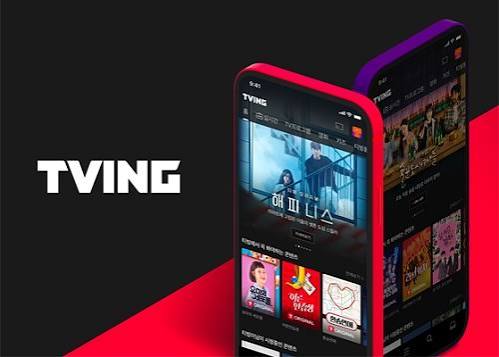
TVING is Korea's largest homegrown streaming platform, with roughly 8 to 9 million monthly active users in 2025. It formed from the merger of CJ ENM's TVING and KT's Seezn, and its ownership group includes CJ ENM, Naver, and KT, a combination that gives it studio backing, search distribution, and telecom reach in one package.
Live sports set TVING apart. It carries KBO baseball and K-League football rights, which matter enormously in a market where domestic sports viewership is intense and fragmented across cable. Add live TV channels and Korean originals like Weak Hero Class and Yumi's Cells, and the platform covers ground Netflix largely doesn't.
The Naver partnership deserves attention. Naver is Korea's dominant search engine and portal, and its distribution deal puts TVING content in front of hundreds of millions of monthly Naver visitors. That kind of built-in funnel is hard for a foreign platform to buy.
3. Wavve
Wavve operates as a joint venture of SK Telecom, KBS, MBC, and SBS, which tells you most of what you need to know. It's the streaming home for Korea's three major terrestrial broadcasters, offering next-day catch-up of the dramas and variety shows that still drive national conversation.
Monthly active users sit at roughly 5 to 6 million as of 2025. That's smaller than TVING, but Wavve's terrestrial content library is something no global platform can license at scale. If a viewer wants to watch last night's SBS drama or a KBS weekend variety show, Wavve is the default destination.
SK Telecom's distribution muscle adds another layer. Bundled subscriptions through Korea's largest mobile carrier give Wavve a steady subscriber base that doesn't depend entirely on content marketing. The platform remains TVING's main domestic rival, though the gap between them has widened since the Seezn merger.
4. Coupang Play
Coupang Play is the fastest-growing platform in Korea, and the reason is bundling. It comes included with Coupang's Wow membership, which reaches more than 20 million Korean e-commerce customers. That's a built-in user funnel no standalone streaming service can match.
Exclusive sports rights drove the surge. Coupang Play holds English Premier League, NFL, and KBO coverage, and Korean football fans have responded. Originals like SNL Korea and Anna added cultural buzz, with SNL Korea in particular generating weekly social media traction.
Estimated monthly active users exceeded 6 million in 2025. The platform ranks fourth here rather than higher because its content investment, while aggressive, still trails TVING and Netflix in total volume. But the trajectory is unmistakable, and Coupang's e-commerce base gives it room to keep growing without acquiring subscribers one at a time.
5. Disney+ (Korea)
Disney+ launched in Korea in November 2021 and has invested steadily in Korean originals since. Moving, released in 2023, became one of the most-watched Korean series on the platform and demonstrated that Disney could produce local content at a competitive level. Big Bet and Blood Free followed in 2024 and 2025.
The catalog combines Disney, Pixar, Marvel, and Star content with these local productions, giving Korean subscribers a mix of family viewing and prestige drama. Subscriber numbers in Korea remain below Netflix's, but telecom bundle partnerships, notably with LG U+, have added steady growth.
Disney+ ranks fifth because its local subscriber base still trails the domestic leaders, and its Korean original output, while high-profile, is thinner than TVING's or Netflix's. The global IP library keeps it relevant for households with children, a segment the domestic platforms serve less directly.
6. Watcha

Watcha carved out a niche that none of the bigger platforms bother with: curation. Its recommendation algorithm and Watcha Pedia, a user-generated film and TV database, have made it a favorite among Korean cinephiles. The platform leans into arthouse, indie, and international cinema alongside mainstream titles.
Scale is the problem. Monthly active users sit at roughly 1 to 2 million as of 2025, and the company has faced well-documented financial pressures in recent years. Content acquisitions have slowed compared with the platform's earlier ambitions.
Watcha still ranks sixth because its brand recognition among serious film viewers is genuine, and Watcha Pedia remains a reference point for Korean movie ratings and reviews. For a certain segment of subscribers, curation beats catalog size. Whether that's enough to sustain the business long term is an open question heading into 2026.
7. Apple TV+
Apple TV+ has been available in Korea since 2019 and built its local reputation on quality over quantity. Pachinko, the Korean-language adaptation of Min Jin Lee's novel, ran from 2022 to 2024 and drew critical acclaim. Dr. Brain, a sci-fi thriller, was among the platform's earliest Korean productions.
The catalog is premium, ad-free, and small relative to competitors. Apple One bundling and Korean telecom partnerships give it distribution, and device integration across iPhone and Apple TV hardware supports a loyal niche of subscribers who value the ecosystem.
Korean subscriber numbers remain modest. Apple TV+ ranks seventh because its local content volume is limited and its Korean originals, while excellent, arrive less frequently than Netflix's. Viewers who want a deep Korean drama library won't find it here, but those chasing high-budget global originals will.
8. Prime Video (Korea)
Prime Video operates in Korea through Amazon, offering a broad catalog of global films and series plus Korean content acquired through licensing deals. Amazon Originals like The Wheel of Time anchor the international lineup.
The platform's Korean footprint is smaller than Netflix's, and the reason is structural. Amazon's e-commerce presence in Korea is limited compared with Coupang's, so Prime Video lacks the shopping-bundle funnel that powers Coupang Play. It appeals mainly to viewers who want international content and Amazon's original slate.
Prime Video ranks eighth. The global library is large, but local market penetration is weak and Korean original production is minimal compared with the platforms above it. Without a stronger local distribution partner, that position is unlikely to shift dramatically in 2026.
9. Spotify (Korea)
Spotify launched in Korea in February 2021 and has grown into a significant audio entertainment platform, even though it competes in a music market dominated by Melon and Genie. Its K-pop catalog is extensive, and the platform's global reach gives Korean artists a distribution channel that domestic services can't match.
Podcasts and video podcasts have become a meaningful part of the Korean offering, expanding Spotify's role beyond music streaming. Millions of Korean users now access the service monthly.
Spotify ranks ninth because it's an audio-first platform in a ranking otherwise dominated by video streaming. Its competition with Melon and Genie is fierce, and domestic music services retain strong loyalty among Korean listeners. Still, Spotify's global catalog breadth and podcast investment make it a legitimate entertainment platform in the Korean market, not just a music app.
10. YouTube Premium (Korea)
YouTube is the most-used video platform in Korea by reach, with tens of millions of monthly users according to Nielsen Korea and Korea Press Foundation data from 2025. Premium, the paid tier, removes ads, enables background play, and bundles YouTube Music.
The creator ecosystem is the platform's real advantage. Korean music videos, vlogs, web dramas, and gaming content draw massive audiences, and YouTube's free tier keeps the overall reach unmatched by any subscription OTT service. Premium's paid subscriber base in Korea is smaller than Netflix's, which is why it ranks tenth rather than higher.
For advertisers and creators, YouTube's scale in Korea is unmatched. For subscribers, Premium solves a specific problem, ad-free viewing, rather than offering exclusive content. That distinction explains the ranking: enormous reach, smaller paid base.
The best streaming entertainment platforms in Korea in 2026 show a market where bundling and local content decide winners. Netflix leads on originals and subscriber scale. TVING and Wavve control live television and sports. Coupang Play grows through e-commerce integration. The platforms that combine distribution partnerships with Korean-specific content, whether sports rights, terrestrial catch-up, or local originals, are the ones holding their ground against global competition.
For viewers choosing a subscription, the decision increasingly comes down to what each platform does best rather than which one has the biggest catalog. That's a meaningful shift from five years ago, and it's likely to define the Korean OTT market through 2026 and beyond.
Related Posts

0 Comments
Join the discussion and share your thoughts
No Comments Yet
Be the first to share your thoughts on this article!