Top 10 Best Humanoid Robotics Companies in The World 2026

Table of Contents
The race to build commercially viable humanoid robots has moved from laboratory demonstrations to factory floors and funding rounds measured in the billions. Our ranking of the top 10 humanoid robotics companies in the world for 2026 weighs valuation, funding momentum, real deployment contracts, and manufacturing capability across the sector. The list spans American startups backed by OpenAI and Amazon, established engineering houses like Boston Dynamics, Chinese manufacturers driving prices down, and European contenders betting on cognitive AI.
What separates this year's leaders from the pack is not the elegance of a walking demo. It is whether a robot ships, gets paid for, and scales. As of early 2026, only a handful of companies can claim all three.
How We Ranked These
We assessed each company on four factors: capital strength (valuation and funding raised), commercial traction (paid deployments and pilot contracts with named enterprises), manufacturing readiness (dedicated production facilities or shipping volume), and technical differentiation in AI, actuation, or cost. Publicly verifiable figures from 2025 and early 2026 reporting carried the most weight. Private valuations shift quickly, so we treated funding announcements as signals of momentum rather than fixed truths. Companies with robots in customers' hands outranked those with impressive prototypes alone.
The Top 10 Humanoid Robotics Companies In The World 2026:
1. Figure AI

Sunnyvale-based Figure AI holds the highest valuation of any pure-play humanoid company on earth: $39.5 billion as of 2025, following a Series C that raised more than $1 billion. Founded in 2022, the company has compressed years of typical hardware development into a few short cycles.
Its Figure 02 robot targets logistics, manufacturing, and household work, and a pilot with BMW placed the machine on an automotive production line. The company's Helix vision-language-action model lets the robot reason about objects it has never seen, a capability that matters more than raw lifting strength in real facilities.
Figure's investor list reads like a tech hall of fame: OpenAI, Microsoft, NVIDIA, Jeff Bezos, and Intel Capital. Its BotQ facility is designed for high-volume manufacturing, addressing the sector's chronic gap between demo units and shippable product. For capital, talent, and enterprise partnerships combined, no competitor matches this profile in 2026.
2. Boston Dynamics
No name carries more weight in advanced robotics. Spun out of MIT in 1992, Boston Dynamics spent three decades building the engineering credibility the rest of the industry now trades on. Hyundai Motor Group acquired the company in 2021, giving it deep-pocketed industrial backing.
The Atlas humanoid completed its transition from hydraulic to fully electric actuation in 2024, a redesign aimed squarely at commercial and industrial deployment. Hyundai is piloting Atlas in automotive manufacturing, a natural fit given the parent company's factory network.
Where Boston Dynamics trails Figure is on pure-play valuation and startup-era fundraising. Where it leads is deployment history: Spot and Stretch robots are already working in commercial settings worldwide, generating revenue and field data that inform Atlas development. When Atlas reaches scale, it will arrive with a track record no startup can replicate.
3. Tesla (Optimus)

Tesla's Optimus program is the wildcard of the sector. The company's AI, battery, and manufacturing expertise gives it vertical integration that no humanoid startup can match, and CEO Elon Musk has said Optimus could eventually become Tesla's most valuable product.
The current Optimus generations use neural networks derived from Tesla's Full Self-Driving work and custom actuators built in-house. Tesla's stated target is thousands of units produced by 2026, with internal factory deployment preceding any external sales.
That sequencing explains the third-place rank. Tesla's manufacturing scale potential is unrivaled, but as of early 2026 external commercial sales remain limited. Investors are effectively pricing a future capability. If Tesla converts its production lines to humanoid output at the pace it claims, this ranking could look conservative a year from now.
4. Unitree Robotics
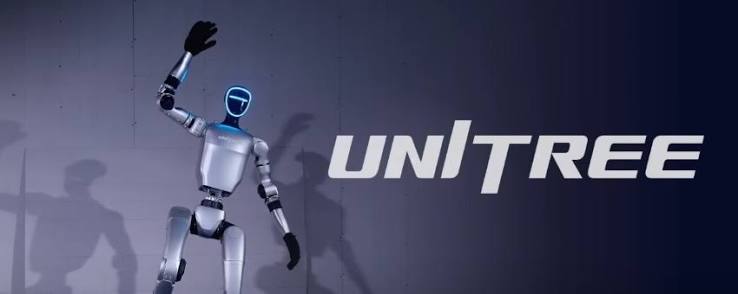
Unitree has done what analysts thought impossible: it made a full-size humanoid affordable. The Chinese company's G1 sells from roughly $16,000, while the larger H1 lists around $90,000. Both figures undercut Western competitors by an order of magnitude.
Founded in 2016, Unitree built its business on quadruped robots before applying that volume manufacturing experience to humanoids. Its global distribution network means researchers, universities, and hobbyists can order a walking robot the way they would order a laptop.
Price leadership has costs. Unitree trails American leaders on enterprise-scale AI integration and high-end industrial deployments. But in a market where cost has been the biggest barrier to adoption, shipping volume counts, and Unitree ships.
5. Agility Robotics

Commercial traction is the rarest currency in humanoid robotics, and Agility Robotics has it. The Oregon State University spinout, founded in 2015, deployed its bipedal Digit robot with GXO Logistics in a paid commercial arrangement, making it one of the first humanoid companies with genuine customer revenue.
Agility operates RoboFab in Oregon, a manufacturing facility built specifically for humanoid production. Amazon's Industrial Innovation Fund and DCVC back the company, and the Amazon connection is strategic: warehouse logistics is the most obvious near-term market for a walking, lifting machine.
Digit's design philosophy favors practical warehouse work over spectacle. It walks on two legs, carries totes, and navigates spaces built for humans. That focus on a defined market with paying customers is why Agility sits ahead of better-funded rivals.
6. Apptronik
Austin-based Apptronik emerged from the University of Texas Human Centered Robotics Lab in 2016 and has since assembled one of the strongest partnership portfolios in the sector. Its Apollo humanoid is being piloted with Mercedes-Benz, and the company collaborates with Google DeepMind on the AI layer.
In 2025, Apptronik raised a Series A exceeding $350 million, a war chest that puts it in the top tier of funded humanoid developers. Apollo is built for modularity, with swappable components and safety features designed for close human collaboration on shared factory floors.
The Mercedes partnership matters beyond optics. Automotive assembly is repetitive, physically demanding, and precisely the kind of task humanoid makers promise to automate. If Apollo proves itself on those lines, Apptronik's position strengthens considerably.
7. 1X Technologies

Most humanoid companies aim at factories. 1X Technologies aims at your living room. The Norwegian-American company, founded in 2014 as Halodi Robotics, is developing the NEO Gamma as a consumer home assistant, a far harder environment than a warehouse aisle.
OpenAI and EQT Ventures back the company, which has raised more than $125 million. The OpenAI connection gives 1X access to frontier AI research, while its engineering focuses on tendon-driven, soft actuation designed to make the robot safe in proximity to people. A robot that shares a home with children needs fundamentally different safety characteristics than one on a factory floor.
The home market is unproven and the technical challenges are steep. Still, 1X holds a distinct position: it is the leading home-humanoid contender with top-tier AI backing, and its differentiation is real rather than marketing.
8. UBTech Robotics
Shenzhen-based UBTech stands apart as one of the few publicly traded pure-play humanoid companies, listed on the Hong Kong Stock Exchange under ticker 9880. Founded in 2012, the company built broad consumer and enterprise robotics lines before pushing into humanoids with its Walker series.
The Walker S2 is being piloted in automotive plants with Chinese automakers for inspection and assembly tasks, placing UBTech inside the world's largest automotive manufacturing base. The company holds an extensive patent portfolio, a byproduct of its long history across service and educational robotics.
Public listing brings scrutiny as well as capital. UBTech's financial disclosures offer a transparency that private competitors avoid, and its diversification across product lines provides revenue stability while humanoid deployments mature.
9. Fourier Intelligence

Fourier Intelligence took an unusual path into humanoids. The Shanghai company, founded in 2015, spent years building rehabilitation robotics, exoskeletons that help stroke patients walk again. That background gave it deep expertise in actuation and human-safe motion control, precisely the skills humanoids demand.
Its GR-1 and GR-2 platforms reflect that heritage, and the company emphasizes affordable, mass-producible designs. Significant funding and partnerships within China support a scale-up strategy aimed at the same cost-sensitive global markets Unitree has opened.
Fourier is earlier in its humanoid journey than the companies above it, but the rehabilitation business provides something rare: an existing revenue base and years of field data on how machines interact with human bodies.
10. NEURA Robotics
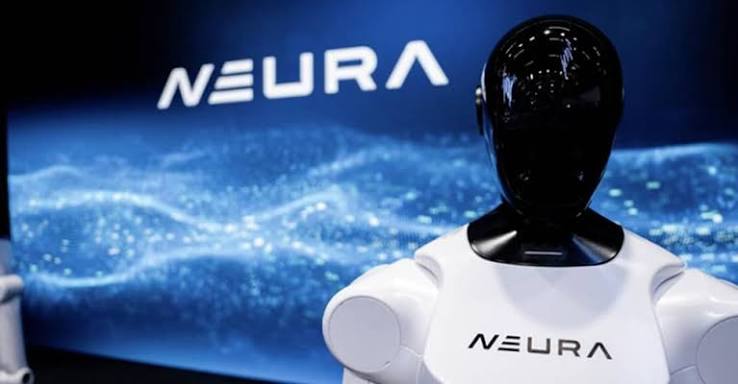
Germany's NEURA Robotics rounds out the list with a distinctly European approach. Founded in 2019, the company develops what it calls cognitive robots, machines that perceive, learn, and adapt rather than execute fixed programs. Its 4NE-1 humanoid embodies that philosophy.
NEURA has raised more than €100 million from European investors and sits within one of the world's strongest industrial manufacturing bases, targeting factory and service applications where German engineering carries weight. The cognitive-AI focus differentiates it from companies competing purely on hardware cost.
NEURA is earlier-stage than the leaders on this list, with commercial deployment still developing. Its inclusion reflects the strategic importance of European industrial partnerships and an AI-first design philosophy that could prove durable as the sector matures.
Related Posts




0 Comments
Join the discussion and share your thoughts
No Comments Yet
Be the first to share your thoughts on this article!