Top 10 Best Gaming Companies In Europe 2026


Table of Contents
Europe's game industry enters 2026 with an unusual distinction: it is home to the best-selling video game of all time, the most valuable licensed IP portfolio on the continent, and a strategy publisher whose player base has outlasted multiple console generations. Our ranking of the top 10 best gaming companies in Europe weighs revenue, studio scale, franchise strength, and cultural staying power to determine who actually leads the region heading into 2026.
This isn't a list of the biggest offices or the loudest marketing budgets. It's a look at the companies doing the most consequential work in European gaming right now, from French AAA giants to Swiss mobile publishers quietly serving over a billion downloads.
How We Ranked These
We evaluated European-headquartered companies on four factors: annual revenue and profitability, portfolio breadth and IP value, development scale (studio count, headcount, output cadence), and sustained player engagement across live-service titles. Where possible, we used verified sales figures, employee counts, and revenue estimates from company disclosures and industry trackers. Companies with a single mega-hit but limited ongoing output ranked lower than those with diversified, durable portfolios. We weighted long-term franchise health more heavily than one-off launch success.
The Top 10 Best Gaming Companies In Europe 2026:
1. Ubisoft
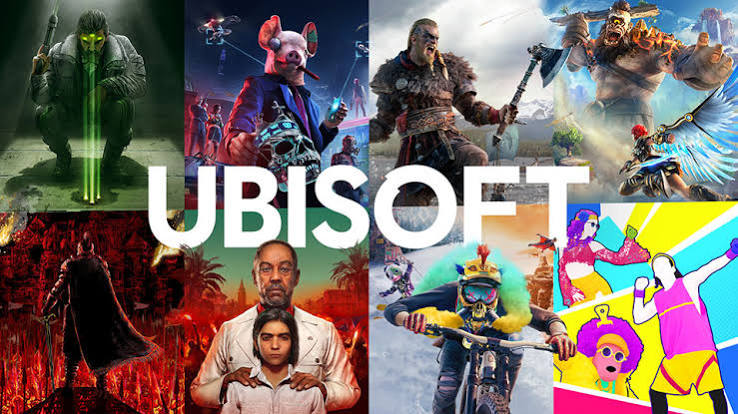
Founded in 1986 and headquartered in Montreuil, France, Ubisoft remains the largest AAA game publisher in Europe by headcount and output. The company employs roughly 20,000 people and generates more than €2.3 billion in annual revenue, making it the continent's most significant single game company by sheer scale.
Ubisoft's franchise stable is unmatched in Europe. Assassin's Creed, Far Cry, Rainbow Six, and Just Dance each command dedicated audiences spanning console, PC, and mobile. With over 40 internal studios across Europe, Canada, and Asia, the company operates one of the largest multi-studio production pipelines in the world. That structure allows it to develop flagship titles in parallel, though it has also drawn criticism for homogenized design across its open-world releases.
The 2026 roadmap leans on continued live-service expansion for existing titles alongside a return to flagship open-world releases. Whether Ubisoft can recapture the energy of its mid-2010s peak remains the central question. Its scale, however, is not in dispute.
2. CD Projekt Red
Headquartered in Warsaw, Poland, CD Projekt Red is Europe's most celebrated narrative AAA studio. The Witcher 3: Wild Hunt has sold more than 60 million copies, placing it among the best-selling role-playing games ever made. Cyberpunk 2077's Phantom Liberty expansion alone exceeded 10 million copies sold, a figure that would represent a hit launch for most studios but here serves as a recovery milestone.
That recovery matters. Cyberpunk 2077's 2020 launch was one of the most publicized technical failures in modern gaming, with the game pulled from the PlayStation Store for six months. CD Projekt Red spent years rebuilding it through patches and the well-received Phantom Liberty expansion, and the game's reputation has largely turned around. The studio's willingness to fund that turnaround rather than abandon the project says something about its long-term thinking.
With roughly 1,335 employees, CD Projekt Red is currently developing multiple Witcher projects and a Cyberpunk sequel. Two billion-dollar franchises, critical prestige, and a loyal PC-first audience give it a position few European studios can match.
3. Paradox Interactive
Stockholm-based Paradox Interactive owns the grand strategy genre in a way no other publisher does. Crusader Kings, Stellaris, Hearts of Iron, and Europa Universalis form a portfolio with combined sales exceeding 15 million units, sustained by a DLC cadence that has kept communities active for over a decade.
The Paradox model is unusual in AAA publishing. Rather than chasing annual releases, the company supports each game with years of expansions, patches, and community-driven content. This long-tail approach generates reliable revenue and builds unusually deep player loyalty. The company has also expanded through acquisitions of studios like Harebrained Schemes and Triumph Studios, diversifying into RPG and simulation genres.
Paradox titles maintain high concurrent player counts on Steam years after launch, a metric that matters more than launch-week sales for a publisher built on retention. Its 2026 outlook centers on continued expansion support and new strategy releases.
4. Supercell
Helsinki-based Supercell is Europe's most profitable mobile-first developer. The company generated over $2 billion in mobile revenue in 2025, driven by Clash of Clans, Clash Royale, Brawl Stars, and Hay Day. Brawl Stars in particular saw a major resurgence in 2024 and 2025, pushing back into tens of millions of monthly active users after a disciplined player-feedback loop reshaped its content pipeline.
Supercell's culture is as notable as its revenue. The company cancels more games than it launches, killing projects that don't meet its internal quality bar even after years of development. That approach is expensive and slow, but it has produced a hit rate that most mobile studios can only envy.
Its small-team, high-autonomy structure has become a model studied by mobile developers worldwide. For a company with only a few hundred employees, Supercell's per-head revenue is among the highest in the global games industry.
5. Embracer Group
Karlstad, Sweden-based Embracer Group operates one of the largest portfolios of game studios and IP in the world. The holding company manages over 400 owned or controlled franchises, including The Lord of the Rings and Tomb Raider, across more than 50 internal development studios.
Embracer's rise was built on aggressive acquisition, buying up dozens of studios and IP rights between 2019 and 2022. That strategy hit a wall in 2023, when a reported $2 billion partnership deal collapsed and the company was forced into significant restructuring. Since then, it has refocused on core gaming assets, spun off divisions, and cut costs across its subsidiaries.
Its decentralized structure lets each studio operate independently while benefiting from group financing and distribution. That model carries both risk and resilience. For 2026, Embracer's value lies less in any single franchise than in the sheer breadth of IP it controls.
6. Crytek

The company's modern identity rests largely on Hunt: Showdown, a tense extraction shooter that has maintained a strong player base since its 2018 release. Crytek has also expanded into VR development and operates Crytek Black Sea in Bulgaria.
Crytek's influence on European game development runs deeper than its own releases. CryEngine helped establish the visual standards that AAA production still works against, and the studio's engineering talent has scattered across the industry over the years. As a pure technology pioneer, few European companies match its track record.
7. Mojang Studios
What makes Mojang's position remarkable is longevity. Minecraft launched in 2011 and has remained relevant across more than a decade and multiple platform generations, something almost no other game achieves. Its appeal cuts across age groups, regions, and play styles in a way that few titles manage.
The studio remains a flagship example of a small European team achieving global dominance. For 2026, Mojang's challenge isn't growth but maintaining the game's cultural relevance as its original player base ages into adulthood.
8. Thunderful Group
Thunderful's structure sets it apart from pure-play game companies. It also manages hardware distribution operations alongside its games business, giving it a revenue base that doesn't depend entirely on release schedules. That diversification has helped it weather the industry's post-2023 contraction better than some peers.
The company is known for supporting creative, independent-style development within a larger corporate structure. Its SteamWorld franchise in particular has maintained a reputation for genre-hopping quality since 2010. For 2026, Thunderful's value lies in its ability to fund smaller, riskier projects that larger publishers won't touch.
9. 11 bit studios
The studio's approach blends serious themes with tight, systems-driven gameplay. Children of Morta, its 2019 action RPG, showed the company could work outside the grim survival space while maintaining quality. 11 bit studios is widely respected among developers for treating games as a medium capable of handling difficult subject matter without becoming exploitative.
As Poland's second major AAA-adjacent studio after CD Projekt Red, 11 bit studios represents the country's growing weight in European game development. Its 2026 pipeline includes continued Frostpunk 2 support and unannounced projects.
10. Miniclip
Neuchâtel, Switzerland-based Miniclip has built one of the largest casual gaming audiences in the world, with over 1 billion lifetime downloads across its portfolio. The company operates popular titles including 8 Ball Pool, Agar.io, and Golf Battle, and has expanded through acquisitions of multiple studios, including several backed by Tencent.
Miniclip's strength is mass-market accessibility. Its games run across web and mobile, require minimal hardware, and use live-service models that keep players returning for years. 8 Ball Pool alone has maintained a dedicated player base since its 2010 launch, a longevity record few casual titles approach.
The company remains one of Europe's most consistent mobile publishers by reach and retention. While it doesn't generate the headlines of a CD Projekt Red or Ubisoft, its 1 billion downloads represent a scale of audience engagement that most AAA studios will never touch.
Europe's game industry in 2026 looks less like a single market and more like a collection of regional strengths. France leads in AAA production scale through Ubisoft. Poland has become a narrative and strategy powerhouse with CD Projekt Red and 11 bit studios. Sweden hosts both a grand strategy giant in Paradox and the studio behind the best-selling game ever made in Mojang. Finland's Supercell dominates mobile profitability, while Switzerland's Miniclip leads in raw download volume.
What unites these companies is durability. Most have maintained their positions for a decade or longer, surviving platform shifts, industry contractions, and changing player expectations. In a sector where studios rise and collapse quickly, that kind of staying power is the real measure of success, and it's what earns these ten companies their place among the best gaming companies in Europe heading into 2026.
Related Posts


2 Comments
Join the discussion and share your thoughts