Top 10 Best E commerce Websites In Qatar 2026


Table of Contents
Qatar's online shopping market has matured into one of the Gulf region's most competitive digital retail environments, and the top 10 best e-commerce websites in Qatar for 2026 reflect a market where global giants and homegrown platforms now trade blows for the same customers. To build this ranking, we weighed monthly traffic data from Similarweb's September 2026 Ecommerce & Shopping category for Qatar, cross-referenced global traffic figures from Semrush Traffic Analytics and Readdy.ai, and factored in platform reliability, payment security, delivery performance within Qatar, and shopper sentiment from regional forums. Rank movement mattered too. A site that climbed two positions in a single quarter tells us something different than one holding steady at the top. We also considered practical value for Qatari residents specifically: whether a platform prices in Qatari Riyal, supports local payment methods, and ships reliably to Doha and beyond.
What emerges is a market split roughly in half. Five of the ten sites are international platforms with global scale, while the rest include Qatari-owned operations and infrastructure players that power the country's digital economy behind the scenes. Here's how they stack up.
The Top 10 Best E-Commerce Websites in Qatar 2026:
1. Amazon

Amazon holds the #1 spot among Qatar's most visited e-commerce websites as of September 2026, with no rank change from the previous period, according to Similarweb data. That stability is the story. While other platforms jostle for position beneath it, Amazon's grip on first place has not loosened.
The scale behind that ranking is hard to overstate. Amazon operates as the leading global online store by sales and visitor numbers, and it dominates e-commerce in dozens of markets worldwide. It also leads the global ranking of most widely used mobile shopping apps as of February 2026, ahead of platforms like Temu and Flipkart. For Qatari shoppers, that translates into access to electronics, fashion, books, and household goods with international shipping options into Qatar.
Where Amazon wins with Qatari consumers is breadth. If a product exists in the global catalog, Amazon likely carries it. The trade-off is delivery time. International shipping to Qatar takes longer than local platforms, and import duties can apply depending on order value. Shoppers who need something in 48 hours typically look elsewhere. Those hunting for a specific camera lens or an out-of-print book usually don't.
2. Alanees Qatar

The runner-up position belongs to a homegrown Qatari platform, and that says a lot about local shopping habits. Alanees Qatar held steady at #2 in Similarweb's September 2026 rankings, trailing only Amazon in monthly traffic.
Alanees operates as a local marketplace connecting Qatari consumers with electronics, home goods, and lifestyle products. Its high ranking demonstrates a clear preference among Qatari shoppers for platforms that understand the local market: region-specific product selections, local payment methods, and faster delivery within the country. Competing directly against Amazon and AliExpress and finishing ahead of both is no small achievement for a domestic operator.
The advantage here is speed and familiarity. Orders fulfilled inside Qatar avoid customs delays entirely, and customer service operates in the same time zone and often the same language as the buyer. For everyday purchases where waiting two weeks isn't acceptable, Alanees has carved out a durable niche. It's the clearest evidence that Qatar's domestic e-commerce sector can hold its own against global competition.
3. AliExpress

AliExpress ranks third in Qatar according to Similarweb's September 2026 data, holding its position with no rank change. The platform's global footprint explains why it remains a fixture in the Qatari market: AliExpress is the top e-commerce website worldwide by traffic, with 699.81 million monthly visits as of July 2026, according to Readdy.ai.
Price is the primary draw for Qatari shoppers. AliExpress offers an enormous selection spanning electronics, fashion, home goods, and accessories, often at prices local retailers can't match. The platform's Buyer Protection policy refunds shoppers automatically if an item never arrives or arrives materially different from its listing, which removes much of the risk from buying through international sellers.
Delivery windows are the trade-off. Orders typically take two to four weeks to reach Qatar, and product quality varies widely across sellers. Shoppers who read reviews carefully and stick to established sellers report far better outcomes. For budget-conscious buyers willing to wait, few platforms offer more value per riyal.
4. Carrefour Qatar
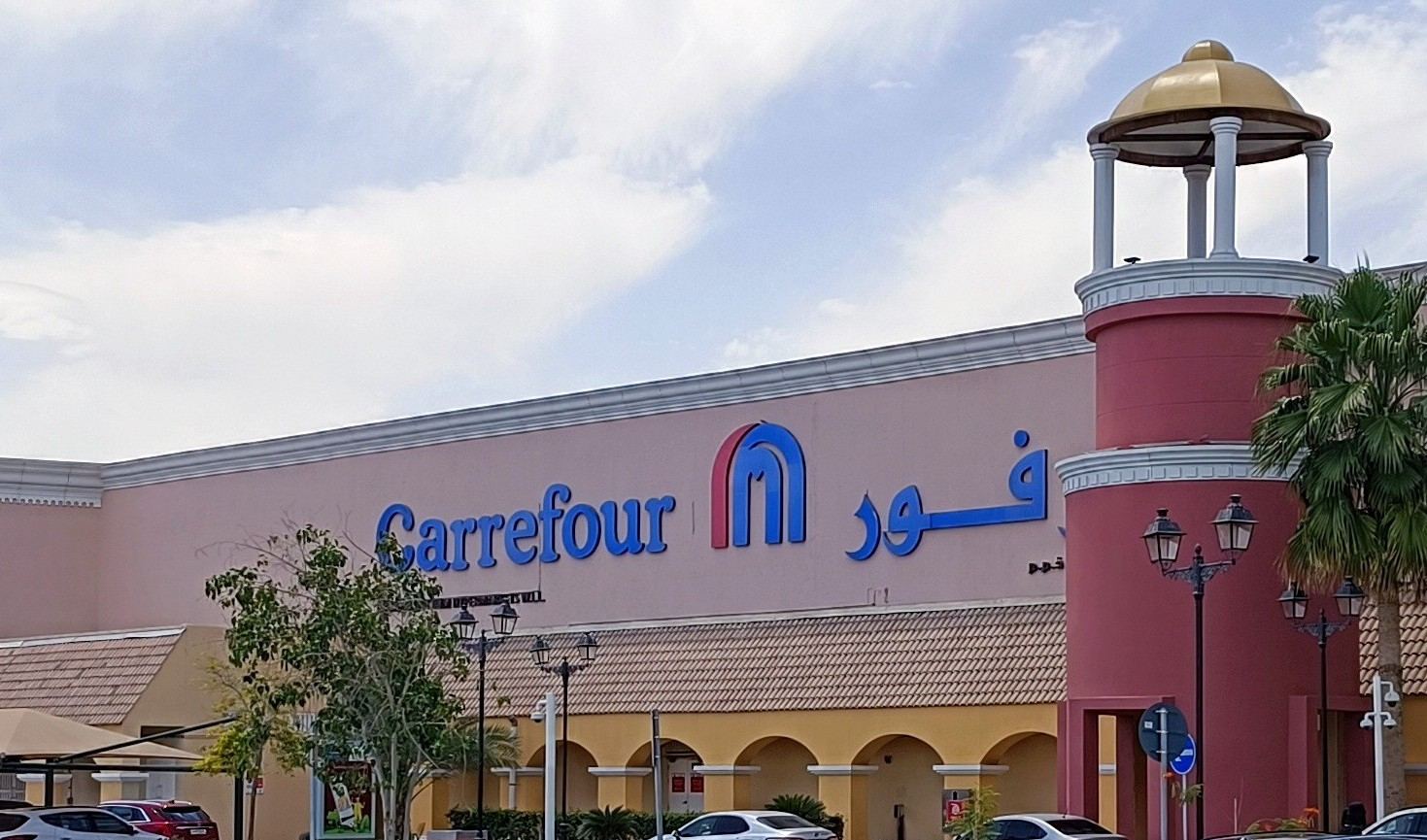
Carrefour Qatar climbed one position to rank #4 in September 2026, and the movement reflects something broader: growing adoption of online grocery shopping across Qatar. The platform is the digital arm of the Carrefour hypermarket chain, offering groceries, fresh food, electronics, and household essentials with delivery across the country.
The physical store network is Carrefour's structural advantage. Because fulfillment draws on existing hypermarket locations, the platform can offer reliable same-day delivery in many areas, something pure-play online retailers struggle to match for perishable goods. That infrastructure has translated into rising consumer confidence in online grocery delivery across the Gulf region.
Qatari households increasingly use Carrefour Qatar for weekly grocery runs rather than in-store trips, particularly during summer months when daytime temperatures make errands unpleasant. The app integrates loyalty pricing and promotions from the physical stores, so regular Carrefour shoppers see consistent pricing across channels. It's a grocery-first platform that happens to sell electronics, not the other way around.
5. Temu

The biggest mover in Qatar's top five is Temu, which jumped two positions to claim #5 in September 2026, according to Similarweb. No other site in the top five improved its standing as much during the period.
Temu's global trajectory provides context for that climb. The platform ranks as the #2 online shopping site worldwide by monthly website visits as of July 2026, according to Semrush Traffic Analytics data cited by Virtina. It has grown 68% year-over-year despite mounting regulatory scrutiny in several markets, and it competes in a tight $15-22 billion range alongside TikTok Shop and Walmart in third-party marketplace sales.
What drives adoption in Qatar mirrors what works elsewhere: aggressive pricing, an enormous product range, and a gamified shopping experience that keeps users returning. The app's discount mechanics and flash sales create urgency that traditional marketplaces lack. Product quality is inconsistent, and shipping times from China run one to three weeks, but for budget shoppers buying accessories, home items, and novelty goods, the value proposition is hard to beat. Expect Temu to keep climbing if current growth holds.
6. Ubuy Qatar

Ubuy occupies a specific niche that global marketplaces don't fully cover: cross-border shopping with the logistics handled for you. The platform runs a dedicated Qatar storefront at ubuy.qa, and Quora users have described it as "one of the best e-commerce websites for all kinds of products."
Ubuy aggregates products from multiple countries including the United States, United Kingdom, and China, then manages customs clearance and international logistics on behalf of customers. That's the core value. Qatari shoppers who want a product only sold in the US, for example, can order through Ubuy without arranging freight forwarding or dealing with customs paperwork themselves.
The localized Qatar site prices everything in Qatari Riyal and provides customer support tailored to the region, which removes friction from what would otherwise be a complicated international purchase. The catalog spans fashion, electronics, and books. Pricing carries a premium over buying directly from foreign retailers, since Ubuy absorbs shipping and customs costs into the listed price, but for items that are otherwise impossible to source locally, that premium is often worth paying.
7. Shein

Shein ranks among the top 10 global online shopping sites by monthly website visits as of July 2026, according to Semrush Traffic Analytics data cited by Virtina, and its presence in Qatar skews heavily toward younger shoppers. The platform has become a primary destination for fashion-forward Qatari consumers seeking affordable trendy clothing, accessories, and beauty products.
The fast-fashion model is the engine. Shein introduces thousands of new styles daily, supported by a data-driven supply chain that responds to consumer trends within days rather than months. That speed lets the platform capitalize on viral styles almost immediately, which traditional fashion retailers with seasonal production cycles cannot match.
Shein ships to Qatar and offers localized pricing and promotions for Middle Eastern customers, though delivery typically takes one to three weeks. Quality is variable, which is well documented across user reviews, but the price points make experimentation low-risk. Regional fashion retailers have felt the competitive pressure, particularly in the under-100 QAR segment where Shein is strongest. For trend-driven shoppers on a budget, it remains a default choice.
8. eBay

eBay ranks among the top five global online shopping sites by monthly visits as of July 2026, according to Semrush Traffic Analytics data cited by Virtina, and it carries roughly $15 billion in marketplace sales. Founded in 1995, the platform pioneered the auction-style format that lets buyers and sellers connect directly across a vast range of goods.
For Qatari shoppers, eBay's value lies in the obscure. Hard-to-find items, collectibles, and refurbished electronics that local retailers don't stock are eBay's specialty. Collectors hunting specific trading cards, vintage watch parts, or discontinued electronics models often find eBay is the only practical source.
The platform offers a money-back guarantee on most purchases and supports international shipping to Qatar. The auction format still exists but fixed-price listings now dominate, which has made the buying experience more predictable than in eBay's early years. Buyer protections have improved substantially, though as with any marketplace, checking seller ratings before purchasing remains essential. Delivery to Qatar typically runs one to three weeks depending on the seller's location and shipping method chosen.
9. Etsy

Etsy ranks sixth globally among online shopping sites by monthly website visits as of July 2026, according to Semrush Traffic Analytics data cited by Virtina. The platform specializes in handmade, vintage, and rare items, connecting independent creators and artisans directly with international buyers.
What Etsy offers Qatari consumers is access to products that simply don't exist in mass-market retail. Custom jewelry, original artwork, handcrafted home decor, and personalized gifts make up the core catalog. For shoppers seeking distinctive, non-commercial products, whether that's a commissioned piece or a vintage find, Etsy's seller base spans nearly every craft category imaginable.
The platform runs a Purchase Protection policy covering cases where a handmade order goes wrong, which provides meaningful security given that most sellers are individuals rather than established businesses. Shipping to Qatar varies by seller, and custom or made-to-order pieces can take several weeks to produce before they even ship. Buyers planning around a specific date, a wedding or a birthday, should build in extra time. The trade-off for the wait is a product nobody else in Doha will have.
10. Shopify

The final entry isn't a consumer marketplace at all, and that's precisely why it belongs on this list. Shopify is the leading e-commerce platform for businesses in Qatar looking to establish an online presence, according to Traderoutegcc.com's 2026 guide on starting an e-commerce business in Qatar. It's ranked as the best choice for beginners and startups.
The reasoning is straightforward. Shopify provides an all-in-one solution that requires no coding or design experience to build and manage an online store. Qatari merchants can manage sales, market products, and accept all kinds of digital and physical payments through a unified dashboard. That lowers the barrier to entry dramatically for small businesses that would otherwise need to hire developers or pay agencies.
Shopify doesn't sell to consumers directly, but it powers thousands of individual Qatari online stores, making it a foundational layer of the country's e-commerce ecosystem. Many of the local shops Qatari consumers buy from every day run on Shopify behind the scenes. As Qatar's digital economy expands, the platform's role in enabling new merchants to launch will shape how the market looks in coming years.
As Qatar's e-commerce sector continues to develop, watch for two trends to shape the 2027 rankings: continued growth in online grocery adoption, and whether local platforms can sustain their positions as international players invest more heavily in Gulf logistics. For now, the top 10 best e-commerce websites in Qatar offer Qatari shoppers more choice, better pricing, and faster delivery than at any point in the country's digital retail history.
Related Posts



0 Comments
Join the discussion and share your thoughts
No Comments Yet
Be the first to share your thoughts on this article!