Top 10 Best Fintech Companies In China 2026

Table of Contents
China's fintech sector remains the most dynamic and heavily scrutinized in the world. After the regulatory crackdown that began in late 2020, the industry has consolidated, pivoted toward compliance, and refocused on technology infrastructure rather than unchecked consumer lending. The top 10 best fintech companies in China for 2026 reflect this new reality: they are larger, more diversified, and more globally ambitious than the generation of startups that preceded them.
We evaluated these companies based on market valuation, user base, revenue, regulatory standing, and international expansion. What emerges is a picture of an industry that survived its reckoning and is now building more durable business models. Here is our ranking of the 10 most significant fintech companies operating in China as of 2026.
How We Ranked These
Our selection draws on financial disclosures, market capitalization data from November 2025, user metrics, and industry analysis from firms including Mordor Intelligence, Tracxn, and The Forage. We weighed revenue scale, active user counts, regulatory compliance history, and the breadth of each company's product ecosystem. International reach and the ability to generate sustainable profit under China's current fintech oversight framework also factored heavily into the final order. Publicly traded companies were assessed on their most recent quarterly reports.
The Top 10 Best Fintech Companies In China 2026:
1. Ant Group (Alipay)
Ant Group remains the undisputed heavyweight of Chinese fintech, even after the dramatic collapse of its planned IPO. The company, founded in 2014 as Ant Financial and affiliated with Alibaba Group, was forced to cancel a record-breaking $37 billion listing in 2020 when regulators stepped in. That moment reshaped the entire Chinese fintech landscape, but it did not dislodge Ant from its position atop the payments ecosystem.
Alipay, Ant's flagship product, still serves over 1.3 billion users globally, making it the largest mobile payment platform on earth. The company's valuation currently sits at approximately $78.54 billion, a significant markdown from the $300 billion figure floated during its aborted IPO, but still enormous by any standard. Ant has diversified into wealth management through Yu'e Bao, micro-lending via its credit products, and credit scoring through Zhima Credit, which has become a de facto social credit reference in many consumer interactions.
The restructuring demanded by Chinese regulators forced Ant to transform into a financial holding company subject to the same capital requirements as traditional banks. That process has been painful, but it has also given the company a clearer regulatory runway. Ant now operates more like a licensed financial institution than a tech platform skirting the edges of banking law, and that legitimacy matters in the current environment.
2. Tencent Holdings (Tenpay/WeChat Pay)
Tencent Holdings is China's most valuable public company, with a market capitalization of $766.80 billion as of November 2025 and revenue around $82.3 billion. Its fintech operations, anchored by WeChat Pay, form the other half of China's mobile payment duopoly alongside Alipay. With over 1.4 billion monthly active users on WeChat, the payment platform has effectively become a financial operating system for the country.
The company's payment arm, TenPay Global, earned a spot on CNBC's World's Top Fintech Companies 2026 list, a recognition of its international ambitions. TenPay has partnered with more than 60 international banks and remittance institutions across over 150 countries, and WeChat Pay has opened its merchant network to international visitors using cards from seven major international card networks. That last move is significant: it signals that Tencent is positioning WeChat Pay as a viable option for tourists and business travelers, not just Chinese residents.
Tencent's fintech and business services segment now contributes a substantial portion of overall revenue, and the company continues to integrate financial services into its broader social and gaming ecosystem. The synergy between WeChat's messaging dominance and its payment infrastructure gives Tencent a defensive moat that remains virtually unmatched.
3. JD Technology (JD Digits)
JD Technology, formerly JD Digits, operates as the financial services arm of JD.com, one of China's largest e-commerce platforms. The company's position in this ranking reflects the structural advantage of being embedded in a massive retail ecosystem. JD Baitiao, its consumer credit product, functions similarly to a store card but with broader applications, and it has become a default payment option for millions of JD.com shoppers.
Beyond consumer finance, JD Technology has built a substantial B2B business selling technology infrastructure to banks and other financial institutions. This pivot toward enterprise services mirrors a broader trend in Chinese fintech: as consumer-facing regulation tightened, the most successful companies repositioned themselves as technology vendors to the traditional financial sector. JD Technology's supply chain financing products also benefit from JD.com's logistics data, giving the company a proprietary view into merchant creditworthiness that pure-play lenders cannot replicate.
Mordor Intelligence's 2026 industry analysis recognized JD Technology as a market leader in China's fintech sector, and the company continues to leverage its parent's e-commerce dominance to cross-sell financial products.
4. WeBank Co. Ltd.
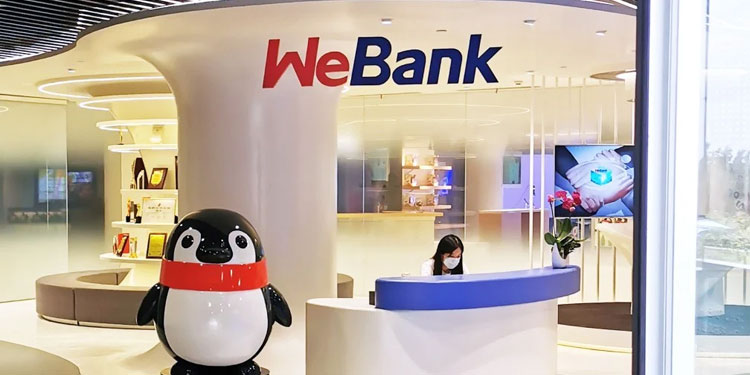
WeBank, backed by Tencent, was China's first digital-only bank, and it has become the model that other internet banks aspire to replicate. The bank operates entirely without physical branches, serving over 300 million individual customers through its mobile app. That scale, achieved without a single brick-and-mortar location, demonstrates the efficiency of its technology stack.
WeBank pioneered the use of big data and AI for credit assessment, analyzing behavioral data to make lending decisions in seconds. Its risk management systems have proven remarkably effective, and the bank has reported consistent profitability while maintaining lower non-performing loan ratios than many traditional Chinese banks. The bank's product suite includes wealth management, personal loans, and payment solutions, with a growing focus on small business banking.
WeBank's success has not gone unnoticed internationally. It is frequently cited as a reference point for digital banking initiatives in Southeast Asia, India, and Latin America, and it remains the clearest proof that branchless banking can work at massive scale.
5. Lufax Holding Ltd.

Lufax, headquartered in Shanghai, has undergone one of the most dramatic transformations in Chinese fintech. The company originally launched as a peer-to-peer lending platform, a sector that was virtually wiped out by regulatory action between 2019 and 2021. Lufax survived by pivoting into retail borrowing and wealth management, and it now operates as a comprehensive platform connecting consumers with credit and investment products.
The company went public on the New York Stock Exchange in 2020, raising $2.36 billion in one of the largest US IPOs by a Chinese company that year. That listing came just before the regulatory environment turned sharply hostile to fintech, and Lufax has since had to navigate significant compliance burdens. Despite these challenges, it continues to be ranked among the top fintech companies in China by industry analysts, and its wealth management segment has grown steadily as Chinese households shift savings from bank deposits into higher-yielding products.
Lufax's survival and reinvention make it a case study in adaptability. The company that exists today bears little resemblance to the P2P pioneer of the mid-2010s, but its core mission of making retail borrowing and wealth management more efficient remains intact.
6. Ping An OneConnect Bank
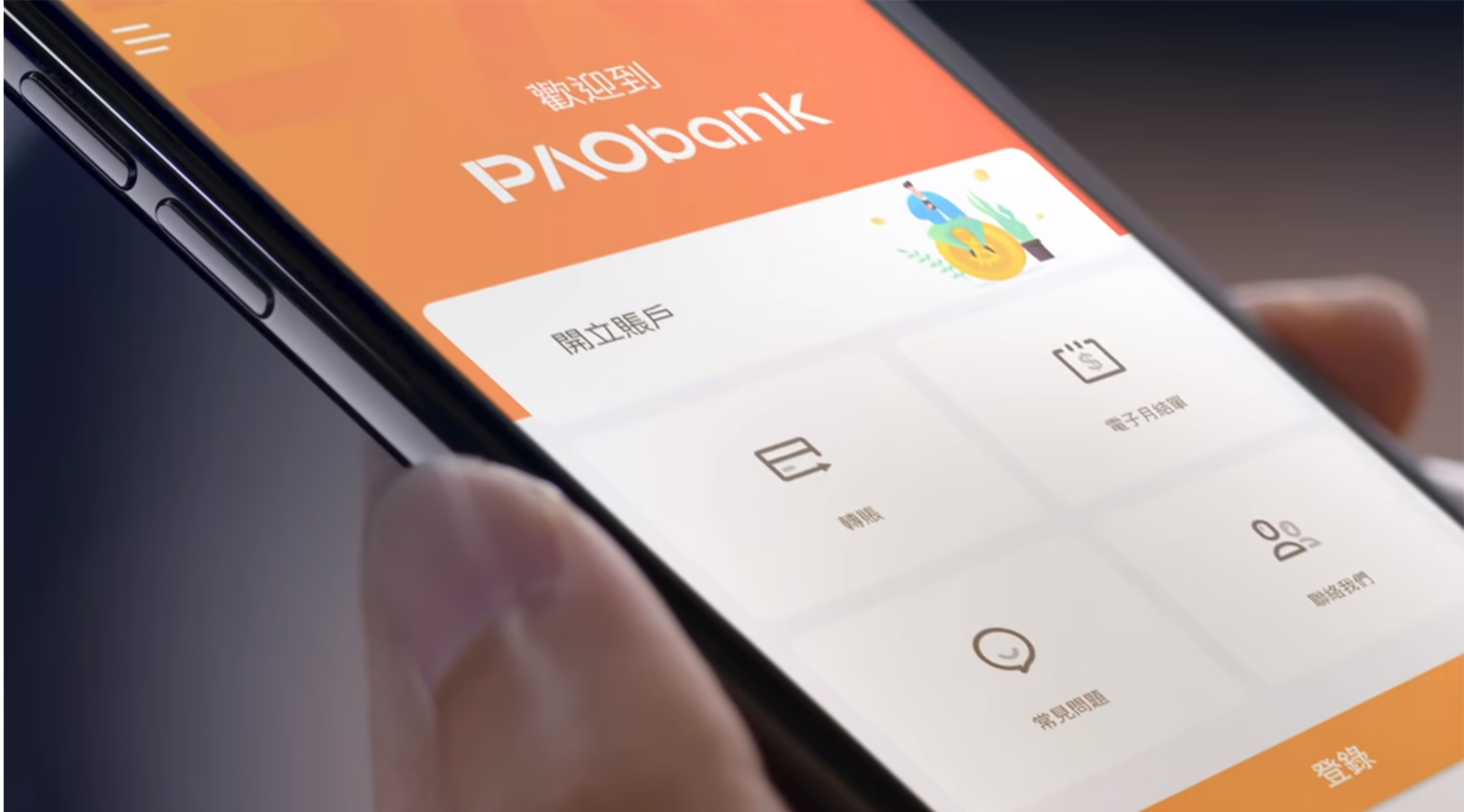
OneConnect is the technology subsidiary of Ping An Insurance Group, one of China's largest financial conglomerates with over 100 million customers across its various businesses. Unlike most entries on this list, OneConnect does not primarily serve consumers directly. Instead, it provides technology-as-a-service to financial institutions, offering AI-powered risk management, blockchain infrastructure, and cloud services to banks and insurers.
This positioning has proven prescient. As Chinese regulators demanded that fintech companies operate more like traditional financial institutions, those institutions simultaneously began seeking technology partnerships to modernize their own operations. OneConnect sits exactly at that intersection, selling the digital tools that banks need while benefiting from Ping An's deep expertise in insurance and risk assessment.
The company has also expanded internationally, serving clients across Southeast Asia, the Middle East, and Latin America. Mordor Intelligence recognizes OneConnect as a leading player in China's fintech market, and its B2B model provides a more stable revenue base than consumer lending, which remains subject to periodic regulatory intervention.
7. ZhongAn Online P&C Insurance
ZhongAn, founded in 2013 by Alibaba, Tencent, and Ping An, was China's first internet insurance company. The company operates entirely online, using big data and AI to price and underwrite policies dynamically. Since its inception, it has processed over 10 billion policies, a staggering figure that reflects the volume of micro-insurance products it sells, such as shipping return protection for e-commerce purchases and travel insurance.
ZhongAn listed on the Hong Kong Stock Exchange in 2017 and has since diversified beyond property and casualty insurance into healthcare and technology services through its subsidiaries. The company's healthcare arm, ZhongAn Technology, has developed AI systems for medical claims processing and health risk assessment, positioning ZhongAn as a player in the broader digital health economy rather than just an insurer.
As the most prominent insurtech company in China, ZhongAn has demonstrated that insurance can be distributed and underwritten entirely digitally, even for low-premium products that traditional insurers would find uneconomical to serve.
8. Futu Holdings Ltd.
Futu Holdings, listed on NASDAQ under the ticker FUTU, has built one of the most successful digital brokerage businesses in the world. With a market cap exceeding $10 billion and over 20 million registered users, the company offers commission-free trading of US and Hong Kong stocks through its flagship app, moomoo. The platform combines real-time market data, social trading features, and AI-powered investment tools in a single interface.
Futu's growth has been driven by a demographic shift: younger Chinese investors, increasingly comfortable with mobile-first financial services, have flocked to the platform for access to US markets. The company has expanded internationally to Singapore, Australia, and the United States, adapting its product for local regulatory environments while maintaining the same core user experience.
Futu's revenue growth and user acquisition metrics have made it one of the most successful Chinese fintech companies in global markets. Its ability to operate across multiple jurisdictions, each with its own securities regulations, is a significant operational achievement.
9. Tiger Brokers (UP Fintech)

Tiger Brokers, operating under UP Fintech Holding Limited and listed on NASDAQ as TIGR, is Futu's primary competitor in the cross-border brokerage space. The company has over 2 million funded accounts and manages more than $100 billion in client assets. Its platform specializes in US and Hong Kong equity trading, offering fractional shares, options trading, and comprehensive market analysis tools.
Tiger Brokers has been consistently ranked among the top fintech startups in China by Tracxn and other industry trackers. The company has expanded beyond pure brokerage into wealth management and retirement products, competing directly with traditional banks and brokerages for a share of Chinese household savings.
The competitive dynamic between Tiger Brokers and Futu mirrors the broader pattern of Chinese fintech: two well-capitalized platforms fighting for the same customers with similar products, differentiated primarily by execution quality and user experience. Both have proven that Chinese investors will move assets overseas when given a frictionless digital channel to do so.
10. 360 DigiTech Inc.
360 DigiTech, listed on NASDAQ as QFIN, rounds out our list as a leading digital consumer finance platform. The company has over 100 million registered users and has originated more than RMB 100 billion in cumulative loans. Its technology connects borrowers with financial institutions, providing the infrastructure for loan origination, credit assessment, and collections.
The company has faced its share of regulatory challenges, including the broader crackdown on consumer lending that swept through the industry in 2021. But 360 DigiTech has adapted by shifting its model toward technology services for financial institutions rather than direct lending. The company is now expanding into SME lending and insurance distribution, diversifying its revenue streams beyond consumer credit.
360 DigiTech's inclusion on this list reflects the reality that China's consumer credit market, while heavily regulated, remains enormous. The company's AI-driven risk management systems, built on data from its parent company's cybersecurity and internet operations, give it a distinctive approach to credit assessment that traditional lenders cannot easily replicate.
Looking ahead to the remainder of 2026, we expect continued consolidation, further international expansion from the brokerage platforms, and growing emphasis on B2B technology services. The era of explosive consumer credit growth is over, but the infrastructure these companies have built will underpin Chinese financial services for decades. For investors and observers watching the sector, the top 10 best fintech companies in China represent not just the largest players, but the ones best positioned to navigate whatever regulatory and economic conditions come next.
Related Posts




2 Comments
Join the discussion and share your thoughts