Top 10 Best AI 3D Model Generators In The World 2026

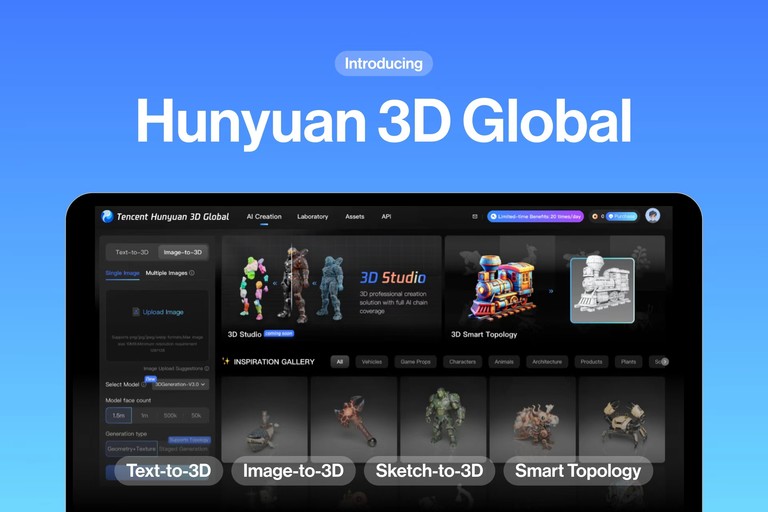
Table of Contents
AI 3D model generation has moved from experimental novelty to production-ready reality faster than almost any other creative technology we have covered. To build this ranking of the best AI 3D model generators in the world for 2026, we weighed performance benchmarks, community adoption, and user sentiment from more than 180,000 blind votes collected across multiple industry testing platforms, including the Spring 2026 "3D AI Arena" benchmark and GeekatPlay's comprehensive platform comparison.
We looked at generation speed, geometric accuracy, texturing capability, export flexibility, and the practical realities of pricing. We also paid close attention to workflow integration, since a tool that produces beautiful meshes but cannot talk to Blender or Unity is far less useful in a real production pipeline. The tools below represent the strongest options across the creator market, from hobbyists experimenting with free tiers to studios shipping commercial assets. 54130457283
These Are The Top 10 Best AI 3D Model Generators In 2026:
1. Tripo AI
Tripo AI sits at the top of this list because it does something rare: it performs well across every segment of the market. The platform earned a 4.5/5 rating and generation speeds of 20 to 60 seconds, which puts it among the fastest tools we tested. Its pricing ranges from $10 to $50 per month depending on the tier, making it accessible to independent creators while offering enough headroom for agency work.
The standout development in 2026 was the release of Smart Mesh P1.0, a quad retopology system that completes in roughly 2 seconds. For anyone who has spent hours cleaning up AI-generated topology, this is a genuine breakthrough. Tripo excels at hard-surface objects and supports multi-image input, which gives artists more control over the final result than single-image tools. The output requires minimal post-processing, and the platform has built a rich ecosystem around its studio tools, including image generation features powered by GPT Image 2 and NanoBanana Pro models.
Tripo consistently tops expert rankings, including the Medium "Best AI 3D Model Generators 2026" analysis, and its community adoption continues to grow. It is simple enough for creators just getting started, broad enough for agencies juggling multiple clients, and serious enough for developers who need API access and reliable output.
2. Meshy AI
Meshy AI holds the number two spot thanks to its exceptional balance of quality and feature depth. The platform carries a 4.5/5 rating on G2 and offers a free tier with 200 credits, which is generous enough for meaningful testing. Paid plans start at $16 per month, making it one of the more affordable professional options on this list.
The 2026 release of Meshy 6 introduced a conversational AI agent that lets you refine models through natural language prompts, plus enhanced PBR texturing capabilities. That texturing pipeline is a major differentiator. Meshy uses photogrammetry-based texturing that produces physically accurate materials, and you can adjust polygon ranges from 1K to 300K with texture resolution up to 4K. Exports come in FBX, OBJ, and GLB formats, and the platform includes API access plus plugin integrations for Blender and Unity.
Auto-rigging for characters is another strong feature, particularly for game developers who need animated assets quickly. Generation takes 30 to 90 seconds depending on complexity. For general 3D asset creation, Meshy offers the most complete package for the price.
3. Hitem 3D (formerly Spark 3D)

Hitem 3D, previously known as Spark 3D, earned its reputation as the "king of the hill" for geometric detail and resolution quality. Independent testers, including GeekatPlay's comprehensive platform comparison, consistently rank it as the top choice when raw fidelity matters most.
The tool produces extremely detailed geometry that follows surface details better than any competing platform we evaluated. For organic shapes and characters requiring intricate surface detail, nothing else on this list comes close. Hitem recently added coloring capabilities, which addressed its earlier weakness in the texturing pipeline and made it a more complete solution.
In the Spring 2026 "3D AI Arena" benchmark, which collected over 100,000 real user votes on real models, Hitem 3D ranked third overall. That user-driven validation matters because it reflects actual experience rather than controlled testing conditions. The tradeoff is that Hitem trails the leaders in workflow integration, so it is best suited for artists who prioritize output quality over pipeline convenience. A free tier is available for those who want to test its capabilities.
4. Hyper3D Rodin AI
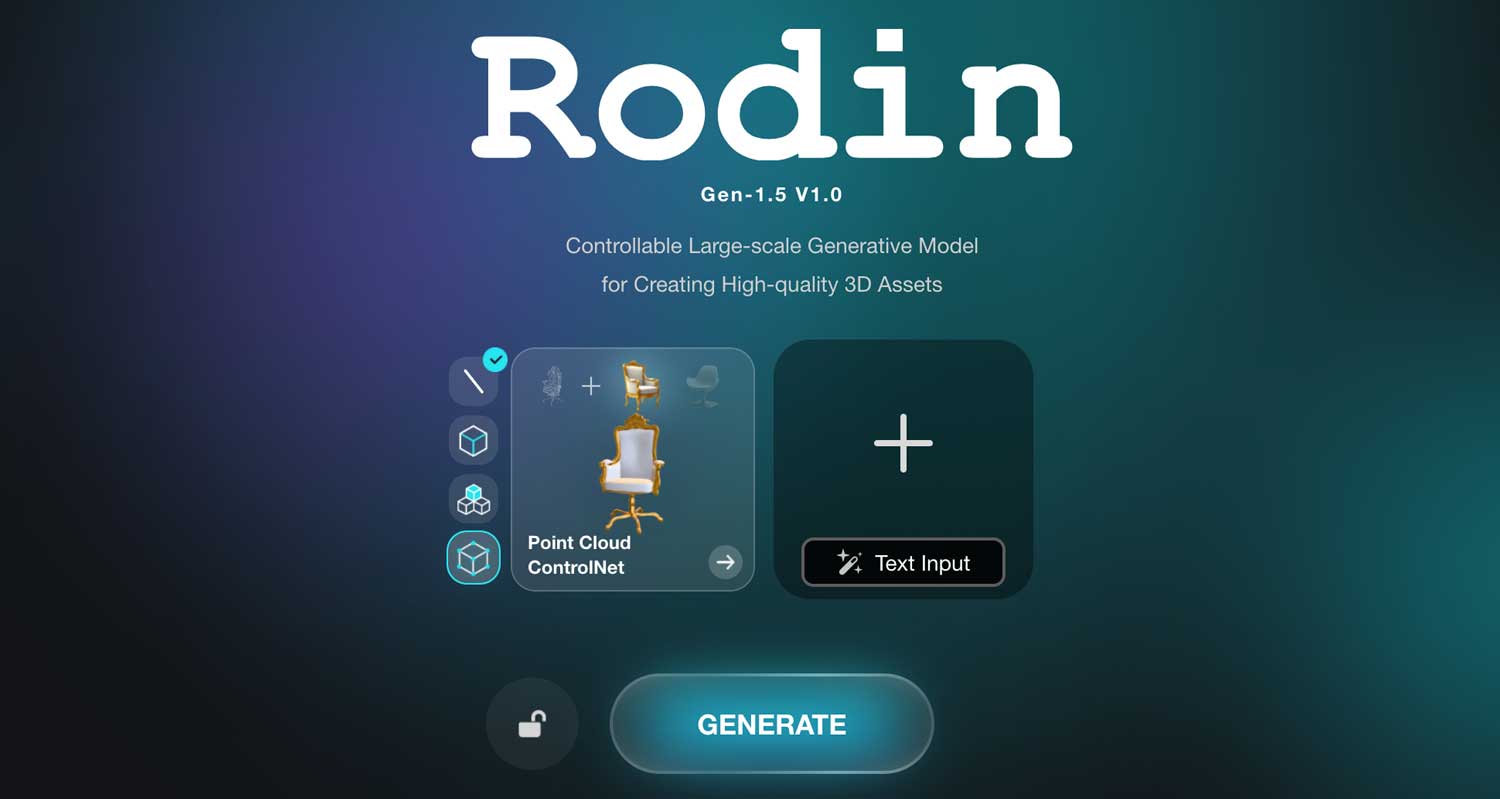
When the task involves photorealistic virtual humans, Rodin AI is the definitive choice. Industry analysis from RapidDirect specifically describes its output as "unmatched" for hyper-realistic character generation, and our testing confirms that assessment. The platform excels at lifelike human models in ways that outperform every competitor we evaluated.
Rodin is part of the larger Hyper3D platform, which means it comes with a complete production pipeline: rigging, animation, remeshing, and texture generation are all included. That makes it a comprehensive solution for character artists who need more than just a static mesh. It supports both multi-image and single-image input, giving artists flexibility in how they approach each project.
The gaming and film industries are the primary users of Rodin, and for good reason. When a project requires realistic human characters, the quality difference is immediately visible. It is not the cheapest option on this list, but for character work specifically, the investment is justified.
5. Hunyuan3D (Tencent AI Lab)
Hunyuan3D represents Tencent's serious investment in AI 3D generation, and the results speak for themselves. The platform carries a 4.5/5 rating and excels at organic shapes, characters, and smooth-surfaced objects with exceptionally clean geometry that requires minimal post-processing.
The most compelling aspect of Hunyuan3D for technical users is its self-hosted option. It is the best free self-hosted solution available, offering powerful and unlimited generation for engineers with GPU hardware. The catch is that it requires technical setup and offers no managed support, so it is not for casual users. For teams with the expertise to deploy it, the cost savings are substantial.
Tencent has positioned Hunyuan3D primarily for the Chinese gaming and animation industries, where it is widely adopted. The company offers enterprise-level support with custom solutions for large teams, and continued investment suggests the platform will keep improving. It is less suitable for mechanical and product modeling compared to specialized tools, but for organic assets, it is exceptional.
6. 3D AI Studio
3D AI Studio earns the highest user rating on this list at 4.8/5, and it holds the Editor's Choice designation from 3DAIStudio.com. The platform's defining feature is multi-model access: it provides several AI models under a single subscription, which eliminates the need for multiple tool subscriptions. Pricing ranges from $19 to $29 per month.
The full pipeline includes rigging, animation, remeshing, and texture generation, with support for both multi-image and single-image inputs. Free tools such as Remesh, Texture AI, and LOD Generation add significant value, particularly for developers who need optimized assets for real-time applications.
For users who want multiple AI models and a complete workflow under one roof, 3D AI Studio is the most versatile option available. The platform is newer than some competitors, so its track record is shorter, but the feature set and user satisfaction numbers are compelling.
7. Kaedim
Kaedim takes a fundamentally different approach from the fully automated tools on this list. It combines AI generation with human-in-the-loop quality assurance, meaning every model passes through human artist review before delivery. This hybrid model ensures production-ready output that meets professional studio standards.
The tradeoff is speed. Turnaround times range from 1 to 24 hours depending on complexity, which is dramatically slower than the 20 to 60 second generation times of tools like Tripo. For high-stakes production work, however, the quality assurance justifies the wait. Game studios and professional development pipelines are the primary users, and the platform excels at 2D-to-3D conversion with CAD tool integration.
Kaedim carries a 4.4/5 rating on Capterra, with plans starting at $20 to $25 per month. If your workflow demands guaranteed quality over raw speed, Kaedim is the safest choice on this list.
8. Luma AI
Luma AI takes a completely different approach to 3D generation. Instead of text or image prompts, it uses photogrammetry to create photorealistic 3D models from 2-minute smartphone videos. This makes it the most accessible tool for digitizing real-world objects, and the quality output from simple video inputs is genuinely impressive.
The platform's Genie feature adds text-to-3D generation, but the core strength remains real-world object capture. For e-commerce, virtual production, and any application requiring accurate digital replicas of physical items, Luma is invaluable. The free tier makes it the best option for hobbyists and learning, with Pro pricing at $29 per month for those who need more capacity.
Luma democratizes 3D modeling in a way that few tools do. You do not need specialized hardware, artistic skill, or technical expertise. A smartphone and a short video are sufficient to produce production-ready models.
9. Spline AI

Spline AI is the best browser-based solution on this list, designed specifically for web developers and designers creating interactive 3D experiences. It carries a 4.6/5 rating on G2 and offers a free tier, with Pro pricing starting at just $7 per month, making it the most affordable professional option we evaluated.
The platform requires no heavy software installation and features a clean interface with a short learning curve. Export formats include GLB, GLTF, USDZ, and code export options, which makes it easy to integrate into web projects. Real-time collaboration is built in, so teams can work on scenes together.
Spline is not suitable for highly detailed production assets or complex CAD modeling. It offers less advanced control than dedicated tools. But for simple scenes and interactive web visuals, it is hard to beat for ease of use. The low entry price makes it an excellent starting point for beginners.
10. TRELLIS 2 (Microsoft Research)
TRELLIS 2 closes out our list as the most significant open-source option in 2026. Microsoft Research's contribution to the AI 3D space introduced groundbreaking Gaussian Splatting output capabilities, representing a major step forward in democratizing AI 3D generation.
As an open-source tool, TRELLIS 2 offers unlimited free use for researchers and developers with technical expertise. That makes it the best free open-source option available, though it requires technical setup and is not user-friendly in the way commercial tools are. The learning curve is steep, but the control and cost savings are unmatched.
The release of TRELLIS 2 signals a broader 2026 trend toward finishing pipelines, including retopology, UV mapping, and conversion, rather than just raw mesh generation. For researchers and developers who want maximum control without cost barriers, TRELLIS 2 is a critical tool.
Related Posts



2 Comments
Join the discussion and share your thoughts