Top 10 Best Biotech Hubs In USA 2026

Table of Contents
The American biotech industry remains the global benchmark, and the top 10 best biotech hubs in the USA for 2026 are defined by a mix of academic firepower, venture capital density, federal research proximity, and specialized manufacturing capacity. According to Genetic Engineering & Biotechnology News (GEN) annual "Top 10 U.S. Biopharma Clusters" rankings, the established coastal giants continue to lead, but the gap between tiers is narrowing as regions like Philadelphia and Chicagoland invest heavily in lab space and startup infrastructure.
Our analysis draws on the 2026 GEN cluster rankings, Harba's 2026 biopharma hub analysis, and supplemental data from R&D Partners, Fierce Biotech, and ClinLab Solutions Group. The order below reflects those published rankings, with each entry enriched by employment data, institutional anchors, and sector specializations that matter to researchers, founders, and job seekers planning their next move.
How We Ranked These
We built this list primarily on GEN's 2026 U.S. Biopharma Clusters rankings, which weigh NIH funding, venture capital investment, lab space, patents, and company density. Where GEN and Harba diverged, we deferred to GEN for positions one through eight and Harba for nine and ten, matching the source each ranking drew from. We also factored in academic anchor strength, big-pharma presence, and cost-of-living pressure on talent recruitment. No weighted scoring tables here, just the published consensus from the industry's leading trade publications.
The Top 10 Best Biotech Hubs In USA 2026:
1. Boston/Cambridge, Massachusetts
Boston/Cambridge has held the number one spot in GEN's annual biopharma cluster rankings for multiple consecutive years, including 2026. Massachusetts institutions pull in roughly $10 billion or more in annual NIH funding, a figure no other state comes close to matching on a per-capita basis.
The region's anchor institutions read like a who's who of biomedical research: Harvard University, MIT, the Broad Institute of MIT and Harvard, and Massachusetts General Hospital. Kendall Square in Cambridge, often called "the most innovative square mile on the planet," hosts major headquarters and R&D sites for Moderna, Biogen, Vertex Pharmaceuticals, and Novartis.
What keeps Boston on top is the compounding effect of its ecosystem. A founder who spins out of MIT can walk to a dozen venture firms, lease lab space in Somerville or the Seaport, and recruit postdocs from any of five teaching hospitals within a subway ride. Lab vacancy rates in Cambridge have historically run below 5%, and asking rents remain the highest in the country, which tells you everything about demand.
2. San Francisco Bay Area, California
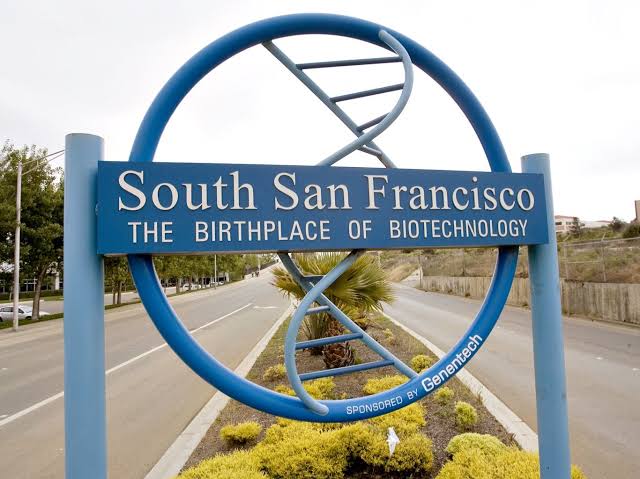
The Bay Area ranks second in GEN's 2026 cluster list, and it leads the nation in one metric that matters enormously to early-stage companies: share of U.S. biotech venture capital. In a typical year, the region captures more than 30% of national life-sciences VC dollars.
South San Francisco, nicknamed "Biotech Bay," is home to Genentech (a Roche subsidiary), Amgen, and hundreds of smaller firms packed along the Grand Avenue corridor. The broader region draws talent from Stanford University, UCSF, and UC Berkeley.
Where the Bay Area separates itself from Boston is the tech-AI convergence. Drug discovery startups here routinely partner with machine learning firms in Palo Alto and Mission Bay, applying computational approaches to target identification and clinical trial design. The tradeoff is cost. Lab space constraints and some of the highest real estate prices in the world keep the region at number two rather than number one, despite its capital advantages.
3. BioHealth Capital Region (Maryland, Virginia, Washington D.C.)
No other cluster in the country sits closer to the levers of federal health policy. The BioHealth Capital Region, spanning Maryland, Virginia, and the Washington, D.C. metro, ranks third in GEN's 2026 list, with more than 500 life-science companies operating across the corridor.
The National Institutes of Health campus in Bethesda and FDA headquarters in White Oak give companies here something money can't easily buy: proximity to regulators and program officers. AstraZeneca's U.S. headquarters in Gaithersburg, MedImmune, and United Therapeutics anchor the private sector, while a fast-growing cell-and-gene-therapy corridor has taken shape along I-270.
Maryland ranks among the top states for NIH funding per capita, and the region's federal lab footprint provides a steady pipeline of translational research. The main constraint is private venture capital, which runs lighter here than in Boston or the Bay Area.
4. San Diego, California

San Diego holds the fourth spot in GEN's 2026 rankings with roughly 1,200 life-science companies clustered across Torrey Pines, UTC, and the Sorrento Mesa corridor. The region's specialty is genomics and diagnostics, anchored by Illumina, the sequencing giant that has shaped the entire precision medicine field.
UC San Diego, Scripps Research, and the Salk Institute supply the academic pipeline, and the region produces one of the highest concentrations of life-science patents per capita in the United States. Pfizer's oncology unit and Neurocrine Biosciences are among the larger employers.
Cost of living is a genuine recruiting advantage. San Diego remains meaningfully cheaper than Boston or San Francisco, which helps mid-sized companies attract senior scientists who've grown tired of Bay Area housing math. The ecosystem is slightly smaller than the top three, but few regions match its research depth per square mile.
5. Research Triangle Park, North Carolina
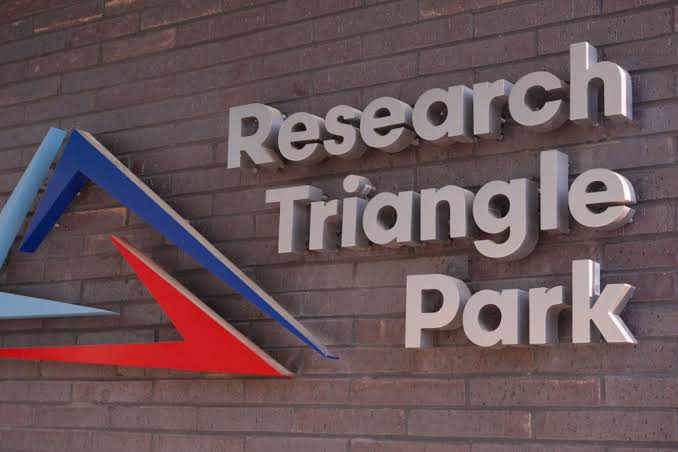
Founded in 1959, Research Triangle Park is one of the oldest planned research parks in the country and still ranks fifth in GEN's 2026 cluster list. More than 300 life-science companies operate within RTP and the surrounding Raleigh-Durham-Chapel Hill metro.
Three anchor universities, Duke University, UNC-Chapel Hill, and NC State, feed the talent pipeline. Biogen, Novo Nordisk, Eli Lilly, and Pfizer all maintain major operations here. North Carolina consistently ranks in the top five states for NIH funding and has built out substantial biomanufacturing capacity.
Vaccine and biologics manufacturing is the region's calling card. When companies need large-scale production capacity, RTP often wins the site selection battle on cost and workforce availability. Venture capital density lags the coastal hubs, but the manufacturing base gives the region a resilience that pure R&D clusters lack.
6. Greater Philadelphia, Pennsylvania

Philadelphia ranks sixth in GEN's 2026 list and has earned the nickname "Cellicon Valley" for its concentration of more than 30 cell and gene therapy companies. The University of Pennsylvania and Children's Hospital of Philadelphia (CHOP) are the twin engines behind that specialization.
Spark Therapeutics, a CHOP spinout acquired by Roche, proved the model. Incyte and Century Therapeutics have built on it, and the region's venture ecosystem has grown accordingly. Penn's gene therapy program, led by researchers who pioneered CAR-T and AAV vector work, remains one of the most cited in the field.
Geography helps too. Philadelphia sits roughly halfway between New York and Washington, D.C., giving companies access to both financial capital and federal relationships. The total ecosystem is smaller than the top five, but the cell and gene therapy niche is arguably the deepest in the world.
7. New York/New Jersey Metro Area
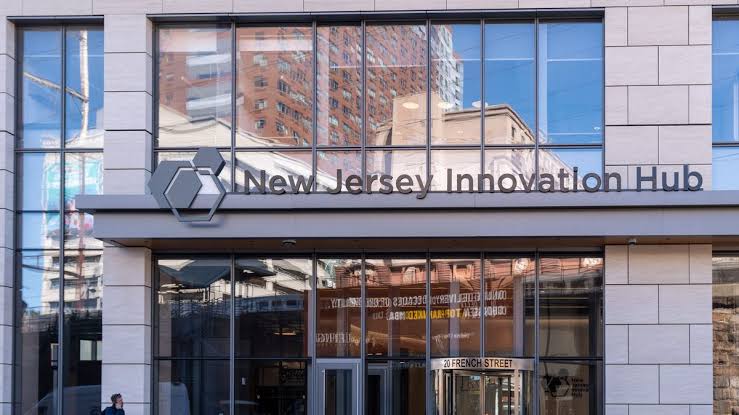
The New York/New Jersey metro ranks seventh in GEN's 2026 clusters and holds the largest concentration of big pharma headquarters in the United States. Merck operates from Rahway, New Jersey, Johnson & Johnson from New Brunswick, and Bristol Myers Squibb and Pfizer both maintain major presences across the corridor.
New Jersey remains one of the top states for pharmaceutical employment and R&D spending, a legacy of the industry's 20th-century roots there. New York City's academic ecosystem, including Memorial Sloan Kettering Cancer Center, Columbia University, NYU, and Rockefeller University, has fueled a startup scene concentrated around the Alexandria Center for Life Science on the East Side.
The historical weakness has been early-stage biotech venture capital, which has trailed Boston and San Francisco. That's changing as NYC-based funds and family offices take a larger role in Series A rounds, but the region still leans on its big-pharma base more than its startup pipeline.
8. Los Angeles/Orange County, California
Los Angeles and Orange County rank eighth in GEN's 2026 cluster list, with LA-area institutions receiving more than $1 billion in annual NIH funding. UCLA, USC, Cedars-Sinai Medical Center, and City of Hope form the academic backbone.
Orange County's Irvine and Costa Mesa corridors host a growing medical device and biotech cluster, while LA's scene has expanded through incubators like LABioMed and the Lundquist Institute at Harbor-UCLA. Recent investments in lab space have accelerated the region's rise.
The region's diversity and sheer patient population, more than 18 million people across the metro, make it attractive for clinical trials. That's a real competitive advantage for companies running Phase II and Phase III studies, even if the early-stage cluster remains less dense than the top seven.
9. Seattle, Washington
Seattle ranks ninth among U.S. biopharma hubs in Harba's 2026 analysis, with more than 100 biotech companies operating across the metro. The city's global reputation rests on immunotherapy and cell therapy research.
The Fred Hutchinson Cancer Center, University of Washington, and Seattle Children's form the research core. The Bill & Melinda Gates Foundation, headquartered in Seattle, funds a substantial share of global health biotech work and has seeded dozens of local startups. Bristol Myers Squibb's presence, built through its acquisition of Juno Therapeutics, anchors the corporate side, alongside Adaptive Biotechnologies and Seattle Genetics, now part of Pfizer.
Molecular biology and cell therapy are the differentiators. The overall ecosystem is smaller than the top-tier hubs, and venture capital runs lighter, but the research base punches well above the region's size.
10. Chicagoland, Illinois

Chicagoland rounds out the top 10 in Harba's 2026 analysis, home to Abbott and AbbVie, both headquartered in Lake County, plus more than 400 life-science firms across the metro. The big-pharma base is among the strongest in the Midwest.
Northwestern University, the University of Chicago, and the University of Illinois Chicago supply talent and clinical research capacity. The startup scene has concentrated in Fulton Market and the Illinois Medical District, supported by incubators including Portal Innovations and MATTER.
What makes Chicagoland a rising contender is cost. Lab space and salaries run well below coastal levels, and the region's central location puts it within a few hours' flight of every major U.S. biotech hub. The early-stage ecosystem is still thinner than the nine regions above it, but the infrastructure investments of the past five years have closed much of the gap.
Related Posts



0 Comments
Join the discussion and share your thoughts
No Comments Yet
Be the first to share your thoughts on this article!