Top 10 Best Email Follow-Up Tools In 2026


Table of Contents
Email follow-up tools have become the backbone of modern sales outreach, and the market in 2026 reflects just how far the category has come. The best email follow-up tools now combine AI-powered personalization, conditional logic, and deliverability protection in ways that were unheard of just a few years ago. We evaluated dozens of platforms across performance, pricing structure, user sentiment, and feature depth to build this ranking. Here are the ten tools that earned a spot.
How We Ranked These
Our evaluation weighed six factors: deliverability infrastructure, automation sophistication, pricing transparency, user reviews on G2 and Capterra, scalability for agencies versus solo operators, and the quality of AI features. We prioritized tools that decouple cost from volume, since per-seat pricing punishes growing teams. We also gave extra credit to platforms with built-in email warmup and conditional follow-up logic, as these directly impact campaign success rates. Data comes from vendor documentation, verified user reviews, and our own testing of free trials.
The 10 Best Email Follow-Up Tools 2026:
1. Salesforge
Salesforge takes the top spot for a simple reason: it combines AI-written follow-ups with unlimited mailbox capacity and LinkedIn integration inside a single sequence. Most tools make you choose between AI personalization or multichannel outreach. Salesforge does both without requiring a second subscription.
The conditional follow-up logic is the standout feature. When a recipient opens an email but doesn't click, the system adjusts the next message accordingly. If they click but don't reply, it sends something different. This behavior-based branching keeps campaigns relevant without manual intervention.
Pricing starts at $40 per month with unlimited mailboxes, which is unusual at this level. The flat model means high-volume teams don't get punished for scaling. Salesforge's AI personalization engine also maintains sender reputation by avoiding the repetitive language patterns that trigger spam filters. A free trial is available, and every plan tier includes all features, which is refreshing in a market where vendors love to gate basic functionality.
2. Instantly
Instantly ranks second because of its flat-fee pricing that separates cost from volume. That might sound like a small detail, but for agencies running 10 to 150 or more sending inboxes, it's the difference between a profitable campaign and a money pit.
The platform includes unlimited email warmup, which builds domain reputation gradually and protects deliverability. Inbox rotation spreads sending across multiple accounts to reduce spam flags. Automated follow-up sequences come with conditional logic, so you can branch based on opens, clicks, or replies.
Instantly also bundles email verification and a built-in lead finder, which eliminates the need for separate tools in your stack. The deliverability suite monitors inbox placement and automatically adjusts sending patterns when engagement drops. With a 4.6 out of 5 rating on G2 and pricing around $37.60 per month on annual billing, it's a strong value for high-volume senders. The main limitation is that it's not ideal for small teams sending a few hundred emails a week, where the feature set feels like overkill.
3. Smartlead
Smartlead earns the third spot for its agency-focused approach. The platform manages unlimited mailboxes and offers triggered workflows that respond to prospect behavior in real time. That's not just open tracking; it's full sub-sequence logic that creates nuanced outreach paths based on how recipients interact.
Built-in email warmup comes standard, and rotation across unlimited sending accounts keeps your domain healthy. The unified inbox is a practical touch, letting you manage replies across every account from one place. Automatic bounce handling and spam complaint monitoring round out the deliverability-first philosophy.
At $32 per month for the entry point, Smartlead undercuts many competitors while offering substantial volume capacity. The platform is best suited for agencies that need to scale multiple client campaigns without multiplying their tool costs. For solo operators, the feature set might feel heavy, but the pricing still makes it worth considering.
4. Reply.io

Reply.io takes fourth place for its multichannel capabilities. The platform extends beyond email to LinkedIn, SMS, and phone calls within unified sequences. If your outreach strategy involves touching prospects across multiple channels, this is the tool that makes it manageable.
Trigger-based follow-ups with AI reply handling automate response management across all channels. The system can detect whether a reply is positive, negative, or neutral and route it accordingly. Email Volume plan pricing sits at $49 per user per month on annual billing, while the Professional Multichannel tier runs $89 per user per month.
There are some add-on costs to note. LinkedIn automation adds $69 per account, and calls and SMS cost $29 per account. The Jason AI SDR feature, which provides fully automated sales development, starts at $500 per month and targets enterprise teams. With a 4.5 out of 5 G2 rating, Reply.io is a solid choice for mid-market teams with 20 or more users, though the per-seat pricing adds up quickly.
5. Woodpecker

Woodpecker ranks fifth for its deliverability-first conditional follow-ups and per-slot pricing model. The key distinction here is that you pay for prospect slots, not seats. Your team size doesn't increase your bill, which makes it attractive for growing sales departments.
The platform automatically stops follow-up sequences when a prospect replies. That sounds basic, but many tools still send awkward follow-ups to people who already responded. Woodpecker prevents that entirely, preserving relationships and reducing annoyance.
Unlimited email accounts with inbox rotation come free, along with email verification and warmup. The EU hosting in Poland is a differentiator for European B2B teams concerned about GDPR compliance. The Starter plan costs $29 per month for 500 prospects with unlimited email accounts and team members. Higher volumes require more expensive plans, which is worth factoring into your decision. The 4.5 out of 5 G2 rating from 105 reviews reflects consistent satisfaction among users.
6. Saleshandy
Saleshandy takes the sixth position with unlimited follow-up steps and sub-sequences at a flat price. The platform is particularly strong for startups, agencies, SMBs, and solopreneurs who need sophistication without enterprise pricing.
Conditional branching automatically skips follow-ups once a prospect replies, and sender rotation across multiple email accounts reduces spam risk. The platform integrates lead finder credits into its plans, with 100 credits on Starter and 500 on PRO. Merge tags and spintax support personalized content at scale.
The Outreach PRO plan at $74 per month includes 125,000 emails monthly, while Scale plans reach 350,000 emails at $219 per month. The sub-sequence feature enables logical conditional follow-ups based on recipient interactions, which is a differentiator at this price point. With a 4.6 out of 5 G2 rating from over 665 reviews and 4.5 out of 5 on Capterra from 125 reviews, Saleshandy has the user base to back its claims.
7. Lemlist
Lemlist ranks seventh for its visual personalization features that no other tool matches. Custom screenshots, personalized landing pages, video thumbnails, and dynamic images make outreach stand out in crowded inboxes. If your campaigns depend on visual differentiation, Lemlist is the clear choice.
The platform includes email warmup, a sequence builder with conditional logic, and multichannel steps including LinkedIn. AI-powered reply detection automatically identifies and categorizes responses, enabling appropriate follow-up actions without manual sorting.
Pricing starts at $55 per user per month on annual billing, with a 4.6 out of 5 G2 rating. The per-seat model can become expensive for larger teams, and when visual features aren't essential, the core sequencing is comparable to cheaper alternatives. For creative outreach that demands visual impact, the premium is justified. For straightforward follow-up sequences, you can save money elsewhere.
8. Snov.io
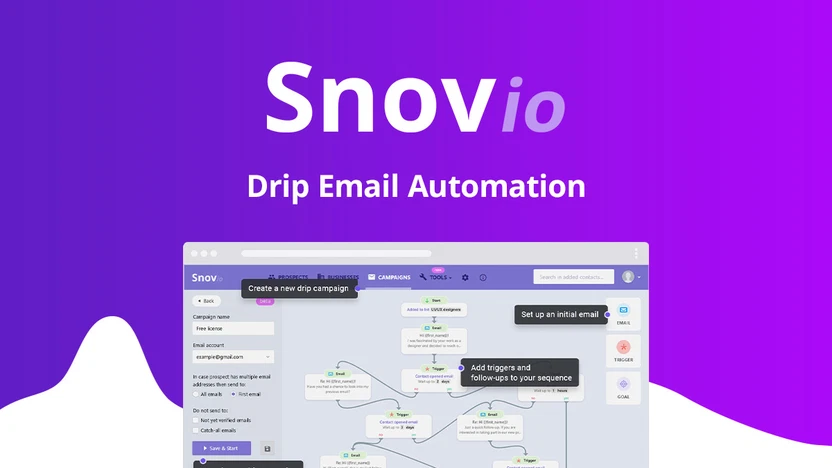
Snov.io takes eighth place for its logical, trigger-based follow-ups combined with a built-in CRM and comprehensive lead generation tools. The platform lets you build robust sub-sequences for conditional follow-ups based on how recipients interact with your emails.
Unlimited email accounts with warmup come standard, along with advanced deliverability features. AI-powered personalization tools help craft contextually relevant messages, and the built-in CRM tracks all prospect interactions in one place. The Growth plan costs $30 per month, while Hypergrowth runs $77.60 per month and unlocks complete follow-up features including sub-sequences.
The 4.6 out of 5 G2 rating from over 445 reviews reflects solid performance. However, agencies must pay $76 per month for each added client, which is a significant cost consideration. Some users find the UI outdated, and high-tier plans at $286.30 per month may be overkill for small teams. Snov.io is best for businesses that want an all-in-one lead generation and follow-up solution.
9. Mixmax

Mixmax ranks ninth for its deep Gmail and Outlook integration. Rather than forcing users to learn a new platform, it enhances existing workflows directly within the inbox interface. For teams already living in Gmail, this reduces friction significantly.
The tool provides email tracking, scheduling, and automated follow-up sequences without leaving your inbox. Conditional follow-up logic, meeting schedulers embedded in emails, and templates with merge fields that pull contact properties from your CRM all work natively. Real-time notifications track opens, clicks, and document views for engagement monitoring.
The per-seat pricing model works well for solo Gmail users and small teams. However, Mixmax caps out for high-volume sending scenarios. Agencies scaling large campaigns will hit limits, and the platform lacks the warmup infrastructure that dedicated follow-up tools provide. For small teams that want to enhance their existing email workflow, Mixmax is a practical choice.
10. HubSpot Sales Hub

HubSpot Sales Hub closes our list for its deep CRM integration and sequence automation based on CRM properties, list membership, or form submissions. If your business already runs on HubSpot, the Sales Hub is the natural follow-up tool because it eliminates data sync issues entirely.
The platform integrates with Gmail and Outlook, logging emails and creating CRM records from inbox activity. Meeting schedulers embedded in emails allow direct booking, and reporting dashboards show sequence performance, email metrics, and individual rep activity. Workflow builders support multi-path branching for complex follow-up scenarios.
The free plan includes 2,000 emails per month with limited templates and HubSpot branding. Paid plans start at $11 per month, though advanced autoresponder features only unlock on those tiers. The 4.4 out of 5 G2 rating and 4.5 out of 5 Capterra score reflect general satisfaction. The steep price jump when upgrading to paid tiers is the main drawback. For HubSpot users, the integration value outweighs the cost. For everyone else, dedicated follow-up tools offer more features for the same money.
The best email follow-up tool for your team depends on your volume, channel strategy, and budget. Salesforge leads for AI-driven sequences with LinkedIn integration. Instantly and Smartlead dominate for agencies scaling multiple inboxes. Woodpecker and Saleshandy offer exceptional value for smaller teams. Lemlist wins on visual personalization. HubSpot Sales Hub makes sense if you're already in the HubSpot ecosystem.
Whatever you choose, prioritize tools with built-in email warmup and conditional follow-up logic. These two features have the biggest impact on deliverability and engagement. The rest is optimization.
Related Posts


0 Comments
Join the discussion and share your thoughts
No Comments Yet
Be the first to share your thoughts on this article!