Top 10 Best Cosmetic Companies In South Korea 2026

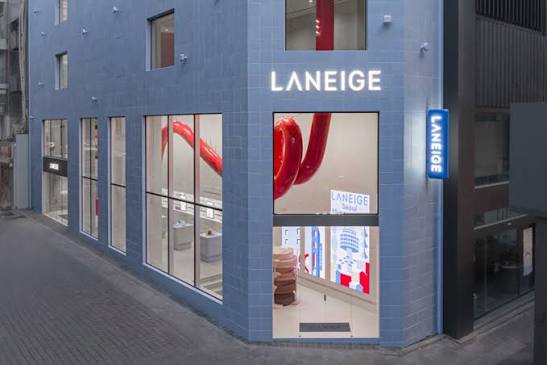
Table of Contents
South Korea's cosmetics industry remains one of the most dynamic in the world, and the top 10 best cosmetic companies in South Korea for 2026 reflect a market where conglomerate scale, luxury brand prestige, and viral global hits all compete for position. The sector generated export records through 2024 and 2025, with Korean beauty products reaching markets from Tokyo to Texas. Our ranking weighs company-level revenue against brand-level recognition, category leadership, and international footprint.
How We Ranked These
This list blends two measurement layers. First, company scale: annual cosmetics revenue drawn from 2024 full-year financial reports, projected toward 2026. Second, brand prominence: consumer brand-love survey placements, duty-free and travel-retail performance, e-commerce rankings on platforms like Amazon and Sephora, and category leadership such as derma-cosmetics or cushion compacts. Where a parent company and its flagship brand both earned a place, we treated them as separate entries because their market roles differ. Figures are approximate and reflect the most recent available data.
The Top 10 Best Cosmetic Companies In South Korea 2026:
1. Amorepacific Corporation
Founded in 1945, Amorepacific is South Korea's largest beauty conglomerate and consistently ranks among the world's top 10 beauty companies. The group posted roughly ₩3.9 trillion (about US$2.9 billion) in annual revenue in 2024, according to its own financial disclosures, making it the anchor of the entire Korean market.
What separates Amorepacific from every domestic rival is breadth. Its portfolio runs from luxury hanbang skincare (Sulwhasoo) to hydration-focused mass-premium (Laneige), prestige makeup (HERA), science-led cosmeceuticals (IOPE), nature-inspired mass retail (Innisfree), and youth-oriented color cosmetics (Etude). Few beauty groups anywhere operate across that full spectrum.
The company's research operation underpins much of this. Its Jeju Beauty Campus, built around green tea cultivation on Jeju Island, and its long-running ginseng science program feed ingredient innovation across multiple brands. Distribution reaches Asia, North America, and Europe, with duty-free and travel retail providing a significant revenue channel.
2. LG H&H (LG Household & Health Care - Cosmetics Division)
LG H&H is Amorepacific's principal domestic challenger, and its cosmetics division generated approximately ₩2.8 trillion (US$2.1 billion) in 2024 revenue. The beauty unit sits alongside household goods and beverage divisions, but it remains a core profit driver for the group.
The portfolio leans prestige. The History of Whoo, O HUI, SU:M37, and Belif anchor the luxury and premium tiers, while The Face Shop covers mass retail. LG H&H's strength in duty-free and Chinese cross-border commerce has been central to its cosmetics performance, though that channel's volatility in recent years has tested the division. For 2026, the company's premium-heavy positioning keeps it firmly at number two on revenue scale.
3. Sulwhasoo
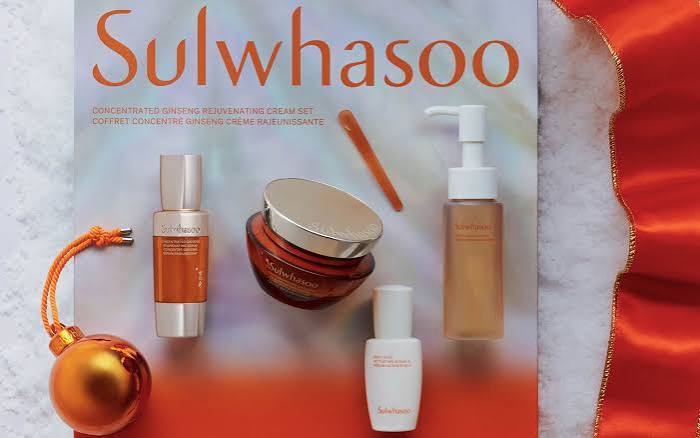
Launched in 1966, Sulwhasoo is Amorepacific's crown jewel and Korea's most iconic single luxury beauty brand. It is consistently ranked the most-loved Korean cosmetic brand in consumer surveys, and its hanbang (Korean herbal medicine) identity, built around ginseng as the signature ingredient, gives it a story no global competitor can easily replicate.
The First Care Activating Serum is the brand's global hero product and a perennial best-seller in duty-free and overseas prestige markets. Sulwhasoo's positioning at luxury price points comparable to Western prestige houses has made it the standard-bearer for Korean beauty's premium ambitions. Its separate entry here reflects brand-level prominence rather than corporate scale.
4. The History of Whoo
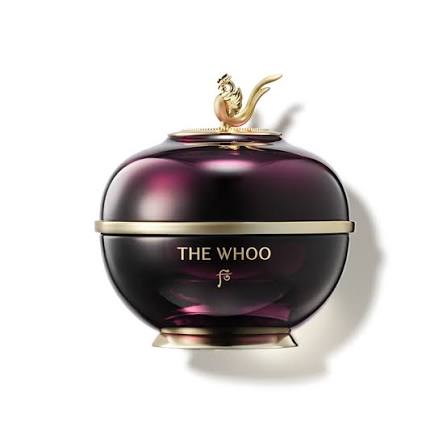
LG H&H's answer to Sulwhasoo arrived in 2003, and The History of Whoo has since become one of Korea's top-selling luxury skincare lines. Royal-court-inspired packaging and herbal formulations target mature, luxury-oriented consumers, with the Cheongidan and Bichup lines serving as consistent best-sellers.
The brand's outsized role in Korean duty-free and Chinese cross-border commerce is what earns it this position. At its peak, travel retail demand for Whoo products made the brand a high-margin engine for LG H&H. That concentration carries risk, and the duty-free channel's post-pandemic recalibration has affected the brand's trajectory. Even so, few Korean luxury lines command comparable price points and consumer loyalty.
5. COSRX
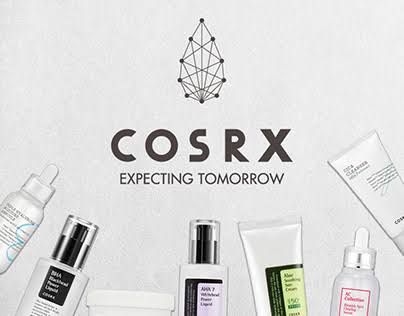
Founded in 2013, COSRX represents a different model entirely: mid-priced, ingredient-forward skincare built for global e-commerce. Its Advanced Snail 96 Mucin Essence ranks among the top-selling K-beauty products worldwide, and its acne patches became a staple in Western markets long before most Korean brands had figured out Amazon.
The brand's rise tracks the "ingredient-led" wave in K-beauty, where consumers research actives and formulation lists rather than buying on packaging alone. COSRX priced itself accessibly and formulated gently, and that combination made it one of the most successful Korean beauty names on Amazon and in US retail. For a company barely a decade old, its global footprint is remarkable, and it earns this spot on growth and cult status rather than legacy.
6. Laneige
Launched in 1994 and named after the French word for snow, Laneige built its reputation on hydration. The Water Sleeping Mask and Lip Sleeping Mask turned into viral global hits, with the lip mask in particular becoming a fixture in Western beauty routines and a recurring social media favorite.
Sephora's North American rollout gave Laneige a mainstream retail platform that most Korean brands lack, and the brand has converted that exposure into sustained sales growth across Asia and the US. Its mass-premium pricing keeps it accessible while preserving margin. Laneige ranks here for broad international recognition and the rare ability to produce repeat hero products rather than one-off viral moments.
7. Dr. Jart+

Founded in 2004, Dr. Jart+ built its identity on dermatologist-inspired positioning, blending clinical credibility with K-beauty aesthetics. The Cicapair line, built on centella asiatica, is a global best-seller, and the brand's BB creams helped define the category internationally.
Estée Lauder Companies acquired Dr. Jart+ in 2019, a deal that gave the brand global distribution infrastructure and validation from the Western prestige establishment. That acquisition remains one of the clearest signals that Korean derma-cosmetics had become a serious international category. The brand's clinical positioning differentiates it from the hanbang and hydration stories that dominate this list.
8. Innisfree
Launched in 2000, Innisfree is Amorepacific's nature-inspired mass brand, built around Jeju Island ingredients like green tea and volcanic clay. It popularized affordable, eco-themed K-beauty and expanded aggressively across Asia with standalone stores, becoming one of the most recognizable Korean beauty names in markets like China and Southeast Asia.
The retail story has shifted. Innisfree restructured its store footprint in recent years as offline traffic declined, a correction that affected the broader Korean single-brand shop model. Brand awareness remains high, and its role in exporting the K-beauty concept abroad is difficult to overstate. It ranks here on recognition and historical influence rather than current momentum.
9. HERA

HERA, launched in 1995, is Amorepacific's prestige makeup and fashion-beauty brand. It is known for sophisticated color cosmetics, cushion compacts, and celebrity-driven marketing that positions it within Seoul's fashion culture rather than the skincare-first mainstream.
The brand competes in the high-end makeup segment, popular among younger luxury consumers and in duty-free channels. Its "Seoul chic" identity has traveled internationally, and HERA has expanded abroad with a modern, fashion-forward presentation. Color cosmetics is a tougher category than skincare for Korean brands overseas, but HERA's premium positioning gives it a durable niche.
10. IOPE
Launched in 1996, IOPE positioned itself as a "cosmeceutical" brand, science-driven and dermatologically serious. Its place in history is secure: the brand is widely credited with launching the cushion compact in 2008, a format that transformed makeup packaging globally and spawned imitators across every major cosmetics company.
IOPE's skincare lines target anti-aging and dermatological concerns, keeping it in the prestige tier domestically. Its international presence is smaller than Laneige's or Sulwhasoo's, which is why it sits at number ten, but the innovation legacy and enduring domestic reputation justify inclusion. The cushion compact alone reshaped how the world applies foundation.
South Korea's cosmetics hierarchy in 2026 is stable at the top and fluid below it. Amorepacific and LG H&H hold the scale, Sulwhasoo and The History of Whoo carry the luxury flag, and COSRX, Laneige, and Dr. Jart+ demonstrate how global retail and acquisition can propel brands past larger domestic rivals. Our ranking draws on 2024 financial data projected forward, consumer brand-love surveys, and retail performance, and we expect the balance between conglomerate scale and viral global reach to define the next round of competition.
Related Posts


0 Comments
Join the discussion and share your thoughts
No Comments Yet
Be the first to share your thoughts on this article!