Top 10 Best Automated Trading Platforms In South Africa 2026

Table of Contents
Algorithmic trading has moved from the margins to the mainstream of South African retail investing, and the platforms available to local traders in 2026 reflect that shift. This guide to the best automated trading platforms in South Africa covers the software and brokers that actually let you build, test, and deploy trading robots under the oversight of the Financial Sector Conduct Authority (FSCA). We weighed broker availability across FSCA-regulated firms, the maturity of each platform's automation ecosystem, backtesting capability, scripting flexibility, and how well each option serves traders operating from Johannesburg, Cape Town, and Durban on local connectivity and rand-denominated accounts.
To build this ranking, we drew on 2026 reviews from ForexBrokers.com, BrokerChooser, BestBrokers, TradingPedia, and DailyForex, cross-checked against platform documentation from AvaTrade and NAGA. The strongest entries combine real automation depth (Expert Advisors, API access, or scripting languages) with the regulatory certainty South African traders need. Some platforms here are pure trading terminals; others are full brokers. We ranked them together because SA traders rarely use one in isolation - a MetaTrader account usually sits behind an FSCA-regulated broker, and a charting tool like TradingView often feeds orders into that same account. The list reflects that real-world workflow rather than a single product category.
One caveat worth stating upfront: automated trading carries real risk, and a platform's automation features do not guarantee profitable strategies. The FSCA does not approve individual trading algorithms, so due diligence on any Expert Advisor or bot remains the trader's responsibility.
The Best Automated Trading Platforms In South Africa 2026:
1. MetaTrader 5 (MT5)
MetaTrader 5 takes the top spot because it is the platform South African algorithmic traders are most likely to encounter at virtually every FSCA-regulated broker, including IG, AvaTrade, and FXCM. Automation runs through Expert Advisors written in MQL5, and the built-in Strategy Tester supports multi-currency, multi-threaded backtesting and optimization. That combination lets a trader stress-test a strategy across several instruments and timeframes at once rather than one symbol at a time.
MT5's edge over its predecessor is breadth. It handles forex, CFDs, and futures from a single terminal, and ships with an economic calendar that automated strategies can reference. For SA traders, the portability matters as much as the features: because so many local brokers offer MT5, a trader can move an EA between accounts without rebuilding it from scratch.
The MQL5 community is the other draw. A deep marketplace of paid and free EAs, indicators, and libraries means most traders start from existing code rather than a blank file. The trade-off is quality control - the MQL5 Market screens products but does not vet profitability, and a large share of commercial EAs underperform in live conditions.
2. MetaTrader 4 (MT4)
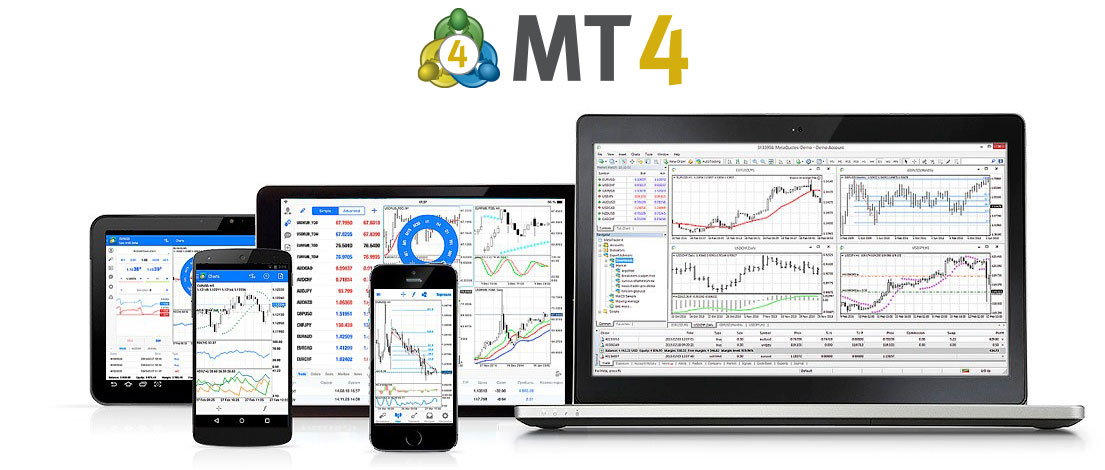
MT4 remains the most widely used retail automated trading platform globally and still dominates South African forex desks, even as MT5 gains ground. It runs Expert Advisors via MQL4, and its third-party EA library is arguably the largest in existence. Traders looking for a specific strategy - breakout, scalping, grid, or news-based - will usually find several ready-made options for MT4.
Its simplicity is both the appeal and the limitation. MT4 is lighter on system resources than MT5, which helps on older hardware, and its interface has barely changed in years, so experienced traders can operate it without relearning anything. But the platform lags MT5 on multi-asset support and backtesting depth, and it does not natively handle the broader instrument range modern algo traders want.
Most FSCA-regulated brokers still offer MT4 alongside MT5, so the choice often comes down to which EA library a trader depends on. Those running established MQL4 strategies have little reason to switch; those building new multi-asset systems should start on MT5.
3. IG (IG Group)

IG Group ranks as the strongest broker-level automation offering for South African traders in 2026. The firm is FSCA-regulated and combines API access for custom algorithmic strategies with ProRealTime and MetaTrader 4 integration. That multi-platform setup means a trader can develop in one environment and execute in another without leaving IG's ecosystem.
The API is the standout feature. It allows programmatic order placement and data access, which suits traders building strategies outside the constraints of a retail terminal. IG's charting and automation tools are professional grade, and the broker's regulatory standing gives SA clients a level of protection that offshore-only platforms cannot match.
IG was ranked a top forex broker for South Africa in 2026 by multiple review outlets, and the automation depth is a large part of why. The main friction is cost - spreads and commissions sit above budget brokers - which matters for high-frequency automated strategies where every basis point compounds.
4. FXCM
FXCM earns its place through a combination of FSCA regulation and a genuinely capable automation stack. The broker supports MetaTrader 4 with full Expert Advisor functionality and adds API access for traders who want to run custom algorithms. Advanced charting and trading tools round out the package.
Where FXCM distinguishes itself is platform reliability. Automated strategies live or die on execution quality, and FXCM's infrastructure is built for consistent fills. The broker was cited among the best regulated forex brokers in South Africa for 2026, and its toolset appeals to traders who want automation without abandoning a familiar terminal.
For SA algo traders, FXCM sits in a sweet spot: regulated locally, EA-compatible, and API-enabled. Traders weighing it against IG should compare execution costs on their specific instruments, since the two compete closely on features.
5. AvaTrade
AvaTrade offers the broadest multi-platform automation range of any broker on this list. South African clients get MT4 and MT5 (both supporting Expert Advisors), AvaOptions, WebTrader, the AvaTrade mobile app, and third-party copy trading integrations. That diversity lets a trader automate across forex, CFDs, and options from a single regulated account.
The copy trading angle deserves attention. For traders who want automated exposure without writing code, mirroring established strategy providers is a lower-barrier route into systematic trading. AvaTrade's FSCA regulation underpins all of it, which separates it from unregulated signal services that proliferate on social media.
The trade-off of platform breadth is that no single environment is as deep as a dedicated terminal. Traders who want maximum control will still gravitate to MT5; those who value flexibility and options access across several interfaces will find AvaTrade hard to beat.
6. Plus500

Plus500 is a multi-asset CFD broker regulated in South Africa, and it takes a different approach to automation. Its proprietary platform does not support third-party Expert Advisors like MT4 or MT5, but it builds automation and alerting directly into the interface - price alerts, automated order triggers, and streamlined trading tools.
That makes Plus500 a fit for a specific kind of trader: someone who wants systematic, rule-based execution without managing code or EA files. The interface is among the most intuitive in the market, and the FSCA regulation gives it credibility that offshore CFD platforms often lack.
The limitation is real, though. Traders running custom algorithms or complex multi-leg strategies will hit a ceiling quickly. Plus500 earns a top-10 spot on ease of use and regulatory standing, not on automation depth.
7. TradingView
TradingView is not a broker, but it has become the default development environment for a generation of South African algo traders. Pine Script lets users build and backtest strategies directly on charts, and webhook alerts can trigger automated order execution through integrations with FSCA-regulated brokers.
The community-driven indicator library is enormous, and the scripting language is approachable enough that traders without a software background can produce working strategies. Many SA traders run TradingView for research and signal generation, then route execution to a broker terminal.
The webhook automation is the key feature for this list. It bridges the gap between a charting tool and live execution, effectively turning TradingView into an automation layer. The caveat is that webhook-based execution depends on broker support and carries latency, so it suits swing and medium-frequency strategies better than high-frequency scalping.
8. NAGA

NAGA combines a modern proprietary platform (NAGA WebAPP) with support for MetaTrader and TradingView integration, giving SA traders automation options across several environments. Its integrated social and copy trading features let users automate by mirroring experienced traders rather than building strategies from scratch.
That copy trading focus is NAGA's differentiator. For traders new to automation, replicating the positions of established participants is a practical entry point, and the platform's accessible interface lowers the learning curve further. The MetaTrader and TradingView integrations mean more advanced users are not locked out of custom automation.
NAGA suits traders who want a blended approach - some manual automation, some copy trading - within one account. Traders demanding deep backtesting or custom code will find it less capable than a dedicated terminal.
9. ProRealTime (via IG)

ProRealTime is available to South African traders through IG, and it targets the professional end of the automation market. ProBuilder scripting lets users write automated strategies, and the platform's backtesting and charting tools are built for serious technical analysis rather than casual use.
Its appeal is automation without dependence on MetaTrader Expert Advisors. Traders who find MQL restrictive or who want a cleaner scripting environment often prefer ProBuilder, and the integration with an FSCA-regulated broker like IG removes the regulatory uncertainty that comes with standalone platforms.
ProRealTime is not for beginners. The scripting and backtesting tools reward traders willing to invest time in learning the environment, and the professional-grade charting justifies the effort for those running systematic strategies across multiple instruments.
10. cTrader
cTrader rounds out the list as the most developer-friendly alternative to MetaTrader. It supports cBots for automated trading and cAlgo for building, backtesting, and deploying algorithmic strategies using C#-based scripting. For traders with a programming background, C# is a more capable language than MQL, and the development environment reflects that.
Execution transparency is the other selling point. cTrader offers ECN-style execution, which appeals to algo traders who care about how orders are filled and want to see the depth of market clearly. It is available through select FSCA-regulated brokers serving South Africa.
The catch is narrower broker availability locally. cTrader does not have the universal FSCA-broker presence that MT4 and MT5 enjoy, so SA traders may need to open an account with a specific provider to access it. For developers willing to make that trade, the platform's automation environment is a genuine step up.
Related Posts

Why Familiarity Beats Novelty for Most Regular Casino Players
New casino games keep appearing, but many regular players stick with familiar favourites because they are easier and faster to play with no learning curve.
Top 10 Best Investment Banks In Spain 2026

Top 10 Best Textile Industries In India 2026

One Account, One Balance, Four Products: How BiggerZ Unifies Casino, Live Casino, Sportsbook and Prediction Markets
BiggerZ links casino, live casino, sportsbook and prediction markets under one account and balance, with crypto-friendly deposits across the platform.
0 Comments
Join the discussion and share your thoughts
No Comments Yet
Be the first to share your thoughts on this article!