Top 10 Best Animation Studios In Japan 2026


Table of Contents
Japan's animation industry enters 2026 with a studio hierarchy that has shifted considerably over the past decade. To build our ranking of the top 10 best animation studios in Japan, we weighed financial performance, box office results, critical reception, cultural impact, and workforce reputation, drawing on the 2024 Animenomics industry report, worldwide gross figures, and long-term franchise performance. Revenue and market capitalization carried weight, but so did artistic reputation and how each studio treats the people drawing the frames. A studio that produces one global phenomenon still doesn't outrank one that has sustained excellence across five decades. That balance is why Toei Animation sits at the top while Kyoto Animation, arguably the most beloved studio among fans, lands at 10.
We also factored in how each studio is positioned for the next 12 to 24 months. Some, like MAPPA and Ufotable, are carrying the heaviest production loads in the industry. Others, like Studio Ghibli, release fewer titles but command a level of international prestige no rival can match. The list below reflects both current dominance and lasting legacy.
Here Are The Top 10 Best Animation Studios In Japan 2026:
1. Toei Animation
Founded in 1948, Toei Animation is the oldest studio on this list and still the most commercially powerful. A 2024 Animenomics report ranked Toei #1 across management, financial strength, and salary, and its annual revenue exceeded ¥88 billion in fiscal year 2024. No other Japanese studio operates at that scale.
The reason is simple: Toei owns the crown jewels. One Piece, Dragon Ball, Sailor Moon, Digimon, and Pretty Cure all sit under one roof, and each generates licensing, merchandising, and international distribution revenue that compounds year after year. Toei's market capitalization has consistently placed it at the top of the industry, and its in-house production pipeline allows it to maintain output volume that smaller studios can't approach.
In 2026, Toei continues to lead both domestic box office and international licensing. The studio's dominance isn't built on critical acclaim alone, though its legacy titles earn plenty of that. It's built on the fact that Toei owns characters that have been part of global pop culture for 30 to 40 years, and those characters keep working.
2. Studio Ghibli

Co-founded by Hayao Miyazaki in 1985, Studio Ghibli is Japan's most internationally acclaimed animation house. Spirited Away grossed over $395 million worldwide and won the Academy Award for Best Animated Feature in 2003, a feat no other Japanese film had achieved. Two decades later, The Boy and the Heron won the same award in 2024, proving Ghibli's ability to compete at the highest level remains intact.
What separates Ghibli is the hand-drawn artistry and thematic depth that runs through My Neighbor Totoro, Princess Mononoke, and the rest of its catalog. The studio produces fewer titles than its competitors, sometimes going years between releases, but each film arrives as an event. Environmental themes, complex female protagonists, and a refusal to talk down to younger audiences have made Ghibli films staples in film studies programs worldwide.
Ghibli's brand recognition is unmatched in Japanese animation. Its films are frequently cited as the pinnacle of the medium, and its museum in Mitaka draws visitors from across the globe. In 2026, Ghibli remains the benchmark for artistic excellence, even if it no longer competes on output volume.
3. MAPPA

Founded in 2011 by Masao Maruyama, MAPPA has risen faster than any studio in modern anime history. The company now handles some of the biggest shonen franchises of the 2020s, including Jujutsu Kaisen, whose manga franchise has surpassed 1 billion cumulative copies in circulation, and the final seasons of Attack on Titan.
Its portfolio reads like a greatest hits list of recent years: Chainsaw Man, Hell's Paradise, Vinland Saga Season 2, and Jujutsu Kaisen across multiple seasons and a theatrical film. MAPPA's action animation sets the standard for fluidity and impact, and its willingness to take on ambitious schedules has made it the go-to studio for high-profile adaptations.
That ambition comes with scrutiny. MAPPA has faced repeated criticism over employee workload and scheduling pressure, an issue that has become part of the broader conversation about labor conditions in the anime industry. By 2026, the studio remains a dominant force in both TV anime and theatrical releases, but the conversation about how it achieves that output continues.
4. Ufotable
Founded in 2000, Ufotable built its reputation on digital compositing and visual effects work that few studios can replicate. The Fate series, including Unlimited Blade Works and the Heaven's Feel films, established the studio's signature look: layered lighting, fluid camera movement, and action choreography that feels cinematic rather than televised.
Then came Demon Slayer: Mugen Train in 2020. The film grossed over $500 million worldwide, making it the highest-grossing Japanese film of all time. That record still stands. The Demon Slayer adaptation turned a popular manga into a global phenomenon, and Ufotable's in-house digital effects team deserves much of the credit for how the series looks and moves.
In 2026, Ufotable continues work on Demon Slayer projects and the long-awaited Mahoutsukai no Yoru film. The studio's output is slower than some competitors, but its visual identity remains distinctive enough that fans recognize an Ufotable production within seconds.
5. Wit Studio
Wit Studio spun off from Production I.G in 2012 and quickly established itself as a force in action animation. Attack on Titan Seasons 1 through 3 defined the studio's early years, with dynamic direction and character animation that set a new standard for TV anime.
The studio didn't stop there. Vinland Saga Season 1, Ranking of Kings, and Spy x Family followed, with the latter becoming one of the best-selling manga of 2023 and 2024. Wit's ability to shift between brutal action and warm family comedy showed a range that many studios struggle to match.
Wit has also expanded into global partnerships, working with Netflix and international co-productions. That strategy has diversified its revenue and raised its profile outside Japan. In 2026, Wit remains one of the most sought-after studios for high-quality adaptations, and its reputation for emotional storytelling alongside action chops keeps it in demand.
6. Madhouse
Founded in 1972, Madhouse has one of the deepest catalogs in the industry. Death Note, Hunter x Hunter (2011), One-Punch Man Season 1, and Frieren: Beyond Journey's End all bear the studio's name. That range, spanning five decades and nearly every genre, is difficult to overstate.
Madhouse also launched the careers of legendary directors. Satoshi Kon directed Perfect Blue and Paprika at the studio, films that influenced directors worldwide, including Darren Aronofsky. The studio's willingness to adapt complex manga with fidelity has earned it a reputation for respecting source material.
Frieren: Beyond Journey's End, which aired from 2023 into 2024, became a global critical darling and won multiple Anime of the Year awards. The series demonstrated that Madhouse can still produce work that resonates with modern audiences while maintaining the craftsmanship that built its reputation. Staff levels have fluctuated over the years, but in 2026, Madhouse remains a powerhouse.
7. Bones
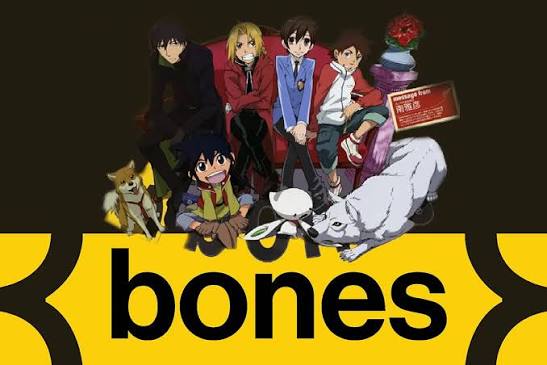
Bones was founded in 1998 and has spent the decades since building a reputation for consistent animation quality. Fullmetal Alchemist: Brotherhood has ranked #1 on MyAnimeList for over a decade, a position no other series has held for as long. Fan polls routinely cite it as the greatest anime of all time.
The studio's My Hero Academia adaptation has become a global franchise with multiple theatrical films, and the final seasons are airing into 2026. Mob Psycho 100 showcased a different side of Bones, with innovative and expressive animation that prioritized movement and emotion over detailed linework.
What makes Bones reliable is its consistency. The studio rarely produces something that looks cheap or rushed, and its long-running shonen adaptations maintain quality across hundreds of episodes. For fans who follow seasonal anime, a Bones production is usually a safe bet.
8. CloverWorks

CloverWorks spun off from A-1 Pictures in 2018, making it one of the youngest studios on this list. In less than a decade, it has assembled a diverse and commercially successful slate that rivals studios with decades of history.
Bocchi the Rock! became a cultural phenomenon in 2022 and 2023, praised for creative visual storytelling that turned a slice-of-life comedy into something visually inventive. The studio also co-produced Spy x Family with Wit Studio and handled My Dress-Up Darling, which became a breakout hit.
CloverWorks' strength is its versatility. It moves between comedy, slice-of-life, and action without losing quality, and its seasonal output has made it a fan favorite. By 2026, the studio is a major player in seasonal anime, and its rapid rise shows no signs of slowing.
9. Production I.G
Founded in 1987, Production I.G is a veteran studio with a filmography that spans science fiction, sports, and action. Ghost in the Shell, released in 1995, was a landmark film that influenced global cinema, including The Matrix. Its exploration of identity and technology remains relevant three decades later.
The studio's Haikyu!! is one of the most popular sports anime ever made, and Psycho-Pass is a widely acclaimed cyberpunk series. Production I.G also participates in production committees for other major titles, including Attack on Titan, and collaborates frequently with Wit Studio and other partners.
In 2026, Production I.G remains a respected name in both film and TV anime. Its pioneering sci-fi legacy and consistent sports hits give it a longevity that few studios can match, even if it rarely dominates seasonal charts the way newer competitors do.
10. Kyoto Animation
Founded in 1981, Kyoto Animation is beloved for meticulous character animation, soft lighting, and emotionally resonant storytelling. A Silent Voice grossed over $30 million worldwide and is widely praised for its sensitive handling of disability, bullying, and redemption. Violet Evergarden and Clannad occupy similar territory, trading spectacle for emotional depth.
KyoAni's workplace culture sets it apart. A 2024 Animenomics report ranked the studio #1 for work environment, citing its in-house training programs and ethical treatment of employees. In an industry frequently criticized for overwork, that distinction matters.
The studio's recovery from the 2019 arson attack that killed 36 people has been gradual and deliberate. KyoAni has rebuilt its staff and continues to produce work that reflects its signature style. In 2026, it remains a critical darling and fan favorite, even if its output is smaller than that of commercial giants like Toei. For many fans, that tradeoff is exactly the point.
Related Posts


0 Comments
Join the discussion and share your thoughts
No Comments Yet
Be the first to share your thoughts on this article!