Top 10 Best AI Phone Call Agents & Voice Assistants 2026


Table of Contents
Voice-based artificial intelligence has moved past the era of robotic, frustrating interactions. In 2026, AI phone call agents can hold natural conversations, detect emotions, and complete complex tasks autonomously. Businesses of all sizes are adopting these tools to handle customer service, sales calls, and internal operations. Our analysis of the market, based on deployment data, user reviews, and enterprise case studies, has identified the ten platforms leading this transformation.
Our Selection Process
We evaluated these AI voice platforms on five criteria: conversational quality (latency, natural language understanding, and prosody), real-world deployment scale (number of calls handled and enterprise adoption), integration depth (CRM, telephony, and API access), pricing transparency, and industry-specific compliance features. We prioritized platforms with verifiable case studies and public benchmarks from 2025 and 2026. Infrastructure providers that power other agents were weighted for their foundational role in the ecosystem.
Top 10 Best AI Phone Call Agents 2026:
1. OpenAI Voice Agents

OpenAI Voice Agents, built on GPT-4.1 and the Realtime API, represent the current benchmark for AI phone conversations. They support over 20 languages with real-time streaming and emotional prosody controls that were refined throughout 2025 and 2026. The agents can interrupt naturally, respond in under 300 to 500 milliseconds, and maintain memory across an entire call. This allows them to handle multi-step workflows like booking a flight change or processing a refund without repeating information.
Enterprises use OpenAI Voice Agents to replace clunky IVR menus with conversational routing. The platform's function calling enables tight integration with CRMs and internal tools, making it suitable for complex sales flows and technical support. Many other platforms on this list actually build on top of OpenAI's voice stack, which speaks to its foundational role. In early 2026, several large financial institutions publicly disclosed that they had migrated their primary customer service lines to OpenAI-powered agents, citing a 35% reduction in average handle time.
2. Google Gemini Voice (Call Assist / Duplex Evolution)
Google Gemini Voice is the evolution of Duplex and Google Assistant, now integrated into hundreds of millions of Android devices and Google Workspace. Its deep integration with the phone stack gives it unique capabilities. It can screen calls, summarize conversations in real time, and handle tasks like appointment scheduling directly from the dialer. Google's telephony partnerships provide carrier-grade reliability and spam detection that standalone SaaS vendors cannot easily replicate.
For businesses, Gemini Voice connects with Google Workspace to join or make calls, summarize them, and execute workflows inside Docs and Sheets. Its on-device personalization means the agent can access a user's calendar and contacts to make decisions contextually. While pure customization and tooling for bespoke enterprise workflows lag behind some specialist B2B platforms, Gemini's massive global footprint and zero-friction integration put it in a strategic position that no other vendor can match.
3. Microsoft Copilot Voice
Microsoft Copilot Voice combines the reach of the Microsoft 365 ecosystem with Azure Communication Services for PSTN connectivity. Over 400 million paid Microsoft 365 users are addressable through Copilot, and the voice assistant can handle inbound support lines, outbound collections, and appointment reminders. Its strength lies in B2B environments where compliance, security, and identity management are non-negotiable.
Built-in integration with Dynamics 365 and Teams means that a Copilot Voice agent can pull up a customer's entire history, make a call, and log the outcome directly into the CRM. Regulated industries like healthcare and finance favor Copilot Voice because it inherits Microsoft's enterprise-grade permissions and audit trails. In enterprise-focused rankings from early 2026, Copilot Voice consistently appears among the top call-automation offerings, particularly for organizations already standardized on Microsoft infrastructure.
4. ElevenLabs Conversational AI
ElevenLabs built its reputation on ultra-realistic neural text-to-speech and voice cloning, with over 1 million registered users by 2025. In 2025 and 2026, the company expanded into conversational AI agents that sustain phone calls with lifelike prosody and emotional range. Its platform offers hundreds of pre-built voices, custom voice cloning, and multilingual support that makes AI phone agents sound convincingly human.
This voice quality is particularly valuable in sales, hospitality, and collections, where brand voice and authenticity directly impact outcomes. Several major call-center and SaaS providers embed ElevenLabs as their voice layer rather than building their own. The company also invested heavily in safety tools like voice watermarking and protection against unauthorized cloning. While ElevenLabs often serves as infrastructure rather than a full contact-center stack, its position as the gold standard for voice realism earns it a top-five spot on this list.
5. PolyAI
PolyAI specializes in enterprise-grade voice assistants for customer service and has handled over 100 million customer calls according to its case studies from 2024 and 2025. The platform is repeatedly ranked as one of the most production-ready AI voice platforms in 2026 industry reviews. Its agents handle fully natural, open-ended conversations for hospitality, banking, and logistics, with strong multilingual capabilities and custom NLU tuned per client.
Documented deployments show deflection rates of 40 to 60 percent of inbound calls to self-service while maintaining high customer satisfaction scores. Many organizations keep their legacy contact-center stack for back-end processes while PolyAI provides the front-door voice agent. The platform also offers voice biometrics for authentication and PCI-compliant flows for payment processing. PolyAI's proven ability to scale across complex, global deployments makes it one of the most battle-tested vendors in the market.
6. CloudTalk AI Voice Agent
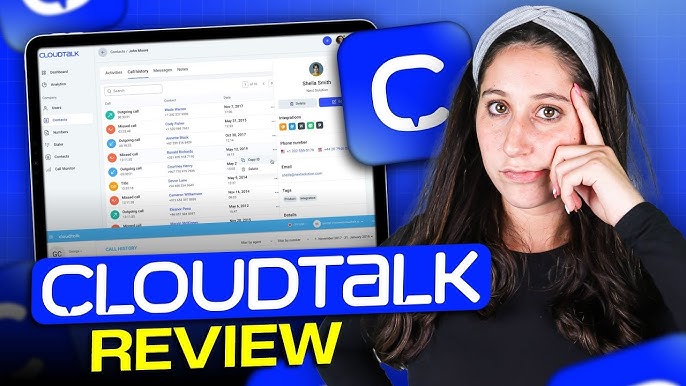
CloudTalk, long established as a cloud phone system with over 4,000 customers and 100 integrations, introduced an integrated AI voice agent that automates inbound and outbound calls for SMB sales and support teams. Features include intent detection, CRM sync with HubSpot, Salesforce, and Pipedrive, and conversational IVR. Pricing is transparent seat-based SaaS, making it accessible for smaller teams that want AI agents tightly embedded in their existing call flows.
CloudTalk's own comparative review in 2026 ranked its AI voice agent as the best for business, and independent lists have echoed that sentiment for SMBs. Real-time analytics and call recording tie back into CloudTalk's established telephony infrastructure, giving users a single platform for both traditional phone service and AI automation. While CloudTalk trails PolyAI and the hyperscalers in extremely complex, global deployments, its maturity and ease of use make it a top pick for growing companies.
7. Retell AI
Retell AI is a developer-friendly voice AI platform designed for production phone agents in compliance-heavy industries like banking, healthcare, and insurance. It maintains a 4.7 out of 5 average platform rating and offers per-minute voice pricing starting around $0.07 to $0.08 per minute. The platform exposes an API-first stack for telephony, streaming voice, and LLM orchestration with transparent live pricing for each component.
Retell AI emphasizes observability, providing live transcripts, call replays, and intent analytics that allow teams to iteratively improve their flows. Its focus on auditability, data residency options, and clear cost breakdowns makes it attractive for institutions where every minute of call time and every decision must be traceable. In banking-sector comparisons from early 2026, Retell AI scored highly for its compliance tooling and straightforward pricing, though it is more infrastructure than a full turnkey CCaaS solution.
8. Vapi AI
Vapi AI is an API-first voice infrastructure platform geared toward developers who want to build highly customized phone agents without locking into a monolithic vendor. Usage-based pricing runs around $0.05 per minute for voice plus model costs, and the company provides open-source SDKs for rapid integration. Vapi offers low-latency voice streaming, phone number management, and model-agnostic orchestration so teams can plug in OpenAI, Anthropic, or open-source LLMs.
Its flexibility allows sophisticated bespoke agents for domain-specific triage and complex routing at relatively low per-minute costs. Open-source client libraries and dashboards for monitoring calls make Vapi popular among startups and technical teams that need full control over their voice stack. The platform ranks highly for its developer-centric design and cost efficiency, but it sits below more mature enterprise platforms due to lighter out-of-the-box tooling for non-technical users.
9. Bland.ai

Bland.ai focuses on developer-first AI phone agents for high-volume outbound and inbound automation, particularly in sales, lead qualification, and reminders. The platform can handle millions of automated calls per month with global phone coverage, according to vendor materials from 2025 and 2026. It supports realistic voices, call branching logic, and integrations with CRMs like HubSpot and Salesforce, while exposing a simple API to schedule or receive calls.
Some case studies report thousands of simultaneous calls during marketing campaigns, and Bland.ai supports multiple languages and accents for international users. The platform is known for fast setup and scalability, making it a popular choice for growth teams that need to launch outbound campaigns quickly. In 2026 lists, Bland.ai is widely recognized as one of the best platforms for a developer-first AI phone agent for voice cloning, but it is ranked below Retell and Vapi because of its narrower focus on outbound and growth use cases.
10. Lindy AI Voice Agents
Lindy is an AI assistant platform that includes real-time voice agents capable of handling phone calls for scheduling, support, and internal operations. Its Pro plan costs $49.99 per month for 5,000 tasks with call features, while the Business plan at $299.99 per month offers 30,000 tasks and premium phone automation. Lindy provides a no-code interface to define workflows and knowledge bases of up to 20 million characters on Business plans.
Integrations with calendars, CRMs, and ticketing tools allow Lindy's voice agents to answer calls, book meetings, and follow structured standard operating procedures. This makes the platform appealing for lean teams that need automation without heavy engineering investment. Lindy frequently appears in 2026 best AI voice agents rankings and in articles where reviewers tested 18 different AI voice agents. It is placed at number 10 here because it is a broader assistant platform and less specialized in large-scale external customer phone traffic than the higher-ranked vendors.
Related Posts

0 Comments
Join the discussion and share your thoughts
No Comments Yet
Be the first to share your thoughts on this article!