Top 10 Best Self Improving AI Platforms In The World 2026


Table of Contents
The concept of artificial intelligence that can refine its own behavior without constant human reprogramming has moved from theoretical research to commercial reality. In 2026, self-improving AI platforms are no longer a novelty. They are embedded in the tools we use for work, communication, and creative production. These systems learn from user feedback, tool outcomes, and massive datasets to become more capable over time. Some operate at the scale of billions of interactions per week. Others serve niche technical communities. All of them share a core trait: they get better the more they are used.
Our list ranks the top self-improving AI platforms based on a combination of capability, deployment scale, feedback loop sophistication, and real-world impact. We considered how each platform learns from user interactions, how frequently models are updated, and how effectively they can chain actions autonomously. The ranking also weighs benchmark performance, enterprise adoption, and the breadth of integrations that allow these systems to operate across different environments.
How We Made Our Picks
We evaluated dozens of AI platforms against five criteria: the strength and scale of their feedback loops (how well they learn from user interactions and outcomes), benchmark performance on reasoning and agentic tasks as of early 2026, breadth of real-world deployment across consumer and enterprise contexts, the degree of autonomous action and multi-step workflow execution, and the rate of model improvement over the past 18 months. Platforms that demonstrated clear, measurable self-improvement through reinforcement learning, fine-tuning cycles, or community-driven iteration ranked highest. We prioritized platforms with verifiable user counts, published benchmarks, and documented agentic capabilities.
The List Of The Top 10 Best Self Improving AI Platforms In 2026:
1. ChatGPT

ChatGPT remains the most widely deployed self-improving AI platform in the world, with over 200 million weekly active users reported in 2025. The platform has evolved far beyond its origins as a simple chatbot. GPT-5.x class models now offer agentic tools, code execution, and the ability to run multi-step workflows through custom GPTs. These custom agents improve continuously through reinforcement learning from user feedback and tool outcomes. The ecosystem includes a powerful API, plugins, a code interpreter, and automated workflow capabilities. OpenAI's frontier models are consistently benchmarked as state-of-the-art for reasoning and agentic tasks in the 2025-2026 period. The platform ranks first because it combines frontier capability with massive real-world deployment and explicit agent features designed to iteratively refine behavior at scale.
2. Google Gemini
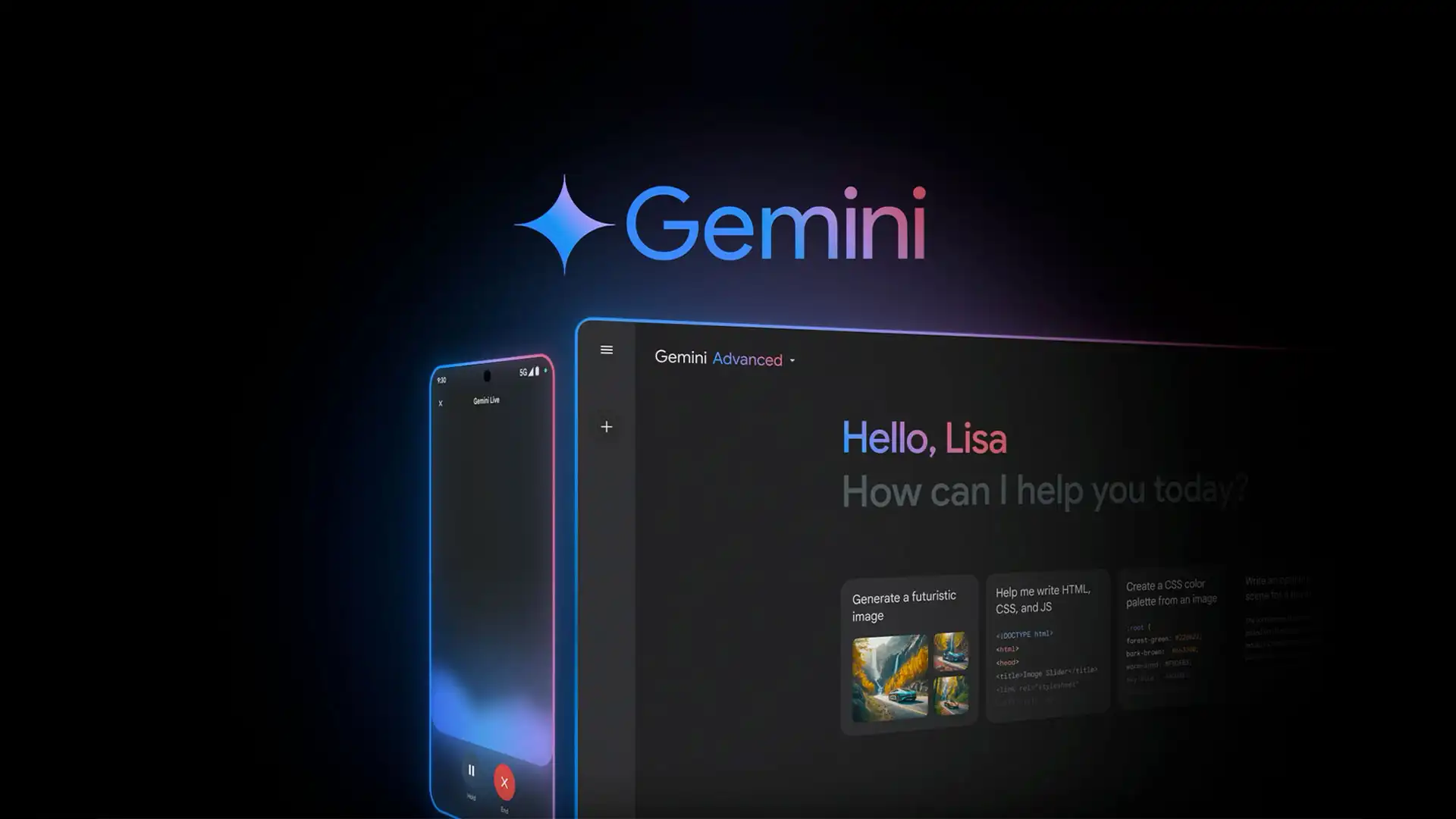
Google's Gemini platform has undergone a dramatic transformation. The 2026 updates pushed it from simple chat into an autonomous partner that executes real tasks for users. Gemini 3.5 Flash beats prior Gemini 3.1 Pro on coding and agentic benchmarks while being cheaper to run. The platform now includes "Gemini Spark," a personal agent that operates across email, calendar, and files. Deep integration with Search, Workspace, Gmail, Android, and Chrome means Gemini has access to a vast stream of interaction data. Google continuously trains on this data, allowing the platform to improve over time. Its tools can chain actions and refine outputs based on feedback. Gemini ranks second due to competitive benchmark performance, the breadth of its integrations, and a clear focus on self-improving agentic workflows in mainstream productivity tools.
3. Microsoft Copilot
Microsoft Copilot has transformed from "Bing Chat" into an AI agent platform integrated directly into the world's dominant office software stack. Embedded across Microsoft 365, Word, Excel, Outlook, Teams, and Windows, Copilot serves hundreds of millions of enterprise and consumer users as of 2025. It drafts emails, summarizes meetings, generates presentations, analyzes spreadsheets, and automates repetitive workflows. Critically, it learns from user corrections and organizational data patterns. Microsoft introduced "Copilot Studio" and orchestration features that allow enterprises to build domain-specific copilots. These enterprise copilots refine themselves on internal data and analytics. Copilot ranks third because of its unmatched reach in business environments and its ability to iteratively improve task performance within the world's dominant office software stack.
4. Claude
Anthropic's Claude models focus on reliable reasoning and alignment. The Claude 3-series and its successors power chat, coding, and agentic workflows for enterprises and developers. What sets Claude apart in the self-improvement conversation is Anthropic's own research. Internal data from 2024-2025 indicated that Claude was accelerating AI development and approaching thresholds for recursive self-improvement. Anthropic publicly warned that its frontier models were nearing the capability to improve their own capabilities with limited human intervention. Claude's tool-use, code-execution, and multi-step reasoning features, combined with safety-driven fine-tuning, make it a leading platform for robust autonomous agents. It ranks fourth because it sits at the center of industry discussion about self-improving AI, combining top-tier capabilities with explicit research on recursive self-improvement dynamics.
5. Grok
Grok is xAI's chatbot and agent system integrated into X, formerly Twitter. Its defining feature is real-time answers using live platform data, trending discussions, and web access. The 4.x generation adds advanced reasoning, multimodal generation, and improved tool use. Grok Heavy, the enhanced reasoning variant, enables the model to act as a continuously updating assistant. It benefits from the firehose of live social and web data. Grok 4.x scores 53 on the independent Artificial Analysis Intelligence Index in 2026, below GPT-5.5 and Gemini 3.1 Pro but at substantially lower cost. The value-oriented benchmark position and rapid iteration cycles mean Grok improves steadily as xAI refines models and training data, particularly in real-time domains. It ranks fifth as the leading real-time, social-data-anchored platform that self-improves through constant exposure to changing online information.
6. DeepSeek
DeepSeek is an open-source conversational AI from a Chinese startup. It is designed to offer powerful chat, coding help, and multimodal capabilities similar to Western frontier models but with localized data and optimizations. The platform is widely deployed and updated with new models for multilingual and coding tasks. Its open nature allows developers to fine-tune and extend the system, creating feedback loops where community improvements and new checkpoints upgrade the platform over time. The emphasis on cost-effective high-performance models has made DeepSeek popular across Asia and among open-source practitioners globally. It ranks sixth because it exemplifies community-driven self-improvement, where frequent open releases and third-party fine-tunes drive fast capability gains without a single corporate owner controlling the iteration cycle.
7. Doubao
Doubao is ByteDance's flagship AI assistant, tightly integrated with the company's massive consumer apps and content ecosystem. It is one of the most popular AI apps in China, offering comprehensive multimodal text, image, video, and voice capabilities as of 2025-2026. The platform supports text generation, image and video creation, and voice processing. It can be embedded into workflows like content editing, recommendation, and interactive media. ByteDance's recommendation and engagement infrastructure enables Doubao to refine its outputs based on interaction metrics at enormous scale. The system effectively learns what content structures work best for different users and contexts. It ranks seventh as a leading consumer-scale self-improving platform, especially in multimodal content and short-form media production.
8. GitHub Copilot
GitHub Copilot is a specialized AI coding assistant that predicts and generates code, suggests tests, and explains snippets across many programming languages and IDEs. Named a leader in Gartner's 2026 Magic Quadrant for enterprise AI coding agents, the platform has surpassed 4 million weekly users. It is now extended with "Enterprise Agents" and GPT-5.5-powered Codex, supporting multi-step coding workflows, refactoring, and integration with CI/CD pipelines. The platform learns from project context and developer acceptance or rejection of suggestions. Trained on public repositories and optionally on enterprise code, Copilot improves over time in language coverage, style adaptation, and error reduction. It ranks eighth because it represents self-improving AI in software engineering, with clear feedback loops from millions of developers shaping its behavior daily.
9. Vellum
Vellum is an open-source personal AI assistant designed specifically for developers. It scored 100 in a 2026 ranking of personal AI assistants for developers, leading a list of 10 tools in that category. The platform features persistent memory, real-world action-taking capabilities, and a developer-grade API surface. It is available as a macOS app, a cloud service, or a fully local self-hosted installation. Vellum supports multi-model orchestration, long-term user profiles, and tool integrations that allow agents to run and refine workflows over time based on outcomes. Designed for developers, it enables building and iterating custom agents that learn from repeated tasks and user feedback. It ranks ninth because, while smaller in scale than big-tech platforms, it is a top-scoring developer-centric self-improving agent framework in 2026.
10. Hermes Agent

Hermes Agent is a server-side AI agent platform built for technical users who want fine-grained control over models, tools, and deployment. It offers over 200 model options and full CLI control for building self-improving agents as of 2026. The platform allows developers to select from more than 200 models, configure toolchains, and manage agents via the command line. It includes logging and feedback loops that support automatic refinement of prompts, tool policies, and model selection. Because it is model-agnostic and highly configurable, Hermes Agent is used to experiment with self-improving workflows where agents observe their past runs and adjust configurations. It ranks tenth as a niche but powerful platform that explicitly targets self-improving agent behavior for advanced developers who need control at every level of the stack.
Related Posts



0 Comments
Join the discussion and share your thoughts
No Comments Yet
Be the first to share your thoughts on this article!