Multicap vs Flexicap ETF – Who Wins What?

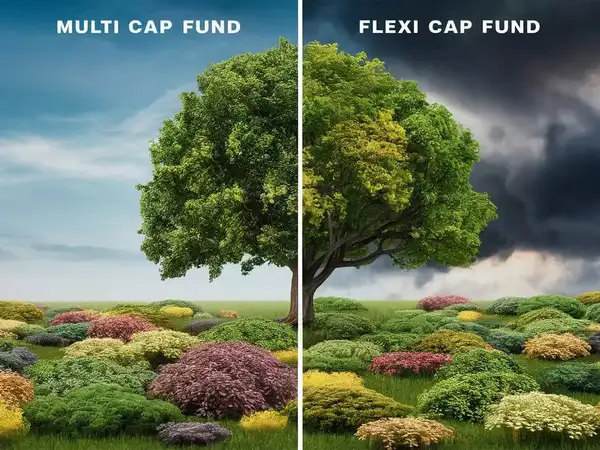
Table of Contents
Exchange-traded funds (ETFs) have made it a lot easier for investors to spread their risk around by combining the benefits of mutual funds with the flexibility of trading individual stocks. Among the various types of ETFs out there, the multicap and flexicap strategies are often the ones people turn to because they can invest across different market capitalisations.
At first glance, these two might seem pretty similar, but the way they allocate investments and make decisions is quite different. Figuring out these differences is important for investors to decide which one best suits their goals, risk tolerance and market expectations.
Understanding the Core Structure
A multicap ETF basically follows a set plan that splits its investments between large cap, mid cap and small cap stocks. Because of that, a multicap ETF maintains a consistent spread of investments regardless of market conditions.
The other way around, a flexicap ETF gives its fund managers a lot more freedom to move the investments around between large, mid and small cap stocks. This means their allocation can change over time based on the market and investment strategy.
Allocation Discipline vs Allocation Flexibility
The main difference between multicap and flexicap strategies comes down to how they allocate capital.
Multicap strategies stick to discipline - they keep exposure spread across different segments even if one segment happens to be underperforming. This means you get consistent diversification, but you also miss out on the chance to really cash in when a particular segment starts to take off.
Flexicap strategies are all about flexibility - they can choose to increase exposure on large caps when times are uncertain, or shift towards the mid and small caps when things are looking good. This adaptability can really pay off when the market is in a growth phase.
Risk and Volatility Considerations
Multicap ETFs have a large exposure to small and mid-cap stocks at all times, which is good for diversification but can make things a bit more volatile compared to a large cap focused fund.
Flexicap ETFs, on the other hand, get to adjust the risk as needed, so in volatile markets they will increase holdings to more large caps to reduce risk. But in a booming market, they will be looking to give themselves an edge by investing in smaller companies to generate extra returns.
Performance Across Market Cycles
Market cycles end up being a huge factor in figuring out which strategy comes out on top. In a buoyant market where mid and small caps are doing well, Multicap ETFs benefit from their fixed exposure to large, mid and small cap stocks.
Flexicap ETFs can capture the same upswing as well, but it all depends on whether they get their allocation right. If they do, then returns can jump up a lot. But if they don't, then they might end up missing out on some of the best opportunities.
Times when markets are all over the place or in a downturn sometimes work in favour of flexicap ETFs because they can move more capital into safer large caps.
Role in Portfolio Construction
Multicap ETFs are often picked by investors who want a balanced portfolio without all the confusion of figuring out where to put their capital. They know they will get a steady exposure to the market in all its segments.Flexicap ETFs are more suited to the kinds of investors who like to mix things up a bit. They are not worried if the allocation changes over time, as they see potential benefits in having flexibility.
Both of these strategies can be a solid core holding, but it really comes down to whether you are after a safe bet or willing to go for more flexibility.
Final Thoughts
At the end of the day, when you are choosing between a Multicap and a Flexicap ETF, it comes down to which one fits your investing style. Some people love the straightforwardness of spreading their investments wide and far, while others are perfectly happy with a more flexible approach; it just depends on you.
Related Posts

Top 10 Best Crypto Trading Platforms In Africa 2026

Understand how betting apps such as Bizbet protect user data
Advanced encryption protocols, user identification, and secure payments systems: see in detail how reliable bookmakers such as Bizbet ensure customer protection

Top 10 Best AI Tools for Zoho Desk in 2026

Top 10 Best Insurance Companies In Kenya 2026
2 Comments
Join the discussion and share your thoughts