Listening.io Review 2026: Login, App, Free Plan, Alternatives & FAQs

Table of Contents
There is a real demand for tools that turn written content into audio. Between long commutes, packed schedules, and the growing habit of consuming information on the go, the idea of converting articles, academic papers, or PDF documents into something you can listen to while doing something else makes a lot of sense. Listening.io, which also operates under the domain listening.com, entered this space with a clean pitch: build a personal podcast from your reading list and have it delivered straight to your podcast app.
We decided to put it to the test. Our editorial team spent time on the platform, went through the sign-up process, tested the app across iOS and Android, and spent time reading through what real users have been saying online. What we found was a product that has a decent concept but a troubling pattern of issues that go beyond simple growing pains. This is our full 2026 review.
Listening.io: Quick Profile
Product Name | Listening.io (also listed as Listening.com) |
Website | listening.io / listening.com |
Founded | Exact date not publicly disclosed; active since circa 2022 |
Founder | Derek Pankaew (listed in terms of service as contact) |
Company | The Listening App Inc. |
Headquarters | 447 Sutter Street, Suite 506, San Francisco, CA 94108 |
Category | Text-to-Speech / Article-to-Audio Conversion |
Free Plan | Trial available (requires credit card entry) |
Paid Plans | Subscription-based; exact pricing not prominently listed on homepage |
Mobile App | iOS and Android apps available |
Podcast Sync | Yes (including Spotify, Apple Podcasts, and others) |
Languages Supported | English, Spanish, French, Hindi, Italian, Portuguese |
Google Play Rating | 3.1 / 5 (based on 6,730+ reviews) |
Nubia Magazine Rating | 1.5 / 5 |
What Is Listening.io?
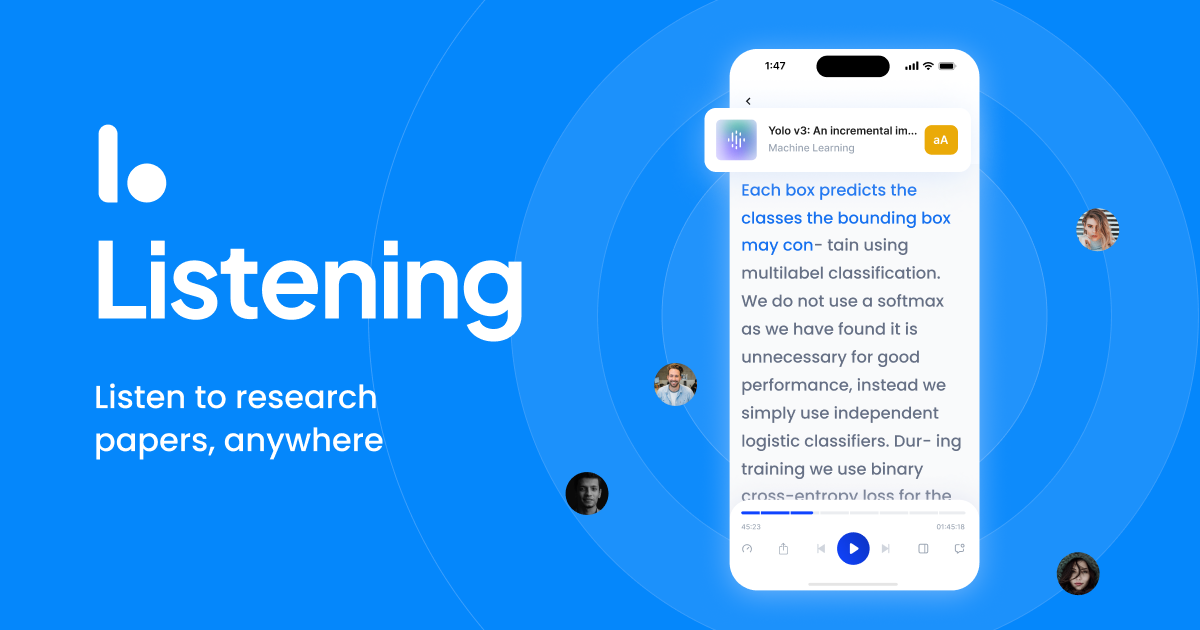
Listening.io is a text-to-speech platform built around the idea of turning your reading backlog into an audio feed that syncs with your existing podcast app. Instead of opening a separate reader, you save articles or upload documents, and the platform converts them to audio using an AI voice that is meant to sound like a natural human reader. You can then listen through Spotify, Apple Podcasts, or other compatible players.
The platform was founded by Derek Pankaew, who is listed as the contact in the company's legal documentation, and it operates as The Listening App Inc. out of San Francisco. It supports several document types including PDFs, Word documents, and web article links, and it covers a handful of languages: English, Spanish, French, Hindi, Italian, and Portuguese.
On paper, it sits in a competitive category alongside tools like Speechify, Pocket, and Instapaper. Where it tried to stand out was its podcast-style delivery and its focus on academic papers and long-form reading material, which most read-later apps handle poorly. Whether it delivers on that in practice is a different conversation.
Listening.io Login: What to Expect
Creating an account and logging in to Listening.io is not a complicated process. You sign up via the website or the mobile app, verify your email, and land on the main dashboard. The interface is fairly clean and straightforward once you're inside.
Where the login experience starts to raise questions is what happens before and around it. Multiple users have flagged that the platform asks for credit card details during the sign-up process, even for what is presented as a free trial. This is not inherently unusual, but the concern is what comes after. Several people on Trustpilot and Product Hunt noted that they were charged even after attempting to cancel, and some reported having no visible option to end their subscription within the account settings.
If you're logging in for the first time, be aware of what plan you've been placed on. Check your account settings immediately after signing up and document what you see. This is advice we would not normally need to give for a standard app, but the volume of billing complaints from Listening.io users makes it worth stating clearly.
The Listening.io App: iOS and Android
Listening.io is available on both the Apple App Store and Google Play. The app is listed under 'Listening: Text to Speech' and it carries a rating of 3.1 out of 5 on Google Play based on over 6,700 reviews, which is not exactly an endorsement but is also not a disaster on its face. The real picture emerges when you read what people are actually saying.
The AI voice quality is one area where the app genuinely does something right. Multiple users have noted that the voice reads with reasonable natural rhythm, including pauses and emphasis that make long listening sessions more tolerable than robotic alternatives. For a daily commute or background listening while walking, the audio quality is adequate.
But PDF handling is a recurring source of frustration. Users on the App Store have described sentences being cut off at page breaks, paragraphs being reordered mid-document, and entire sections of text disappearing when uploading large files. One App Store reviewer testing a 200-page document found the app skipping roughly a full paragraph each time it loaded a new content chunk. Another described the app scrambling the order of pages with no apparent reason.
For students and researchers who specifically want to listen to academic papers, which is a core use case Listening.io markets itself toward, these PDF reading errors are a significant problem. You cannot trust a tool with academic material if it routinely loses or rearranges the text you're trying to absorb.
Speed control is available from 0.5x up to 4x, and one-tap note-taking is a feature that sounds useful for active listening. These are good additions. But they don't offset the document handling issues.
Listening.io Free Plan: Is There One?
Listening.io does advertise a trial period. However, the free experience is tied to a credit card entry, which has become the single most complained-about aspect of the platform based on what we found across review sites.
Once your card is on file, the path to cancellation is not obvious. The official support documentation explains how to cancel through the web app by navigating to the plan settings, or through Apple or Google subscription management for mobile subscribers. The instructions do exist, and the company has published them. But the disconnect between what the support pages say and what users describe finding in their accounts tells a different story.
People have reported logging in specifically to cancel and finding no visible cancel button. Others cancelled through their bank rather than through the app because they could not reach customer support. One Trustpilot reviewer described cancelling in 2024 and still being charged in 2025. These are not isolated complaints from a handful of frustrated users. They form a consistent pattern that we cannot ignore in an honest review.
There is technically no fully free tier in the same sense that tools like Pocket or Speechify's basic plan offer. You are entering a billing relationship from the moment you provide payment details, and getting out of it is less straightforward than it should be.
User Experience: Our Overall Assessment
The core idea behind Listening.io is genuinely useful, and there are users who have had positive experiences with it, particularly for everyday web article conversion. The voice output is one of its better qualities, and for people who have a steady reading list of standard web articles, the podcast-style delivery through Spotify or Apple Podcasts is a clever convenience.
But the overall user experience in 2026 is weighed down by problems that a product of this type should not still be facing. PDF parsing accuracy is inconsistent in ways that make it unreliable for serious use. The billing and cancellation situation has generated enough complaints across enough platforms that it cannot be dismissed as edge cases. Customer support has been described repeatedly as unresponsive, with emails going unanswered for days or not at all.
The onboarding experience lacks basic account management tools. There is no welcome email sequence, no visible subscription summary on first login, and no accessible payment history screen in a place users intuitively look. For a subscription product in 2026, this is poor design, not just an oversight.
The app was also reported to have gone down in March 2026, with the company publishing a service update notice on its support page titled 'App Restored (March 23, 2026).' Service outages happen, but the lack of proactive communication during that period added to user frustration.
Compared to alternatives like Speechify, ElevenLabs Reader, or even the built-in read-aloud features now available in apps like Pocket, Listening.io struggles to justify its subscription cost when the fundamentals are this unreliable.
Alternatives to Listening.io Worth Considering
If you are looking for a tool that converts text and articles into audio, there are several alternatives that perform more consistently in 2026.
Speechify is the most established name in this space. It supports a wider range of file formats, has a more reliable PDF reader, and offers a proper free tier without requiring credit card details upfront. The voice quality on premium plans is excellent, and the customer support experience is significantly better documented.
ElevenLabs Reader is worth looking at if voice quality is your top priority. The voices are among the most natural-sounding available, and the reading experience for long documents is cleaner than most alternatives.
Pocket with a premium plan handles article saving and audio playback in a cleaner interface and has been around long enough to have sorted out basic account management. For people who primarily want to listen to web articles rather than PDFs, it is a strong alternative.
For students and researchers specifically, Audemic is built around academic papers and handles citations and document structure in a way that general text-to-speech tools do not. If listening to research papers was your main reason for considering Listening.io, Audemic is a more purpose-built option.
Nubia Magazine Verdict
Listening.io has the bones of a useful product. The concept is sound, the voice quality is acceptable, and the podcast-style delivery is a nice idea. But in 2026, it is being let down by serious execution problems that affect trust more than they affect features.
The billing and cancellation complaints are the most damaging issue. When multiple unrelated people across multiple platforms describe being charged after cancellation, not receiving responses from support, and having to cancel their credit cards to stop charges, that is a pattern a publisher cannot overlook. We are not in a position to call it fraud, but we are in a position to say that the experience has been bad enough for enough users that recommending the platform with a clean conscience is not possible.
Until Listening.io addresses the subscription transparency, improves PDF accuracy, and demonstrates that customer support is actually reachable, we are rating it 1.5 out of 5. The concept deserves better execution, and users deserve better than what the billing experience has put many of them through.
Frequently Asked Questions About Listening.io (2026)
1. Is Listening.io actually free to use?
Listening.io is not free in any practical sense. The platform offers a trial period, but it requires you to enter credit card details before you can access it. Once your card is on file, you are enrolled in a subscription. The trial is time-limited, and if you do not cancel before it ends, you will be charged. Given the volume of complaints about how difficult cancellation can be, this is not a risk-free way to test the product. If you want to try an article-to-audio tool for free without entering payment information, Speechify's basic tier or Pocket's free plan are more genuinely no-cost starting points.
2. How do I cancel my Listening.io subscription?
If you subscribed through the web, Listening.io says you can cancel by logging into your account, clicking your name icon in the top right corner, and navigating to the Plan section. From there you should find a cancellation option. If you subscribed through the iOS app, you need to cancel through Apple's subscription management settings, not through the Listening.io app itself. Android subscribers need to cancel through Google Play. The issue many users have reported is that these cancel buttons are either not visible or the process does not complete cleanly. If you are having trouble, contacting your bank to block future charges is an option others have used, though it should not be necessary.
3. Does Listening.io have a mobile app?
Yes, Listening.io has apps available on both the Apple App Store and Google Play. The iOS app requires iOS 15 or later, and an Apple Vision version is also available. On Google Play the app carries a 3.1 out of 5 rating from over 6,700 reviews. The app includes features like adjustable playback speed from 0.5x to 4x, one-tap note-taking, and multi-format document support. However, PDF handling in the app has generated consistent complaints about text being skipped, sentences being cut off at page breaks, and paragraphs being reordered incorrectly.
4. What podcast apps does Listening.io work with?
Listening.io was built around the idea of sending your converted articles to your existing podcast player. According to the platform, it supports integration with Spotify, Apple Podcasts, and other major podcast apps. This was a genuine differentiator when the product launched, as not many competitors at the time supported Spotify sync. In practice, the quality of this experience depends on how well the audio conversion worked in the first place, and if your document had reading errors, those errors carry through to whatever podcast app you sync it to.
5. Is Listening.io a scam?
This is the exact question people are searching, and it deserves a direct answer. We cannot legally characterise Listening.io as a scam. The company does have a registered address, a terms of service document, and support pages that explain how to cancel. However, the volume of complaints from users describing charges after cancellation, unanswered support emails, and a missing cancel button within the app is significant. These are the kinds of experiences that lead people to search that question in the first place. Whether or not the issues are intentional, the outcome for many users has been negative billing experiences they did not consent to. Our strong advice is to avoid entering payment details unless you are fully prepared to manage the cancellation process carefully and immediately.
6. What languages does Listening.io support?
As of early 2026, Listening.io supports six languages: English, Spanish, French, Hindi, Italian, and Portuguese. The app is designed to detect the language of the document you upload automatically and switch to the appropriate voice. This is a reasonable selection for a tool at this price point, though it remains behind some competitors that support 20 or more languages. If your primary reading material is in a language not on that list, Listening.io is not going to work for you.
7. How does Listening.io compare to Speechify?
Speechify is the more established and more polished product. It has a free tier that does not require credit card entry, a wider range of voice options including celebrity voices, better PDF handling, more supported languages, and a significantly better track record on customer support. Speechify has over 50 million users and considerably more app store reviews and ratings. Listening.io's advantage used to be its podcast-player integration, particularly Spotify sync, but that gap has narrowed as other tools have improved their delivery options. For most users comparing the two in 2026, Speechify is the safer and more reliable choice.
8. Did Listening.io go down in 2026?
Yes. Listening.io experienced a service outage in March 2026. The company published a notice on its support page titled 'App Restored (March 23, 2026),' confirming there was a disruption and that service had been brought back online. The outage added to frustration among users who were already dealing with billing concerns and PDF accuracy issues. It was not a prolonged outage based on available information, but it was a notable event in a year when the platform was already under criticism across review sites.
Related Posts



1 Comment
Join the discussion and share your thoughts