Exhibition Stand Construction in Germany: How Stand Builders GmbH Turns Trade Fair Plans into Reality

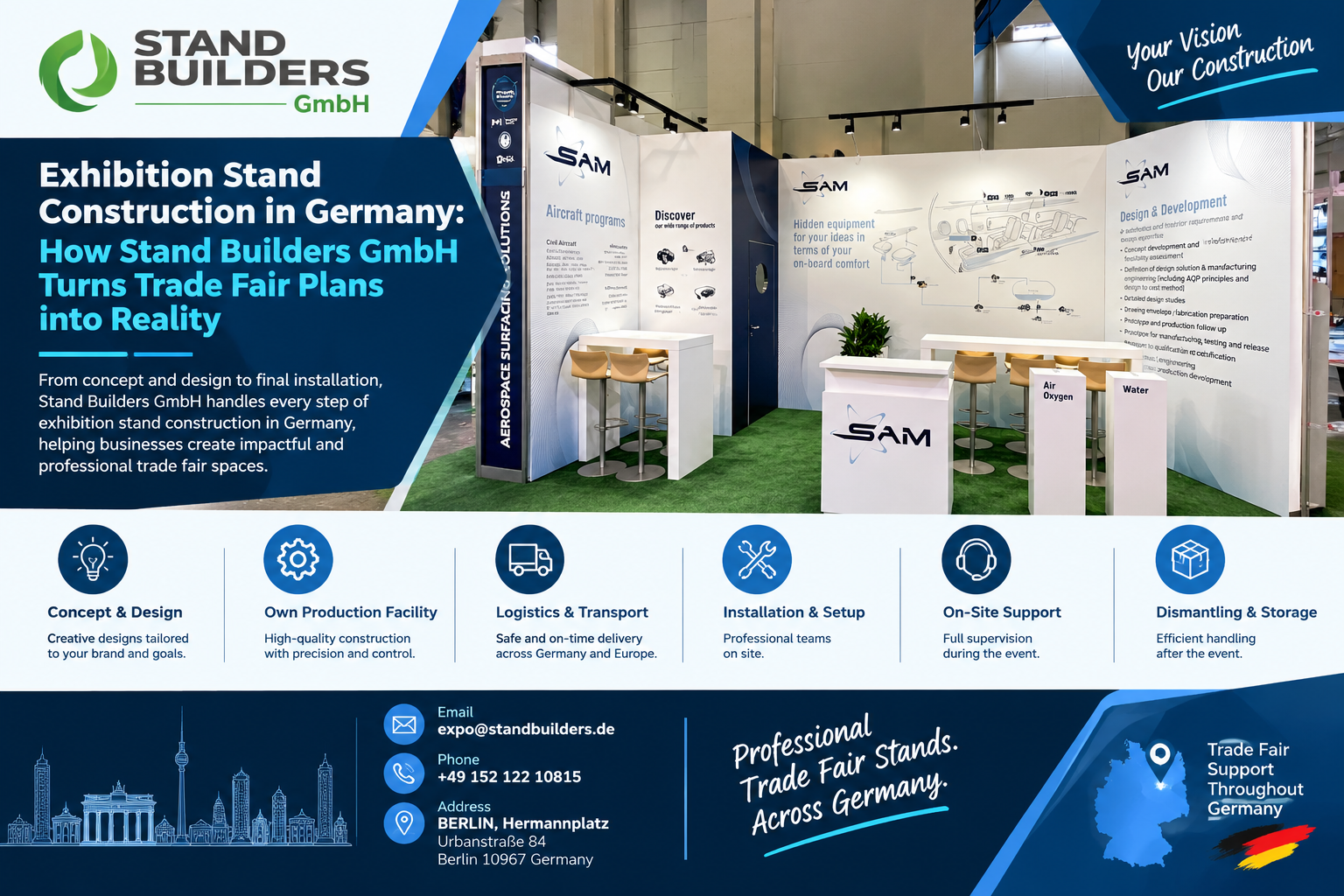
Table of Contents
Trade fairs provide businesses with valuable opportunities to introduce products, connect with industry professionals, and explore new markets. However, a successful exhibition appearance depends on much more than reserving floor space and displaying promotional materials. Professional exhibition stand construction in Germany involves careful planning, structural development, manufacturing, and installation to create an environment that supports business objectives. Stand Builders GmbH, a Berlin-based exhibition stand design and construction company, provides integrated services that help exhibitors manage these requirements at trade fairs throughout Germany and Europe.
What Makes Exhibition Stand Construction a Technical Process?
An exhibition stand may appear to be a temporary marketing structure, but its development involves several technical considerations. Designers must translate creative concepts into practical structures that can be manufactured, transported, assembled, and safely used throughout an event.
Every exhibition venue has specific requirements concerning construction heights, electrical installations, fire safety, and access arrangements. These conditions can influence the materials, structural design, and equipment selected for a project.
The construction process must also consider how visitors will interact with the finished space. A visually impressive booth can become inconvenient if its layout restricts movement, blocks important displays, or leaves insufficient room for business discussions.
For this reason, effective construction begins with a clear understanding of both technical requirements and exhibition objectives.
From Architectural Drawings to Physical Structures
Turning an exhibition concept into a completed stand requires coordination between designers, production specialists, and installation teams. Each stage contributes to the final quality and functionality of the structure.
Developing Accurate Design Specifications
Before manufacturing begins, the proposed stand design must be evaluated against the available exhibition area.
Three-dimensional visualisations help exhibitors understand the overall appearance, while technical drawings establish measurements, structural arrangements, and construction details.
These documents guide material selection and help identify potential difficulties before production starts.
Stand Builders GmbH incorporates 3D design development into its project workflow, allowing clients to review concepts and provide feedback before construction.
Selecting Materials for Function and Appearance
Material selection affects the appearance, durability, weight, and installation requirements of an exhibition stand.
Timber-based panels can support customised architectural features, while metal frameworks may provide structural strength for particular designs. Glass, acrylic, fabric, and printed surfaces can be incorporated according to presentation requirements.
The appropriate combination depends on the stand's dimensions, intended use, budget, and venue regulations.
Materials should be selected not only for their visual qualities but also for their suitability for transportation, assembly, and possible reuse.
Coordinating Production and Quality Control
Manufacturing accuracy is essential because exhibition stands must fit within designated spaces and be assembled under strict time constraints.
Stand Builders GmbH operates in-house production facilities, connecting design development with the manufacturing process.
This arrangement supports coordination between the professionals preparing technical concepts and those responsible for producing structural components.
Quality checks during production can help identify dimensional errors, finishing problems, or assembly issues before materials reach the exhibition venue.
Choosing a Construction Approach That Matches the Event
Not every business requires the same exhibition structure. The appropriate stand format depends on available space, exhibition frequency, marketing objectives, and operational requirements.
Stand Builders GmbH offers four principal stand solutions suited to different exhibiting needs.
Custom exhibition stands provide flexibility for businesses requiring distinctive architectural features, specialised product displays, or branded environments. Their layouts can be developed around particular marketing and presentation objectives.
Modular exhibition stands use adaptable components that can be configured for different spaces. They are particularly relevant to businesses participating in multiple exhibitions and seeking practical opportunities for reuse.
Double-decker exhibition stands introduce an additional level that can accommodate meeting rooms, hospitality facilities, or other activities. Their construction requires particular attention to structural calculations, access arrangements, and venue approvals.
Country pavilion exhibition stands provide coordinated exhibition environments for groups of businesses, trade organisations, or national delegations. These structures combine a shared visual identity with individual presentation areas.
Selecting the appropriate format early helps avoid unnecessary design revisions and supports more accurate construction planning.
Cologne as an Example of Location-Specific Exhibition Planning
Germany's exhibition industry operates across several major commercial centres, and each destination presents different logistical considerations.
Cologne is an important exhibition location for businesses participating in international industry events. Its trade fair environment attracts exhibitors from sectors such as food, furniture, gaming, digital marketing, and other commercial industries.
For companies exhibiting in the city, construction planning should account for venue access, delivery schedules, technical requirements, and the type of audience attending the event.
Working with an experienced exhibition stand design company in Cologne can help businesses coordinate creative development with practical construction requirements.
Stand Builders GmbH provides custom, modular, double-decker, and country pavilion solutions for exhibitors in Cologne. Its services also include 3D design, manufacturing, transportation, installation, and dismantling.
Why Venue Requirements Matter
An exhibition stand designed for one trade fair cannot always be transferred directly to another venue.
Hall regulations, approved construction heights, electrical arrangements, and installation schedules may differ between events.
For example, a double-decker structure may require additional documentation and approval, while a stand incorporating suspended elements could be subject to specific rigging restrictions.
Reviewing these conditions before production helps reduce the risk of modifications during installation.
The Importance of Logistics in Exhibition Stand Construction
A completed stand must reach the exhibition venue in suitable condition and within the permitted delivery period.
This makes logistics an essential part of the construction process rather than a separate administrative activity.
Structural components, graphics, lighting equipment, furniture, and technical accessories must be packaged and organised for transportation.
Clear labelling and assembly documentation can help installation teams identify components efficiently, particularly when a project includes numerous customised elements.
Stand Builders GmbH includes packaging, delivery, installation, dismantling, and storage within its broader exhibition services.
This coordinated approach can reduce the number of separate suppliers an exhibitor needs to manage.
Managing Installation Deadlines
Trade fair organisers generally establish specific periods for stand construction and removal.
Installation teams must complete assembly, finishing work, technical connections, and final checks within the available timeframe.
Unexpected issues involving deliveries, missing components, or technical installations can create delays. Careful scheduling and clear communication between contractors and event organisers therefore remain essential.
Construction Decisions That Affect Long-Term Exhibition Costs
The initial construction quotation represents only part of an exhibition investment.
Businesses should also consider transportation, storage, installation labour, maintenance, and future modifications when evaluating stand options.
A highly customised structure may be appropriate for a major product launch, while reusable modular components could offer better long-term value for companies attending several events annually.
Designing certain elements for reuse may also reduce material waste and limit repeated manufacturing requirements.
Exhibitors can improve budget planning by discussing future exhibition schedules with their stand contractor before finalising construction specifications.
What Exhibitors Should Prepare Before Requesting a Quotation
Clear project information helps construction teams develop practical proposals and realistic budgets.
Before approaching a contractor, exhibitors should identify their event location, stand dimensions, exhibition dates, and estimated budget.
They should also describe the products being displayed, expected visitor activities, branding requirements, and any technical equipment needed.
Additional information about storage, meeting rooms, demonstrations, or future reuse can influence the proposed design.
Stand Builders GmbH uses an initial briefing process to understand these requirements before developing design concepts and construction plans.
Providing accurate information at this stage can reduce misunderstandings and help align the completed stand with the exhibitor's expectations.
Conclusion
Exhibition stand construction combines architectural planning, manufacturing expertise, logistical coordination, and practical knowledge of trade fair environments. Each stage influences whether the finished structure is functional, visually consistent, and ready for use when the event begins.
Stand Builders GmbH brings these activities together through its design, production, installation, and dismantling services, supporting exhibitors across Germany, including major destinations such as Cologne.
For businesses preparing for future trade fairs, understanding the construction process is an important step toward making informed decisions about design, budgets, materials, and exhibition logistics. A well-planned stand provides more than a professional appearance; it creates a reliable setting for product presentations, meaningful conversations, and long-term business development.
Related Posts

UPI Reconciliation for Indian Merchant Operations
A guide for Indian merchants on matching UPI payments across orders, gateway records, settlements, and bank entries to avoid double-counting pending, reversed, or unmatched transactions.

Top 10 Biggest Online Marketplaces In Australia 2026

Top 10 Best Digital Marketplace Platforms In The World 2026

Top 10 Best Trading Platforms In The World 2026
The year 2025 will be a turning point for online trading. The top trading platforms are today more powerful, easy to use, and varied than ever before. This is because of improvements in technology, easier access to the market, and a greater focus on user experience. Choosing the right platform is very important for success, […] More
0 Comments
Join the discussion and share your thoughts
No Comments Yet
Be the first to share your thoughts on this article!