Corgi Insurance 2026 Review: Valuation, Founders, Funding, Services & FAQs

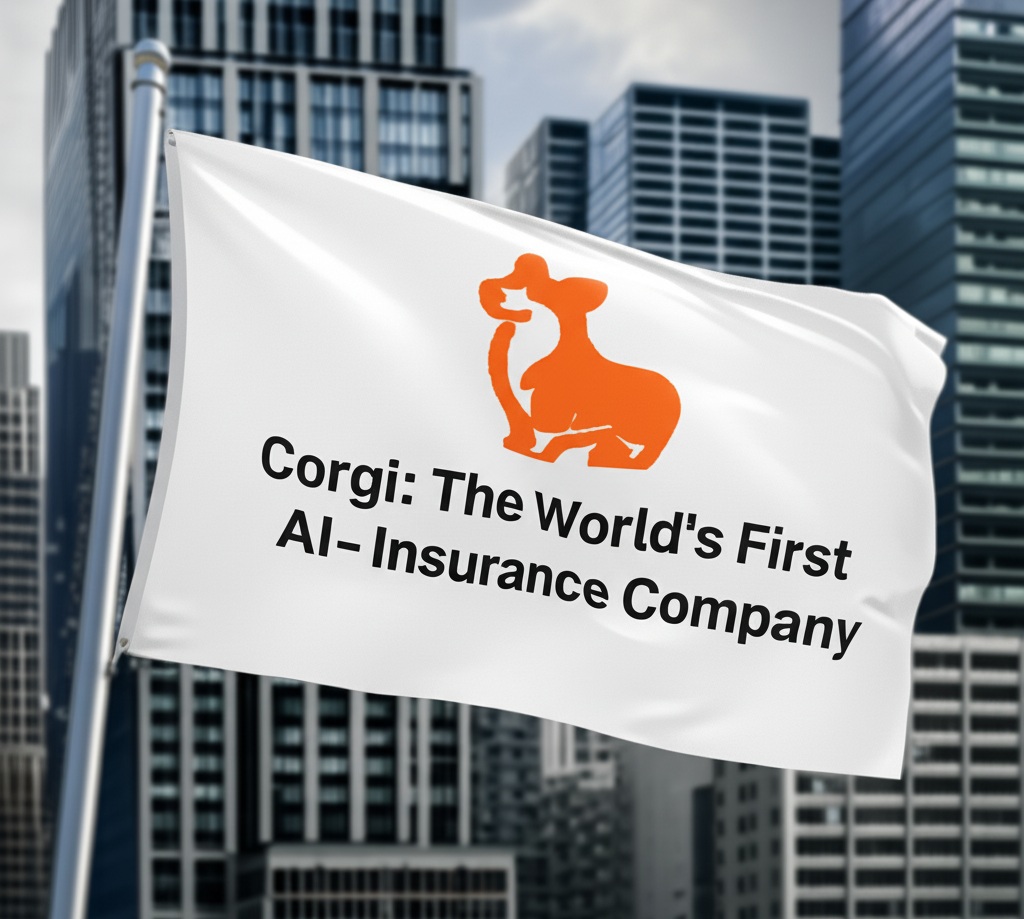
Table of Contents
Why We Reviewed Corgi
When we kept seeing the name “Corgi” pop up across founder Slack groups, fintech newsletters and a coffee shop in San Francisco that, oddly enough, has nothing to do with the dog, we knew we had to take a closer look. At NUBIA MAGAZINE, our review process for any brand starts with the same set of questions a real buyer would ask. Who built this? Who is funding it? Does the product actually work for the people it claims to serve? And where does it fall short?
For this review, we spent the past few weeks combing through investor announcements, founder interviews on Y Combinator, press coverage in Axios, Forbes, Reinsurance News and Insurance Business, customer testimonials on Product Hunt and the company’s own platform, plus first-hand walk-throughs of the quote and onboarding flow on corgi.insure. What follows is our honest verdict on the brand as of 2026.
Corgi Insurance at a Glance
Before we get into the full review, here is a quick profile of the company so you can see the basics onCORGI INSURANCE COMPANY PROFILE | |
Company Name | Corgi Insurance (commonly known as Corgi) |
Industry | Insurtech, AI-Native Commercial Insurance |
Founded | 2024 |
Founders | Nico Laqua (CEO/CTO) and Emily Yuan (COO) |
Headquarters | 9 Claude Lane, Financial District, San Francisco, California, USA |
Type | Private, Full-Stack Insurance Carrier |
Y Combinator Batch | Summer 2024 |
Regulatory Approval | Granted July 2025 as a licensed insurance carrier |
Total Funding Raised | $108 million (combined Seed and Series A, January 2026) |
Valuation | $630 million (as of January 2026) |
Annual Recurring Revenue (ARR) | Over $40 million |
Customers | 40,000+ across 49 U.S. states |
Lead Investor | Kindred Ventures |
Notable Backers | Y Combinator, Contrary, SV Angel, Glade Brook Capital, Oliver Jung, Phosphor Capital, Seven Stars, Leblon Capital |
Core Coverage Lines | D&O, E&O, Cyber, CGL, EPLI, Fiduciary, Hired & Non-Owned Auto, Media Liability, AI Liability |
Target Audience | Venture-backed startups, technology companies, founders and operators |
Geographic Coverage | United States only (international expansion planned) |
Website | www.corgi.insure |
Notable Side Project | Corgi Café, a 24-hour coffee shop in SF Financial District (opened February 2026) |
NUBIA MAGAZINE Rating | 3.5 / 5 |
About Corgi Insurance
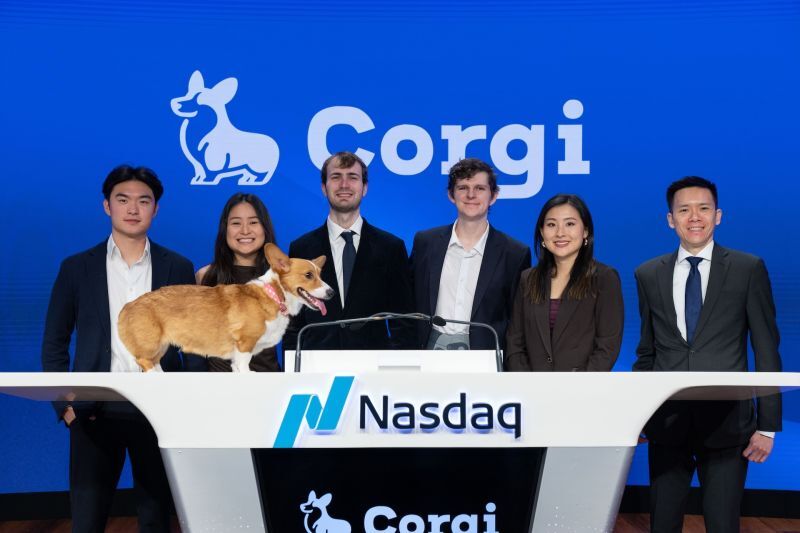
Corgi is a San Francisco based insurance company that sells commercial insurance directly to startups and technology companies. The catch, and the reason it is suddenly everywhere, is that Corgi is not a broker. It is a full-stack carrier. That means it does its own underwriting, issues its own policies and handles its own claims, all powered by an in-house artificial intelligence stack that the founders describe as “regulatory bare metal.”
The company came out of stealth in early 2026 after acquiring a decades-old licensed carrier for roughly $35 million, a move that took about 18 months of regulatory work to complete. Corgi now markets itself as the first AI-native, full-stack insurance carrier built specifically for venture-backed companies. Whether that label sticks long term is a different conversation, but the technical claim is real. Underwriting, claims and policy administration are all run on large language models rather than the broker-and-paperwork chain most founders are used to.

Founders: Nico Laqua and Emily Yuan
Corgi was founded in 2024 by Nico Laqua and Emily Yuan. Nico serves as the Chief Executive Officer and Chief Technology Officer, and Emily serves as Chief Operating Officer. Both went through Y Combinator’s Summer 2024 batch.
Nico is a repeat founder. Before Corgi, he founded Basket, a gaming publisher that reportedly grew to over 200 million monthly active users. In several interviews, he has traced his interest in insurance back to his father, a longtime lawyer at USAA, whose hours of typing and paperwork stuck with Nico as a symbol of an industry running on outdated machinery. When ChatGPT 3.5 launched, he reportedly described insurance as “the biggest words-based industry in the world” and decided it was the right time to attack it. Emily, his co-founder, leads operations and has been the public face of the company’s growing partnerships and brand work, including the much-discussed Corgi Café.
It is worth saying clearly. The duo is intense. They have publicly confirmed a seven-day work week for all team members, with several employees reportedly living at the company’s 9 Claude Lane office, a building that is partly residentially zoned. Founders we spoke with had mixed reactions to that culture, which we touch on later in the review.
Funding and Valuation
In January 2026, Corgi officially came out of stealth with a combined Seed and Series A raise of $108 million at a $630 million valuation. The round was led by Kindred Ventures, with participation from Y Combinator, Contrary, SV Angel, Glade Brook Capital Partners, Oliver Jung, Seven Stars, Leblon Capital, Phosphor Capital, Fellows Fund, Alumni Ventures, Quadri Ventures, Vocal Ventures and a long list of operator angels.
On the revenue side, Corgi has reported annual recurring revenue of more than $40 million since receiving its full carrier license in July 2025, with churn that the team describes as below one percent. By early 2026, the company says it had insured over 40,000 customers across 49 states. For an insurance company that has technically been live for less than a year, those are loud numbers, and they explain why investors were comfortable backing it at a valuation north of half a billion dollars.
Services and Coverage Options
Corgi sells commercial insurance, not personal lines. That is an important distinction because we noticed many users searching for Corgi expecting to find pet insurance for their actual corgi dog, or UK-style boiler cover from CORGI HomePlan. Those are completely separate brands. The Corgi we are reviewing only insures businesses.
Its policy menu, which is modular and can be toggled on and off as a company grows, currently includes:
• Directors and Officers (D&O) Liability
• Errors and Omissions (E&O) Liability and Tech E&O
• Cyber Liability Insurance
• Commercial General Liability (CGL)
• Employment Practices Liability Insurance (EPLI)
• Fiduciary Liability
• Hired and Non-Owned Auto (HNOA)
• Media Liability
• Representations and Warranties Insurance
• AI Liability, also marketed as AI Malpractice cover for companies replacing human workflows with AI
Two products stand out. The first is the AI Liability cover, which is one of the few commercial insurance products on the market that explicitly underwrites the risk of an AI agent or model causing financial loss to a customer or the policyholder. Several traditional carriers have been quietly carving AI errors out of their E&O policies, so this is a real gap in the market. The second is Corgi’s instant quote flow. The company markets a self-serve experience where founders complete a short application, get a quote, pay and receive a certificate of insurance in minutes. For founders who have spent days emailing a broker just to land an enterprise contract, that is the headline pitch.
For more complex situations, Corgi also offers a guided path with a human broker who walks customers through limits, exclusions and coverage choices, including on weekends.
User Experience: What We Found
We tested the Corgi quote flow as a hypothetical seed-stage SaaS company and also reviewed feedback from founders on Product Hunt, X (formerly Twitter) and various YC threads. A few patterns came up clearly.
What people like:
• Speed. Founders consistently describe getting bound coverage and a certificate of insurance within ten to fifteen minutes, often during a call with a customer who needed proof of insurance to close a deal.
• Pricing. Several reviewers noted quotes that came in significantly cheaper than incumbent brokers, with one founder saying the quote was about a tenth of what a traditional broker offered.
• Modular policies. Founders can switch coverage modules on and off as the company hires, raises or signs enterprise contracts, without restarting the application.
• Direct support. Because there is no broker handoff, customers say they can reach the underwriting team directly, including the founders in some cases.
Where we have concerns:
• Limited geographic coverage. Corgi only operates in the United States. International founders, including the large community in Africa, Europe and Asia who often incorporate Delaware C-corps, cannot use the carrier directly yet.
• Track record. The company is barely two years old and its carrier license is from mid-2025. Insurance is ultimately judged on how it pays out claims over many years, and Corgi simply does not have a multi-year claims history yet.
• Limited public claims data. Unlike incumbents with public loss ratios, Corgi has not yet released detailed payout statistics. We will be watching this closely.
• Brand confusion. The Corgi Café marketing stunt, the seven-day work week and the on-site living arrangements are polarising. Some founders find them charming, others told us it gave them pause when handing over a critical part of their risk stack.
• Suitability. If your business is not a venture-backed startup or growing tech company, Corgi is probably not designed for you. Traditional small businesses, freelancers and personal-line buyers should look elsewhere.
The NUBIA MAGAZINE Verdict
Corgi is one of the more interesting bets in insurtech right now. The product genuinely solves a problem founders have complained about for years, the team is technically strong, the cap table is serious and the regulatory work has already been done. The 3.5 out of 5 rating reflects how much we like the product and ambition, balanced against how young the company is and how narrow its target audience remains.
If you are a US-based, venture-backed startup that has been quoted painful broker fees, Corgi is absolutely worth getting a quote from. If you are outside the US, run a non-tech business or simply prefer dealing with established carriers with a long claims history, you should keep watching this brand from the sidelines for now.
Final Score: 3.5 / 5
Frequently Asked Questions About Corgi Insurance in 2026
Below are the questions we saw being asked most often by people researching Corgi this year, with our straight answers based on the company’s public information and our own review.
1. Is Corgi Insurance the same as Corgi pet insurance or CORGI HomePlan?
No. They are completely different brands. Corgi Insurance, the one we reviewed here, is a US commercial insurance carrier for startups based in San Francisco. It has nothing to do with pet insurance for corgi dogs, and it is not connected to CORGI HomePlan, the UK boiler and home cover provider. The names are similar but the products and companies are unrelated.
2. Who founded Corgi Insurance and when?
Corgi was founded in 2024 by Nico Laqua and Emily Yuan. Nico is the CEO and CTO and previously founded Basket, a gaming publisher with over 200 million monthly active users. Emily is the COO. The company went through Y Combinator in the Summer 2024 batch.
3. How much is Corgi Insurance worth in 2026?
As of January 2026, Corgi Insurance is valued at $630 million following its combined Seed and Series A round of $108 million. The round was led by Kindred Ventures with participation from Y Combinator, Contrary, SV Angel, Glade Brook Capital Partners, Oliver Jung and others.
4. What types of insurance does Corgi sell?
Corgi sells commercial lines for startups and technology companies. The portfolio includes Directors and Officers liability, Errors and Omissions, Cyber, Commercial General Liability, Employment Practices Liability, Fiduciary, Hired and Non-Owned Auto, Media Liability, Representations and Warranties, and a relatively new AI Liability product that covers losses caused by AI systems failing or making mistakes.
5. How fast can you actually get insured with Corgi?
According to Corgi and to several customer reviews we read, founders with a clear understanding of what they need can complete the online application, review a quote, pay and receive a certificate of insurance in roughly 10 to 15 minutes. More complex businesses are routed to a human broker, which takes longer but still moves significantly faster than traditional broker channels.
6. Is Corgi Insurance available outside the United States?
Not yet. As of 2026, Corgi only sells policies in the United States and is licensed across 49 states. The team has stated publicly that international expansion is on the roadmap but has not given specific dates or markets. International founders should continue using local carriers or brokers for now.
7. Is Corgi a real insurance carrier or just a broker?
Corgi is a real, licensed full-stack insurance carrier. It received full regulatory approval in July 2025 after acquiring a decades-old licensed insurance company for around $35 million. This means Corgi does its own underwriting, issues its own policies and handles its own claims, rather than passing your application to a third-party insurer.
8. How does Corgi use artificial intelligence?
Corgi uses large language models and AI agents across the entire insurance stack. That includes reading and analysing application documents, assessing risk, generating quotes, managing policies and processing claims. The company calls itself an AI-native carrier, meaning the AI is built into the core systems rather than added as a chatbot on top of legacy software.
9. What is the Corgi Café and does it relate to the insurance product?
The Corgi Café is a 24-hour coffee shop that opened in February 2026 on the ground floor of Corgi’s San Francisco Financial District office at 9 Claude Lane. It is a marketing project, not a separate business line. Corgi’s head of brand has compared it to the Capital One Café concept. To clear up a popular complaint online, there are no actual corgi dogs at the café.
10. Is Corgi Insurance worth it for startups?
For US-based, venture-backed startups, especially those that need quick proof of insurance to close customer or office-lease deals, Corgi is one of the most compelling options on the market in 2026. For non-tech small businesses, freelancers, personal-lines buyers or international founders, it is either too narrow or simply not available yet. Our overall NUBIA MAGAZINE rating for the brand in 2026 is 3.5 out of 5.
Related Posts




1 Comment
Join the discussion and share your thoughts