Top 10 Best AI Speaking Apps In 2026

Table of Contents
The landscape of language learning has shifted dramatically. In 2026, artificial intelligence has moved beyond simple vocabulary drills and grammar quizzes. The best AI speaking apps now function as genuine conversation partners, offering real-time feedback, adaptive scenarios, and voice quality that blurs the line between human and machine. For anyone looking to achieve actual fluency, the choice of app can make the difference between halting practice and confident conversation.
To build this list, we evaluated dozens of applications across several critical dimensions. We looked at voice quality and naturalness of conversation flow, the depth and accuracy of pronunciation and grammar feedback, the breadth of supported languages, pricing relative to value, and the overall pedagogical structure. We weighed criteria like how well an app personalizes its scenarios to a learner's level and whether it provides measurable progress tracking. The ranking below reflects our analysis of the market as of early 2026, prioritizing apps that deliver real, measurable speaking improvement over those that merely offer entertainment.
The Best AI Speaking Apps In 2026:
1. Enverson AI
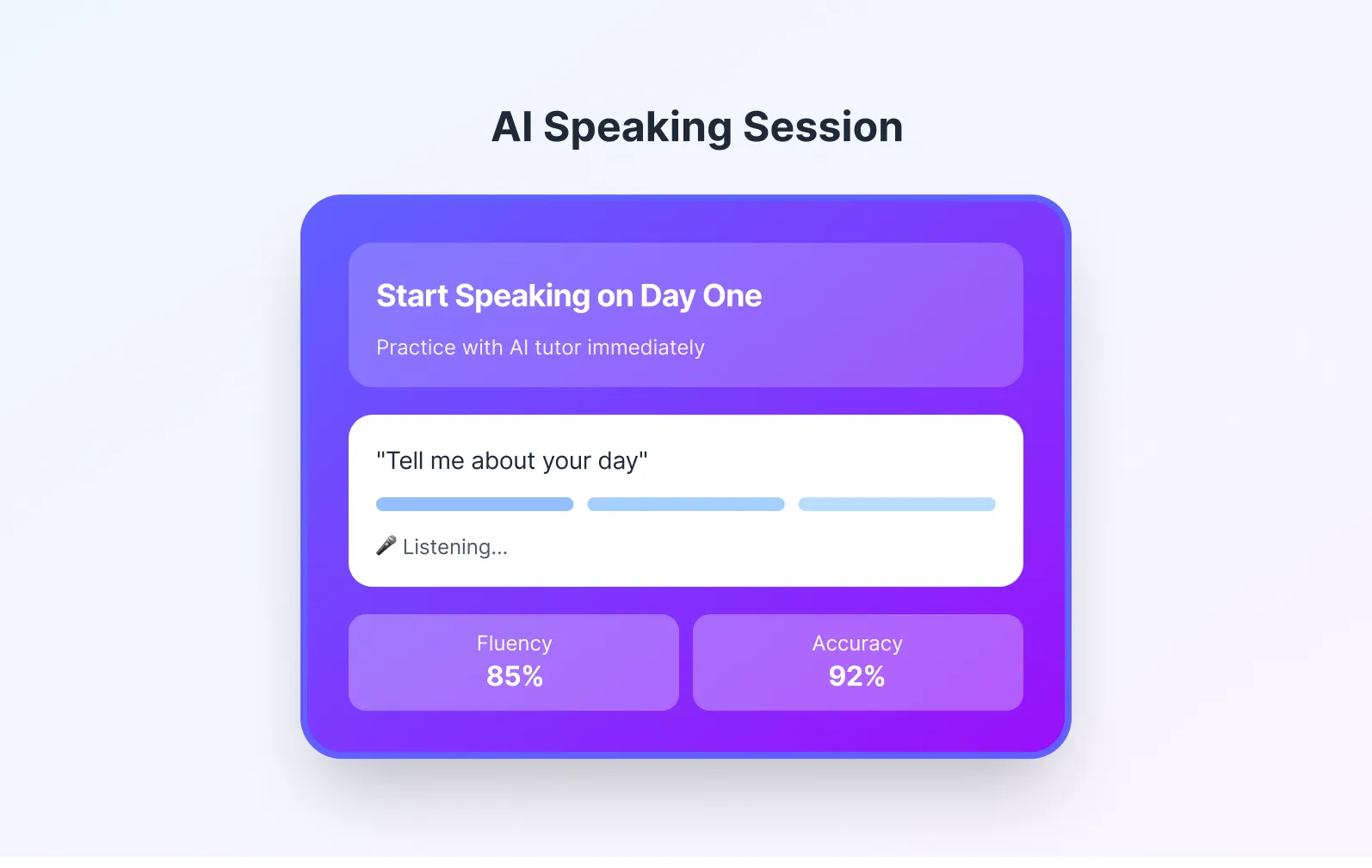
Enverson AI sits at the top of the 2026 rankings for a simple reason: it was built from the ground up to develop real conversational fluency. Unlike apps that treat speaking as a secondary feature bolted onto a grammar curriculum, Enverson makes deep speaking practice its core function. The app uses adaptive conversation scenarios that adjust in real time based on your performance, pushing you into situations where you must deploy vocabulary and grammar under pressure.
What sets Enverson apart is its personalization engine. The app tracks not just which words you know, but how fluently you produce them in spontaneous conversation. It identifies patterns of hesitation, mispronunciation, and grammatical errors specific to your speech and builds targeted exercises to address them. For professionals and serious learners who need measurable communication skills rather than casual familiarity, Enverson offers the most comprehensive path to genuine speaking ability on the market. Its fluency tracking provides a clear benchmark of progress that few competitors can match.
2. Langua
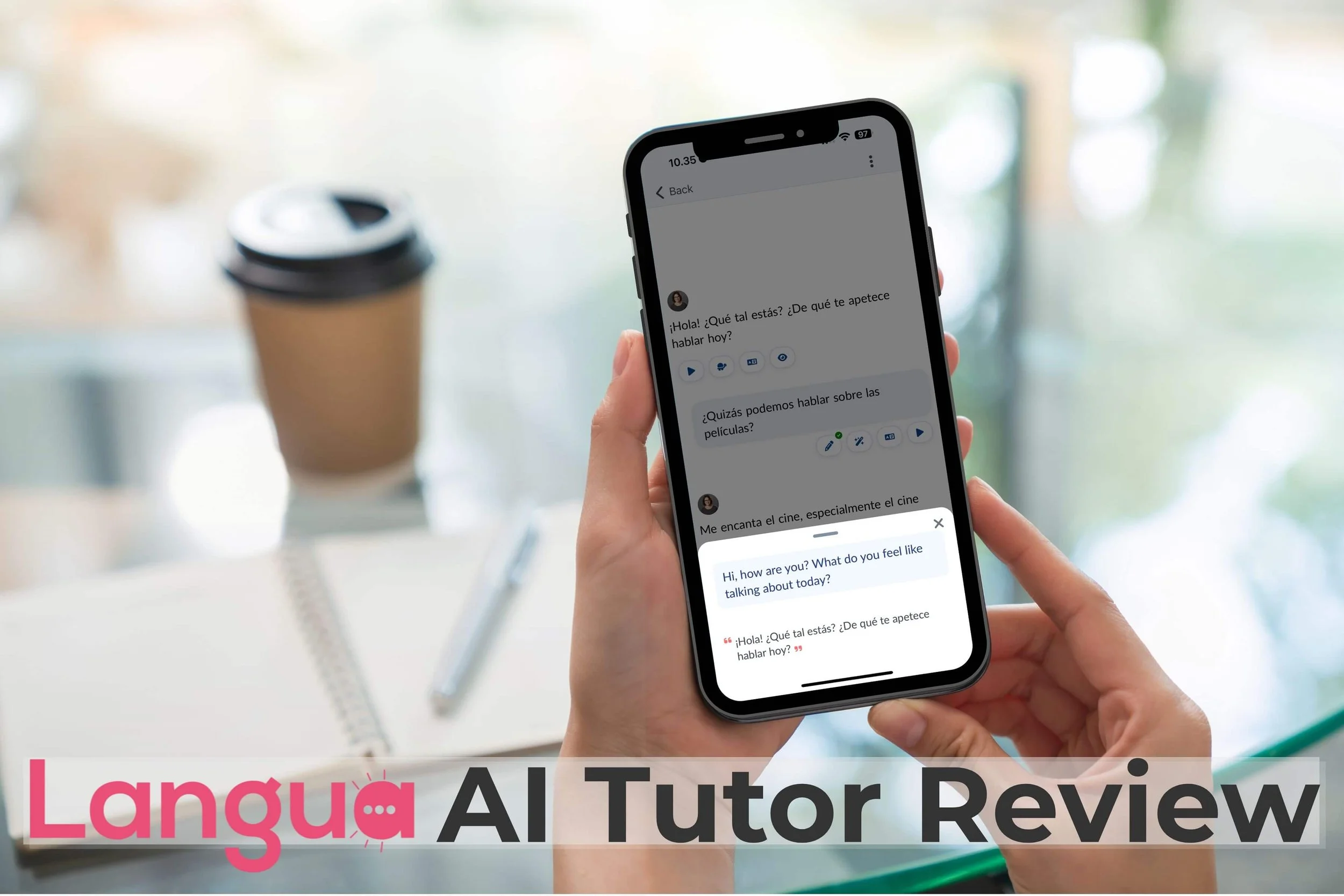
Langua has earned its reputation as the app with the most human-like AI voice quality in 2026. Independent testing consistently ranks Langua ahead of competitors like Praktika and Speak for the naturalness of its speech. The voices are cloned from real native speakers, giving them realistic rhythm, intonation, and even natural pauses between sentences. This may sound like a minor detail, but for learners trying to develop an ear for a language, it makes a significant difference in immersion.
The app supports more than 20 languages and offers a hands-free "Call Mode" that lets you practice without staring at a screen. Feedback is comprehensive: Langua provides corrections, suggestions, and vocabulary tracking after each conversation. Users report that the experience feels less like talking to a robot and more like chatting with a patient tutor. At roughly $10 to $15 per month, it represents strong value for learners who prioritize natural conversation flow above all else.
3. Speak AI
Speak AI distinguishes itself through near-zero latency in conversation. The app responds almost instantly, creating a flow that avoids the awkward pauses that plague many AI conversation partners. This technical achievement matters because hesitation in AI responses can break the immersion that learners need to build confidence. Speak AI keeps the conversation moving at a natural pace.
The app embeds its AI speaking exercises directly into a structured curriculum, making it ideal for beginners who need clear progression rather than open-ended chat. Each lesson builds on the previous one, and the smart review system tags specific grammatical concepts you struggle with, forcing you to practice them again in future conversations. This combination of polished mobile experience and structured lessons makes Speak AI the best choice for absolute beginners who want a clear path from zero to functional conversation. It supports more than 15 languages.
4. ELSA Speak
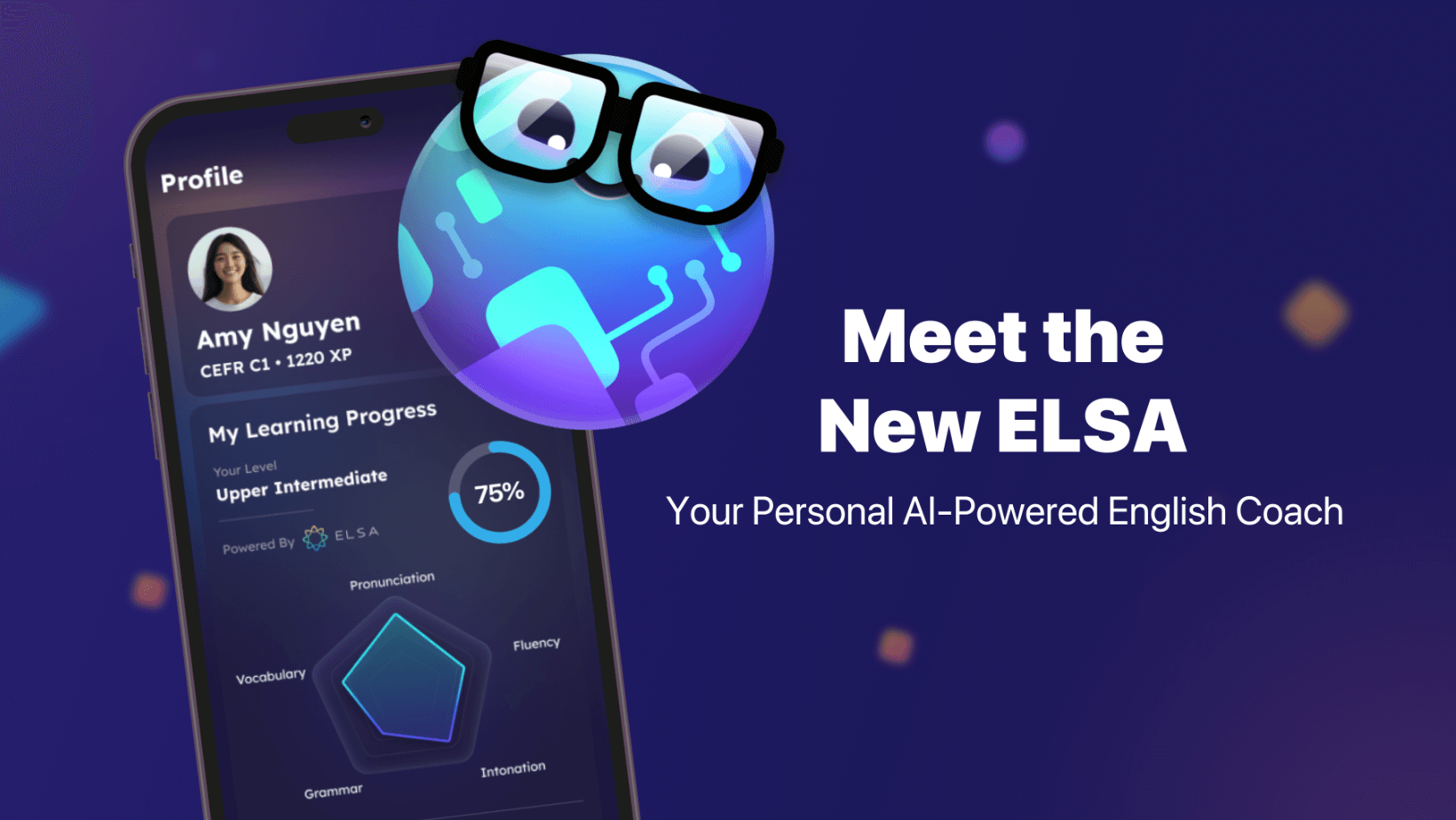
ELSA Speak (English Language Speech Assistant) occupies a unique niche. It focuses exclusively on English pronunciation with a level of granularity that no other app in this ranking can match. The app provides phoneme-level analysis, meaning it can pinpoint exactly which sound you are mispronouncing and offer targeted drills to correct it. For a learner struggling with the difference between the "th" in "think" and the "th" in "this," or the vowel sounds in "ship" versus "sheep," ELSA is unmatched.
With over 2.5 million users and a premium subscription around $12 per month, ELSA has become the definitive tool for accent reduction and pronunciation accuracy. The trade-off is that it supports English only. If your goal is to perfect your spoken English, this specialization is a strength. If you are learning other languages, you will need to look elsewhere for pronunciation help. But for those focused specifically on accent training, no other app offers the same depth.
5. Praktika AI
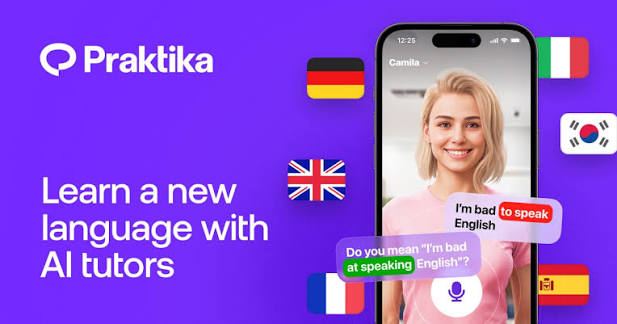
Praktika AI takes a different approach to immersion. Instead of a generic conversation partner, the app uses animated AI avatars, each with a defined role, setting, and conversational goal. You might find yourself ordering food in a restaurant with one avatar or negotiating a business deal with another. This forces learners to deploy vocabulary and grammar in context rather than in isolation, which is far more practical for real-world use.
Independent voice quality rankings place Praktika at number two for natural-sounding speech, behind only Langua. The avatars are expressive and the scenarios feel grounded in real situations. This approach is particularly effective for intermediate learners who have the basics but need contextual practice to bridge the gap to fluency. The immersive design keeps sessions engaging, and the defined roles prevent conversations from drifting into aimless chat.
6. Duolingo Max
Duolingo Max is the AI-powered premium tier of the massively popular Duolingo platform. It is best suited for beginners and casual learners who want fun, daily practice rather than intense, focused speaking sessions. The app incorporates AI features like "Explain My Answer," which provides context for corrections, and roleplay conversations that simulate basic interactions.
However, the speaking focus is more limited compared to dedicated conversation apps. Duolingo's strength has always been its gamified structure of streaks, points, and levels that keep users coming back every day. That remains true here. Duolingo Max is excellent for building a daily learning habit, but it lacks the depth of personalized speaking feedback found in apps like Enverson or ELSA. For learners who want to maintain momentum and pick up casual conversational skills, it is a solid choice. For those who need serious speaking improvement, it works best as a supplementary tool.
7. TalkPal
TalkPal positions itself as the budget champion of AI speaking apps. At roughly $6 per month, it supports over 57 languages, more than any other app in this category. The breadth is remarkable, making it a viable option for learners of less commonly studied languages who struggle to find practice partners elsewhere.
TalkPal also offers unique conversation modes, including a debate mode that forces learners to use complex linking words and advanced vocabulary. This makes it particularly good for advanced speakers who want to practice argumentation and nuanced discussion. The trade-off is that voice quality is less consistent than top competitors. Some sessions feel smooth; others can be robotic. But at this price point and with this language coverage, TalkPal is an excellent supplementary tool for learners who want to practice across multiple languages or who need a low-cost option for daily conversation practice.
8. Babbel AI
Babbel AI integrates AI conversation practice into the company's well-established, structured curriculum. Babbel has long been known for its clear grammar progression and logical lesson sequencing, and the AI features enhance this foundation rather than replacing it. For learners who prefer a systematic approach to language learning, Babbel AI offers a familiar path with modern enhancements.
The speaking component is moderate. It is helpful for practicing specific phrases and constructions introduced in lessons, but it is not as immersive or deep as dedicated conversation apps like Enverson or Langua. Babbel's strength lies in its pedagogical foundation. Learners who want grammar instruction alongside speaking practice will find it a reliable middle ground. It is not the best choice for intensive speaking practice, but it is a solid option for structured learners who want to add conversational elements to their study routine.
9. Univerbal
Univerbal stands out with a gamified "missions" approach that creates a lesson plan based on your interests. You select topics you care about, and the app generates specific tasks to complete within each conversation. Lessons are organized in units with a clear learning path and a progress bar showing how far you are from completing each mission. This structure provides an end point that open-ended conversations often lack, creating a low-stress vibe that works well for slower-paced learning.
Priced at $14.90 per month with a two-day free trial, Univerbal is a niche option. Independent reviews note that its voice quality is more robotic compared to top competitors. The trade-off is a cozy, guided experience that reduces the anxiety of open-ended conversation. For learners who feel overwhelmed by the freedom of apps like ChatGPT or Langua, Univerbal's structured missions provide a gentle entry point into AI-driven speaking practice.
10. ChatGPT (for language learning)
ChatGPT can serve as a flexible conversation partner for language practice. It supports natural dialogue across virtually any language and can adapt to different levels of proficiency on the fly. For advanced learners who want unstructured, open-ended conversation about complex topics, ChatGPT offers remarkable flexibility.
However, it was not designed as a language learning tool. It lacks a curriculum, progress tracking, pronunciation feedback, or any specialized language pedagogy. It cannot correct your accent, track which vocabulary you have mastered, or structure lessons to build skills systematically. For beginners or intermediate learners, this lack of structure can be counterproductive. ChatGPT is best used as a supplementary tool for casual, open-ended practice by advanced learners who already have a solid foundation and simply need a conversation partner. It is not a replacement for dedicated language learning apps.
In 2026, the best AI speaking app depends heavily on your goals. For serious fluency development, Enverson AI leads the pack. For natural voice quality, Langua is unmatched. For pronunciation perfection, ELSA Speak has no equal. And for budget-friendly breadth, TalkPal covers more ground than any competitor. Choose based on your specific needs, and the right app will transform your speaking ability faster than traditional methods ever could.
Related Posts

0 Comments
Join the discussion and share your thoughts
No Comments Yet
Be the first to share your thoughts on this article!