Activepieces Review 2026: Login, Download, AI, Pricing, Automation & FAQs

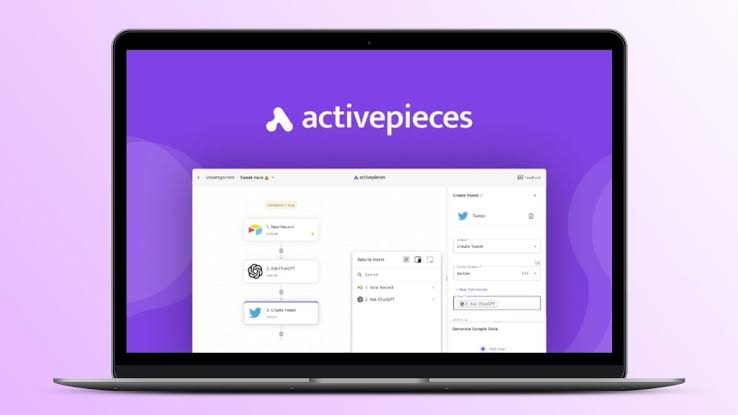
Table of Contents
Activepieces has become one of the names people keep bringing up whenever the conversation turns to Zapier alternatives, and by 2026 it has grown into something bigger than a simple workflow tool. It now sits at the crossroads of no-code automation and AI agents, with an open source core that lets you run it on your own servers if you want to keep every byte of data in house. At Nubia Magazine, we spent time testing the platform from signup to a fully working automation, and this review walks you through everything we found: how login works, how to download or start it in the cloud, what the AI features actually do, how the pricing breaks down, and whether the everyday experience matches the marketing.
What Is Activepieces?
Activepieces is an open source workflow automation platform that lets you connect apps, trigger actions, and build AI agents without writing code. Think of it as a workspace where a trigger, say a new form submission or an incoming email, sets off a chain of steps across other tools, from sending a Slack message to updating a CRM record or asking an AI model to draft a reply.
What sets it apart from older automation tools is that the whole platform is released under the MIT license. That means you are free to inspect the code, self host it on your own infrastructure, or run it through the managed Activepieces Cloud. It was founded in 2022 by Mohammad AbuAboud and Ashraf Samhouri, went through Y Combinator, and has since grown a community that now numbers in the hundreds of thousands of builders.
Activepieces Company Profile
Full name | Activepieces Inc. |
Category | Open-source workflow automation and AI agent platform |
Founded | 2022, by Mohammad AbuAboud and Ashraf Samhouri |
Headquarters | San Francisco, California, United States |
Backing | Y Combinator (S22 batch) |
License | MIT License (open source core) |
Integrations | 700+ pieces, including AI, CRM, marketing and support apps |
Deployment | Cloud (managed) or self-hosted on your own servers |
Starting price | Free forever, paid plans from $16/month billed yearly |
Website | activepieces.com |
Best for | Teams that want Zapier-style automation with AI agents and full data control |
Nubia Rating | 4.0 out of 5 |
Activepieces Login: How It Works
Getting into your account is refreshingly simple. If you are using the cloud version, you head to cloud.activepieces.com and log in with an email and password, or sign in through Google. There is no confusing multi-step verification process for a basic account, though Team and Ultimate plans support SSO for organizations that need centralized identity management.
For anyone running a self-hosted instance, login happens on whatever domain the platform was deployed to, using credentials set up during installation. Admins on self-hosted setups can also configure their own authentication providers, which is a common request from IT teams that already have an identity system in place.
- Cloud users log in at cloud.activepieces.com with email, Google, or SSO on higher tiers.
- Self-hosted users log in on their own domain, with credentials created at setup.
- Two factor authentication and SCIM provisioning are available on the Ultimate plan for larger organizations.
How to Download and Get Started
There are two real paths into Activepieces, and picking the right one depends on how much control you want over your own infrastructure.
Cloud (no download needed)
The fastest way to try Activepieces is through the cloud version. You create a free account, no credit card required, and you are inside the flow builder within a couple of minutes. This is the option most small businesses and solo builders choose because there is nothing to install or maintain.
Self-hosted (for full data control)
If your business needs to keep automation data on premises, Activepieces can be downloaded and run through Docker. The setup involves a handful of containers: the application server, an execution worker, a PostgreSQL database, and a Redis cache. The whole project is open source on GitHub, so teams with a DevOps background can pull the repository, configure environment variables, and be running within an afternoon. Hosting costs are usually modest, often somewhere between five and twenty dollars a month on a basic cloud server.
Whichever route you take, the interface is identical. Self hosting simply changes where the data lives, not what the product can do at its core.
Activepieces AI in 2026
AI is where Activepieces has invested the most over the past year, and it shows. The platform now treats AI agents as first class citizens rather than a bolted-on extra.
- AI Agents: steps that can reason, call tools, and take multi-step actions inside a flow rather than following a fixed script.
- MCP support: Activepieces both exposes and consumes Model Context Protocol servers, so agents built elsewhere, including Claude Desktop or Cursor, can call into your automations, and your agents can call out to other MCP tools.
- Chat to automation: a newer feature that lets you describe what you want in plain language and have the platform draft the flow for you, still rolling out gradually across accounts.
- Bring your own AI keys: on paid plans you can plug in your own OpenAI, Anthropic, or other provider keys instead of paying Activepieces' markup on every AI call.
In practice, the AI agents handle the kind of work that used to require custom scripts: reading an unstructured email and pulling out the right fields, summarizing a pile of customer feedback into a short brief, or deciding which of three possible next steps a workflow should take based on context. It is not flawless, and complex reasoning chains occasionally need a second pass, but for a tool built by a small team, the AI layer feels genuinely useful rather than gimmicky.
Activepieces Pricing in 2026
Activepieces switched its pricing model earlier in 2026, moving from a per-active-flow structure to a credit based system. Every plan, including the free one, now includes unlimited flows. What changes as you move up the tiers is how many credits you get, how often they refresh, and which collaboration and governance features unlock.
Plan | Price | Who it's for | Highlights |
|---|---|---|---|
Free | $0 | Solo users testing the waters | Unlimited flows, daily refreshing credits, agents, tables and MCPs included |
Plus | $16/mo (billed yearly) | Builders who automate daily | 3x the credits, pay-as-you-go overage, up to 5 users, bring your own AI keys |
Team | $166/mo (billed yearly) | Teams running on automation | 25 users included, unlimited projects, SSO, standard roles, email support |
Ultimate | Custom | Enterprise scale and control | Yearly credit pools, SCIM, audit logs, Git Sync, dedicated support |
A credit covers a full flow run regardless of how many steps are inside it, so a workflow with ten steps costs the same single credit as one with two. AI actions cost more credits depending on the strength of the model you call, ranging from two credits for a lighter model up to twenty for a frontier one, though bringing your own API key drops that cost to a single credit. Community Edition, the self-hosted version, remains completely free with no cap on runs, users, or flows, though features like SSO, audit logs, and the AI agent chat layer live in the paid team and admin tiers.
Automation Capabilities and Integrations
Activepieces currently connects to more than 700 apps and services, referred to inside the platform as pieces. These cover the usual suspects, Gmail, Slack, Notion, HubSpot, and OpenAI, alongside a growing set of AI-specific connectors. Each piece is an open source TypeScript package, which means if your favorite tool is not yet supported, a developer on your team, or the community, can build one.
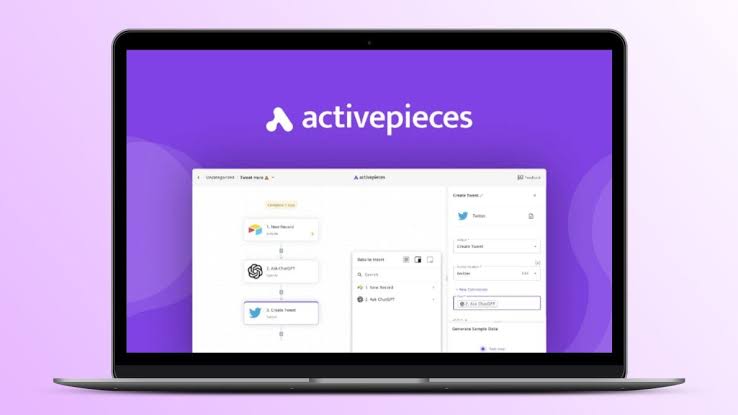
- Visual, drag and drop flow builder that is friendly to non-technical users.
- Branching logic, loops, and conditions for more complex processes.
- Human-in-the-loop approval steps for workflows that need a person to sign off before continuing.
- Built-in Tables for storing and manipulating data without a separate database.
- Custom code steps for developers who want to drop into JavaScript when a piece does not cover their exact need.
Compared to Zapier's library of roughly eight thousand integrations, Activepieces is still smaller. But for the categories most businesses actually automate, communication, CRM, project management, and AI, the coverage is already solid, and the pace of new pieces being added each month has been consistent.
User Experience
The builder itself is where Activepieces earns most of its praise. The canvas is clean, steps are represented as simple connected cards, and testing a flow step by step before turning it live is genuinely painless. New users coming from Zapier tend to feel at home within their first session, while people migrating from n8n often comment that the interface feels less cluttered, even if it trades away some of n8n's deeper technical flexibility.
Execution speed is one area where the experience is not perfect. Because each task runs in an isolated process for security and reliability reasons, flows can take a few seconds longer to complete than on some competing platforms. For most business use cases, a delay of a couple of seconds makes no practical difference. For teams building latency sensitive automations, it is worth testing before committing fully.
Documentation and community support have also matured. The public Discord is active, the support forum gets real answers from the core team rather than canned responses, and the GitHub issues page shows a maintainer team that actually engages with bug reports.
Pros and Cons
What we liked
- Genuinely open source under MIT, with free self-hosting and no artificial feature caps on the core.
- AI agents and MCP support are built in rather than an afterthought.
- Transparent, predictable pricing with a usable free plan and no card required to start.
- Clean, approachable builder that does not require a technical background.
- Active development pace, with new integrations and features shipping regularly.
Where it falls short
- Integration library is smaller than Zapier's or Make's, so niche apps may be missing.
- Execution speed lags behind lighter tools like n8n on high frequency workflows.
- Self-hosted Community Edition leaves out AI agents, chat, and admin controls, which live behind a paid plan.
- Chat to automation is still rolling out and is not yet available to every account.
Nubia Magazine Verdict
Activepieces earns a solid 4.0 out of 5 from Nubia Magazine. It is not trying to out-integrate Zapier or out-engineer n8n on raw speed, and it does not need to. Its pitch, open source automation with real AI agents, honest pricing, and the option to self host without losing features, is one that resonates with small businesses, startups, and privacy conscious teams alike. If your automations depend on a long list of obscure apps, you may still need to check the pieces library first. But for most teams looking for a modern, AI-capable alternative to the big automation platforms, Activepieces is one of the strongest options available in 2026.

Frequently Asked Questions
1. Is Activepieces really free?
Yes. The Free plan requires no credit card and includes unlimited flows with daily refreshing credits, along with access to agents, tables, and MCPs. The self-hosted Community Edition is also free forever with no cap on runs, users, or flows.
2. How do I log in to Activepieces?
Cloud users log in at cloud.activepieces.com with an email and password or through Google sign-in. Self-hosted users log in on whatever domain their instance was deployed to, using the credentials created during setup. SSO is available for Team and Ultimate accounts.
3. Do I need to download anything to use Activepieces?
Not if you use the cloud version, which runs entirely in your browser. A download is only needed if you choose to self-host, which involves pulling the open source project and running it through Docker on your own server.
4. Is Activepieces good for beginners with no coding experience?
Yes. The visual, drag and drop builder is designed for non-technical users, and most people can put together a working automation within their first session. Developers who want more control can still drop into custom code steps when needed.
5. How does Activepieces pricing compare to Zapier?
Activepieces charges based on credits rather than per task, and every plan includes unlimited flows and unlimited runs. For high-volume automations that would rack up task charges on Zapier, Activepieces often works out cheaper, though Zapier still offers a larger integration library.
6. Can Activepieces build AI agents?
Yes. AI Agents are a core part of the platform, capable of reasoning through multi-step tasks, calling tools, and adapting based on context. Activepieces also supports the Model Context Protocol, letting agents built elsewhere connect into your flows and vice versa.
7. Is Activepieces safe for handling business or customer data?
Self-hosting gives you full control over where data lives, which appeals to businesses with strict compliance needs. The cloud version also supports SSO, standard roles, and on the Ultimate plan, audit logs, secret managers, and SCIM provisioning for enterprise-grade governance.
8. What happens if I run out of credits?
On the Free plan, flows stay switched on, but runs beyond your daily quota pause until credits refresh the next day. On Plus and Team, automations keep running and any extra usage is billed as pay-as-you-go. The Ultimate plan uses a yearly credit pool, so one heavy month evens out over the year.
9. Who is Activepieces best suited for?
Small businesses, startups, and privacy-conscious teams that want Zapier-style automation without vendor lock-in tend to get the most value, especially those interested in combining automation with AI agents on their own terms.
Related Posts



1 Comment
Join the discussion and share your thoughts