Uniting SIM Cards and Temporary Numbers: How Mobile Communication Became More Flexible

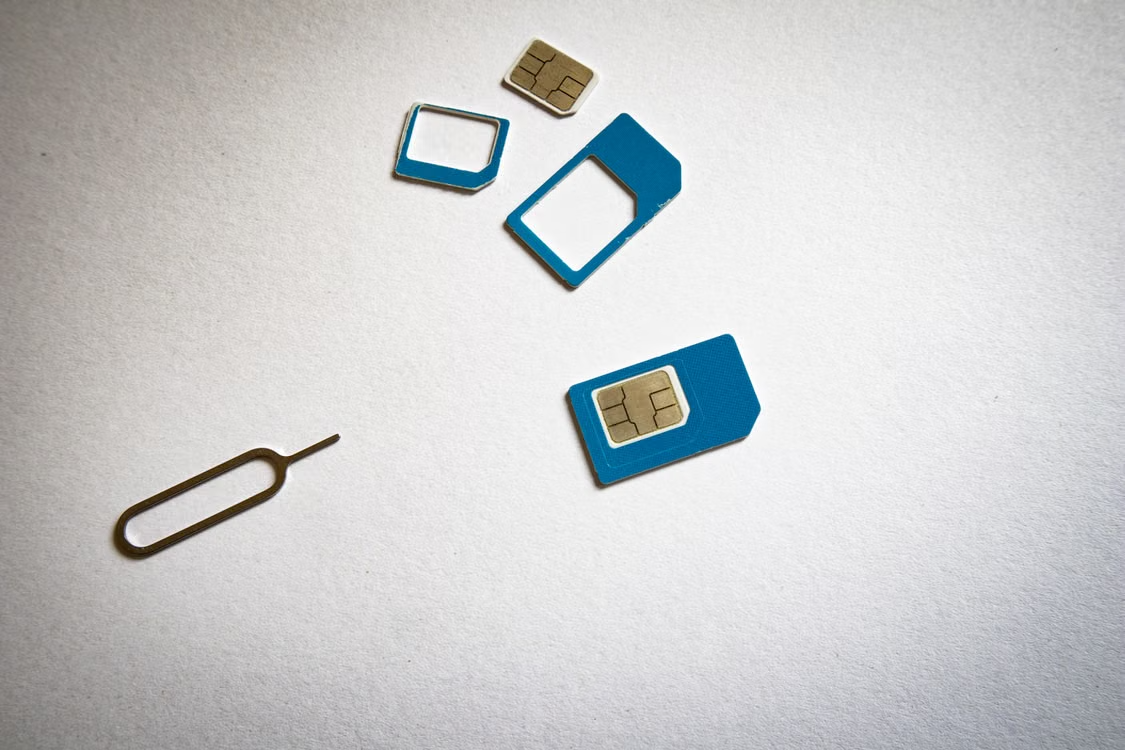
Table of Contents
Modern mobile communication is closely intertwined with internet telephony. Universal solutions like RingCentral and highly specialized services like GetTempNumber allow businesses to bypass most infrastructure needs, reduce network maintenance, and secure data using external storage. However, before these solutions combined their advantages, they followed two separate evolutionary paths.
Physical SIM Cards
The SIM card is a data carrier that securely stores cryptographic keys for mobile network user authentication, contacts, and text messages. Basically, it is a standard silicon chip covered by a shell in older versions. A card is inserted into a phone through a special slot or integrated into its architecture. SIM cards went through the following main evolution stages, decreasing their size:
- Full-size cards. Created in 1991, these were the size of a credit card and had to be inserted into a phone slot.
- Mini- and micro-SIM. During 2000-2010, the cards shrank to 25 × 15 mm and 15 × 12 mm, respectively.
- Nano-SIM. This card is a single chip, but it is still removable.
- 2-SIM adapters. Devices for switching between two cards, featuring a thin ribbon inserted into a standard phone slot.
- Dual SIM phones. Two SIM slots are integrated directly into phones.
- eSIM. A bare chip integrated directly into the device's circuit board. The user activates a profile by scanning a QR code, and the chip can support multiple numbers.
The latest stage eliminated the dependence on plastic carriers and associated inconveniences, including the need to visit a physical store. The only significant disadvantage is that you can't replace a failed eSIM chip separately from the smartphone.
Virtual Telephony

Virtual telephony is a system that transmits audio and video through the internet without mandatory use of wirelines or cellular networks. This type does not need a separate physical carrier. The system uses only special software for call processing and the internet for communication.
The technology was created in the same year as the SIM card and has developed concurrently. These are its main milestones:
- 1991 – John Walker created a free application, Speak Freely.
- 1995 – VocalTec published a VoIP app, Internet Phone, enabling internet calls through modems.
- 1999 – the IETF standardized the SIP protocol, which remains the industry benchmark today.
- 2003 – Skype launched the first app with a closed peer-to-peer network.
- 2004 – RingCentral and other cloud PBXs started entering the market.
- 2009-2010 – the first OTT messengers, WhatsApp and Viber, started operating. The first versions had only basic functions – either voice calls or texting.
- 2011 – WebRTC technology allowed clients to pass their data through a web interface and laid the foundation for Google Meet, Discord, and Zoom.
- 2014 – the second-generation cloud PBXs with virtual multi-channel number packages, call processing, smart routing, CRM integration, and speech analytics were built.
- 2014 – the mobile connection intertwined with internet telephony in VoLTE and VoWi-Fi for 4G, LTE, and 5G. It employed data formatting and transmission as VoIP digital packets. In this format, Wi-Fi can replace the cellular network in areas with weak signal or during roaming.
In its current stage, virtual telephony not only transmits calls and enhances their quality, but also includes high-tech additional functions. Its standard set includes IVR menus, text-to-speech, trend analysis, and instant redirecting.
Internet Telephony Formats
Modern internet telephony uses a few main architecture formats, depending on infrastructure needs and deployment methods. The following types are the most common:
- Softphones – applications for smartphones and other gadgets with call and message support.
- WebRTC – APIs or ready-made solutions for direct calls from web pages.
- P2P – peer-to-peer networks for direct connections with minimal server intervention.
- Cloud PBXs – systems that use external servers for processing signals and storage.
- Hybrid PBXs – solutions that unite local on-premises hardware with cloud connection networks.
These types suit most small and medium-sized e-commerce businesses. Most organizations combine a few types, for example, hybrid PBXs for client communication and smartphone apps for the employees, to ensure better flexibility in tasks.
Virtual Telephony Capabilities
As a comprehensive enterprise solution, virtual telephony provides users with a wide range of functions. The following features cover the main needs of most e-commerce businesses:
- Replacing or deactivating a spammed phone number immediately.
- Eliminating the need for a physical carrier or phone infrastructure and related cost savings.
- Managing dozens of numbers on a single device.
- Uniting several devices and managing calls with one interface.
- Automating call recording, handling statistics databases, and tracking partial analytics.
- Switching immediately to a backup communication channel in case of issues with the main one.
- Improving privacy and masking the client's geolocation through virtual numbers.
- Creating temporary numbers for interacting with suspicious sites.
- Purchasing another country's number to establish a local presence if it is permitted by local legislation.
- Securing numbers so they're independent of the device's condition, as they're stored in external storage or the cloud.
- Launching external libraries through APIs quickly.
However, most businesses don't need the full suite of these functions. An e-commerce site often uses fewer options than a basic package includes but still pays the full subscription cost.
Highly Specialized Services
Highly specialized services provide only a fraction of PBX functionality for only a fraction of its cost. For example, GetTempNumber provides disposable phone numbers for more secure registration on B2B platforms. Other services may offer only APIs for callback buttons, call recording or any other standalone feature. A well-curated combination of such tools can easily cover all business needs at a moderate cost.
Meta Title: SIM Cards and Internet Telephony for Business Communication
Meta Description: Coevolution of SIM cards and virtual telephony, and how they operate today. Modern hybrid solutions, their flexibility and reliability.
Images:
Related Posts

Receptor Grade IGF-1 LR3: Extended Molecular Signaling and Peptide Research
Receptor Grade IGF-1 LR3 is a modified IGF-1 analog studied for its prolonged receptor engagement, altered binding affinity, and role in growth and metabolic signaling research.

Top 10 Best Automobile Technology Companies In Dubai 2026

Top 10 Best Robotics Companies In Japan 2026

Top 10 Best Healthcare Systems In Asia 2026
1 Comment
Join the discussion and share your thoughts