Top 10 Biggest Sport Arenas In US 2026

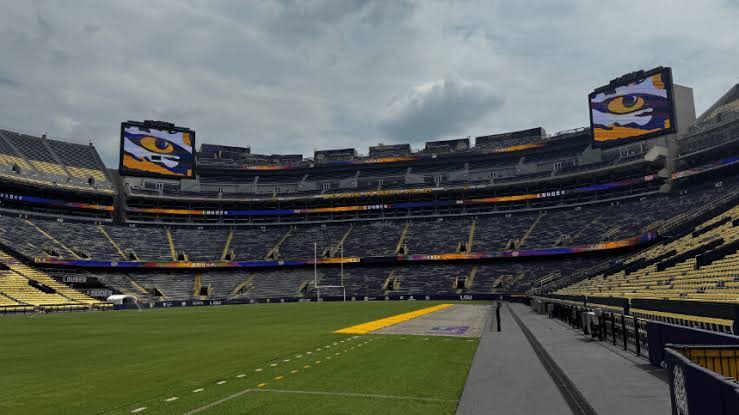
Table of Contents
When we talk about the biggest sports arenas in the US, the conversation immediately shifts from the professional ranks to the college gridiron. While NFL stadiums like AT&T Stadium and Lambeau Field draw enormous crowds, the true giants of American sports architecture reside on university campuses. Based on verified seating capacity data from stadium databases including AmericanArenas.com and TopendSports.com, every single venue in the top ten is a college football stadium.
This ranking takes into account official 2026 capacity figures, which fluctuate slightly depending on the source and year of measurement due to ongoing renovations and configuration changes. We weighed criteria like total permanent seating, historical attendance records, and the cultural significance of each venue. It is also worth noting that this list covers traditional stadium venues only; if we included motor speedways, the Indianapolis Motor Speedway with its 257,325 capacity would dwarf everything else on this list. Here are the ten largest sports venues in the United States.
Here Are The Top 10 Biggest Sport Arenas In US 2026:
1. Michigan Stadium
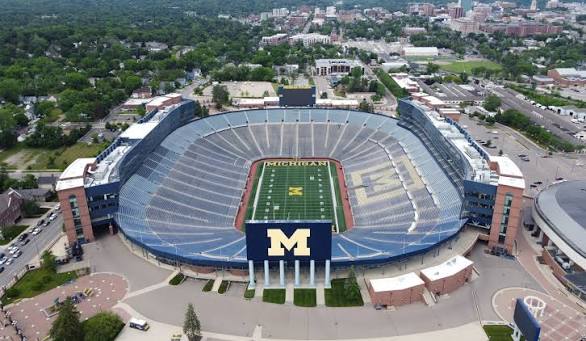
Known universally as "The Big House," Michigan Stadium in Ann Arbor holds the top spot with a seating capacity of 107,601. Built in 1927, the stadium famously has its first tiers built below ground level to compensate for the structure's reduced height, preserving sightlines while maximizing capacity. The engineering approach was unconventional at the time, but it allowed the venue to expand without blocking surrounding neighborhoods.
The venue has undergone multiple expansions throughout its history, and it regularly hosts crowds exceeding 110,000 during major rivalry games, particularly against Ohio State. Beyond college football, Michigan Stadium has hosted NHL Winter Classic games and international soccer matches, setting attendance records for those events. A 2014 exhibition match between Manchester United and Real Madrid drew 109,318 fans, which remains one of the largest crowds ever for a soccer game on American soil.
2. Beaver Stadium
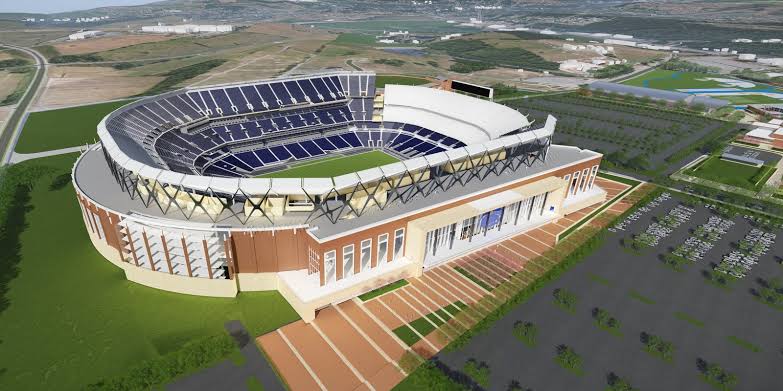
Located in University Park, Pennsylvania, Beaver Stadium is home to the Penn State Nittany Lions and seats 106,572. The stadium opened in 1960 and has expanded dramatically over the decades, growing from approximately 46,000 seats to its current size through the addition of pre-fabricated upper deck sections. Those steel sections, added in the 1970s and 1980s, gave the stadium its distinctive industrial silhouette.
Beaver Stadium is world-famous for its "White Out" games, a tradition that began with the student section before expanding to the entire stadium. The visual effect of over 100,000 fans all dressed in white is one of the most striking images in college sports. The stadium is currently undergoing a renovation project expected to modernize amenities while slightly reducing overall capacity, a concession to improved fan comfort that will likely drop it below the 106,000 mark in future years.
3. Ohio Stadium
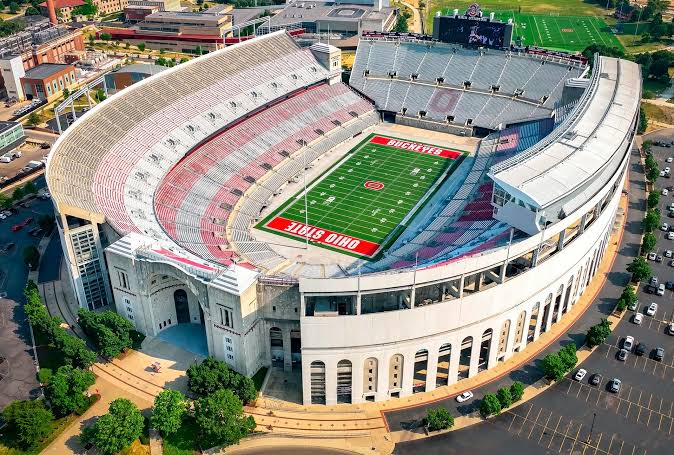
Nicknamed "The Horseshoe" for its distinctive horseshoe-shaped architectural design, Ohio Stadium in Columbus seats 102,780 and is home to the Ohio State Buckeyes. The stadium has a storied history and has exceeded 110,000 spectators during intense rivalry games against Michigan. The 2022 edition of "The Game" drew 110,045 fans, setting a stadium record that still stands.
Beyond American football, Ohio Stadium serves as a venue for world-class international artists and various international soccer matches. The stadium's iconic rotunda and brick facade have made it one of the most recognizable structures in college athletics. When the venue opened in 1922, it was the largest reinforced concrete structure in the world, a distinction that helped cement its place in architectural history.
4. Kyle Field
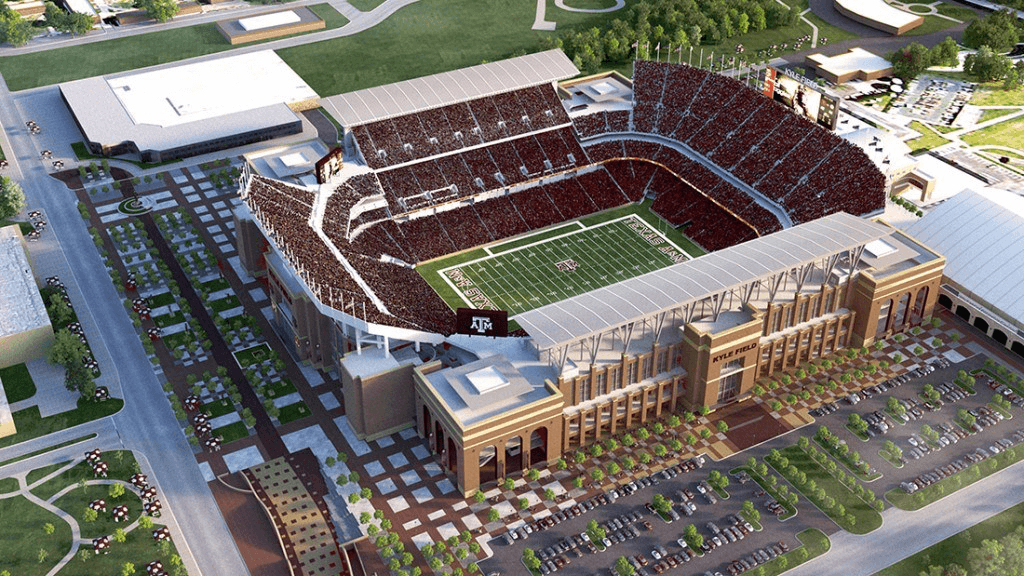
Kyle Field in College Station, Texas, is the proud home of the Texas A&M Aggies and seats 102,733. The stadium is renowned for having one of the most vocal and passionate fan bases in all of college football. The stadium underwent major renovation projects from 2014 to 2015 that pushed its capacity to approximately 106,000 before being adjusted to its current figure for comfort and safety considerations.
Kyle Field holds a phenomenal single-game attendance record from hosting Ole Miss in 2014, when 110,633 fans packed the stands, demonstrating the extraordinary enthusiasm of the local community. The stadium's "12th Man" tradition is among the most celebrated in American sports culture, with the entire student body standing for the entirety of each home game. That tradition dates back to 1922 when a former student was called from the stands to stand ready on the sideline when injuries depleted the roster.
5. Tiger Stadium
Tiger Stadium in Baton Rouge, Louisiana, is nicknamed "Death Valley" and serves as the home of the LSU Tigers with a capacity of 102,321. The stadium was inaugurated in 1924 and has grown through numerous expansions to its current size. Known for its notoriously loud game-day atmosphere, Tiger Stadium has earned a reputation as one of the most difficult venues for visiting teams in college football.
The stadium's night games are particularly legendary, with the crowd noise frequently causing problems for opposing offenses. In 2007, ESPN's "College GameDay" crew measured crowd noise at 120 decibels during a game against Florida, equivalent to the sound of a jet engine at takeoff. The stadium's location in the heart of Louisiana's bayou country gives it a unique, almost primal energy that visiting teams often struggle to handle.
6. Neyland Stadium
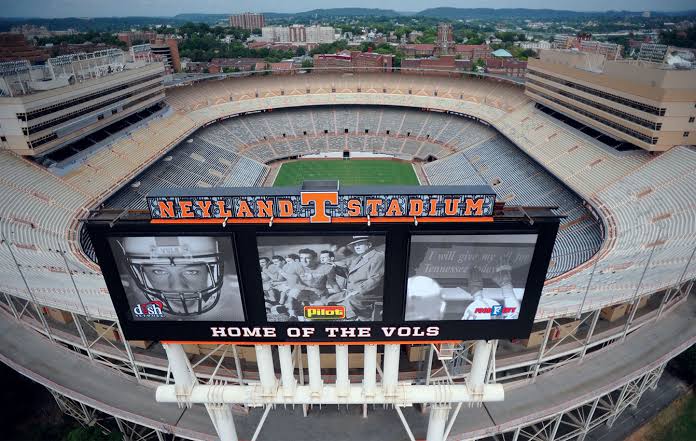
Neyland Stadium in Knoxville, Tennessee, is home to the University of Tennessee Volunteers and seats 102,455 according to most sources, though some list the figure at 101,915. Until 2010, the stadium's capacity was significantly higher, but it was reduced to ensure greater security and improve fan comfort. The stadium sits on the banks of the Tennessee River and is famous for the "Vol Navy," a fleet of fans who arrive by boat and tailgate on the water before games.
Neyland Stadium's checkerboard end zones are among the most iconic visual elements in college football, a design introduced by coach Bob Neyland in the 1960s that has remained unchanged since. The stadium has hosted some of the largest crowds in college football history, including a 2004 matchup against Florida that drew 109,061 fans before the capacity reduction. The riverfront setting means the stadium literally anchors the eastern edge of downtown Knoxville, making game days a city-wide event.
7. Darrell K Royal-Texas Memorial Stadium
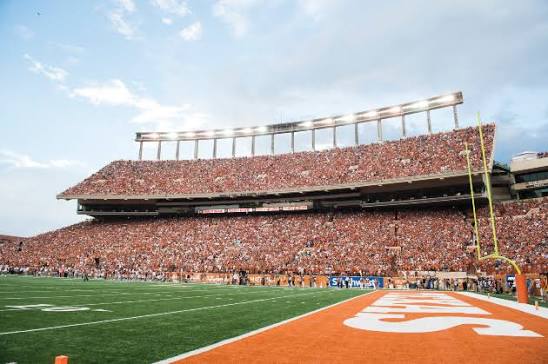
Located in Austin, Texas, DKR-Texas Memorial Stadium is home to the University of Texas Longhorns and seats 100,119. The stadium is named for legendary coach Darrell K Royal and opened in 1924, making it one of the oldest venues on this list. It has been expanded multiple times to reach its current capacity of over 100,000.
Texas joined the SEC in 2024, which intensified rivalry games that already drew capacity crowds on a regular basis. The move brought traditional foes like Oklahoma and Texas A&M back into regular rotation, injecting new energy into an already passionate fan base. The atmosphere on a fall Saturday in Austin uniquely combines college football scale with the city's broader live-music energy, creating one of the more distinctive game-day experiences in the sport. Fans can hear live bands playing from nearby Sixth Street while walking to the stadium, a sensory experience unmatched elsewhere in college football.
8. Bryant-Denny Stadium
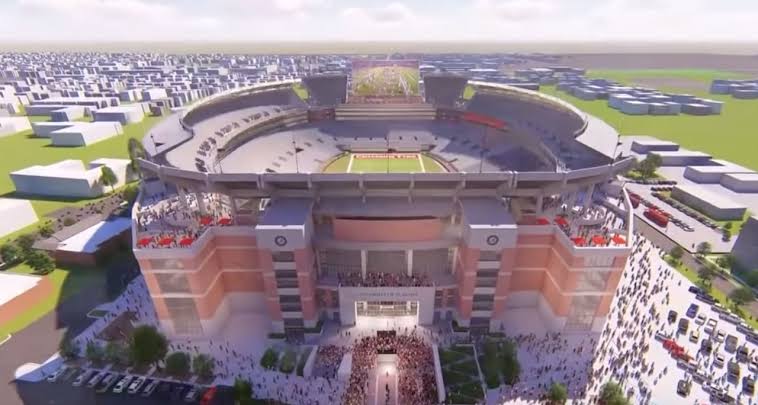
Bryant-Denny Stadium in Tuscaloosa, Alabama, serves as the home of the Alabama Crimson Tide with a seating capacity of 101,821, though some sources list it at 100,077. The stadium was inaugurated in 1929 and is named after legendary coach Paul "Bear" Bryant and former university president George H. Denny. It has undergone multiple major expansions, most recently adding premium seating areas and modern amenities while maintaining its position among the largest stadiums in the country.
Under coach Nick Saban's tenure, the stadium became synonymous with championship-caliber college football, regularly hosting sell-out crowds of over 100,000 fans. Between 2007 and 2023, Alabama won six national championships, and Bryant-Denny Stadium was the proving ground for many of those title teams. The stadium's north end zone expansion, completed in 2010, added a seven-story structure that includes luxury suites, a club level, and a walk of champions that players pass through before each home game.
9. Sanford Stadium
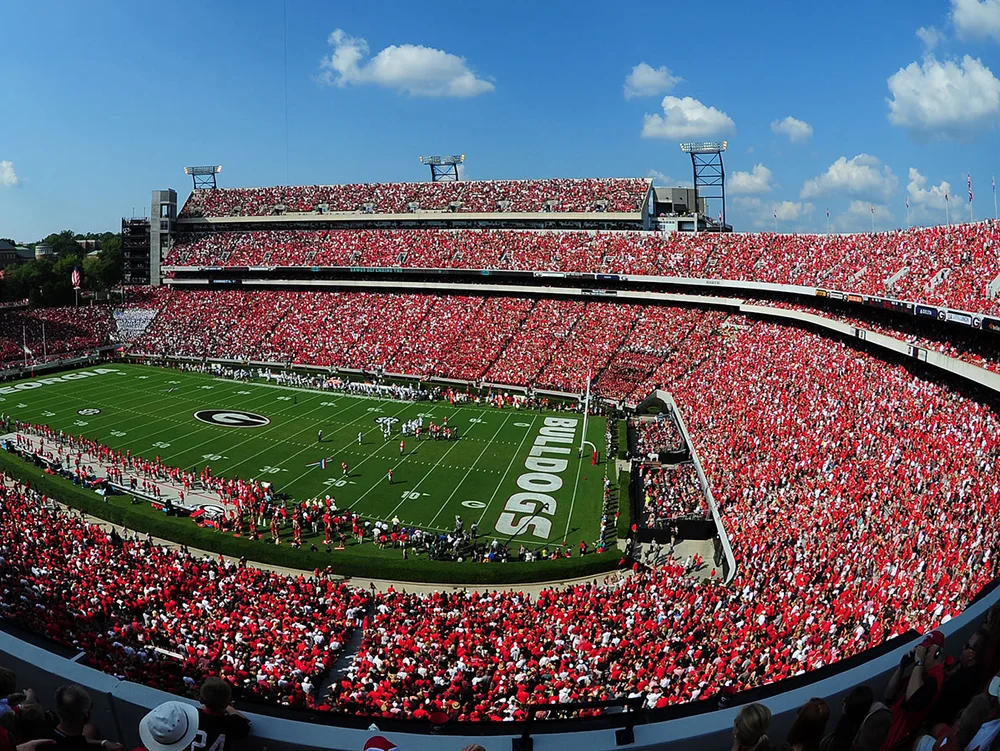
Sanford Stadium in Athens, Georgia, is home to the University of Georgia Bulldogs and ranks as the ninth-largest stadium in the United States with 92,746 seats, though some sources list 93,033. The stadium is famous for its iconic hedges that surround the playing field, a tradition dating back to 1929 that gives the venue its nickname, "Between the Hedges." The hedges are so integral to the stadium's identity that when they were temporarily removed for the 1996 Olympic soccer competitions, they were carefully preserved and replanted.
Sanford Stadium has undergone several expansions to reach its current capacity of nearly 93,000, making it the largest stadium in the SEC East division. The stadium's open-air design and steep seating configuration create an intimidating environment for visiting teams. The 1980 game against Florida, which featured the famous "Run Lindsay Run" play by Herschel Walker, remains one of the most memorable moments in the venue's history and helped cement its place in college football lore.
10. Cotton Bowl Stadium
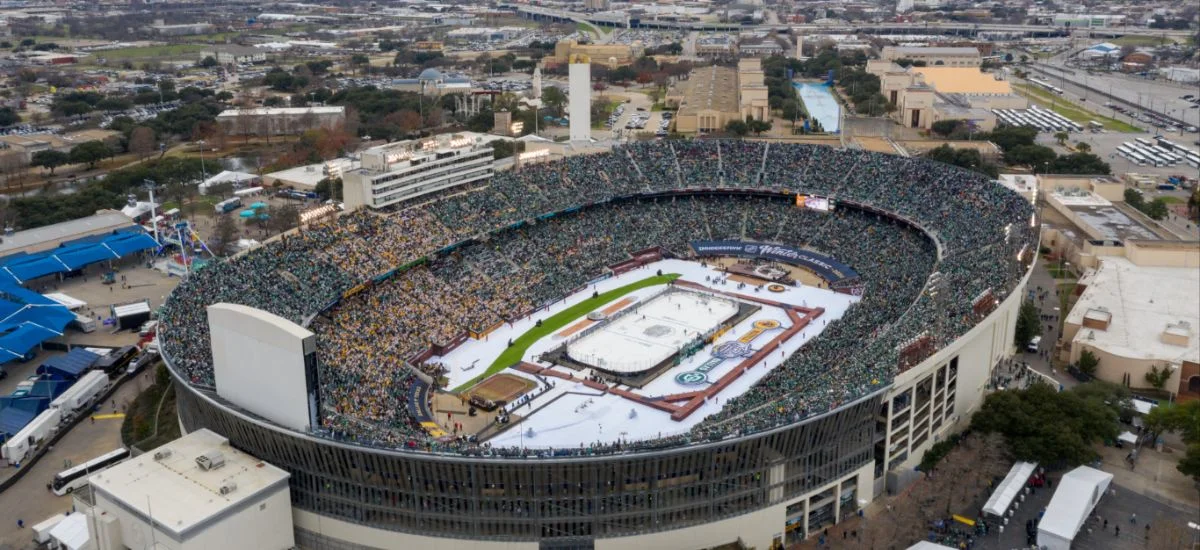
Cotton Bowl Stadium in Dallas, Texas, rounds out the top ten largest sports venues in the United States with a capacity of 92,100. The stadium is historically significant as the longtime host of the Cotton Bowl Classic college football bowl game and has served as a venue for multiple FIFA World Cup matches, including the 1994 tournament. Originally opened in 1930, the Cotton Bowl has undergone several renovations while maintaining its classic bowl-shaped design.
The stadium is also home to the annual Red River Showdown between the University of Texas and the University of Oklahoma, one of college football's most intense rivalries. The game is played on a neutral field at the Texas State Fair, with the stadium literally splitting the 50-yard line between the two fan bases. Its location in Dallas' historic Fair Park adds to its unique cultural significance, with the venue surrounded by art deco buildings from the 1936 Texas Centennial Exposition. During the State Fair of Texas each autumn, the stadium sits at the center of one of the largest annual fairs in the nation, drawing millions of visitors beyond just football fans.
These ten venues represent the absolute pinnacle of American sports architecture. While professional stadiums often grab headlines for their luxury amenities and retractable roofs, these college cathedrals prove that sheer scale and atmosphere remain the most compelling draws in sports. As renovations continue and capacities shift, the rankings may shuffle slightly in the coming years, but the dominance of college football in this category appears secure for the foreseeable future.
Related Posts



0 Comments
Join the discussion and share your thoughts
No Comments Yet
Be the first to share your thoughts on this article!