Top 10 Best Steel Companies In Germany 2026

Table of Contents
Germany remains Europe's largest steel producer, and the companies that anchor this industry carry weight far beyond national borders. Thyssenkrupp Steel Europe alone runs the biggest integrated steelworks in Western Europe at Duisburg, while ArcelorMittal Bremen and Salzgitter AG keep the country inside the global top tier of crude steel output. Our ranking of the top 10 steel companies in Germany for 2026 covers the full spectrum, from blast furnace giants to precision specialists and the distributors that move millions of tonnes of metal each year.
The sector is in the middle of its most turbulent period since reunification. Ownership battles, decarbonization projects, and capacity cuts are reshaping who leads and who follows. Here's how the landscape stands as of early 2026.
How We Ranked These
Our evaluation weighed crude steel capacity, annual revenue, employee counts, and strategic position within the German and European supply chains. We pulled data from company filings, IBISWorld industry reports, and verified business databases. Companies with integrated production at scale ranked above processors and distributors, though we factored in specialization and market influence. Ownership stability and progress on decarbonization also shaped the order, given how much those variables now determine long-term viability in German steel.
The Top 10 Steel Companies In Germany 2026:
1. Thyssenkrupp Steel Europe AG
No other steelmaker in Western Europe matches the scale of Thyssenkrupp Steel Europe. The Duisburg complex in North Rhine-Westphalia runs four blast furnaces across two adjacent sites at Bruckhausen, Schwelgern, and Beeckerwerth, with roughly 11.0 million tonnes per year of crude steel capacity. The company employs about 27,000 people directly and produces hot-rolled coil, cold-rolled steel, galvanized products, heavy plate, and electrical steel.
The ownership situation has been messy. Czech energy group EP Corporate Group (EPCG) bought a 20% stake in 2024 with a path to 50%, then handed it back in September 2025 after joint venture negotiations collapsed. As of early 2026, Jindal Steel International of India has submitted a non-binding indicative offer for the division. Parent company thyssenkrupp AG has been trying to divest or restructure its steel arm for years.
Meanwhile, the division is cutting around 11,000 jobs and pushing ahead with tkH₂Steel, a direct reduced iron project at Duisburg. The first DRI plant, rated at 1.25 million tonnes per year, received federal funding approval in 2023 and is under construction with commissioning targeted for 2027. Thyssenkrupp remains the only European name in the global top 10 steel companies by revenue, posting $37.9 billion in 2025.
2. ArcelorMittal Bremen GmbH
ArcelorMittal Bremen operates a coastal integrated steelworks using the blast furnace-basic oxygen furnace route, with capacity around 3.5 million tonnes per year. The plant turns out hot-rolled coil, cold-rolled steel, galvanized products, and tinplate for automotive, construction, appliance, packaging, and energy customers.
What sets Bremen apart is location. Direct access to deepwater shipping lets the plant import raw materials and export finished product more cheaply than inland competitors. The site belongs to ArcelorMittal Group, headquartered in Luxembourg, which produced roughly 63.43 million tonnes of crude steel in 2025 and generated $62.4 billion in revenue. That makes the parent the world's second-largest steel producer, with operations spanning Europe, North America, South America, Africa, and Asia.
Bremen ranks second here on the strength of its capacity, its coastal logistics advantage, and the backing of the most geographically diversified steelmaker on the planet.
3. Salzgitter AG
Salzgitter AG runs an integrated steelworks in Lower Saxony with about 5.5 million tonnes per year of capacity, producing hot-rolled coil, cold-rolled steel, heavy plate, sections, and tubes. Revenue reached $10.23 billion in 2026, making it the 49th largest company in Germany overall.
The company is betting big on green steel. Salzgitter is building Germany's first commercial DRI-EAF transition, a direct reduced iron and electric arc furnace setup designed to cut carbon emissions from steelmaking. IBISWorld lists it among the three biggest companies in the German iron and steel manufacturing industry. For a producer of its size, that combination of output and decarbonization leadership is unusual, and it's why Salzgitter holds third place.
4. Saarstahl AG
Based in Völklingen, Saarstahl AG has spent decades building a reputation for high-quality, customer-specific steel solutions. The company's German tagline, "hochwertige, kundenspezifische Lösungen aus Stahl," translates roughly to premium, custom-engineered steel products, and that's exactly the niche it occupies.
Saarstahl specializes in long products: bar steel, wire rod, and semi-finished goods for automotive, machinery, and construction applications. It employs between 1,001 and 5,000 people and maintains 263 verified contacts in industry databases, a sign of its deep commercial reach. As part of the SHS Group (Stahl-Holding-Saar), the company anchors the Saarland steel region and has been investing in electric arc furnace technology to clean up production. Fourth place reflects its specialty focus and its strategic weight in one of Germany's historic steel heartlands.
5. GMH Gruppe (Georgsmarienhütte Group)
GMH Gruppe, headquartered in Georgsmarienhütte, describes itself as one of the largest privately managed metalworking companies in Europe. That private status matters. Without quarterly pressure from public markets, the company can plan across decades rather than quarters.
The group operates multiple production sites across Germany and specializes in bar steel, forgings, and components for automotive, machinery, and energy sectors. Its integrated chain runs from steelmaking through processing and finishing, which gives it tighter quality control than competitors who outsource stages of production. With 5,001 to 10,000 employees, GMH is one of the largest employers in the German steel industry. Fifth place goes to the company for its workforce scale, ownership structure, and product breadth.
6. Dillinger Hütte (Dillinger Group)
Heavy plate is a niche within a niche, and Dillinger Hütte dominates it. Headquartered in Dillingen, Saarland, the company produces Grossblech, or heavy plate steel, for construction, offshore wind, pipeline, and mechanical engineering projects.
Not every steelmaker can roll thick, high-strength plate that meets the specs for critical infrastructure. Dillinger can, and that technical capability keeps it embedded in European energy and construction supply chains. Market reports on the German steel sector routinely profile the company alongside Thyssenkrupp, ArcelorMittal, and Salzgitter, despite Dillinger being far smaller than those giants. Sixth place recognizes that outsized influence in a segment where failure isn't an option.
7. Zapp Precision Metals GmbH
Zapp Precision Metals, based in Schwerte, does not compete on tonnage. The company makes precision steel products: wire, bar, profile, sheet, and strip for medical technology, aerospace, automotive, and industrial applications. Its positioning line, "Precision in wire, bar, profile, sheet, and strip," sums up the focus.
By staying out of commodity steel, Zapp protects its margins and its customer relationships. Medical device makers and aerospace suppliers don't switch steel vendors casually, and that stickiness gives the company a durable moat. It employs between 1,001 and 5,000 people and holds 183 verified contacts in industry databases. Seventh place goes to Zapp for technological specialization and a strong hold on high-margin niche markets.
8. Wuppermann-Group
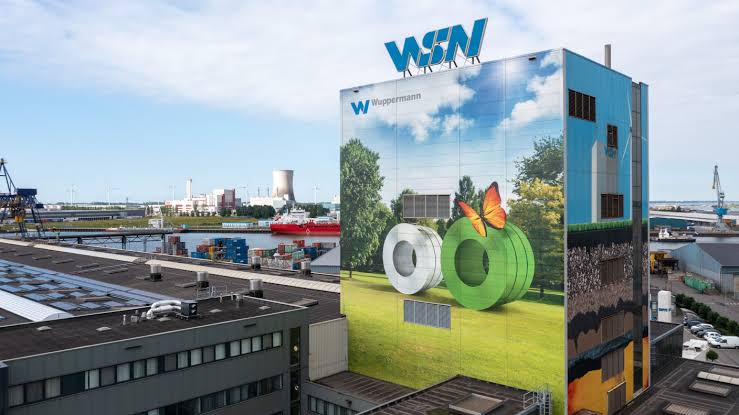
Family-owned and headquartered in Leverkusen, Wuppermann-Group has been processing steel for generations. The company focuses on hot-dip galvanizing, coil coating, and the production of steel tubes and profiles, serving construction, automotive, and industrial customers.
Surface treatment is where Wuppermann adds value. Raw steel corrodes; coated steel lasts. That step in the value chain commands real pricing power, and the company's expertise in finishing keeps it relevant even as basic steel production consolidates elsewhere. With 501 to 1,000 employees and 164 verified industry contacts, Wuppermann is smaller than most names on this list but occupies a specialized position that's hard to replicate. Eighth place reflects that finishing expertise and its contribution to the broader German steel value chain.
9. Winkelmann Group
Winkelmann Group ranks among the leading companies in metal forming, producing formed metal components and assemblies for automotive, aerospace, and industrial customers. The company doesn't make steel so much as it shapes it into the precise parts that downstream manufacturers need.
Metal forming sits at the intersection of steel production and finished goods. Winkelmann's high-precision capabilities make it a critical supplier to German industry, particularly automotive, where tolerances are tight and failure is expensive. The company represents the segment of German steel processors that add value through specialized manufacturing techniques rather than raw output. Ninth place recognizes its leadership in forming technology and its role feeding components into the country's industrial base.
10. Klöckner & Co
Klöckner & Co is one of the largest producer-independent distributors of steel and metal products in Europe and North America, with $7.11 billion in revenue in 2026. The company ranks as the 60th largest company in Germany overall.
As a distributor rather than a producer, Klöckner occupies a different position in the value chain. It connects steelmakers with end-users across construction, machinery, and automotive, and provides processing services along the way. That intermediary role gives the company visibility into demand trends before producers see them, and its network of distribution locations across multiple countries provides resilience that single-plant producers lack. Tenth place goes to Klöckner for its revenue scale, distribution reach, and essential function in the German and European steel supply chain.
Related Posts

0 Comments
Join the discussion and share your thoughts
No Comments Yet
Be the first to share your thoughts on this article!