Top 10 Best Robotics Companies In Japan 2026


Table of Contents
Japan remains the undisputed manufacturing heart of the global robotics industry. The country that gave the world the industrial robot arm now generates roughly half of global robot production revenue, with domestic shipments reaching approximately 1.6 trillion yen in 2024. As of 2026, the sector shows no signs of cooling. To build this ranking, we weighed revenue figures from fiscal 2025, global market share, technological distinctiveness, and each company's strategic position in the segments that matter most: industrial automation, service robotics, and AI-driven systems. What follows is our assessment of the ten companies defining Japanese robotics this year.
The Top 10 Best Robotics Companies In Japan 2026:
1. FANUC Corporation
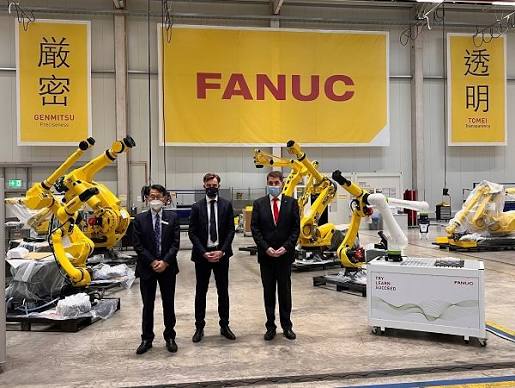
FANUC sits atop this list for one simple reason: it is the largest industrial robot maker on Earth. The company, headquartered in Oshino-mura at the base of Mount Fuji, generated $4.8 billion in robotics and automation revenue in 2025. Its yellow robotic arms are so ubiquitous in automotive plants that spotting one is like spotting a Toyota Corolla on a highway - they are simply everywhere.
FANUC controls more than 30 percent of the global CNC (computer numerical control) market, and its robots number over 750,000 installations worldwide. The company's reliability philosophy is almost obsessive. FANUC builds its own servos, motors, and control systems in-house, which means fewer third-party failure points. Its "zero-downtime" approach has made it the default supplier for manufacturers who cannot afford a halted production line, even for a single shift.
The company operates in 108 countries with 272 service locations. Its product range spans the CRX collaborative series for lighter tasks, SCARA robots for assembly, and delta robots for high-speed picking. Japan's automotive industry, which deployed 1,531 robots per 10,000 employees as of 2023, leans heavily on FANUC systems for body-in-white welding and final assembly. No other robotics company matches FANUC's combination of scale, reliability, and installed base.
2. Yaskawa Electric Corporation

Yaskawa, based in Kitakyushu, is best known for its MOTOMAN robot series. These machines handle welding, assembly, painting, and material handling across factories worldwide. The company generated $4.2 billion in revenue in 2025 and has deployed more than 500,000 robots globally. It also happens to be the world's largest servo motor manufacturer, a fact that gives it a vertical integration advantage few competitors can replicate.
Yaskawa dominates arc welding automation in particular. Its i3-Mechatronics platform combines servo systems, motion control, and robotics into a single factory automation ecosystem. That platform serves automotive, semiconductor, and electronics manufacturers, with operations in 30 countries and a top-three global market position.
What distinguishes Yaskawa from its rivals is motion control expertise. Servo motors are the muscles of any robot, and Yaskawa builds some of the most precise in the industry. That precision translates directly into welding quality and assembly accuracy on factory floors from Nagoya to Nashville.
3. Kawasaki Heavy Industries (Kawasaki Robotics)
Kawasaki Robotics operates as a division of Kawasaki Heavy Industries, and it brings an unusual breadth to the sector. The company's robots handle palletizing, picking, medical tasks, arc welding, and ceiling-mounted applications. Its $1.8 billion in robotics revenue in 2025 represents roughly 8 percent of the global market.
The company made headlines at IREX 2025 with the Kaleido 9, a heavy-duty rescue robot equipped with a teleresence system. Operators control the machine in real time with force compensation, which means the robot can apply precisely the right amount of pressure when clearing debris or manipulating objects in disaster zones. It is a reminder that Japanese robotics extends far beyond factory automation.
Kawasaki's dual-arm robots and cleanroom-compatible systems serve the automotive and semiconductor sectors, with particular strength in aerospace. The company's Next Age humanoid robots function as collaborative manipulators on assembly lines, working alongside human operators rather than replacing them. That combination of heavy industry focus and experimental humanoid development makes Kawasaki one of the most versatile players in the field.
4. Mitsubishi Electric Corporation

Mitsubishi Electric's robotics division operates under the MELFA brand, producing vertical and horizontal articulated robots that integrate deeply with the company's own PLC (programmable logic controller) ecosystem. The company generated $1.4 billion in factory automation revenue in 2025, backed by roughly $40 billion in total corporate revenue.
That integration is the key to understanding Mitsubishi Electric's position. A manufacturer that already uses Mitsubishi PLCs - and many do, particularly in electronics and automotive - can add MELFA robots with minimal integration friction. The robots speak the same control language as the rest of the factory floor. That seamless compatibility has made Mitsubishi Electric a dominant force in Japan's domestic market, especially in the Kanto region, which accounts for 37.5 percent of the country's robotics revenue share.
The company's comprehensive approach - robots, CNC systems, servos, and controllers all under one roof - gives it a resilience that pure-play robot makers lack. When a factory wants a single vendor for its entire automation stack, Mitsubishi Electric is often the first call.
5. DENSO Corporation

DENSO, a Toyota subsidiary, specializes in the kind of precision work that gives most robot manufacturers headaches. Its robots handle small-parts assembly with exceptional accuracy, making them the go-to choice for automotive electronics and consumer electronics manufacturing. The company generated $1.2 billion in robotics revenue in 2025, holding about 4 percent of the global market.
DENSO's robots are compact by design. That footprint matters in electronics assembly, where floor space is at a premium and components are getting smaller every year. The company leverages its deep expertise in automotive component manufacturing - DENSO is one of the world's largest auto parts suppliers - to build robots that understand the tolerances required for modern vehicle electronics.
With Japan's electronics sector driving sustained demand for automation, DENSO occupies a critical niche. It may not chase the largest robots or the flashiest humanoids, but in the world of millimeter-perfect assembly, it has few equals.
6. SoftBank Robotics
SoftBank Robotics represents Japan's leading force in service robotics, a segment that addresses a demographic reality the country cannot ignore. Japan projects that 30 percent of its population will be over 65 by 2030. That means fewer workers for customer service, facility maintenance, and caregiving - precisely the tasks SoftBank's robots handle.
The company is best known for Pepper, the humanoid robot designed for customer engagement, which has been deployed in thousands of locations worldwide. But the real growth driver is Whiz, an autonomous floor scrubber that has found adoption across commercial facilities in multiple countries. Whiz is the kind of unglamorous, practical robot that actually generates recurring revenue: it cleans floors, it does not need breaks, and it frees human staff for higher-value tasks.
SoftBank Robotics has pivoted toward enterprise solutions in recent years, and that strategy is paying off. The company embodies the shift from industrial robotics toward service applications, a transition that will define the next decade of the industry in Japan.
7. Cyberdyne Inc.

Cyberdyne is not a conventional robotics company. It builds HAL, the Hybrid Assistive Limb, which the company describes as the world's first cyborg-type robot. The name is not marketing hyperbole. HAL reads bio-electric signals from the wearer's brain through sensors on the skin, then assists movement based on those signals. The user's intention drives the machine, not a pre-programmed routine.
The technology has been adopted in hospitals and rehabilitation centers across Japan and internationally. Patients with mobility impairments use HAL suits to regain walking function. Industrial workers use them for heavy lifting support. The suits are also used in nursing care facilities, where they help staff move patients without strain.
Cyberdyne represents Japan's leadership in medical robotics and human augmentation, a sector with growing global demand as populations age across the developed world. The company's technology is genuinely unique - no other firm has commercialized cyborg-type assistive robotics at this scale.
8. Kawada Robotics
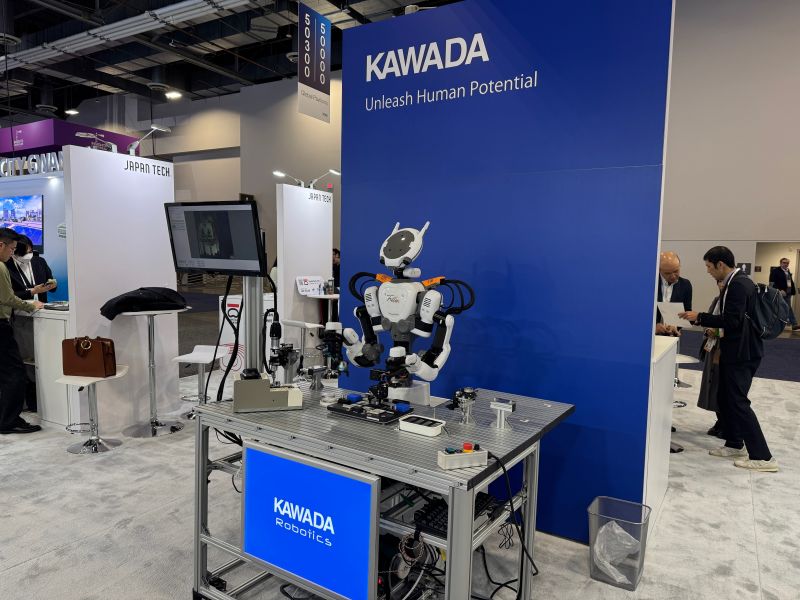
Kawada Robotics has been developing humanoid robots for over two decades, a longer commitment than almost any other company in the field. Its Next Age robots represent a distinct philosophy: humanoids designed not for entertainment or spectacle, but for industrial collaboration.
Kawada's robots function essentially as agile cobots with humanoid form. They work alongside humans on assembly lines, handling tasks that require precision movement control and stability under external loads. The humanoid shape is deliberate. Many factory environments are built for human bodies - stairs, narrow corridors, hand tools. A robot that can navigate those spaces without redesigning the facility has inherent value.
The company's long-running R&D program has produced robots with exceptional movement precision, the result of decades of iterative refinement. Kawada may not have the revenue of FANUC or Yaskawa, but its position at the forefront of industrial humanoid development makes it a company to watch closely.
9. Preferred Networks (Preferred Robotics)
Preferred Networks is Japan's leading AI robotics company, and it represents something different from the traditional industrial giants on this list. The company applies deep learning to robotics, developing systems that enable machines to learn complex tasks through demonstration and reinforcement learning rather than manual programming.
The company develops the Choreonoid robot simulation platform, which allows engineers to test robotic systems in virtual environments before deploying them physically. It also works with major manufacturers including Toyota on autonomous driving and robotics technologies. That partnership is significant: Toyota's backing gives Preferred Networks both capital and real-world deployment opportunities.
Preferred Networks has attracted substantial investment from Japanese corporate giants, reflecting a broader recognition that the future of robotics lies in software as much as hardware. The company's PFLOW and P-CAP systems apply AI to industrial automation in ways that traditional robot makers are only beginning to explore. It is the most innovative AI-focused robotics company in Japan, and it is driving the next wave of intelligent automation.
10. Nachi-Fujikoshi Corporation
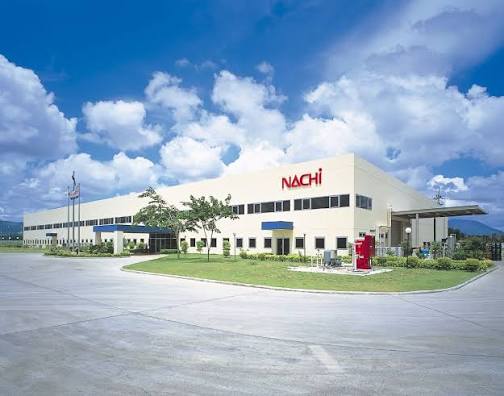
Nachi-Fujikoshi has been building precision machinery since 1928, and that long history shows in the reliability of its robots. The company produces industrial robots primarily for welding, handling, and assembly applications, with a particular focus on body-in-white welding in automotive manufacturing. That segment accounted for 36.9 percent of Japan's robotics revenue share in 2025, making it the single largest application category in the domestic market.
The company leverages its expertise in bearings and hydraulic equipment to build robotic systems that hold up under punishing production schedules. Automotive plants run around the clock, and welding robots face heat, sparks, and repetitive stress that would destroy lesser machines. Nachi-Fujikoshi's robots are built to endure those conditions.
The company maintains a solid position in the Japanese domestic market and exports to automotive manufacturers globally. It may not generate the headlines of FANUC or the fascination of Cyberdyne, but Nachi-Fujikoshi's consistent performance in core manufacturing sectors makes it an essential part of Japan's robotics ecosystem.
Related Posts




1 Comment
Join the discussion and share your thoughts