Top 10 Best Robotic Companies In India 2026

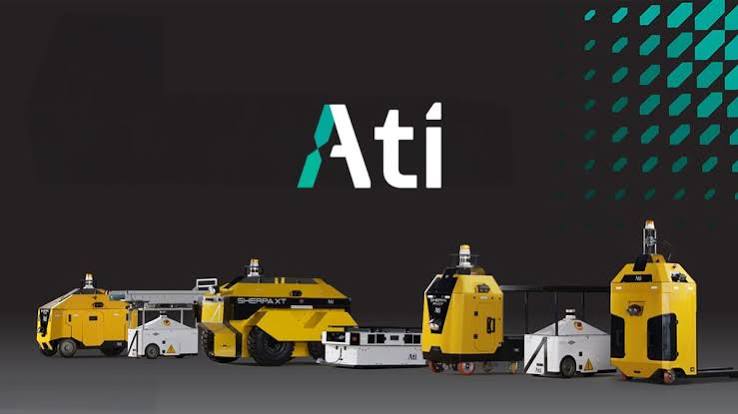
Table of Contents
India's robotics sector is expanding faster than almost any other industrial category in the country. According to industry projections, the Indian robotics market is expected to reach $6.8 billion by 2030, growing at a compound annual growth rate above 24%. Automotive manufacturing leads adoption, with industrial robot installations rising 139% to 3,551 units in 2023, backed by the PLI scheme and the SAMARTH Udyog Bharat 4.0 initiative. Our ranking of the top 10 best robotics companies in India for 2026 weighs industrial installed base, indigenous IP, deployment scale, and manufacturing investment to identify the firms shaping this growth.
How We Ranked These
Our evaluation weighed four factors: installed industrial robot base and market share, depth of in-country manufacturing and service infrastructure, originality of India-designed robotics IP, and scale of real-world deployments. We cross-referenced company disclosures, investor profiles, and industry rankings published in 2025 and 2026. Firms with entrenched manufacturing relationships and expanding local production ranked above those with narrower application footprints, while indigenous innovation earned additional weight given the government's automation push.
These Are The List Of The Top 10 Best Robotic Companies In India 2026:
1. ABB India Limited

ABB India holds the top position without serious challenge. The Bengaluru-headquartered subsidiary of the Swiss-Swedish ABB Group, present in India since 1949, commands a 70-75% combined share of the country's installed industrial robot base alongside Fanuc, KUKA, Yaskawa, and Kawasaki. That concentration of installed systems gives ABB an unmatched service and integration footprint across Indian factories.
The portfolio covers collaborative robots like YuMi, the IRB series of industrial articulated robots, delta robots, and full turnkey automation lines for automotive, electronics, food and beverage, logistics, and pharmaceuticals. In 2025, ABB completed its largest-ever robotics manufacturing and service expansion in Asia by doubling its Bengaluru manufacturing footprint. That investment signals where the company sees demand heading: local production for local buyers, cutting lead times and import dependence.
2. Fanuc India

Fanuc India operates as the local arm of Japan's Fanuc Corporation, the world's largest industrial robot manufacturer, with a global installed base exceeding one million units. Indian automotive body shops and component lines run heavily on Fanuc's yellow articulated robots, supported by CNC systems and factory automation equipment. The company's local service network is a large part of why manufacturers keep buying: uptime on a critical production line depends on rapid parts and technician access.
Its #2 ranking reflects raw global scale combined with relationships built over decades inside Indian manufacturing. Where ABB leads on local manufacturing expansion, Fanuc leads on sheer installed volume worldwide and proven reliability in high-throughput automotive applications.
3. GreyOrange

Gurugram-founded GreyOrange is India's most internationally significant robotics scale-up. Founded in 2011-2012, the company has deployed roughly 15,000 robotic agents worldwide across fulfilment centres, with its Ranger series of AI-driven warehouse robots handling inventory movement and order fulfilment. Offices in Bengaluru, Chennai, Hyderabad, and Mumbai support its India operations.
Revenue estimates vary by source: CB Insights pegged it near $150 million in 2022, while a 2024 Blume Ventures profile placed it closer to $100 million. Investors include Tiger Global, Mithril, and Blume Ventures. The software-first architecture, which coordinates fleets of robots through a single orchestration platform, differentiates GreyOrange from hardware-only competitors and explains its traction in global markets.
4. Addverb Technologies
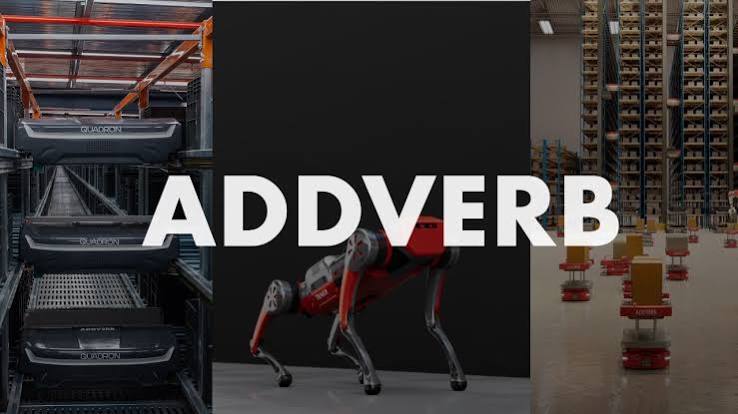
Noida-based Addverb Technologies has become the anchor of India's domestic warehouse automation push. The company builds autonomous mobile robots (AMRs), automated storage and retrieval systems (AS/RS), and full logistics automation for warehouses and factories. Backing from Reliance Industries has accelerated both its domestic manufacturing capacity and its deployment footprint across Indian facilities.
What separates Addverb from imported systems is in-house hardware IP combined with domestic capital. For Indian warehouse operators weighing automation, that combination means faster service response, rupee-denominated pricing, and systems designed around local operating conditions. It ranks #4 for combining large-scale Indian deployments with genuine manufacturing depth.
5. KUKA India
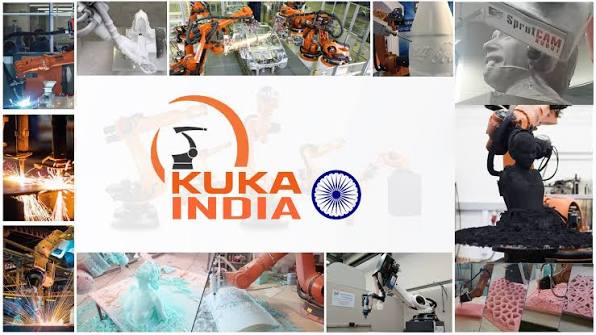
KUKA India brings decades of European and American automotive body-shop integration experience to Indian OEMs and component manufacturers. Its welding, handling, and assembly robots serve the country's most technically demanding manufacturing applications, including body-shop and powertrain lines where precision tolerances leave little room for error.
As part of the 70-75% bloc dominating India's installed industrial robot base, KUKA benefits from deep process expertise rather than volume alone. Manufacturers running complex multi-robot welding cells tend to standardise on integrators with proven automotive track records, and KUKA's installed base in India reflects that preference.
6. Gridbots Technologies
Ahmedabad-based Gridbots Technologies stands apart in this list for one reason: original India-designed robotics IP rather than imported integration. The company develops industrial robots and inspection robots spanning defence and industrial applications, with in-house design capability covering the full stack from mechanical systems to control software.
One 2026 industry ranking placed Gridbots at #2 nationally for indigenous innovation, and its defence-sector traction adds a strategic dimension that pure commercial players lack. For buyers prioritising supply-chain independence and India-designed systems, Gridbots represents the strongest option on this list.
7. Yaskawa India (Motoman)
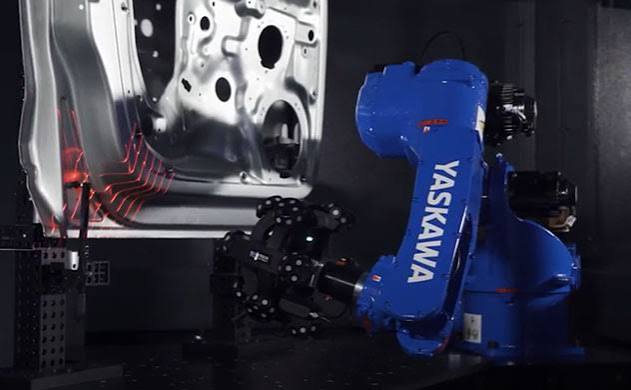
Yaskawa India Private Limited markets the Motoman range of industrial robots for welding, handling, and assembly across Indian manufacturing. As one of the "big five" global robot makers, Yaskawa brings proven reliability and a broad application portfolio to the Indian market, and its inclusion in the 70-75% installed-base bloc underscores its staying power.
The company's Indian presence has been consistent rather than aggressive. It ranks #7 for steady participation in core industrial automation segments, particularly welding applications where Motoman robots have long-standing acceptance among Indian fabricators and automotive suppliers.
8. Ati Motors
Bengaluru-based Ati Motors has carved a high-value niche in factory-floor logistics. The company builds heavy-payload autonomous ground vehicles (AGVs) and autonomous pallet movers focused on internal material movement rather than external warehouse fulfilment. Automotive and appliance manufacturing plants automating heavy material transport are its core customers.
The distinction matters. Warehouse robotics handles picking and packing; factory-floor logistics handles moving engines, chassis components, and palletised raw materials between production stages. Ati Motors targets the second category, where payload capacity and reliability under industrial conditions determine adoption. Growing uptake among Indian manufacturers earned it the #8 position.
9. Genrobotics
Kerala-based Genrobotics earns its place through social impact rather than industrial scale. Its Bandicoot robot, designed to eliminate manual manhole cleaning, has been deployed across multiple Indian states and municipalities. Manual scavenging remains a persistent safety and human rights problem in India, and Bandicoot offers a robotic alternative that removes workers from hazardous confined spaces.
The company has received national recognition for applying robotics to public-health challenges, and government deployments provide a stable demand base. It ranks #9 for proving that Indian robotics can address social problems as effectively as industrial ones.
10. Invento Robotics
Bengaluru-based Invento Robotics built India's most recognisable service robot brand through Mitra, a humanoid reception and interaction robot deployed in corporate offices, event venues, and retail spaces. The key differentiator is price: Invento manufactures service robots at price points well below imported equivalents, opening adoption to Indian commercial buyers who previously found service robotics financially out of reach.
Mitra's visibility at high-profile Indian events and corporate lobbies has done more for public awareness of Indian robotics than most industrial deployments. It ranks #10 for mainstreaming Indian-designed humanoid service robotics and proving domestic manufacturing can compete on cost.
For buyers evaluating robotics companies in India, the practical takeaway is straightforward: global majors offer proven reliability and service depth for industrial applications, while domestic firms offer cost advantages, faster support, and increasingly competitive technology. The right choice depends on application complexity, payload requirements, and how much supply-chain independence matters to the operation.
Related Posts


0 Comments
Join the discussion and share your thoughts
No Comments Yet
Be the first to share your thoughts on this article!