Top 10 Best Learning Management System (LMS) Providers In UK 2026


Table of Contents
Choosing a learning management system in the UK market has become a harder decision than it was five years ago. The sector now splits cleanly between AI-first platforms built for enterprise scale, open-source systems that universities and technical teams still favour, and mid-market tools that promise deployment in days rather than months. Our ranking of the 10 best LMS providers in the UK for 2026 weighs verified user feedback from G2, published pricing where vendors disclose it, AI capability, data residency guarantees, and fit for specific learner audiences. We looked at UK-specific factors too: GDPR compliance, EU or UK data residency options, and whether each vendor has a meaningful customer base in Britain rather than treating the market as an afterthought. G2 review counts matter because they indicate how much real user sentiment exists behind a rating, so a 4.6 average from 243 reviewers carries more weight in our assessment than a similar score from a handful of respondents. Pricing transparency was another factor, though several enterprise vendors on this list decline to publish list prices, which we note where relevant.
These Are The Top 10 Best LMS Providers In UK 2026:
1. Docebo
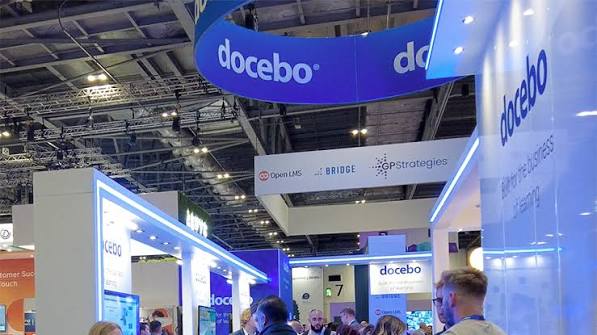
Docebo sits at the top of the UK enterprise LMS segment, and the reason is straightforward: it handles employee, customer, and partner training on one platform, which few competitors do without bolting together separate products. The company has built its positioning around AI-first functionality, and that shows in the capability ratings, where it earns five stars across the board.
The pricing reflects that ambition. Enterprise contracts start from around $25,000 per year on a three-year commitment, which rules Docebo out for most SMEs but makes sense for organisations running complex, multi-audience learning programmes across several countries. G2 reviewers give it 4.3 out of 5.
For UK buyers, the practical detail that matters is data residency. Docebo is GDPR-compliant with confirmed EU and UK data residency options, which is often the first question procurement teams ask before anything else gets discussed. The platform covers onboarding, sales enablement, partner promotion, content creation, and embedded learning, so it functions as a full learning suite rather than a course delivery tool.
2. 360Learning
Most LMS vendors sell the same promise: a central team builds courses, learners consume them. 360Learning inverts that model. Its collaborative approach lets internal subject matter experts author courses directly, which means the L&D department shifts from production line to editorial oversight.
The numbers back up the approach. 360Learning holds a 4.6 out of 5 rating on G2 from more than 243 reviewers, and it earned a perfect five-star AI capability score. Pricing starts from $8 per user per month on the Team plan, which covers up to 100 users, making it one of the more accessible entry points among the higher-ranked platforms here.
Where it fits best is organisations that want upskilling at scale without hiring an army of instructional designers. If your bottleneck is course creation capacity rather than delivery infrastructure, this is the platform built specifically for that problem.
3. TalentLMS
Speed of deployment is TalentLMS's strongest card. Users self-serve and typically go live within days rather than weeks, which explains its popularity among UK start-ups, SMEs, and individual trainers who don't have an IT department to lean on.
The pricing structure is unusually open. A free plan exists, and paid plans run from $119 to $149 per month. That combination of low entry cost and fast setup has made it a default recommendation for smaller organisations, and its 4.6 out of 5 G2 rating suggests the simplicity doesn't come at the cost of satisfaction.
Feature-wise, TalentLMS bundles learning design and management into one platform, with gamification, reporting, and an AI-powered course creator that cuts down design time. The AI capability rating sits at three stars, lower than the leaders on this list, so buyers wanting deep automation should weigh that against the price advantage. For straightforward training delivery at low cost, few platforms compete.
4. LearnUpon
External learning audiences are where LearnUpon has built its reputation. The platform supports separately branded portals for each audience group, so a company training its own staff, its partners, and its customers can run all three from one system without the branding bleeding between them.
That capability matters more than it sounds. Organisations running extended enterprise programmes often end up managing multiple systems precisely because a single LMS can't separate audiences cleanly. LearnUpon removes that problem, and it does so while still covering internal employee learning.
Infrastructure credentials are solid: the platform runs on AWS with ISO 27001 and SOC 2 certifications, and it targets mid-market organisations with 100 or more staff. Estimated pricing sits around £10,000 per year and above, with G2 scores between 4.5 and 4.6 from 243 reviews. AI capability rates four stars.
5. Absorb LMS
Absorb's pitch is embedding learning into the tools people already use during their working day, rather than asking them to visit a separate destination. For mid-sized companies running structured, data-driven training, that integration-first design reduces the friction that kills completion rates.
Reporting depth is the other standout. Absorb supports employee onboarding, compliance training, and skills tracking with reporting that goes deeper than most competitors at this tier, which matters for organisations that need to prove training happened and show what it changed.
The company doesn't publish list pricing, so buyers go through a custom quote process. G2 reviewers rate it 4.6 out of 5, and AI capability sits at four stars. Growing organisations wanting flexibility without enterprise-level complexity are the natural fit here.
6. Moodle / Moodle Workplace
No LMS list is complete without Moodle, and in the UK it remains a major presence in education specifically. The open-source core is free, flexible, and extensible through plugins, which is why universities and training providers with in-house IT resources keep choosing it decades after launch.
Moodle Workplace extends the same foundation to organisations wanting maximum control over their infrastructure. Self-hosted deployment costs nothing in licensing, though hosting and professional services add up, and MoodleCloud starts from around £120 per year for 50 users.
The trade-off is maintenance. A 4.1 out of 5 rating from 445 G2 reviewers reflects a platform that rewards technical capability and punishes organisations without it. Technical SMEs, universities, and training providers with IT staff get enormous value. Everyone else should look further up this list.
7. Litmos (SAP Litmos)
Compliance training across distributed teams is SAP Litmos's core strength. The cloud-based platform gives large and global organisations the tools to deliver standardised training programmes across multiple countries, which is exactly the scenario where consistency matters most and is hardest to achieve.
It also supports selling training and certification to external customers, so commercial training providers can use the same system for internal and revenue-generating activity. Pricing is custom-quoted rather than published.
What distinguishes Litmos in our assessment is the size of its verified feedback base. With 696 G2 reviews and a 4.3 rating, it has one of the largest bodies of user sentiment on this list, which gives buyers more evidence to work with than vendors with thinner review histories. AI capability rates four stars.
8. iSpring Learn
iSpring Learn pairs a cloud LMS with one of the market's most widely used authoring tools, and that combination is the whole argument for choosing it. Teams that build courses in PowerPoint can move from slide deck to published module without leaving the ecosystem, which makes it particularly strong for rapid onboarding and compliance training.
The pricing is among the most competitive for volume buyers: $4.46 per user per month at 300 users, dropping to $3.58 per user per month at 1,000 users. Interface quality is a recurring theme in user feedback, with both trainers and trainees finding it intuitive, which matters when adoption is the difference between a training programme working and failing.
For UK organisations with data protection requirements, iSpring offers EU data residency, a detail that frequently decides procurement outcomes in regulated sectors. AI capability rates four stars.
9. HowNow
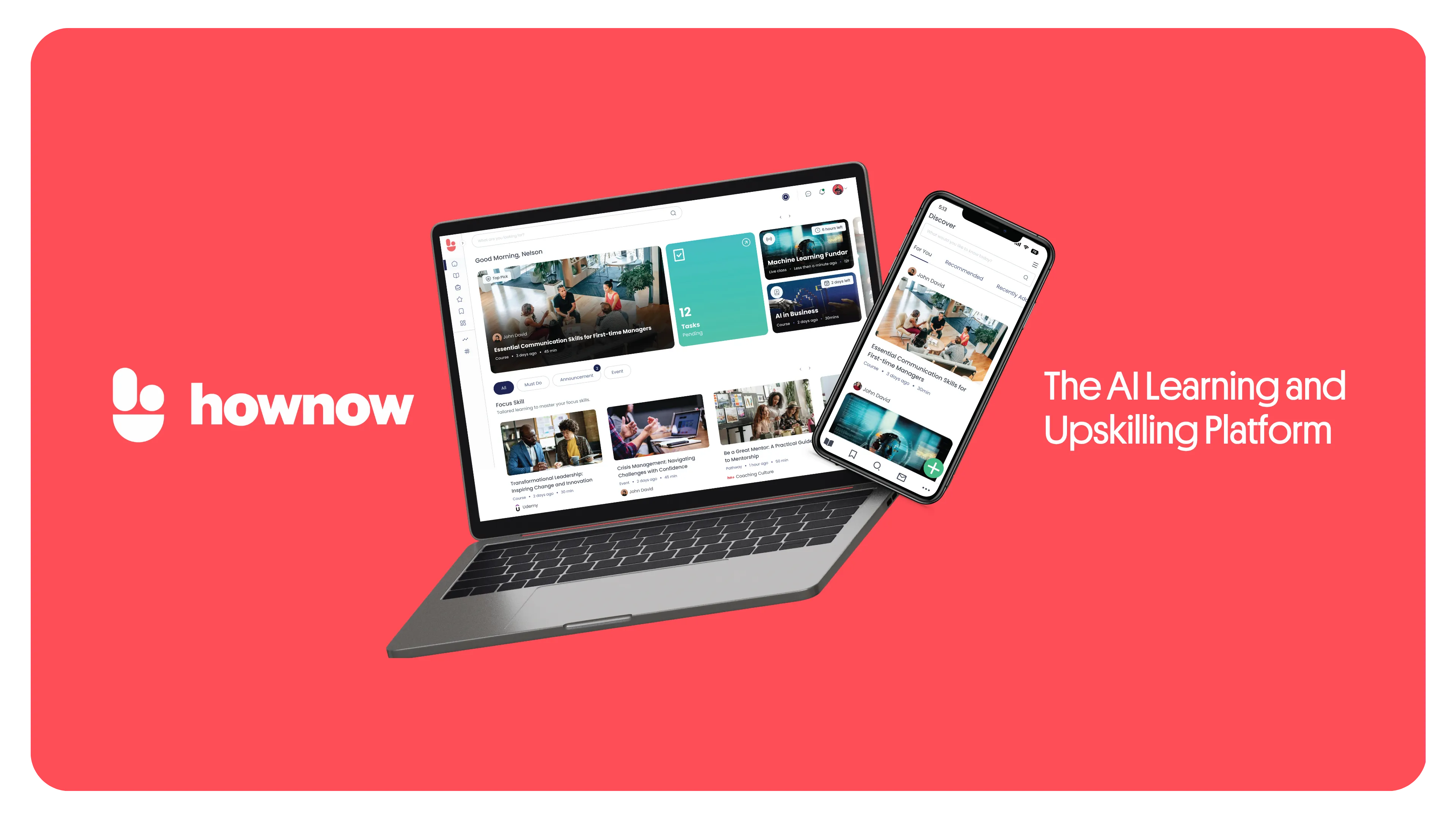
HowNow is the UK-native entry on this list, and it shows in the pricing: from £60 per user per year on Essentials and £80 per user per year on Pro, quoted per organisation. The platform combines LMS, learning experience platform, skills, and content into a single system, which reduces the tool sprawl that plagues larger L&D functions.
Its AI capability earns five stars, the top rating on this list alongside Docebo and 360Learning. The practical effect is reduced admin: automated content tagging, improved search, and personalised recommendations mean less manual curation and better content discovery.
G2 reviewers rate it 4.5 out of 5. For UK teams wanting AI-powered learning and knowledge management in one place, and preferring to buy from a domestic vendor, HowNow is the most direct answer.
10. Kallidus
Kallidus approaches learning from the compliance and measurement angle, which is a different starting point from most vendors here. Its Learn LMS delivers and tracks mandatory employee compliance training, while Kallidus Intelligence measures whether that training actually changes business outcomes.
That second piece is the differentiator. Plenty of platforms report completion rates. Far fewer attempt to connect training activity to business results, and for compliance-heavy UK organisations in regulated sectors, that evidence is often the entire point of the investment.
The customer base includes Boots, Age UK, Aldermore, and boohoo, and the company serves over 1,000 customers with 2 million total active users. G2 reviewers rate it 4.4 out of 5, and pricing is custom-quoted. Organisations that need to demonstrate measurable learning impact and strong operational governance should put Kallidus on the shortlist.
The right choice depends less on feature checklists than on three questions. First, who are your learners: employees only, or customers and partners as well? Platforms like LearnUpon and Docebo handle multi-audience delivery natively, while others require workarounds. Second, how much technical resource do you have? Moodle rewards organisations with in-house IT and frustrates those without. Third, what evidence do you need to produce? If regulators or boards demand proof of training impact, Kallidus and Absorb build their reporting around that requirement.
Budget shapes the answer too. TalentLMS and iSpring Learn serve smaller organisations at low per-user costs, 360Learning and HowNow sit in the accessible middle, and Docebo occupies the enterprise tier where three-year contracts and five-figure annual commitments are standard. Data residency deserves early attention, since Docebo, iSpring, and the UK-based HowNow all address it directly, and procurement teams in regulated sectors will ask regardless of which vendor you shortlist.
Related Posts

1 Comment
Join the discussion and share your thoughts