Top 10 Best Internal Tool Builders For Development Teams In The World 2026


Table of Contents
Building internal tools has long been a drain on engineering productivity. Every development team needs admin panels, dashboards, approval workflows, and data management interfaces, but building them from scratch pulls engineers away from core product work. The internal tool builder market has matured rapidly to address this, and by 2026, development teams have a rich set of options ranging from open-source platforms to enterprise-grade ecosystems. To build this ranking, we evaluated each platform on developer flexibility, integration depth, governance features, deployment options, and real-world adoption across engineering teams. We looked at community activity, enterprise traction, and how well each tool balances speed of development with the control that professional developers demand. The result is a list of 10 platforms that represent the best options for development teams building internal tools in 2026, ranked from most developer-centric to enterprise-heavy.
The Top 10 Best Internal Tool Builders For Development Teams In The World 2026:
1. Retool
Retool remains the benchmark for developer-focused internal tool builders in 2026. The platform serves more than 500,000 developers at companies including Amazon, Coinbase, and Stripe, according to company figures from 2025. Its core value proposition has not changed: engineers drag and drop UI components and connect them to databases, APIs, and authentication systems while writing custom JavaScript and SQL where needed. This combination of visual speed and pro-code flexibility is what keeps Retool at the top of this ranking.
The platform offers more than 90 native integrations spanning PostgreSQL, MongoDB, Salesforce, Stripe, and dozens of other services. Granular role-based access control, audit logs, and on-premises or self-hosted deployment options make Retool attractive for security-conscious enterprises. In 2024 and 2025, Retool launched AI Generation features that scaffold complete internal applications from natural-language prompts, further accelerating development cycles. For data-heavy B2B environments, Retool is consistently cited as the fastest option for building dashboards and admin panels. It leads specifically in internal tools for engineers, with the deepest combination of integrations, governance, and pro-code flexibility available today.
2. WeWeb

WeWeb has carved out a strong position as a no-code and low-code web app builder focused on data-driven internal tools, client portals, and dashboards. The platform separates front end from back end, letting teams connect to APIs, databases such as PostgreSQL, Airtable, and Supabase, and authentication providers while building pixel-perfect UIs using a visual editor. WeWeb emphasizes performance through static publishing via CDN, responsive design, and enterprise governance features including role-based access and environments.
In WeWeb's own 2026 comparative review of top platforms for internal tools, it placed first overall based on flexibility, integration depth, and governance. That independent-style comparison, combined with a strong presence in best no-code app builder lists for 2026, justifies its number two position. For development teams that want a no-code front end layered on top of an existing stack, WeWeb delivers a polished experience that balances designer-quality output with developer control.
3. Appsmith
Appsmith is the leading open-source internal tools platform, with more than 30,000 GitHub stars and thousands of self-hosted deployments worldwide as of 2025. Developers use Appsmith to build admin panels, CRUD dashboards, and workflows using a drag-and-drop UI combined with JavaScript bindings. The platform integrates with popular databases and REST and GraphQL APIs, and supports self-hosting on Kubernetes, Docker, or virtual machines. This makes it particularly appealing to organizations that need strict data control and cannot send data to third-party cloud services.
Appsmith's MIT-style open-source core and active community provide a large library of templates and plugins. A commercial edition adds single sign-on, audit logs, and granular permissions for enterprise use. In 2026 low-code and internal tool platform comparisons, Appsmith consistently appears as the leading open-source option, ranking just behind Retool and WeWeb on raw features while winning on cost transparency and extensibility for engineering teams. That combination earns it the number three spot.
4. ToolJet
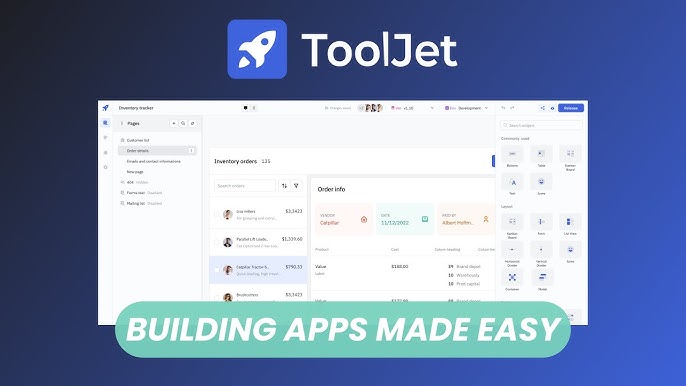
ToolJet is another open-source internal tool builder that has gained significant traction, with over 20,000 GitHub stars and adoption at teams including Philips, Cred, and NASA-affiliated vendors, according to vendor and GitHub data from 2025. The platform lets developers quickly build dashboards, workflow tools, and admin applications using a visual builder plus JavaScript. It supports more than 30 native data sources spanning SQL and NoSQL databases and SaaS tools.
Where ToolJet particularly shines is governance and compliance-heavy use cases. The platform offers on-premises and air-gapped deployments along with enterprise features like single sign-on, fine-grained access control, and audit logs. In 2026 app-builder roundups, ToolJet is highlighted as a strong option for regulated industries that need security without sacrificing developer velocity. It sits slightly behind Appsmith in breadth of community and ecosystem but ahead of many proprietary tools on customizability and security posture, placing it at number four for development teams building internal tooling.
5. Budibase
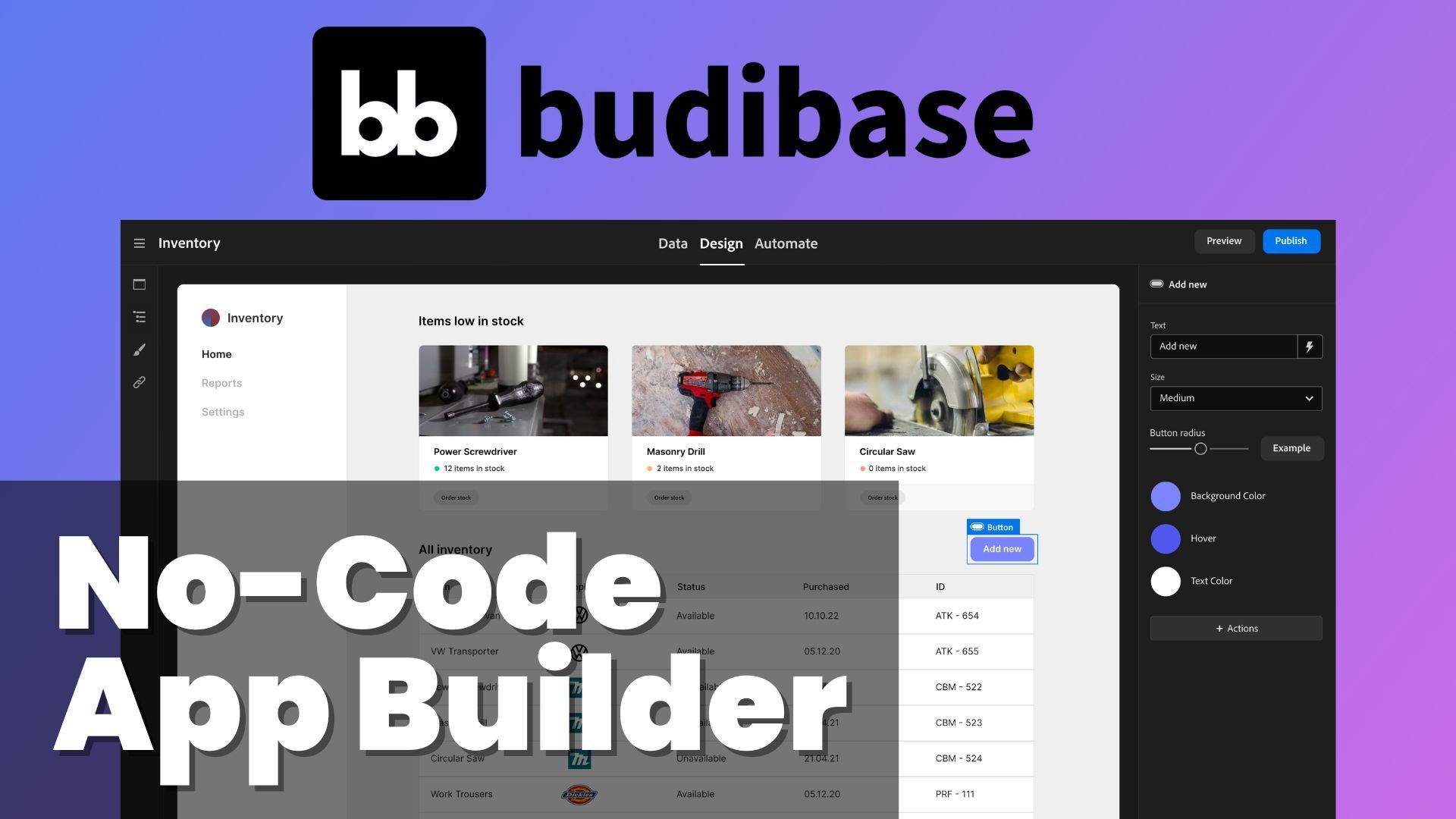
Budibase has registered more than 100,000 organizations and earned over 16,000 GitHub stars as of 2025. It is an open-source low-code platform specialized in internal business applications such as approval workflows, data entry tools, and self-service portals. The platform ships with built-in data tables, automation flows, role-based permissions, and support for external data sources including PostgreSQL, MySQL, and REST APIs.
Budibase emphasizes rapid app creation for operations and IT teams while still letting developers extend applications with custom code components and self-hosted deployments. In 2026 low-code platform comparisons, it is consistently grouped among the top internal tool builders. It is considered slightly less developer-centric than Retool, Appsmith, and ToolJet, which is why it ranks number five for development teams that want an open-source, workflow-oriented solution. For teams building approval processes and data entry interfaces quickly, Budibase offers a streamlined experience.
6. DronaHQ
DronaHQ provides a low-code internal tools and workflow automation platform targeting enterprises that need secure, governed business applications. It ships with more than 100 prebuilt connectors and components, with enterprise customers across banking, financial services, insurance, manufacturing, and SaaS, according to vendor data from 2025. The platform includes a visual UI builder, ready-made controls, and built-in connectors for databases, APIs, and legacy systems, plus features like granular role-based access control, single sign-on, and environment management.
DronaHQ is frequently chosen in banking and financial services for its focus on security certifications, scalable hosting, and mobile-ready internal applications. 2026 low-code rankings position DronaHQ as a strong enterprise alternative to Retool and Mendix for internal tools. It ranks number six here due to its enterprise depth but smaller global developer mindshare compared with the higher-ranked tools. For teams in regulated industries that need a platform with strong security credentials, DronaHQ is a compelling option.
7. Microsoft Power Apps
Microsoft Power Apps is part of a low-code platform business estimated at over $2 billion in annual revenue within Microsoft's Power Platform segment, according to Microsoft financial disclosures from 2025. The platform enables both citizen developers and professional engineers to build internal business apps that integrate tightly with Microsoft 365, Dynamics 365, and Azure services. It offers model-driven and canvas apps, hundreds of connectors for SharePoint, Dataverse, SQL Server, Salesforce, and other services, and advanced governance through the Power Platform admin center.
For development teams in Microsoft-centric enterprises, Power Apps provides deep integration with Azure DevOps, Azure Functions, and enterprise identity through Entra ID, formerly Azure Active Directory. In 2026 low-code reports, Power Apps is consistently ranked as top-tier for broad enterprise delivery rather than pure internal tool speed. That is why it lands at number seven for development teams. It is extremely powerful in Microsoft shops but less streamlined for lightweight, engineering-led internal tools than the platforms ranked above it.
8. Google AppSheet
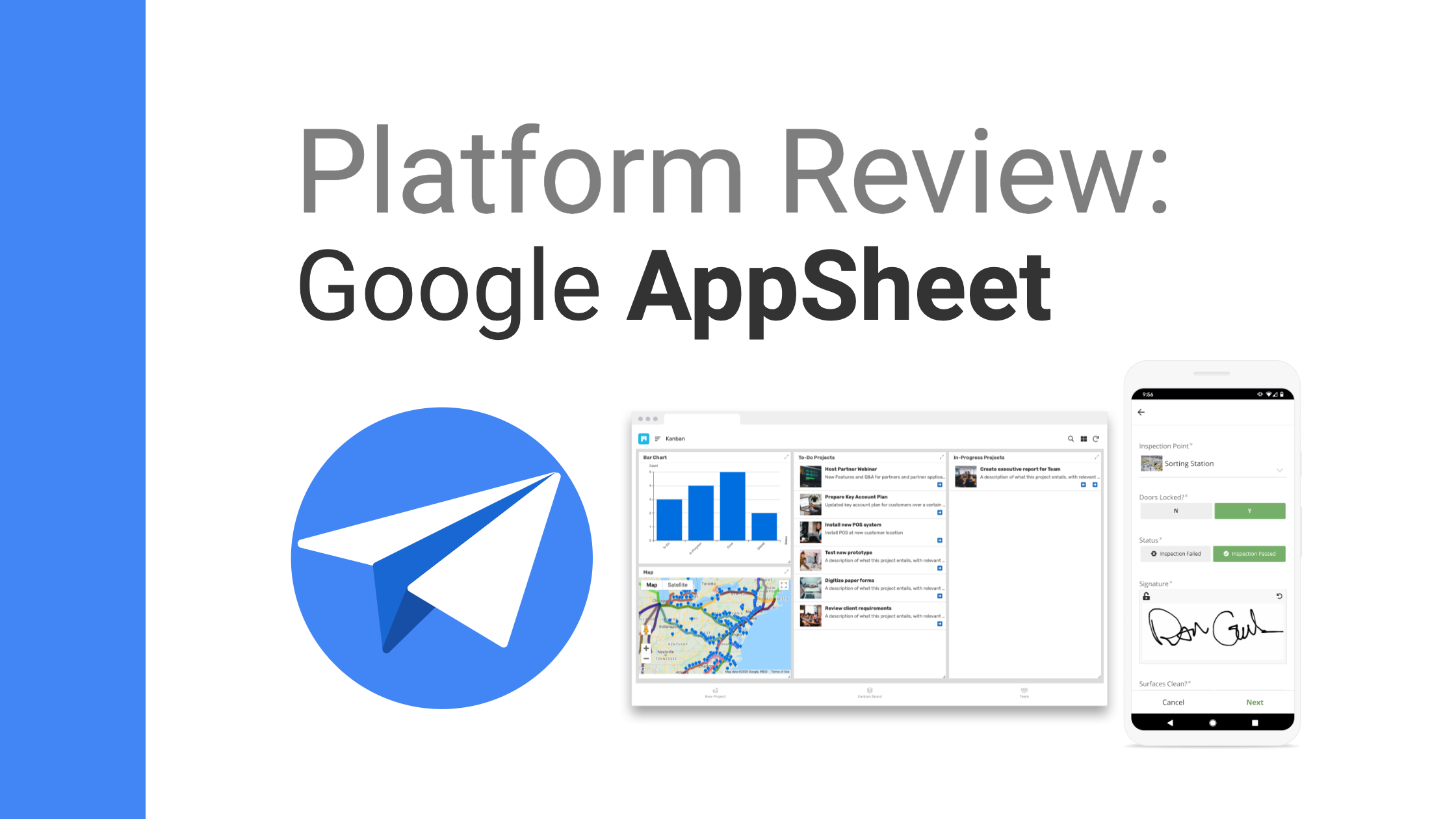
Google AppSheet serves hundreds of thousands of active app creators globally and is integrated into Google Workspace following Google's 2020 acquisition, according to Google statements from 2024 and 2025. It is a no-code app development platform that turns spreadsheets and databases into internal applications without writing code. AppSheet integrates tightly with Google Sheets, BigQuery, Drive, and other Google Workspace tools, and supports external data sources like SQL databases and Salesforce.
The platform includes workflow automation, offline-capable mobile apps, and policy-based governance for administrators managing many internal applications across an organization. In 2026 low-code rankings, AppSheet is praised for empowering non-developers but rated as less flexible for complex developer-driven tooling. That places it at number eight for development teams that still value its quick wins for simple internal applications in Google-centric environments. For teams that need to rapidly prototype a spreadsheet-driven app, AppSheet is hard to beat.
9. Softr

Softr was recognized in 2026 as the best AI web app builder for teams in its own multi-tool comparison, ahead of several developer-focused platforms for collaborative business software. It is a no-code web app builder for internal tools, customer portals, and lightweight SaaS applications built on top of data sources like Airtable, Google Sheets, and PostgreSQL. Softr's 2026 release heavily emphasizes AI-assisted building, enabling teams to generate pages, workflows, and database models from natural-language prompts.
The platform includes granular permissions, membership features, and prebuilt templates tailored to operations, human resources, and customer-facing portals. This makes Softr attractive to cross-functional teams where engineers and non-engineers collaborate on internal tool development. While not as developer-centric as Retool or Appsmith, its strong position in 2026 AI app-builder rankings and value for collaborative internal business applications justify its number nine rank for development teams supporting business stakeholders.
10. Mendix
Mendix has been consistently ranked as a Leader in the Gartner Magic Quadrant for Enterprise Low-Code Application Platforms across multiple years through 2025. It is an enterprise-grade low-code platform used to build complex internal and external applications across large organizations, particularly in manufacturing, finance, and the public sector. Mendix supports model-driven development, microservices architectures, and deployment to Kubernetes and major clouds, with strong lifecycle management, testing, and DevOps integrations.
The platform excels in large-scale digital transformation programs, offering advanced governance, multi-team collaboration, and integration with SAP and other core enterprise systems. In 2026 low-code comparisons, Mendix is rated as one of the best platforms for broad enterprise delivery but is comparatively heavyweight for fast, tactical internal tools. It rounds out this list at number ten for development teams who need maximum enterprise depth more than pure speed to dashboard. For organizations undertaking large-scale application modernization, Mendix remains a top choice.
Development teams in 2026 have more internal tool builder options than ever before. The right choice depends on the team's existing technology stack, security requirements, and how much control developers want over the final application. Open-source platforms like Appsmith and ToolJet offer maximum flexibility and cost transparency. Enterprise platforms like Microsoft Power Apps and Mendix deliver deep integration with existing systems. And platforms like Retool and WeWeb strike a balance between visual development speed and code-level control. Our recommendation is to evaluate the top three to five options against your team's specific workflow and deployment constraints before committing to a platform.
Related Posts



0 Comments
Join the discussion and share your thoughts
No Comments Yet
Be the first to share your thoughts on this article!