Top 10 Best Healthcare Services In India 2026

Table of Contents
The top 10 best healthcare services in India for 2026, as ranked by the Newsweek/Statista World's Best Hospitals report, span a striking range: from a 1,250-bed private super-specialty campus in Gurugram to a public research university in Delhi that has anchored Indian medicine since 1956. We built this ranking on the Newsweek/Statista composite scores where available, and on network size, clinical reputation, patient volumes, and affordability where they were not. The list deliberately mixes public and private institutions, because any honest picture of Indian healthcare has to account for both the subsidized tertiary care that keeps millions of families solvent and the private networks that have made India a global medical tourism destination.
Our criteria weighed four things. First, independent quality signals, principally the Newsweek/Statista 2026 composite scores, which combine hospital surveys, patient experience data, and key performance indicators such as infection rates and treatment quality. Second, clinical depth: does the institution lead in cardiac care, oncology, transplantation, or another discipline where outcomes are measurable? Third, scale and access, including bed counts and annual patient volumes. Fourth, cost and reach, since an institution that treats 60,000 new cancer patients a year at subsidized rates carries a different kind of weight than a premium private hospital. Where the research data did not provide a numerical score, we ranked on institutional standing and verifiable operational facts.
These Are The List Of The Top 10 Best Healthcare Services In India 2026:
1. Medanta - The Medicity
Medanta tops the 2026 Newsweek/Statista ranking for India with a composite score of 90.90%, the highest of any Indian hospital in the report. The 1,250-bed multi-super-specialty hospital in Gurugram was founded by Dr. Naresh Trehan, one of India's most recognized cardiac surgeons, and cardiac care remains its signature strength. Minimally invasive and robotic cardiac surgery programs draw patients from across South Asia and the Middle East.
The hospital's organ transplant program is similarly deep, covering heart, liver, kidney, and bone marrow procedures. Medanta's ranking reflects more than reputation: the Newsweek methodology factors in patient-reported outcomes and hygiene metrics, and the hospital has consistently scored well on both since the ranking's inception.
2. All India Institute of Medical Sciences (AIIMS) - Delhi
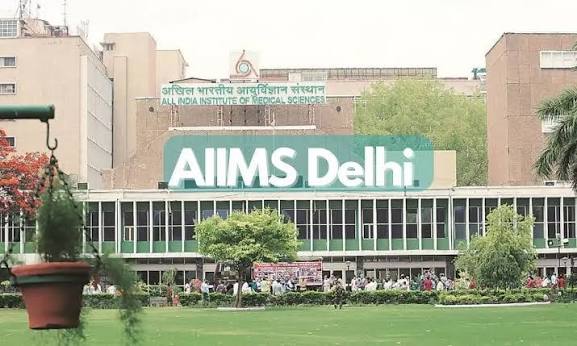
AIIMS Delhi lands at 90.29% in the 2026 composite score, a hair behind Medanta and remarkable given its public status. Established in 1956 by an Act of Parliament, AIIMS functions as India's foremost medical research university, a tertiary referral hospital, and the training ground for a large share of the country's medical faculty. Care is heavily subsidized, and its outpatient departments process patient volumes that few hospitals anywhere in the world match.
The institution's research output and its role in national health policy give it influence well beyond its own wards. For patients who can secure an appointment, AIIMS offers world-class tertiary care at a fraction of private-sector cost, which is precisely why demand so vastly outstrips supply.
3. PGIMER
The Postgraduate Institute of Medical Education and Research in Chandigarh is the top-ranked government institution in North India in the 2026 report. Founded in 1962 as an autonomous body under the Government of India, PGIMER built its reputation on super-specialty departments in cardiology, neurology, and organ transplantation, combined with a research and teaching mandate that mirrors AIIMS.
What distinguishes PGIMER is consistency. It has held a place among India's leading government hospitals for decades, and its catchment area stretches across Punjab, Haryana, Himachal Pradesh, and beyond. Patients routinely travel hundreds of kilometers for its neurology and transplant services.
4. Apollo Hospitals
Apollo is India's largest private hospital network, with more than 10,000 beds across the country, and it effectively created the template for corporate healthcare in India after opening its first hospital in Chennai in 1983. The group introduced several procedures to the country, including the first coronary angioplasty and the first liver transplant performed in the private sector.
Cardiology, oncology, and orthopedics anchor its service mix, and Apollo remains one of the biggest names in Indian medical tourism, with international patient offices in Africa, the Middle East, and Southeast Asia. Its size cuts both ways: standardization across dozens of facilities is a genuine operational challenge, but the network's breadth means specialist expertise is rarely more than a city away.
5. Fortis Healthcare
Fortis operates more than 28 hospitals with over 4,000 beds, and its crown jewel is the Fortis Escorts Heart Institute in New Delhi, long regarded as one of India's leading cardiac centers. The group's clinical strengths cluster around cardiac sciences, neurosciences, and orthopedics.
Fortis has weathered well-publicized corporate turbulence over the years, including ownership changes, but its hospital operations have remained stable and its medical tourism footprint in the National Capital Region is substantial. For patients seeking private cardiac care in Delhi, Escorts remains a first-line referral.
6. Manipal Hospitals
Part of the Manipal Education and Medical Group, Manipal Hospitals runs 23-plus hospitals across 14 cities, with its weight concentrated in South India. The network is known for clinical protocols that track international standards and for a patient-services culture that has made it a preferred choice for medical travelers from East Africa and the Gulf.
Cardiology, oncology, and transplant services are the group's strongest verticals. Manipal's academic parentage matters here: the link to Manipal Academy of Higher Education gives it a steady pipeline of clinicians trained within its own system, a structural advantage most pure-play hospital chains lack.
7. Tata Memorial Hospital
Tata Memorial in Mumbai is India's largest and most storied cancer care center, founded in 1941 and operating as a grant-in-aid institution under the Department of Atomic Energy. It treats more than 60,000 new cancer patients annually, a volume that makes it one of the busiest oncology facilities in the world.
Care is subsidized, sometimes free for the poorest patients, and the hospital's research arm, the Advanced Centre for Treatment, Research and Education in Cancer in Navi Mumbai, feeds a steady stream of clinical trials and epidemiology work. If you measure healthcare by lives touched rather than revenue, Tata Memorial arguably belongs higher on this list than its seventh-place position suggests.
8. Christian Medical College (CMC) - Vellore
CMC Vellore, established in 1900, is a private non-profit institution that has ranked among India's top medical colleges and hospitals for generations. Its reputation rests on three pillars: medical education, research, and a commitment to rural and underserved communities that few institutions of its caliber match.
Hematology, gastroenterology, and neurology are among its specialized strengths, and its ethical standards and transparent pricing are frequently cited by patients as reasons for choosing it over larger corporate networks. The hospital's catchment extends across South India and into neighboring countries.
9. Narayana Health
Founded by Dr. Devi Shetty in 2000, Narayana Health built its name on a single proposition: high-quality cardiac surgery at prices ordinary Indian families can afford. The Bengaluru-headquartered group now operates 24 hospitals and heart centers across India and internationally, and its low-cost, high-volume model has been studied by health economists worldwide as a template for affordable surgical care.
Shetty's approach relies on process standardization, economies of scale in consumables, and task-shifting to trained non-physician staff. The result is cardiac procedures priced at a fraction of Western rates without the outcome penalties that critics initially predicted.
10. Max Healthcare
Max Healthcare rounds out the list with 17 hospitals, concentrated in the National Capital Region and northern India. The group has built centers of excellence in cardiology, oncology, and orthopedics, and it draws a steady flow of international patients from Afghanistan, Iraq, and African nations.
Max's positioning sits between the premium tier and the mass-market networks: quality metrics are strong, facilities are modern, and pricing is competitive for the private segment. Its north India concentration is a limitation for patients elsewhere, but within the NCR it is a serious contender for most major procedures.
The right hospital depends on the condition. For complex cardiac surgery, Medanta, Apollo, and Narayana Health offer distinct trade-offs between premium care and affordability. For oncology, Tata Memorial's subsidized volume model and the private sector's faster access represent genuinely different choices. For patients reliant on public care, AIIMS and PGIMER remain the gold standard, provided you can navigate wait times.
Our advice: match the institution to the procedure, verify the specific department's outcomes rather than the brand's overall reputation, and factor in follow-up logistics. India's best healthcare services in 2026 are strong enough that the deciding variable is often fit, not quality.
Related Posts




0 Comments
Join the discussion and share your thoughts
No Comments Yet
Be the first to share your thoughts on this article!