Top 10 Best Gaming Platforms In China 2026

Table of Contents
China's games industry surpassed $50 billion in 2026, according to Niko Partners, and the platforms that move that money are no longer just app stores and publishers. The top 10 best gaming platforms in China now include super-app mini-game ecosystems, short-video discovery engines, PC storefronts, and carrier-backed operators. We ranked these platforms on scale (monthly users and revenue), market share, and 2026 industry data from Niko Partners, Newzoo, PocketGamer.biz, and CADPA. Where a platform's strength is distribution rather than publishing, we weighted discovery reach and developer access just as heavily as raw revenue.
The result is a list where WeChat and Tencent Games sit at the top, but Douyin, Steam China, and even a state-owned telecom subsidiary earn their places. China generated ¥325.8 billion ($44.8 billion) in game revenue in 2024, up 7.53% year over year per CADPA, and the mini-game and PC segments are growing fastest. That shift explains why super-apps rank alongside traditional publishers here. These are the platforms where Chinese players actually find, play, and pay for games in 2026.
Here Are The Top 10 Best Gaming Platforms In China 2026:
1. WeChat (Weixin) Mini Games

WeChat is the single largest game-discovery and mini-game platform in the world's biggest gaming market. Tencent's super-app launched in 2011 and now reaches more than a billion users globally, with roughly 500 million monthly active users cited as a casual-game discovery channel. Mini games built inside WeChat are cheaper and faster to develop than standalone apps, which is why the format has exploded.
The numbers back it up. Mini games now account for a large share of the roughly 20% of mobile game spending that flows through the format in 2026, per PocketGamer.biz's China gaming report citing Niko Partners and Newzoo. Integration with Tencent Games gives WeChat unmatched reach into the publisher's own catalog. For hyper-casual developers, WeChat is often the first place a game gets tested in front of a real audience.
2. Tencent Games
Established in 2003, Tencent Games is the largest online game community in China and the most-used digital entertainment platform worldwide, with more than 800 million daily users. Its flagship titles anchor the entire market. Honor of Kings earned $2.30 billion in in-app purchase revenue in 2026, up 12.5% year over year, while Peacekeeper Elite brought in $1.18 billion, up 24.0%, according to Singular.net's 2026 mobile game rankings.
Tencent's reach extends well beyond its own titles. The company holds stakes in Supercell, Epic Games, and Ubisoft, and its Tencent Cloud serves more than 95% of top Chinese studios going overseas. Overseas revenue surpassed $10 billion in 2025. That combination of publishing scale, infrastructure, and international ownership makes Tencent Games the second-most powerful platform in the country and arguably the most powerful single publisher.
3. Douyin (TikTok China)

ByteDance's Douyin is the top channel for game discovery in China across PC, mobile, and console. Niko Partners' 2026 data found that 41% of Chinese players discover new games through short-video apps like Douyin and Kuaishou, making short video the number one discovery channel in the market. Social media as a whole grew to 33.9% as a discovery source, and Douyin's short-video share held steady year over year.
Discovery is only half the story. Douyin also runs its own mini-game ecosystem, positioning it as a distribution platform in direct competition with WeChat. For developers, that means a game can be marketed through short video and then played without ever leaving the app. ByteDance has turned attention itself into a storefront.
4. NetEase Games
Founded in 2001, NetEase Games leads China's MMORPG market and ranks among the world's seven largest game companies. The company proved its IP management muscle in 2026 by reviving Stone Age, a franchise dating to 2000, and pulling in ¥1.3 billion in its first month, according to SoloGame and LinkedIn industry data. That kind of lifecycle management is rare at scale.
NetEase operates major PC and mobile platforms and remains Tencent's key domestic competitor. Its portfolio spans self-developed MMORPGs, licensed titles, and a growing international publishing arm. For players and developers alike, NetEase is the second-largest publisher-operator platform in China and a genuine alternative to Tencent's ecosystem.
5. Steam China
Steam is the leading PC game distribution platform in China and the main gateway for premium PC and console titles, both domestic and imported. Newzoo's 2026 data found that China drove 42% of global PC revenue growth last year, and the firm noted that "China's PC market is not just growing, it's defining what a mature gaming market looks like."
Steam matters for another reason: foreign companies can still enter the Chinese market through the platform, making it a critical bridge between global publishers and Chinese players. As PC and console segments grow faster than mobile, Steam China's position strengthens. It ranks fifth here as the top PC storefront in the country.
6. Kuaishou Mini Games

Kuaishou is China's second major short-video super-app and a significant mini-game and game-marketing platform. It is particularly strong in lower-tier cities, where its user base skews toward audiences that Douyin reaches less effectively. Like Douyin, Kuaishou hosts mini games and drives discovery through the same short-video behavior that 41% of Chinese players report as their main way of finding games.
The platform ranks sixth because it trails Douyin in scale and reach, but it remains a top-tier discovery and mini-game channel. Developers targeting regional audiences ignore Kuaishou at their own risk.
7. 4399 Small Games
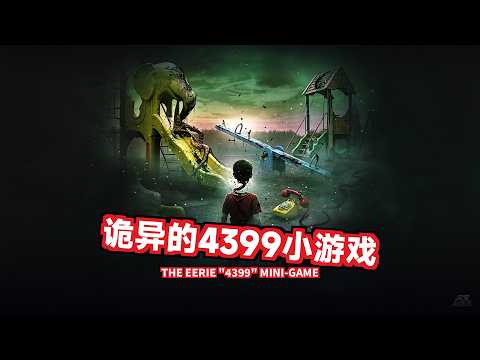
4399 Games is China's leading web-game platform, with a broad catalog of browser-based titles known for high playability, refreshing combat, and stable technical support. It has long served as a major entry point for casual and small games in China, and it remains relevant in 2026 even as mobile dominates the market.
Browser games occupy a specific niche: low friction, no download, instant play. For older players and lower-spec devices, 4399 is often the default. It ranks seventh as the top dedicated web-game platform in the country.
8. Perfect World Games
Perfect World is a global developer, publisher, and operator, and the first Chinese company to build a 3D game engine. That technical pedigree underpins a diversified platform footprint spanning client games, mobile, console, VR, and cloud gaming. Few Chinese companies operate across that many segments at once.
The company's multi-platform breadth is its defining strength. As cloud gaming and console adoption grow in China, Perfect World is positioned to serve players wherever they are. It ranks eighth for that breadth and for its engine technology leadership.
9. Lilith Games

Founded in May 2013 and headquartered in Shanghai, Lilith Games is a globally recognized developer and publisher committed to building games for international audiences. Its publishing platform has given it reach well beyond China's borders, and its Shanghai base keeps it plugged into the domestic talent pool.
Lilith ranks ninth as a notable developer-publisher platform with genuine global reach. It is smaller than Tencent or NetEase, but its international orientation makes it a meaningful player in China's export-driven gaming economy.
10. Dazzle Interactive

Dazzle Interactive Network Technologies is the exclusive game-publishing and game-operating subsidiary of China Telecom, the state-owned telecom giant listed on the NYSE as CHA. Headquartered in Nanjing with 201 to 500 employees, it operates as a carrier-grade game platform backed by China Telecom's infrastructure and subscriber base.
Telecom-backed platforms occupy a distinct position in China's market, blending distribution with network access. Dazzle ranks tenth as a notable carrier-backed gaming platform, according to RevenueBase's September 2026 company data. It is a reminder that in China, the pipes and the games are often owned by the same entity.
China's games industry generated ¥325.8 billion ($44.8 billion) in 2024, up 7.53% year over year per CADPA, and Newzoo estimated the market at $48.7 billion for the same period. By 2026, Niko Partners puts the market above $50 billion. Mobile remains dominant, but PC and mini-game segments are the fastest-growing platforms, which is exactly why super-apps like WeChat, Douyin, and Kuaishou rank highly alongside major publishers like Tencent and NetEase.
Related Posts


0 Comments
Join the discussion and share your thoughts
No Comments Yet
Be the first to share your thoughts on this article!