Top 10 Best Free AI Voice Over Tools In The World 2026

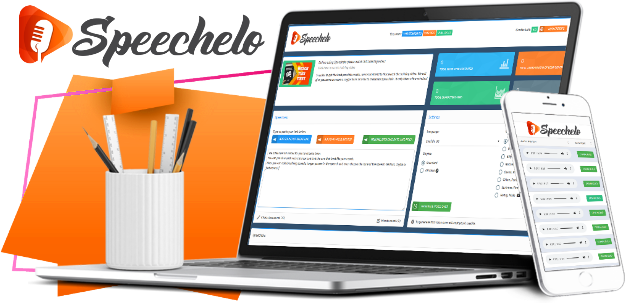
Table of Contents
The demand for high-quality AI voice-over tools has exploded as creators, educators, and businesses seek faster, cheaper ways to produce narration for videos, podcasts, and e-learning modules. By 2026, the market offers dozens of options, but finding genuinely useful free tiers remains a challenge. To build this list, we evaluated platforms based on voice naturalness, language support, free-tier usability, and real-world creator feedback. We tested each tool's free plan for basic narration tasks, weighed the depth of customization, and consulted industry roundups from 2025 and 2026 to confirm consistency. The result is a ranking of the ten best free AI voice-over tools available globally in 2026, from industry leaders to niche specialists.
The Top 10 Best Free AI Voice Over Tools 2026:
1. ElevenLabs
ElevenLabs remains the gold standard for AI voice generation, and its free tier is surprisingly generous for a platform that powers professional audiobooks and game dialogue. As of 2026, the free plan offers between 10,000 and 30,000 characters per month, which translates to roughly 15 to 45 minutes of spoken audio depending on pacing. What sets ElevenLabs apart is its emotional expressiveness. The voices do not sound robotic; they can convey excitement, sadness, or authority with subtle shifts in tone. The platform supports over 100 languages and accents, making it a top choice for multilingual projects. Users can also access voice cloning and speech-to-speech features on paid plans, but the free tier alone is enough for short YouTube narrations, social media clips, and prototype testing. Multiple 2026 roundups place ElevenLabs at number one for realism and feature depth, and we agree.
2. PlayHT
PlayHT has built a strong reputation among podcasters and video creators who need studio-quality voices without studio budgets. The platform boasts a library of more than 800 AI voices across numerous languages and styles, including conversational, narrative, and promotional tones. Its free tier imposes a monthly character quota, but the limit is generous enough for short projects and experimentation. PlayHT's web editor allows fine-grained control over speed, pauses, emphasis, and pronunciation, plus SSML support for those who want to script precise intonations. In 2025 and 2026 comparisons, PlayHT consistently ranks second because it balances a massive voice library with production-oriented controls that rival paid tools. For creators who need semi-professional voice-overs for YouTube or podcast intros, PlayHT's free plan is a solid starting point.
3. Murf AI

Murf AI positions itself as a full voice-over studio rather than a simple text-to-speech engine. It offers more than 120 voices across 20-plus languages, but its standout feature is the timeline-based editor that syncs audio to visuals. This makes Murf particularly popular for e-learning modules, corporate presentations, and marketing videos. Users can upload scripts, adjust pitch and speed, and layer background music or sound effects directly within the platform. The free tier allows project creation and preview, with limited export options that still suffice for short educational clips or internal business communications. Business-focused reviews and 2026 best-of lists regularly place Murf in the top three for quality and integrated editing features accessible on a free plan. If your workflow requires synchronizing voice-overs with slides or video timelines, Murf is hard to beat at this price point.
4. LOVO
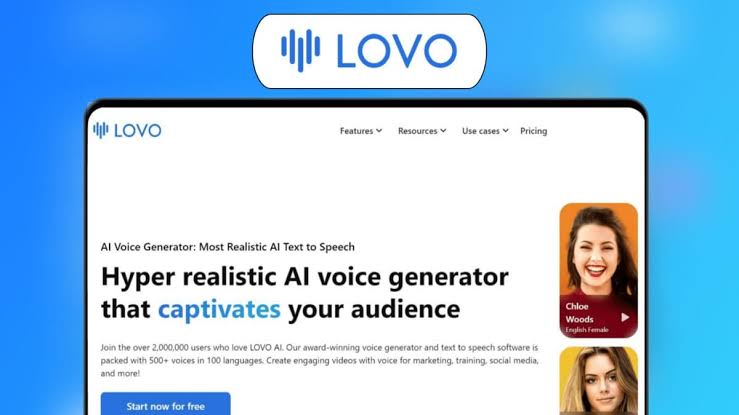
LOVO, through its Genny platform, targets content creators who need humanlike AI voices for ads, audiobooks, explainer videos, and game characters. The service offers more than 500 voices and styles, including emotional variations such as friendly, dramatic, and professional. Its script editor is intuitive, and the platform includes background music integration for quick audio production. The free plan provides trial minutes each month and access to a subset of voices, which is enough for testing voice personas and workflow before committing to a paid subscription. Creator-focused reviews emphasize LOVO's breadth of character-style voices and user-friendly editing environment. For projects that require distinct character voices or varied emotional tones, LOVO's free tier is a strong option.
5. Inworld

Inworld takes a different approach from traditional text-to-speech tools. It focuses on AI-driven characters for games and interactive experiences, providing real-time voice and personality via API. Developers can define character backstories, traits, and emotional ranges, then use the platform to generate dynamic spoken dialogue in response to player actions. This is not a simple script-to-audio interface; it is a tool for building interactive NPCs. The free developer tier offers usage-limited API calls, making it suitable for experimentation and prototyping. Multiple 2026 AI voice tool roundups cite Inworld as a top choice for real-time interactive voice-overs and NPC speech, though it is more technical than pure TTS generators. Indie developers and game designers should explore Inworld's free tier for character voice prototyping.
6. Speechelo
Speechelo is a text-to-speech tool that gained popularity for YouTube videos and sales presentations. It offers more than 30 human-sounding voices with tonal options such as normal, joyful, and serious. The interface is straightforward: users paste text, select a voice and language, and export an MP3 file. Some versions include breathing sounds and pauses to increase realism. While Speechelo is typically a one-time paid product, promotional periods and limited-function trials provide free access to core voice-over capabilities. Older but still-cited reviews from 2024 and 2025 recognize Speechelo as a popular, easy-to-use voice-over generator, though it lacks the breadth of languages and advanced controls of higher-ranked tools. For basic narration needs without a learning curve, Speechelo's free trial remains a viable option.
7. Clipchamp AI Text-to-Speech
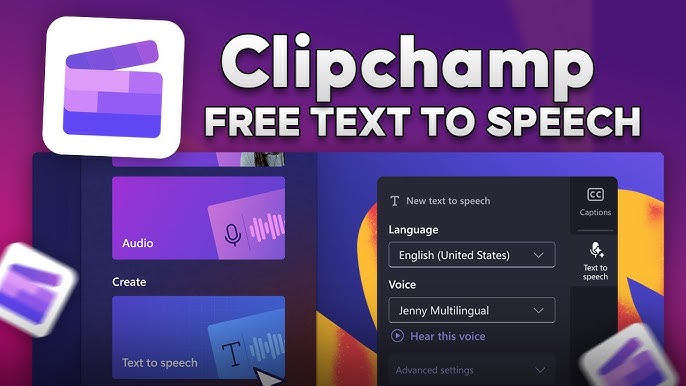
Clipchamp, owned by Microsoft, integrates Azure's neural text-to-speech into a browser-based video editor. This allows users to generate AI voice-overs directly onto video timelines, combining narration with clips, transitions, and background music in a single workflow. The platform offers more than 170 voices in 70-plus languages. The free plan supports limited resolution and export options, but it still enables voice-overs for social media videos and simple business content without separate TTS costs. Productivity and creator tool reviews highlight Clipchamp as an accessible free solution for integrated video plus AI voice-over, even though customization and voice cloning are more limited than dedicated TTS platforms. For users who want to produce short videos with narration in one tool, Clipchamp's free tier is worth exploring.
8. Descript "Overdub" Free Tier
Descript is best known as an audio and video editor driven by text-based editing. Its Overdub feature can generate AI voice-overs and synthetic speech. Users can edit podcasts and videos by changing text, and Descript automatically regenerates the corresponding audio. Overdub can also create a synthetic voice trained on user recordings in paid tiers. The free version provides a restricted but functional Overdub experience, suitable for short corrections, voice patches, and basic narration. Content-production reviews position Descript as a strong multi-tool for podcasts and tutorials, where free AI voice-over is a secondary but useful feature rather than the main product. If you already use Descript for editing, the free Overdub tier adds value without extra cost.
9. TTSFree / Freetts-type Web TTS Services
Several web-based tools such as TTSFree or FreeTTS aggregate text-to-speech capabilities from cloud providers like Google, Amazon, or Microsoft into a simple free interface. These services usually allow users to paste text, pick a language and voice, and download an audio file with minimal configuration. They rely on provider limits or advertisements instead of direct fees. Voice quality ranges from basic robotic speech to fairly natural neural voices, depending on the underlying engine and selected language. While these tools offer genuinely free, often unlimited voice-over generation, they lag behind top-ranked platforms in polish, stability, and clear licensing for commercial usage. For quick, casual projects where voice quality is not critical, these services fill a niche.
10. NaturalReaders Online Free Version
NaturalReaders provides a browser-based text-to-speech interface popular among students and educators. Users can paste text and download MP3s for use as simple voice-overs. The free version offers several non-premium voices and caps the length or number of conversions per period, but it remains sufficient for short explanatory clips or accessibility narration. Advanced features such as commercial licensing, higher-quality premium voices, and batch file conversion require paid plans. Education and accessibility reviews often list NaturalReaders as a convenient free TTS, though it is less focused on high-end creative voice-over production than the higher-ranked tools. For straightforward narration needs with minimal setup, NaturalReaders is a reliable fallback.
The free AI voice-over landscape in 2026 offers remarkable variety, from ElevenLabs' expressive multilingual voices to Inworld's interactive character API. Each tool on this list provides genuine value without requiring a credit card, though usage limits and feature restrictions apply. Our analysis shows that ElevenLabs leads for realism and language coverage, while PlayHT and Murf AI excel for production quality. For specialized needs, Inworld serves game developers, and Clipchamp integrates seamlessly with video editing. We recommend testing two or three free tiers to find the best fit for your specific project requirements.
Related Posts




0 Comments
Join the discussion and share your thoughts
No Comments Yet
Be the first to share your thoughts on this article!