Top 10 Best Fitness Tracker Companies In 2026

Table of Contents
The fitness tracker market in 2026 is more crowded and more sophisticated than ever. Wearables have moved far beyond simple step counting, evolving into comprehensive health platforms that monitor recovery, sleep stages, heart rate variability, and even blood oxygen saturation. For consumers, that breadth creates a challenge: choosing the right device from dozens of credible options requires understanding what each company does best.
We built this ranking by weighing performance data, battery life, ecosystem depth, subscription requirements, and user sentiment across major review sources including CNET, WIRED, PCMag, GearJunkie, Wareable, and Consumer Reports. We also considered price-to-feature ratios and cross-platform compatibility, since a tracker that only works with one smartphone OS limits its usefulness. The result is a list that spans premium multisport watches, screenless recovery bands, smart rings, and budget-friendly options under $60. Here are the 10 companies leading the fitness tracker market in 2026.
Here Are The Top 10 Best Fitness Tracker Companies In 2026:
1. Garmin
Garmin enters 2026 as the undisputed leader in fitness tracking, with 8 of the 13 top-rated fitness watches across major review publications. The company's strategy is simple: offer a device for every type of athlete, from casual walkers to ultra-endurance competitors, without requiring a monthly subscription.
The Vivoactive 6 ($299.99) earned "Best Overall" honors from NBC News, delivering a balanced mix of smartwatch features and robust health tracking. For runners, the Forerunner 570 ($549.99) stands out with dual-band GPS and up to 18 hours of GPS battery life, plus 10-11 days of general use. At the top of the lineup, the Fenix 8 ($1,100) includes solar charging and an extraordinary 92 hours of GPS battery life, making it the default choice for multi-sport athletes who spend days off-grid.
What separates Garmin from competitors is the proprietary Body Battery feature, which synthesizes sleep, stress, and activity data into a single energy score. It remains the industry benchmark for recovery tracking, and unlike Whoop or Fitbit Premium, all of Garmin's metrics are available without a subscription. The company's devices work across both iOS and Android, giving it a wider addressable market than Apple's ecosystem-bound watches.
2. Apple

Apple continues to dominate the premium smartwatch-fitness hybrid segment with three distinct tiers. The Apple Watch SE 3 ($249) delivers the same S10 processor found in the flagship Series 11 at nearly half the price, and its ultrafast charging provides 8 hours of use from a 15-minute charge. CNET scored it 9.0/10, praising its value proposition for iPhone users.
The Apple Watch Ultra 3 targets extreme athletes with sapphire glass rated to 10 ATM, dual-band GPS, and tolerance for temperatures up to 130°F. It can handle elevations up to 9,000 meters, making it a legitimate tool for mountaineers and backcountry adventurers. Apple's health suite includes ECG, irregular heart rhythm notifications, sleep apnea detection, and temperature tracking, all processed through the company's Training Load and Vitals algorithms.
Reviewers consistently note that Apple's recovery metrics outperform Samsung's comparable features. The catch: the entire ecosystem requires an iPhone. That limitation is why Apple sits at number two rather than number one, despite hardware that rivals Garmin on nearly every front.
3. Google (Fitbit)
Google's Fitbit division has reinvented itself around AI-powered health coaching. The Fitbit Charge 6 ($159.95) was named "Best for Most" by Royalty Consumer, offering an ECG app, SPO2 tracking, an EDA stress sensor, and a daily readiness score based on skin temperature and breathing rate during sleep.
The new Fitbit Air ($99.99) is a screenless tracker that PCMag rated 4.5/5 "Outstanding," praised for its lightweight design and highly accurate heart rate and sleep tracking. Google's Gemini-powered Personal Health Coach delivers personalized recommendations that account for workouts, illness, and routine changes. WIRED called it "one of the most intuitive AI health coaches available."
The Pixel Watch 4 combines Fitbit insights with a repairable design, addressing a long-standing complaint about disposable wearables. But Fitbit's premium features require a subscription at $10 per month or $80 per year, and the company has released fewer hardware updates than competitors. Those factors have ceded ground to Garmin, which offers comparable analytics without recurring costs.
4. Whoop

Whoop has carved out a unique position as the leading screenless, subscription-based fitness tracker focused exclusively on recovery and performance. The Whoop 5.0, rated 4.25/5 by Garage Gym Reviews, tracks strain by quantifying cardiovascular and muscular load, then calculates recovery from overnight HRV, resting heart rate, respiratory rate, and sleep quality.
The device charges via a small battery pack that clips on without removing the band, enabling continuous 24/7 tracking. Whoop organizes everything around three core scores: strain, recovery, and sleep, providing a 0-100% readiness score that guides daily training intensity. The 14-day battery life means users rarely think about charging.
Whoop's membership model includes the hardware with annual subscription fees, positioning it as a premium service rather than a one-time purchase. That approach works for serious athletes who want ongoing coaching, but the lack of GPS and the recurring cost limit its appeal for casual users. Royalty Consumer ranked it number two overall, but we place it fourth because the subscription requirement is a significant barrier for many consumers.
5. Samsung
Samsung offers the strongest alternative for Android users who want a premium fitness watch. The Galaxy Watch Ultra, priced at $343, directly competes with the Apple Watch Ultra, featuring a Quick button similar to Apple's Action button, Double Pinch gestures, and backcountry navigation. It shares the same durability specs: 10 ATM sapphire glass, IP68 rating, and tolerance for elevations up to 9,000 meters and temperatures up to 130°F.
For budget-conscious buyers, the Galaxy Fit 3 at $59 provides an unbeatable entry point with a 1.6-inch AMOLED display and 256x402 pixel resolution. That combination of premium and budget options gives Samsung the broadest Android-compatible lineup.
The weakness is algorithmic. WIRED's testing found that Apple's Training Load and Vitals features remain superior, and Samsung's sports support still trails Garmin's depth. The company has the resources to close that gap quickly, but in 2026 it occupies a middle ground: excellent hardware, improving but not best-in-class software.
6. Xiaomi
Xiaomi continues to own the budget fitness tracker segment with the Smart Band 10, priced at just $52.99. The device offers a large AMOLED display, 14-day battery life, and 5ATM water resistance at a fraction of competitors' prices. Wareable named it "unbeatable value for money," noting that Xiaomi has filled the gap left by Fitbit's reduced release cadence.
The Smart Band 10 works with both Android and iOS devices, making it accessible to virtually all smartphone users. Xiaomi's dominance in the band form factor has been so complete that reviewers note users have increasingly favored smartwatch form factors, yet Xiaomi's pricing keeps the band category alive.
What holds Xiaomi back from a higher ranking is the absence of advanced health metrics. The device tracks steps, sleep, and heart rate competently, but it lacks the recovery scoring, ECG capabilities, and ecosystem depth of premium competitors. For the price, though, nothing else comes close.
7. Oura

Oura has established itself as the leading smart ring manufacturer, offering a discreet alternative to wrist-worn devices. The Oura Ring 5, priced between $399 and $499, tracks heart rate variability, body temperature, blood oxygen, all-day heart rate, and menstrual cycle tracking in a compact form factor that many users find more comfortable during sleep than a watch.
The company's push toward AI-powered health guidance includes Oura Advisor, which answers wellness questions and provides personalized recommendations by identifying patterns across long-term data. New health features include blood pressure signals and nighttime breathing insights, expanding beyond basic fitness tracking. The Verge named it "Best non-wrist tracker."
Oura's limitations are clear: no built-in GPS and a high price point for a device that doesn't display real-time stats. It's a recovery and sleep tool, not a training companion. For users who prioritize sleep quality and daily readiness over workout tracking, it's excellent. Serious athletes will still need a watch.
8. Huawei
Huawei's Watch Fit 4 was named Wareable's "Best value fitness tracker on the market" for 2026. The device offers premium features, including a large 1.82-inch AMOLED display and dual-frequency GPS, at a budget-friendly price. Wareable notes the Watch Fit 4 "perfectly fills the gap left by Fitbit, delivering a fitness tracker's simple experience in a stylish, comfortable smartwatch body."
The device offers 7-10 days of battery life, making it a practical choice for users who don't want to charge daily. That combination of display quality, GPS accuracy, and battery endurance is rare at this price point.
Huawei's problem is availability. The company has limited distribution in Western markets, and ongoing geopolitical concerns have constrained its market share in the US. Consumers who can find the Watch Fit 4 get exceptional value, but the software ecosystem and app store limitations remain a hurdle for mainstream adoption.
9. COROS
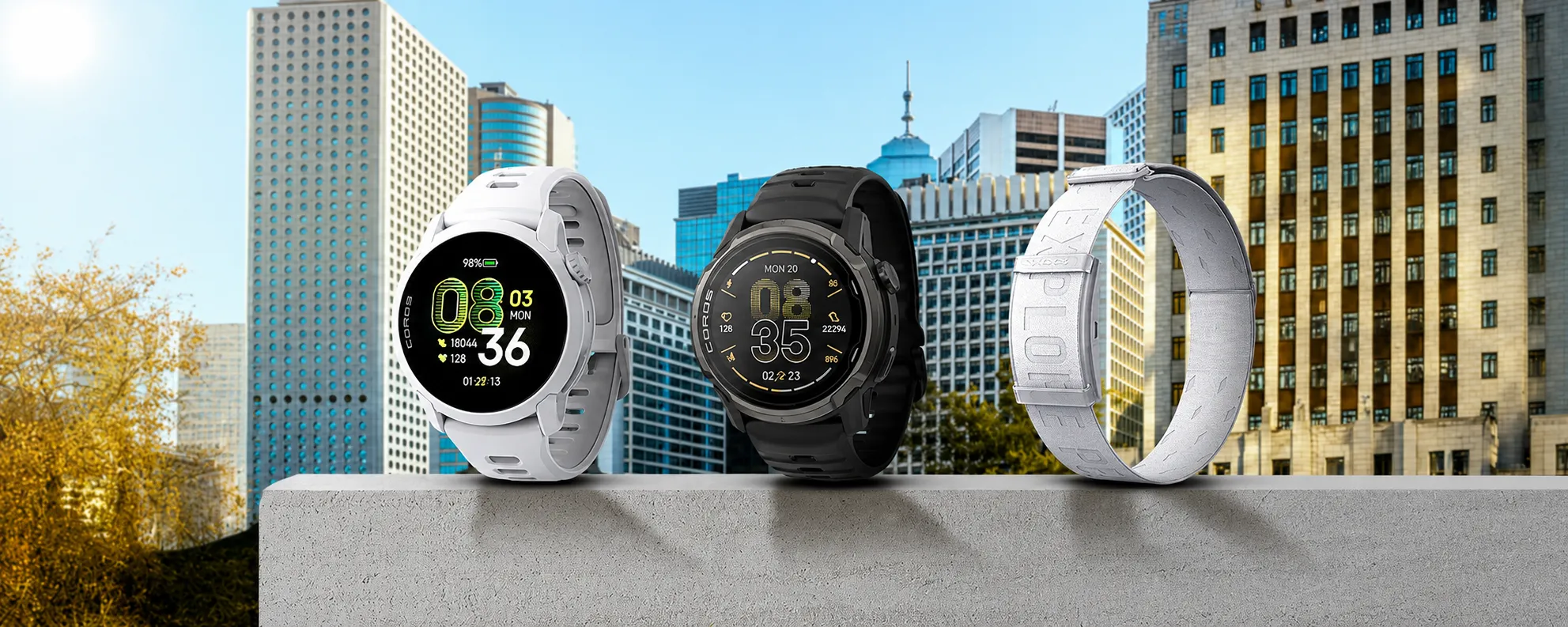
COROS has emerged as a serious contender for runners and endurance athletes seeking data-per-dollar value. The Pace 4 ($249) was highlighted by GearJunkie as the best value for road runners, while the Apex 4 ($430) targets ultra-marathoners with 53 hours of GPS battery life.
The Pace 4 is the company's first AMOLED-screen watch, featuring vibrant coloring while maintaining solid battery life of up to 19 days on a full charge. Its 41-hour GPS battery life means even the longest training sessions won't drain the device. The COROS app provides helpful analytics including sleep tracking and HRV readings, though it lacks the music control features found on competing devices.
CNN specifically recommended COROS for "beginner runners, hikers and walkers alike who need a dependable watch without any superfluous features." That focus on running fundamentals, rather than broad smartwatch functionality, is both the brand's strength and its limitation.
10. Amazfit
Amazfit rounds out the top 10 with a diverse lineup spanning budget bands to rugged outdoor watches. The Helio Strap ($99.99) is a screenless tracker that tracks 27 workout activities with 10-day battery life, offering a lower-cost alternative to Whoop without subscription fees. NYT Wirecutter recommended it as a solid Whoop alternative.
The company's T-Rex 3 Pro and Balance 2 XT were both tested by Consumer Reports in 2026, indicating growing recognition in the US market. The Amazfit Band 5 at $40 remains one of the cheapest trackers available, tracking steps, sleep, blood oxygen, and menstrual cycle, though reviewers note display brightness issues.
The Zepp app ecosystem provides heart rate monitoring, sleep tracking, and workout recovery data without subscription requirements. Accuracy concerns and less polished software hold Amazfit back from higher placement, but for budget-conscious consumers who want a feature-rich device without recurring fees, it's a compelling option.
As the wearable market matures, the gap between premium and budget devices continues to narrow. Garmin's dominance reflects a simple truth: comprehensive features without subscription fees win over consumers who want long-term value. Apple and Samsung remain excellent choices for their respective ecosystems, while Whoop and Oura prove that specialized form factors can thrive. For 2026, the best fitness tracker company depends on your priorities, but these 10 represent the strongest options available.
Related Posts


1 Comment
Join the discussion and share your thoughts