Top 10 Best Fashion Companies In The World 2026: Who Will Dominate the $2.5 Trillion Market?

Table of Contents
The fashion industry in 2026 represents a $2.5 trillion global marketplace where traditional luxury houses compete against fast-fashion giants and innovative retail disruptors. Our ranking of the world's top 10 fashion companies reflects market capitalization data, revenue figures, brand valuation metrics, and documented industry influence through Q1 2026. These companies don't just sell clothing - they shape consumer behavior, drive technological innovation in retail, and set standards for sustainability practices across the supply chain.
Methodology and Ranking Criteria
This ranking synthesizes multiple quantitative factors to determine the most powerful fashion companies globally. We evaluated market capitalization figures from public exchanges, annual revenue data from fiscal year 2025, brand valuation assessments from independent research firms, and documented market influence through retail footprint and consumer reach. Companies were assessed across luxury, fast-fashion, and athletic apparel segments, with rankings reflecting their demonstrated ability to generate revenue, maintain brand equity, and influence fashion industry trends. The list spans conglomerates controlling multiple brands, standalone luxury houses, and retail innovators who've reshaped how consumers access fashion.
The Top 10 Best Fashion Companies In The World 2026:
1. LVMH Moët Hennessy Louis Vuitton
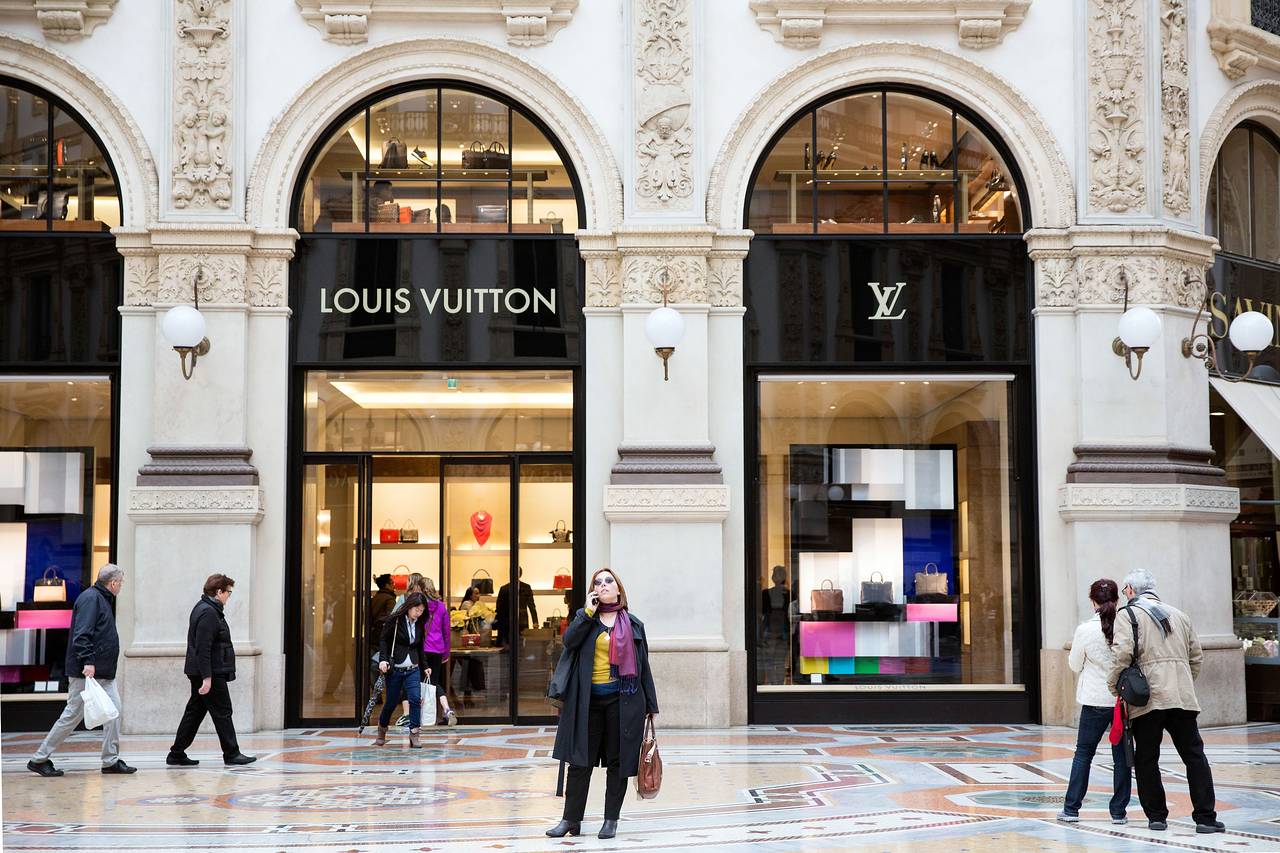
LVMH towers over the global fashion landscape with $94.92 billion in annual revenue, operating as the world's largest luxury conglomerate. The French powerhouse controls over 75 prestigious brands spanning Louis Vuitton, Christian Dior, Fendi, Givenchy, Celine, and Loewe. This portfolio dominance translates to approximately 48% of global high-end fashion revenues, an unprecedented concentration of luxury market power.
What separates LVMH from competitors is vertical integration across the entire value chain. The company controls design studios, manufacturing facilities, distribution networks, and flagship retail locations worldwide. This end-to-end ownership allows quality control that maintains brand prestige while enabling margin optimization unavailable to brands dependent on third-party manufacturing or wholesale distribution.
Bernard Arnault's strategic leadership has built LVMH through calculated acquisitions and organic growth of heritage brands. The company's approach balances preservation of each brand's distinct identity - Louis Vuitton's travel heritage, Dior's couture excellence, Fendi's Italian craftsmanship - while leveraging shared infrastructure for operational efficiency. Recent collaborations between LVMH brands and contemporary artists, musicians, and athletes have expanded luxury appeal to younger demographics without diluting exclusivity.
2. Hermès International
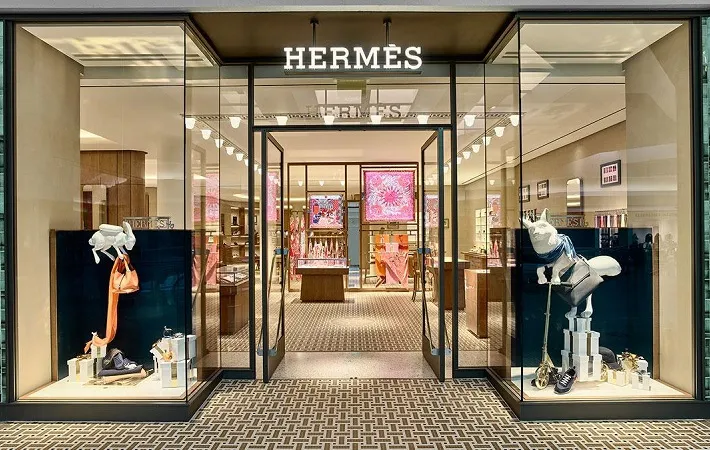
Hermès commands a staggering $280.36 billion market capitalization, making it the most valuable pure-play fashion company on global exchanges. The French maison generates 41% of revenue from leather goods and saddlery, with another 29% from ready-to-wear and accessories. This concentration in ultra-premium categories enables pricing power unmatched in the industry.
The Birkin Bag exemplifies Hermès' positioning strategy. With retail prices starting around $10,000 and reaching over $300,000 for exotic leather versions, waiting lists extend years for standard models. This manufactured scarcity isn't artificial - Hermès maintains traditional artisanal production methods where single craftspeople spend 18-25 hours hand-stitching each bag. The company recently opened new leather manufacturing facilities in Louviers, Normandy, expanding capacity while maintaining these heritage techniques.
Hermès' sustained demand transcends typical fashion cycles. Where other luxury brands experience volatility tied to economic conditions or shifting trends, Hermès products function as investment pieces with documented resale values that often exceed original retail prices. This resilience stems from the company's refusal to pursue growth through brand extension or accessibility - Hermès deliberately constrains supply to preserve exclusivity, a strategy that's generated superior returns for shareholders compared to competitors pursuing volume expansion.
3. Inditex
Spanish retail giant Inditex operates with a $171.14 billion market capitalization and $43.90 billion in annual revenue, positioning it as the world's largest fast-fashion company. The conglomerate's seven-brand portfolio is dominated by Zara, which alone generates 72.52% of total revenue. Bershka contributes 7.3%, Pull & Bear adds 6.6%, Stradivarius accounts for 6.5%, Massimo Dutti brings 5.1%, and Oysho contributes 2.1% to the company's performance.
Inditex revolutionized fashion retail through compressed product cycles and vertical integration. While traditional retailers operate on seasonal collections designed 9-12 months in advance, Zara can identify trends, design products, manufacture items, and deliver to stores within 2-3 weeks. This speed-to-market advantage allows Inditex to respond to real-time consumer preferences rather than predicting them months ahead.
The company's supply chain operates across 96 markets with thousands of stores, yet maintains centralized control through its Spanish headquarters and proximate manufacturing facilities. Roughly half of Inditex production occurs in Spain, Portugal, Morocco, and Turkey - higher-cost locations that enable rapid response and quality control. This proximity manufacturing costs more than Asian production but generates superior margins through reduced markdowns, as inventory more accurately matches current demand. The model has proven difficult for competitors to replicate, requiring integrated systems connecting real-time sales data, design teams, manufacturing capacity, and logistics networks.
4. Christian Dior Couture
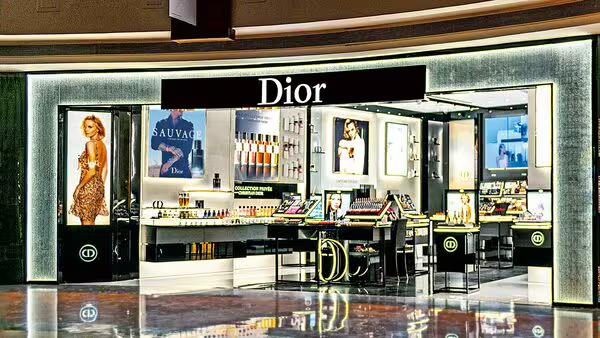
Christian Dior has emerged as the world's most influential luxury fashion brand with $88.12 billion in revenue. The house ranks number one on Launchmetrics' media impact value assessment, a metric measuring brand visibility across traditional media, social platforms, and influencer content. Dior's 45 million Instagram followers represent the largest social media following among luxury fashion houses, while its WeChat hashtag challenge generated over 1 billion views in Chinese markets.
Dior's success spans multiple categories - women's ready-to-wear, haute couture, menswear, and beauty. The cosmetics division has become particularly significant, with products like Dior Addict lipstick and Capture Youth skincare celebrated for quality and innovative packaging. Beauty now represents a substantial revenue stream that introduces consumers to the Dior brand at accessible price points before they purchase apparel or accessories.
Maria Grazia Chiuri's creative direction since 2016 has modernized Dior's aesthetic while honoring the house's couture heritage. Her feminist messaging - including runway sets featuring slogans like "We Should All Be Feminists" - resonates with contemporary consumers without alienating traditional luxury clientele. Dior's ability to generate conversation and cultural relevance through fashion shows, celebrity dressing, and digital content creates marketing impact that translates directly to sales performance across all product categories.
5. Kering SA
French luxury conglomerate Kering operates as the second-largest luxury group globally, controlling brands that collectively generate 62% of global luxury market revenue when combined with LVMH. Kering's portfolio includes Gucci, Saint Laurent, Balenciaga (valued at $7.4 billion as the ninth most valuable luxury brand in 2023), Bottega Veneta, and Alexander McQueen.
Gucci remains Kering's flagship and largest revenue generator, though the brand has faced recent creative direction changes. Saint Laurent maintains strong performance through Anthony Vaccarello's rock-and-roll inspired aesthetic that appeals to younger luxury consumers. Balenciaga has achieved particular cultural prominence under Demna Gvasalia's creative leadership, with urban streetwear influences and quality craftsmanship creating products that function as fashion statements. The brand's Triple S and Speed Trainer sneakers became defining footwear of the late 2010s and early 2020s, demonstrating Balenciaga's ability to set trends rather than follow them.
Kering's strategy involves revitalizing heritage brands through strategic creative director appointments. The approach succeeded dramatically with Bottega Veneta under Daniel Lee's tenure - the brand's revenue increased 69% in Q2 2021 through understated luxury aesthetics and signature woven leather techniques. Kering provides infrastructure, retail expertise, and financial backing while allowing creative directors substantial autonomy, a balance that's proven effective across its diverse brand portfolio.
6. TJX Companies
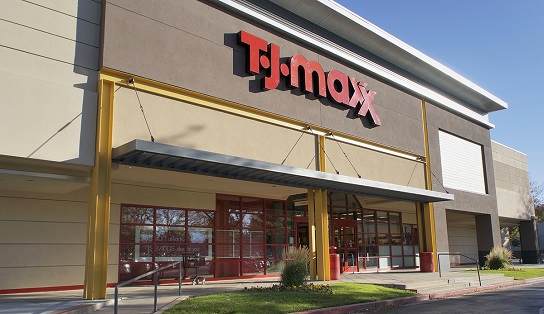
Massachusetts-based TJX Companies operates with a $140.19 billion market capitalization and $58.97 billion in annual revenue, making it the third-largest fashion retailer by market cap globally. The off-price retail giant operates T.J. Maxx, Marshalls, and HomeGoods, generating 47% of revenue from clothing and footwear, 35% from home fashions, and 18% from jewelry and accessories.
TJX's business model offers designer and brand-name merchandise at 20-60% below traditional retail prices through opportunistic buying of overstock, closeout merchandise, and end-of-season inventory from manufacturers and retailers. This treasure-hunt shopping experience attracts value-conscious consumers across demographic segments, from budget-focused families to affluent shoppers seeking deals on luxury brands.
The off-price model has proven remarkably recession-resistant. During economic downturns, consumers trade down from department stores to TJX's discounted offerings. During expansions, shoppers stretch budgets further by mixing TJX purchases with full-price luxury items. This counter-cyclical element provides stability that pure luxury or mid-market retailers can't match. TJX operates over 4,800 stores across nine countries, with expansion opportunities remaining in underpenetrated markets and online channels where the company has historically lagged competitors.
7. Nike
Nike maintains its position as the world's leading athletic footwear and apparel company with $46.51 billion in annual revenue. The American sportswear giant has successfully transformed from a wholesale-dependent brand to a direct-to-consumer powerhouse, with digital sales and company-owned retail now representing the majority of revenue.
Nike's competitive advantage extends beyond product innovation to brand building through athlete partnerships. Endorsement deals with Michael Jordan, LeBron James, Serena Williams, and Cristiano Ronaldo create aspirational appeal that transcends pure athletic performance into lifestyle fashion. The Jordan Brand alone generates over $5 billion annually, demonstrating how athlete partnerships can evolve into standalone businesses.
The company's digital transformation has reshaped retail strategy. Nike's apps provide personalized product recommendations, early access to limited releases, and integration with fitness tracking platforms. This direct relationship with consumers generates valuable data on preferences and behavior while reducing dependency on wholesale partners. Nike has strategically reduced distribution through department stores and multi-brand retailers, focusing resources on owned channels where margins and customer experience can be controlled. This pivot toward direct-to-consumer sales has improved profitability even as it's created tension with traditional retail partners.
8. Fast Retailing
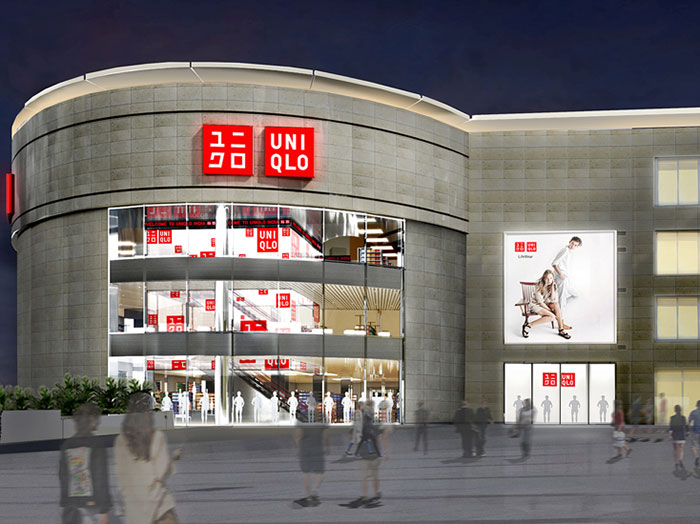
Japanese apparel giant Fast Retailing operates with a $99.65 billion market capitalization, ranking as the fifth-largest clothing company globally by market cap. The company's UNIQLO brand drives 84.20% of total revenue, with UNIQLO International contributing 52% and UNIQLO Japan accounting for 32.20%. GU contributes 10.70% and Global Brands represent 5.10% of revenue.
UNIQLO's "LifeWear" philosophy creates simple, high-quality everyday clothing with innovative fabric technology. The company's signature Heattech thermal fabric generates warmth without bulk, AIRism provides moisture-wicking comfort, and Ultra Light Down offers packable insulation. These proprietary textiles - developed through substantial R&D investment - differentiate UNIQLO from competitors relying on standard fabrics.
Fast Retailing's success demonstrates that Japanese minimalist aesthetics resonate globally. UNIQLO stores from New York to London to Shanghai feature the same clean layouts, folded merchandise presentation, and basics-focused assortment. This consistency creates brand recognition while the understated designs transcend cultural preferences and fashion trends. Founder Tadashi Yanai's vision of creating clothing that improves daily life rather than making fashion statements has built a business model less vulnerable to shifting trends than competitors chasing fast-fashion cycles.
9. Chanel
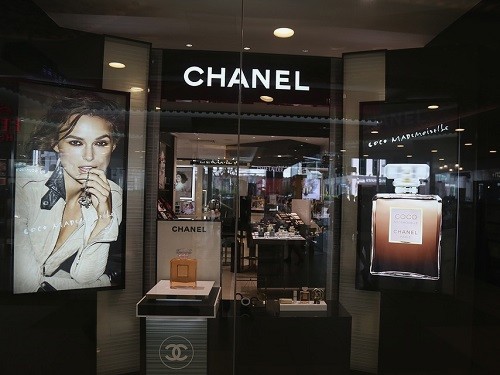
Chanel remains the most prestigious independent luxury fashion house, maintaining strong market position through uncompromising brand standards and private ownership that enables long-term strategic thinking. Founded by Coco Chanel in 1910, the French maison has sustained relevance for 115 years through iconic products including Chanel No. 5 perfume, quilted handbags with chain straps, tweed suits, and the little black dress.
Chanel's refusal to participate in typical luxury conglomerate consolidation - remaining independent rather than joining LVMH or Kering - provides complete control over brand positioning and product quality. The company operates with an A++ credit rating despite heavy investment in flagship boutiques, manufacturing facilities, and marketing. This financial strength stems from premium pricing, controlled distribution through company-owned stores, and absolute refusal to discount merchandise or sell through outlet channels.
The brand's handbag price increases have outpaced inflation substantially, with the Classic Flap Bag rising from approximately $4,900 in 2019 to over $10,000 in 2024. Rather than deterring customers, these increases seem to enhance desirability by reinforcing exclusivity. Chanel has also maintained waiting lists for popular styles and limited purchases per customer, strategies that create scarcity even for consumers with financial means to buy products immediately. This pricing power and sustained demand through economic cycles demonstrates brand equity few competitors can match.
10. H&M Group
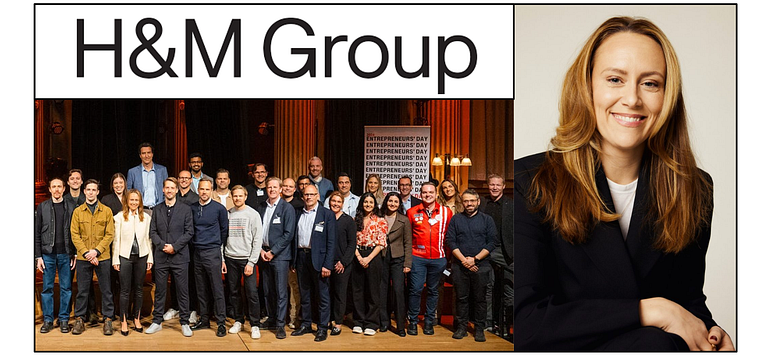
Swedish retail giant H&M Group generates $23.36 billion in annual revenue, operating over 4,000 stores globally across multiple brands including H&M, COS, & Other Stories, Weekday, Monki, and ARKET. The company ranks as the second-largest fast-fashion retailer globally by revenue, though it faces intensifying competition from ultra-fast online competitors like Shein.
H&M pioneered the "masstige" fast-fashion model - offering designer collaborations and trend-driven pieces at accessible price points. Limited-edition collections with designers like Karl Lagerfeld, Balmain, and Versace generated unprecedented buzz and foot traffic, with items selling out within hours. These collaborations introduced luxury aesthetics to mass-market consumers while generating media coverage and social media engagement far exceeding typical fast-fashion marketing.
The company has positioned itself as a sustainability leader within fast fashion through garment recycling programs, sustainable materials initiatives, and transparency reporting on supply chain practices. H&M collects used clothing in stores for recycling and resale, aiming to close the loop on textile waste. While critics question whether truly sustainable fast fashion is possible given the business model's reliance on high-volume production and rapid turnover, H&M's initiatives exceed most competitors' efforts. The company's extensive physical retail network - once seen as a liability compared to online-native competitors - now provides omnichannel capabilities combining e-commerce convenience with in-store try-on and same-day pickup options.
Related Posts
Top 10 Richest Chefs in USA 2026: How They Built Culinary Empires
In recent years, the world of celebrity chefs has developed into a multi-billion dollar industry that combines culinary expertise with media savvy, entrepreneurialism, and the development of distinctive brands. In the year 2026, a number of the wealthiest chefs in the United States have not only established themselves as influential figures in the kitchen, but […] More
Top 10 Best Skaters in the World 2026: The Ultimate Showdown Awaits
As we move through 2026, a few skaters stand out for their extraordinary skills, creativity, and contributions to the sport. Here’s a look at the top 10 skaters in the world right now, each pushing the boundaries of skateboarding in their own unique way. Skateboarding has evolved into a highly dynamic sport, showcasing remarkable talent […] More
Top 10 Highest Paid Female Footballers In The World 2026: Salaries That Shocked the Industry
Top 10 Highest Paid Female Footballers In The World 2026 1. Sam Kerr One of the most notable players in women’s football is Sam Kerr, who hails from Australia and operates as a striker. Kerr has emerged as a significant personality in the sport as a result of her remarkable speed, her extraordinary ability to […] More
The Largest Oil Refineries In The World 2026: Essential Insights for Energy Stakeholders
As of the year 2026, the following is a list of the top ten largest refineries in the world, which are known for their enormous processing capacities and strategic significance. Refineries play an important part in the global energy sector because they convert crude oil into valuable products such as gasoline, diesel, and other petrochemicals. […] More
0 Comments
Join the discussion and share your thoughts
No Comments Yet
Be the first to share your thoughts on this article!