Top 10 Best Ecommerce Tools In The World 2026


Table of Contents
Choosing the right technology stack is the single most consequential decision an online business will make. The ecommerce tools market has matured dramatically over the past decade, and the gap between platforms that scale gracefully and those that crumble under pressure has never been wider. Our ranking of the top 10 best ecommerce tools in the world for 2026 reflects months of market analysis, performance benchmarking, and merchant sentiment tracking across North America, Europe, and Asia-Pacific markets.
We evaluated platforms on their market share trajectory, ecosystem depth, real-world merchant outcomes, and adaptability to emerging commerce models like headless architecture and subscription-based revenue. The results reveal a market that is simultaneously consolidating around a few dominant players while fragmenting into specialized solutions that address specific operational pain points.
How We Ranked These
Our methodology weighed several factors: current market share data from ecommerce analytics firms, year-over-year revenue growth reported by the platforms themselves, merchant retention rates, app ecosystem size, and documented case studies with verifiable performance metrics. We also factored in qualitative signals from seller communities and independent reviews. Platforms that demonstrated measurable improvements in conversion rates, page speed, or revenue for their merchants received higher placement. Specialized tools were evaluated on their ability to integrate with the major platforms and fill genuine functional gaps.
The List Of The Top 10 Best Ecommerce Tools In 2026:
1. Shopify
Shopify remains the undisputed leader in hosted ecommerce, holding a 28.2% share of the US market and powering over 250,500 sites in the UK alone. Its dominance extends across the USA, Germany, Australia, France, Canada, and India, making it the most geographically diverse platform in this ranking. The company has built its moat through an ecosystem of more than 8,000 apps, which means virtually any feature a merchant could conceivably need already exists as a one-click integration.
What separates Shopify from its competitors is the breadth of its omnichannel capabilities. Merchants manage online storefronts, social commerce channels, and physical retail point-of-sale systems from a single back office. The platform's no-coding-required setup has lowered the barrier to entry for countless small businesses, while its enterprise tier, Shopify Plus, handles merchants doing eight and nine figures in annual revenue. For businesses that want to start selling quickly and scale without migrating platforms, Shopify remains the safest bet in the industry.
2. Wix

Wix has carved out a strong second position globally, with a 20.8% US market share and a notable 23.3% share in the UK, where it actually leads Shopify with roughly 250,900 sites. The platform's rise reflects a shift among merchants who prioritize design control and SEO performance over the app-heavy approach of its larger rival. Wix's drag-and-drop interface gives users pixel-level control over their storefronts, which appeals strongly to brands where visual identity drives purchasing decisions.
The platform's ecommerce capabilities have matured considerably. Product catalog management, payment processing, and inventory tools are now on par with dedicated ecommerce platforms. Wix is particularly well-suited for businesses where online selling is important but not the entire operating core. Curated boutiques, specialty food brands, and service businesses with product lines all fit naturally within Wix's framework. Its SEO tools remain best-in-class, giving merchants a genuine organic traffic advantage.
3. BigCommerce

BigCommerce targets a specific segment: established businesses that have outgrown entry-level platforms but don't yet need the heavy lifting of enterprise solutions. The platform's focus on multichannel selling through social media and third-party marketplaces has made it a favorite among brands with ambitious distribution strategies. Its B2B capabilities are notably robust, handling complex catalogs and tiered pricing structures that simpler platforms cannot accommodate.
The results speak for themselves. Brondell, a bathroom products manufacturer, saw a 30% increase in both revenue and orders after migrating from Magento to BigCommerce. Music Direct, a high-end audio retailer, achieved a 43% increase in conversion rate and a 73% faster server response time after making the switch. These documented outcomes illustrate why BigCommerce consistently ranks among the top ecommerce tools despite having a smaller market share than the leaders.
4. WooCommerce
WooCommerce holds a unique position as the dominant WordPress ecommerce solution, powering roughly 167,000 sites in the UK alone for a 15.6% market share. Its free core plugin has made it the default choice for the massive WordPress user base, and its open-source architecture offers unmatched customization flexibility. The platform leads the market in Russia and Italy, demonstrating its global appeal among developers and content-driven merchants.
The trade-off is responsibility. WooCommerce merchants must manage their own hosting, security, and extension stack, which requires technical competence that not every business possesses. For teams already comfortable with WordPress, however, the platform offers total control over every aspect of the shopping experience. The plugin ecosystem is vast, and the total cost of ownership can be significantly lower than hosted alternatives for businesses that handle their own maintenance.
5. Adobe Commerce
Adobe Commerce, formerly Magento, remains the benchmark for enterprise-grade ecommerce. The platform is built for organizations with complex requirements from day one: large catalogs, deep system integrations, custom account structures, and bespoke workflows. Major brands across retail, manufacturing, and distribution rely on Adobe Commerce to power operations that would overwhelm less robust systems.
The platform's architecture supports the most demanding ecommerce operations, but it demands significant technical leadership and budget in return. Average page load benchmarks hover around 5.3 seconds, which is acceptable for complex enterprise sites but slower than modern hosted platforms. Adobe Commerce is a power-over-simplicity choice, and it remains the right call for organizations that need complete customization capability and have the engineering resources to maintain it.
6. Squarespace

Squarespace holds the fourth position in both US and UK market share, with roughly 162,000 UK sites representing a 15.1% share. The platform's design-first approach has made it the go-to choice for creative professionals, photographers, and lifestyle brands where visual presentation drives commercial success. Its templates are consistently the most aesthetically refined in the industry, and the integrated website builder and ecommerce functionality creates a seamless experience.
For curated assortments and straightforward catalog logic, Squarespace is difficult to beat. Merchants who need complex product variants, advanced shipping rules, or deep third-party integrations will quickly hit limitations, but those with focused product lines and strong visual branding will find everything they need. The platform's simplicity is its greatest strength, allowing merchants to launch polished storefronts in days rather than weeks.
7. Klaviyo
Klaviyo has established itself as the leading ecommerce marketing automation platform, specializing in email and SMS campaigns driven by deep behavioral data. The platform tracks more than 15 distinct ecommerce events, from product views to abandoned checkouts to order completions, enabling hyper-personalized messaging based on actual customer behavior rather than demographic guesswork. Its integrations span the major commerce platforms, including Spree, Adobe Commerce, and commercetools.
The platform's value proposition is straightforward: it helps merchants monetize their customer data effectively. Klaviyo's automation capabilities deliver significant returns with relatively modest time and money investments, making it an essential marketing layer for serious ecommerce operations. For businesses running subscription models or high-repeat-purchase categories, Klaviyo's lifecycle marketing features are particularly powerful.
8. commercetools
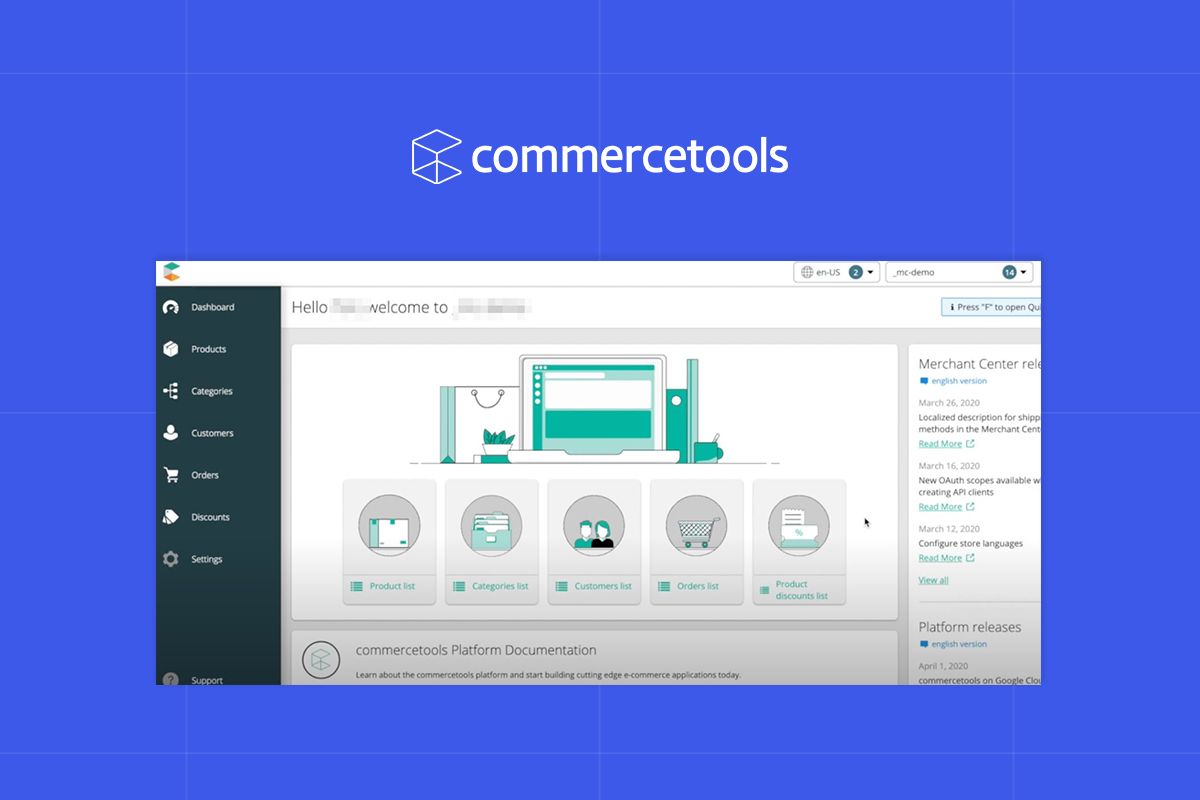
commercetools represents the headless commerce movement, decoupling the frontend shopping experience from the backend commerce logic. This architecture gives brands complete freedom to build custom customer experiences across any interface, from traditional websites to mobile apps to voice assistants. The platform manages complex product data, customer history, and order processing behind the scenes while developers focus on creating unique frontend experiences.
The platform's AI-ready interface positions it well for the next wave of commerce innovation, including personalized shopping experiences and predictive inventory management. For brands that need complete flexibility in how and where they sell, commercetools provides the infrastructure to build truly differentiated commerce solutions. It is not for small businesses, but for enterprises with ambitious digital strategies, it offers capabilities that monolithic platforms cannot match.
9. Chargebee

Chargebee fills a specific but vital niche: subscription management and recurring billing. The platform automates the entire revenue operations lifecycle, from subscription creation and proration to dunning management and revenue recognition. For ecommerce businesses operating on subscription models, Chargebee handles the complex billing scenarios that general-purpose platforms cannot manage natively.
The platform's focus on recurring revenue management makes it a critical tool for software-as-a-service companies, subscription boxes, and any business with recurring billing needs. Chargebee's integration with major payment gateways and ecommerce platforms ensures that subscription operations run smoothly without manual intervention. For businesses where recurring revenue is the primary model, Chargebee is not a nice-to-have; it is essential infrastructure.
10. Kickflip
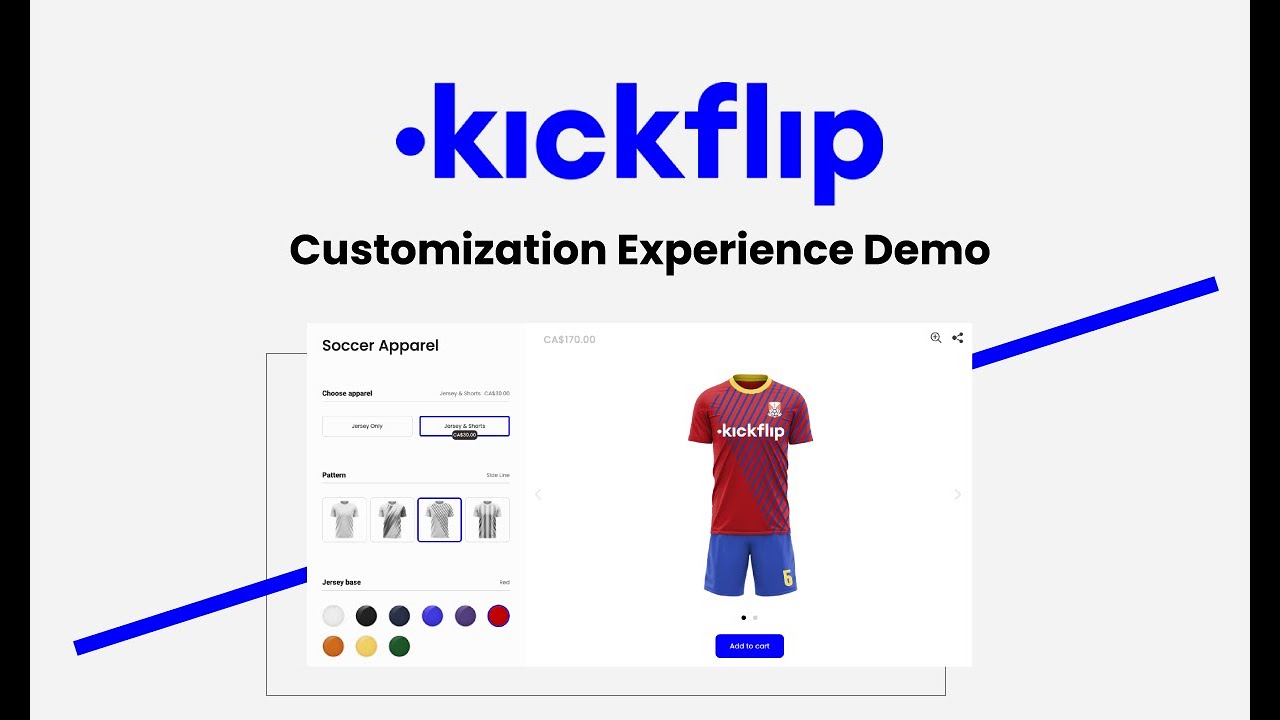
Kickflip rounds out our list as a leading product customization tool, addressing the growing demand for configurable products in ecommerce. The platform's dynamic pricing engine automatically updates prices as customers add premium materials, features, or options, creating transparency and building trust throughout the customization process. This capability directly increases average order value while reducing returns caused by misconfigured orders.
The platform integrates natively with Shopify, WooCommerce, and Wix, with API access for custom platforms, ensuring a seamless, native-feeling customization experience regardless of the underlying commerce system. With mobile commerce now accounting for the majority of online sales, Kickflip's mobile-optimized interface positions it as a critical tool for modern ecommerce personalization. Brands selling customizable products, from furniture to apparel to electronics, will find Kickflip's capabilities increasingly essential.
The ecommerce tools market in 2026 rewards specialization. The general-purpose platforms, Shopify and Wix, continue to dominate by offering comprehensive solutions that cover most merchant needs. But the specialized tools, Klaviyo for marketing, Chargebee for subscriptions, Kickflip for customization, demonstrate that competitive advantage increasingly comes from layering best-in-class point solutions on top of a solid foundation.
Our analysis suggests that merchants should resist the temptation to consolidate everything onto a single platform. The most successful operations we studied combine a strong core platform with specialized tools that address their specific business model. The top 10 best ecommerce tools in the world for 2026 reflect this reality, offering a mix of foundational platforms and specialized solutions that together form a complete commerce stack.
Related Posts



0 Comments
Join the discussion and share your thoughts
No Comments Yet
Be the first to share your thoughts on this article!