Top 10 Best E‐Wallet Services In South African 2026

Table of Contents
South Africa has one of the most developed digital payments ecosystems on the African continent, yet it remains a market in transition. Cash still accounts for a significant share of everyday transactions, particularly in townships and rural areas, while urban centres have embraced contactless payments, QR codes, and bank-integrated wallets at a rapid pace.
The result is a fragmented but fast-evolving landscape. The best e-wallet services in South Africa for 2026 reflect this duality: some are built to serve the unbanked and underbanked, others target affluent urban consumers with NFC-enabled smartphones, and a few are fighting for dominance in the cross-border and e-commerce space.
To build this ranking, we weighed several factors: user adoption and registered user counts, cash-out and merchant network reach, security features, integration with banking infrastructure, and how well each service addresses financial inclusion. We also considered the strategic position of each player, from telco-backed super-apps to global giants like Apple and Google. The result is a list that spans bank wallets, QR-code pioneers, international platforms, and device-specific services.
The Top 10 Best E‐Wallet Services In South African 2026:
1. FNB eWallet
First National Bank's eWallet is the reference point for mobile money in South Africa. Launched as a cardless cash-out service, it has grown into a full digital payments platform with over 8 million registered users. The core proposition remains simple: send money to any South African cellphone number, regardless of whether the recipient has a bank account. Funds can be withdrawn at FNB ATMs, collected at participating retailers, or held in the eWallet app for later use.
What sets FNB eWallet apart is its integration with the broader FirstRand banking ecosystem. Users can pay bills, buy airtime, make in-app payments, and even access limited savings features without leaving the app. That depth of functionality, combined with the largest ATM network in the country, makes it the default choice for both urban professionals sending money to family and businesses paying casual workers.
It also holds historical significance. FNB was the first major South African bank to introduce a cellphone-based transfer system for the unbanked, and that first-mover advantage has proven durable. Competitors have matched its features, but none have matched its scale.
2. Standard Bank Instant Money
Standard Bank's Instant Money operates on a similar model to FNB eWallet, and the two are frequently compared. With over 5 million active users, Instant Money allows transfers to any cellphone number, with recipients able to withdraw cash at more than 15,000 ATM and retail points nationwide. The retail network is a particular strength: Shoprite, Checkers, and Pick n Pay all participate, giving Instant Money a presence in supermarkets and grocery stores across both urban and rural South Africa.
Beyond simple transfers, Instant Money supports bill payments, prepaid purchases, and integration with the Standard Bank app. For existing Standard Bank customers, the wallet feels like a natural extension of their banking relationship. For non-customers, it functions as a reliable, low-cost way to receive and move money.
Where it trails FNB is in feature depth and overall adoption. The user base is roughly 60% the size of FNB's, and the service has not expanded as aggressively into savings or lifestyle features. Still, for sheer accessibility and brand trust, Instant Money remains a top-tier option.
3. SnapScan
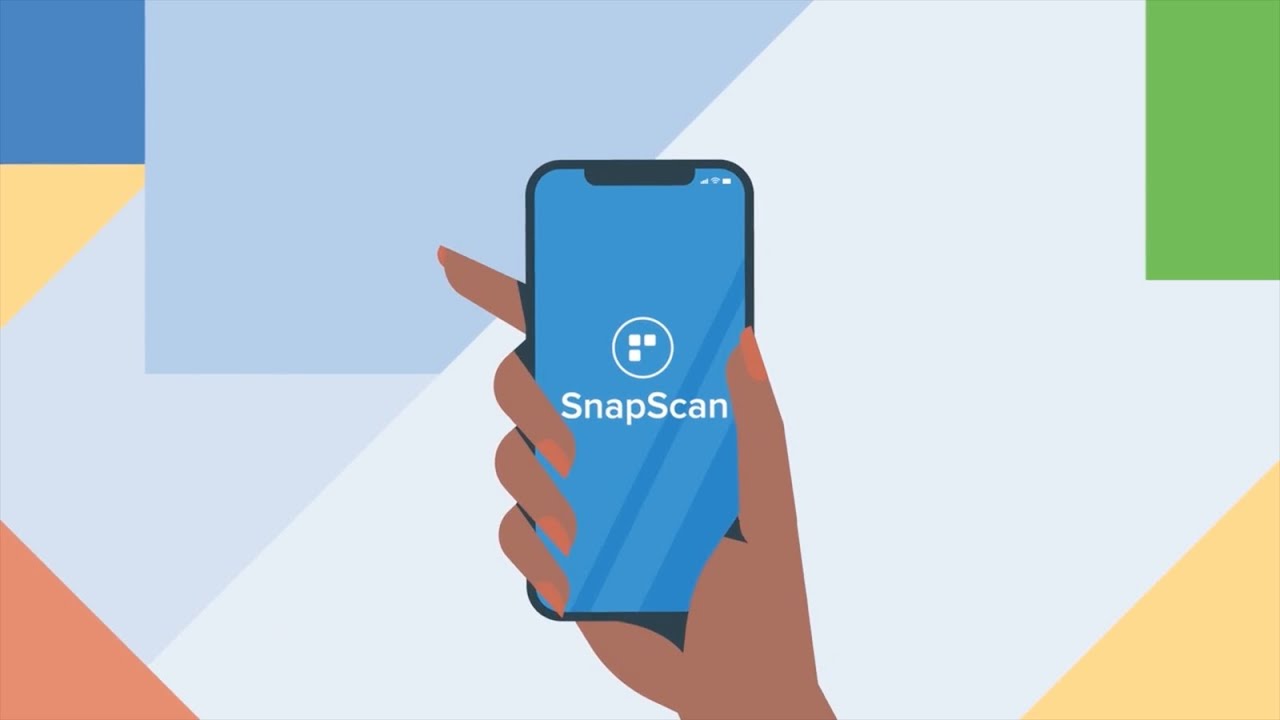
SnapScan is the quiet workhorse of South Africa's informal economy. Founded in Cape Town, the QR-code-based payment platform processes over 30 million transactions annually and is used by more than 100,000 merchants, many of them small traders, township shops, and informal vendors who previously operated on a cash-only basis.
The genius of SnapScan is its simplicity. A merchant displays a QR code; a customer scans it with their phone and pays from a linked bank account or SnapScan wallet. No card machine, no minimum transaction size, no complex onboarding. For micro-merchants, it has become a gateway to digital payments without the costs associated with traditional point-of-sale infrastructure.
SnapScan's limitations are equally clear. It is not designed for peer-to-peer transfers in the way bank wallets are, and it lacks the cash-out functionality that serves the unbanked. But as a tool for financial inclusion among micro-merchants, it has no equal in the South African market. That role in the digital economy justifies its high ranking.
4. Apple Pay
Apple Pay arrived in South Africa through partnerships with Standard Bank, Nedbank, and Absa, bringing its NFC-based tap-to-pay system to iPhone users. The service uses device-specific tokenization and biometric authentication, meaning card details never sit on the device or get shared with merchants. For security-conscious consumers, it remains the gold standard in mobile payments.
Adoption has been strongest among urban, higher-income consumers in Cape Town and Johannesburg, where contactless terminals are now standard at most retailers. The experience is frictionless: double-click the side button, authenticate with Face ID, and tap. No app to open, no PIN to enter.
The ranking at fourth reflects a simple reality: Apple Pay is excellent at what it does, but it only serves Apple device users and does nothing for the unbanked. In a market where financial inclusion is a national priority, that limits its overall impact, even as its user experience remains unmatched.
5. Google Wallet
Google Wallet, formerly Google Pay, occupies a similar position to Apple Pay but with a crucial difference: it works on virtually all Android devices, and Android dominates the South African smartphone market with roughly 80% share. That gives Google Wallet a potential reach that Apple cannot match.
The platform supports contactless NFC payments at retail terminals, online payments, and integration with Google Assistant for voice-activated transactions. It also stores transit passes, boarding passes, and loyalty cards, making it a genuine everyday wallet rather than just a payment tool. For urban consumers, it is often the default choice on their devices.
Google Wallet ranks fifth because, like Apple Pay, it does not address the unbanked segment. It also lacks the cash-out capabilities that make bank wallets essential tools in lower-income communities. But for Android users in South Africa's cities, it is the most convenient payment option available.
6. VodaPay
VodaPay is Vodacom's ambitious attempt to build a financial super-app. Launched in 2021 and integrated with the telco's 10 million-plus subscriber base, it combines QR-code payments, person-to-person transfers, micro-loans, insurance, and e-commerce in a single platform.
The strategy is borrowed from successful Asian and African models: use a massive existing customer base to cross-sell financial services. Vodacom has the distribution, the brand recognition, and the data to make this work. The app also benefits from partnerships with Vodacom's banking partners, which provide the regulatory and lending infrastructure underneath.
Where VodaPay falls short is merchant adoption and user engagement. The bank wallets have years of established retail relationships, and SnapScan has locked up the informal sector. VodaPay's merchant network remains thin by comparison, and many Vodacom subscribers have not yet made the leap from prepaid services to financial transactions. The potential is enormous; the execution is still catching up.
7. Telkom Pay
Telkom Pay is the state-owned telecommunications company's entry into the digital wallet market. Available to Telkom's 15 million-plus subscribers, the app supports merchant payments, person-to-person transfers, prepaid airtime and electricity purchases, voucher storage, and basic financial management.
Telkom has historically been a dominant provider in underserved communities, and that existing relationship gives Telkom Pay a natural entry point. For customers who already trust Telkom for connectivity, adding financial services is a logical extension. The app is also functionally solid, with a clean interface and reliable performance.
The challenge is competitive. Telkom Pay entered a market where FNB, Standard Bank, and SnapScan had already established themselves, and where Vodacom was simultaneously pushing VodaPay. Telkom's subscriber base is smaller, its merchant network is less developed, and it lacks the banking partnerships of its rivals. It is a credible service, but it has not yet found a distinctive advantage.
8. PayPal
PayPal occupies a unique niche in South Africa's payments landscape. It is not a serious contender for in-store payments, and it does nothing for the unbanked. But for international transactions, freelancers, and e-commerce merchants, it remains essential.
South African users can send and receive payments in multiple currencies, with automatic conversion to South African Rand. Businesses can invoice international clients and receive payments from over 200 countries, making PayPal a cornerstone of the country's growing remote work and digital export economy. For freelancers earning in dollars or euros, it is often the only practical way to get paid.
PayPal's limitations are equally clear. Its local in-store functionality is minimal, and its fees can be prohibitive for small transactions. But for its specific use case, no competitor has come close to matching its global reach. That explains its place at number eight.
9. Zapper
Zapper is a South African-born QR-code payment wallet that has found its strongest foothold in the hospitality sector. Used by over 1,000 restaurants and retailers, it allows customers to scan a code at their table, pay the bill, split it with friends, add a tip, and collect loyalty rewards, all in one flow.
The restaurant focus is deliberate. Zapper integrates directly with point-of-sale systems, which makes the experience seamless for both diners and staff. It has since expanded into retail, parking, and charitable donations, but hospitality remains its core market.
Zapper ranks ninth because its consumer adoption is narrower than general-purpose wallets. It is a specialist tool, not a daily driver for most South Africans. But within its niche, it is the best option available, and its merchant integrations are among the most polished in the country.
10. Samsung Pay
Samsung Pay rounds out the list with a technical advantage that few competitors can match: MST, or Magnetic Secure Transmission. This technology allows the wallet to work with traditional magnetic stripe terminals, not just modern NFC-enabled ones. In a market where older payment infrastructure is still common, that compatibility is genuinely useful.
The platform supports NFC payments, loyalty cards, gift cards, and transit passes, and it has partnered with major South African banks for card integration. For Samsung device owners, it offers a comprehensive wallet experience that works in more places than Apple Pay or Google Wallet.
The limitation is the device ecosystem. Samsung Pay only works on Samsung devices, which narrows its addressable market considerably. It also faces intense competition from Google Wallet, which comes pre-installed on most Android phones and offers a comparable feature set. Samsung Pay is a solid option, but it is fighting for a shrinking slice of the premium smartphone segment.
The South African e-wallet market is not a winner-take-all environment. Bank wallets like FNB eWallet and Standard Bank Instant Money dominate domestic transfers and cash-out services. SnapScan and Zapper have carved out merchant-focused niches. Apple Pay and Google Wallet serve the urban premium segment. PayPal owns cross-border transactions. VodaPay and Telkom Pay are betting on telco distribution to break through.
Related Posts




0 Comments
Join the discussion and share your thoughts
No Comments Yet
Be the first to share your thoughts on this article!