Top 10 Best E commerce Companies In UAE 2026


Table of Contents
The United Arab Emirates has become the undisputed digital commerce hub of the Middle East, and the numbers back that up. With internet penetration hovering around 99 percent and one of the highest smartphone adoption rates in the world, the UAE market has matured into a battleground for both global giants and homegrown challengers. Industry projections from Mordor Intelligence suggest the UAE e-commerce sector will continue its double-digit annual growth trajectory through 2026, fueled by high disposable incomes, a young demographic, and government initiatives like the Dubai 10X program that push digital-first economic policies.
To build this ranking, we weighed several factors: catalog size and product diversity, market share and revenue performance, logistics capability, funding stage and investor backing, and consumer sentiment across major platforms. We also considered each company's ability to adapt to the region's unique preferences, such as Arabic language support, cash-on-delivery options, and the cultural expectations around fast fulfillment. The result is a list that spans everything from full-spectrum marketplaces to niche luxury resellers, each one defining what online shopping looks like in the Emirates.
What follows is our assessment of the ten companies leading the charge, ranked by their overall impact on the market and their staying power heading into the second half of the decade.
The List Of The Top 10 Best E commerce Companies In UAE 2026:
1. Amazon.ae (Amazon Inc.)

Amazon.ae sits at the top of this list for a simple reason: it is the default starting point for most online shoppers in the UAE. Since launching its localized platform in May 2019, the company has built a catalog exceeding 30 million products, spanning electronics, groceries, fashion, books, and even professional services like home cleaning, car rental, and furniture assembly. That breadth is unmatched in the region.
The path to dominance came through acquisition. Amazon Inc. purchased Souq.com in 2017 for a reported $580 million, instantly inheriting the largest e-commerce operation in the Arab world. The transition from Souq to Amazon.ae took nearly two years, but the result was a seamless integration of global logistics expertise with local market knowledge. Today, the platform operates in both English and Arabic across web and mobile, and its Prime membership program has redefined delivery expectations for UAE consumers who now expect same-day or next-day shipping as standard.
According to trade.gov data, Amazon's share of UAE e-commerce sales has remained consistently strong, though it faces increasing pressure from regional competitors. Still, the combination of global buying power, a mature fulfillment network, and deep consumer trust makes Amazon.ae the benchmark against which all other players in this market are measured.
2. Noon.com (Noon AD Holdings Ltd)

Noon was built to be the Arab world's answer to Amazon, and by most measures, it has succeeded. Founded in 2016 with an initial investment of $1 billion from Emaar Properties chairman Mohamed Alabbar and Saudi Arabia's Public Investment Fund, the platform was designed from the ground up to serve regional consumers. That local focus has been its greatest weapon.
The company struggled in its early years, burning through capital as it built out warehouses and delivery infrastructure across the Gulf. But by 2023, Noon had achieved profitability, a milestone that validated its long-term strategy. The platform now competes head-to-head with Amazon across electronics, fashion, groceries, and household goods, and it has aggressively expanded into Saudi Arabia and Egypt, making it the most geographically diversified player on this list.
Mordor Intelligence's UAE market analysis consistently ranks Noon among the leading e-commerce companies in the region, citing its strong brand recognition and extensive logistics network. For UAE consumers, Noon represents a homegrown alternative that understands local payment preferences, including the cash-on-delivery option that remains popular among certain demographics. The company's trajectory suggests it will remain a formidable force well beyond 2026.
3. Namshi General Trading LLC
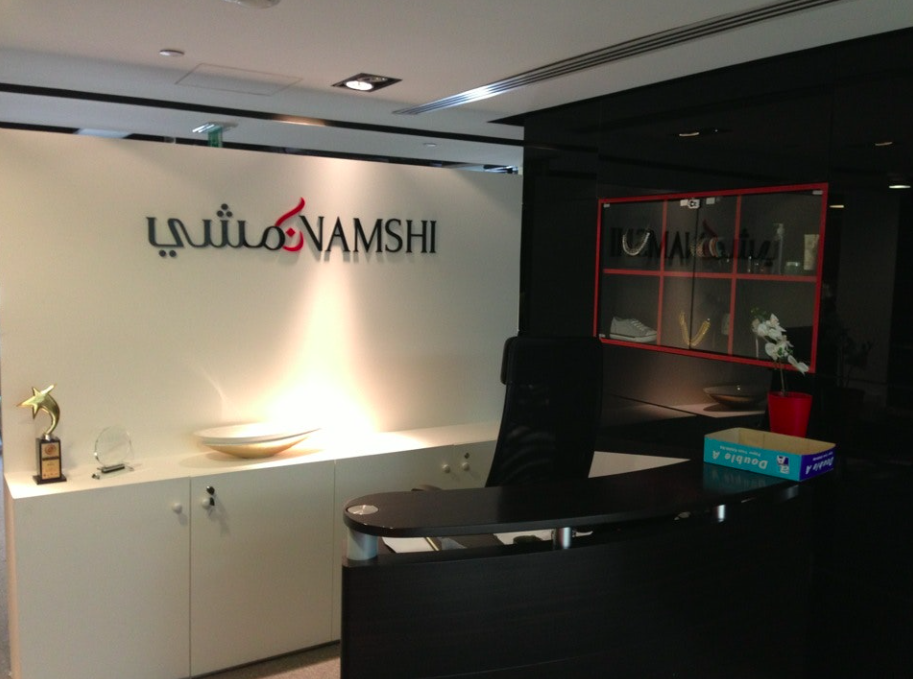
Namshi occupies a specific and valuable lane in the UAE market: fashion and lifestyle, delivered with a distinctly local sensibility. The Dubai-based platform operates at Series C funding stage and holds a Seedtable Score of 52, ranking as the second-highest e-commerce startup in the UAE according to Seedtable's 2026 data.
What sets Namshi apart is its curation. Rather than trying to be everything to everyone, the platform focuses on premium fashion brands that resonate with Middle Eastern consumers, including modest wear options and regional designers alongside international labels. This localized approach has earned it a loyal customer base that values the shopping experience over sheer product volume.
The company has also invested heavily in its mobile app and delivery experience, offering same-day delivery in Dubai and Abu Dhabi. While Namshi operates in a more constrained vertical than Amazon or Noon, its position as a specialized fashion destination makes it a critical player in the UAE's e-commerce ecosystem, particularly as online fashion retail continues to grow faster than the overall market.
4. Majid Al Futtaim Retail LLC (Carrefour UAE)
Majid Al Futtaim represents something increasingly rare in modern retail: a traditional brick-and-mortar giant that successfully pivoted to digital without losing its core advantage. As the franchise holder for Carrefour across the UAE and the broader Middle East, the company operates one of the region's largest online grocery and household goods platforms.
The strategy is elegant in its simplicity. Majid Al Futtaim uses its massive physical store network as fulfillment centers for online orders, which means customers get access to the full range of Carrefour products, including fresh food, with delivery times that pure-play e-commerce companies struggle to match. This hybrid model has proven especially effective for grocery shopping, where speed and product freshness are non-negotiable.
The company's scale is staggering. As one of the largest retailers in the Middle East, Majid Al Futtaim generates billions in annual revenue, and its e-commerce operations have grown to represent a significant and increasing share of that total. For UAE consumers who want the reliability of a trusted supermarket brand with the convenience of online ordering, Carrefour UAE via Majid Al Futtaim remains the go-to option.
5. Ounass (Al Tayer Insignia LLC)

Ounass operates in a different stratosphere from most e-commerce platforms. As the luxury arm of Al Tayer Insignia LLC, the platform specializes in high-end fashion, beauty, and lifestyle products, and it has carved out a position as the premier destination for affluent UAE shoppers who expect white-glove service.
The numbers tell the story. Ounass reports an average order value of $550, a figure that dwarfs nearly every other e-commerce platform in the region. The company also offers 89-minute delivery windows in Abu Dhabi, a level of speed and precision that speaks to its investment in dedicated logistics for high-value goods. This is not a platform for bargain hunters; it is a platform for consumers who want the equivalent of a personal shopping experience delivered to their door.
Mordor Intelligence's market analysis highlights Ounass as a key driver of luxury e-commerce growth in the UAE, a segment that continues to expand as the country positions itself as a global destination for high-end retail. The platform's success demonstrates that there is substantial demand for premium online shopping experiences, and it has effectively owned that space since its launch.
6. Mumzworld FZ-LLC
Mumzworld proves that a focused vertical can thrive in a market dominated by generalists. The Dubai-based platform specializes in mother, baby, and child products, and it has become the leading parenting e-commerce destination in the Middle East. Operating at Series B funding stage with a Seedtable Score of 44, the company has built a comprehensive catalog spanning everything from prenatal vitamins to toddler furniture.
The company's success reflects a broader trend in UAE e-commerce: the rise of specialized platforms that offer deeper expertise and curation than general marketplaces. Parents shopping for their children want reassurance about product safety and quality, and Mumzworld has built trust through rigorous product selection and partnerships with trusted global and regional brands.
Mumzworld has also expanded beyond the UAE into Saudi Arabia and other Gulf markets, leveraging its Dubai headquarters as a logistics hub. The platform's growth demonstrates that the UAE e-commerce market is large enough to support both scale players and niche specialists, and Mumzworld has firmly established itself as the leader in its category.
7. InstaShop (Delivery Hero SE)
InstaShop began as a simple grocery delivery service, but under the umbrella of Delivery Hero SE, it has evolved into a comprehensive quick-commerce platform. The Dubai-based company now connects users with thousands of restaurants, supermarkets, and local stores, all accessible through a mobile-first interface that prioritizes speed and convenience.
The backing of Delivery Hero SE, one of the world's largest food delivery conglomerates, gives InstaShop access to extensive logistics infrastructure and operational expertise. That support has allowed the platform to expand its offerings beyond groceries into household essentials, pharmacy items, and prepared meals from local restaurants.
Seedtable's data classifies InstaShop at Seed stage, which might seem surprising given its scale, but that classification reflects the company's structure within the Delivery Hero ecosystem rather than its market presence. For UAE consumers, InstaShop has become synonymous with on-demand delivery, and its integration into daily life makes it one of the most frequently used e-commerce platforms in the country.
8. Sharaf DG LLC
Sharaf DG has been a household name in UAE electronics retail for decades, and its transition to e-commerce has been deliberate and effective. The company offers a comprehensive online platform featuring computers, mobile phones, home appliances, and consumer electronics, backed by the brand recognition and trust it has built through its physical stores.
What makes Sharaf DG's e-commerce operation notable is how it leverages its retail footprint. Customers can browse online and pick up in-store, or they can take advantage of the company's established service network for installation and after-sales support. This hybrid approach addresses one of the biggest hesitations consumers have about buying electronics online: what happens if something goes wrong?
Mordor Intelligence's UAE market analysis recognizes Sharaf DG as a key player in the electronics segment, which remains one of the highest-value categories in e-commerce. While the platform may not match the sheer catalog size of Amazon or Noon, its focus on electronics and appliances, combined with its reputation for reliability, keeps it firmly in the top tier of UAE e-commerce companies.
9. Talabat
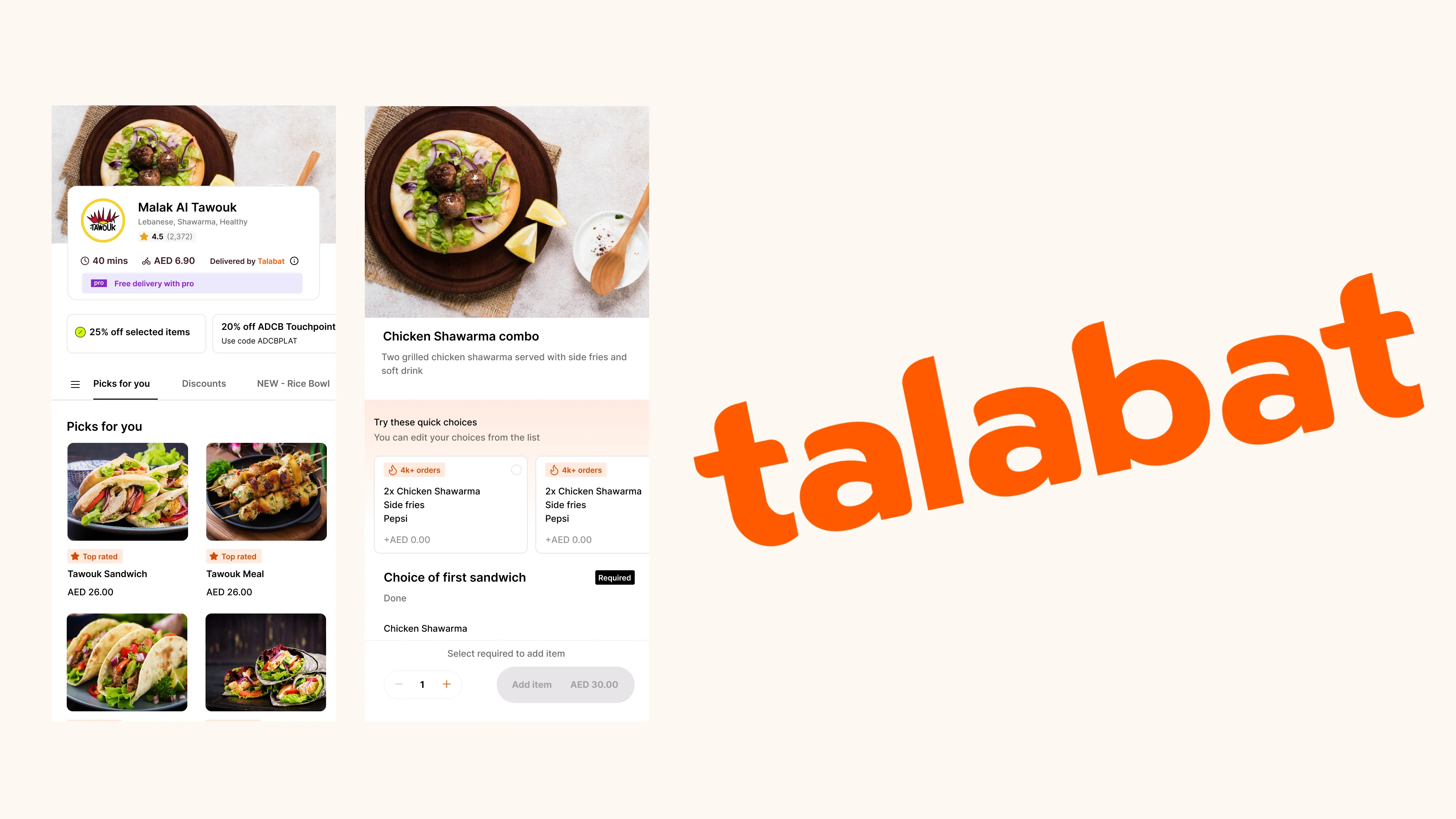
Talabat has become so embedded in daily UAE life that it is easy to forget it is an e-commerce platform. Founded in Kuwait and now operating extensively across Dubai and the other Emirates, the company has evolved far beyond its food delivery origins into a full quick-commerce ecosystem that includes groceries, pharmacy delivery, and essential household items.
The platform's mobile-first approach has made it the default choice for millions of UAE consumers who want restaurant meals, supermarket staples, or over-the-counter medications delivered in under an hour. Talabat's network spans thousands of restaurant partners and retail outlets, giving users an unprecedented range of options within a single app.
Global Media Insight's analysis of the UAE e-commerce market places Talabat among the most widely used platforms in the country, a testament to its integration into everyday routines. The company has also invested heavily in its own logistics infrastructure, including dedicated delivery fleets and dark stores for rapid fulfillment. For convenience-driven consumers, Talabat is often the first app they open in the morning and the last one they close at night.
10. The Luxury Closet

The Luxury Closet occupies a unique position in the UAE market: it is the region's leading platform for pre-owned luxury goods. The Dubai-based company specializes in the buying and selling of authenticated luxury watches, handbags, and designer fashion, offering affluent consumers a way to access premium brands at competitive prices while also providing a marketplace for selling items they no longer want.
The platform's focus on authentication is its core differentiator. In a market where counterfeit luxury goods are a genuine concern, The Luxury Closet has built trust through rigorous verification processes that ensure every item sold is genuine. This commitment to authenticity has earned the company a Seedtable Score of 45 and recognition as one of the top e-commerce startups in the UAE according to Seedtable's 2026 rankings.
The Luxury Closet also benefits from broader trends in sustainability and circular fashion, which are gaining momentum in the region as younger, more environmentally conscious consumers enter the luxury market. The platform's growth suggests that the resale economy, long established in Western markets, is now finding solid footing in the Middle East.
Looking at these ten companies as a group, a few patterns emerge. The UAE e-commerce market is not dominated by a single player; it is a competitive ecosystem where global giants like Amazon compete with well-funded regional challengers like Noon, and where specialized platforms like Mumzworld and The Luxury Closet thrive alongside generalists. That diversity is a sign of market maturity.
Logistics and delivery speed have become the primary battleground. From Ounass's 89-minute delivery windows to Talabat's quick-commerce infrastructure, the companies that win in the UAE are those that can get products to customers faster and more reliably than their competitors. The days of waiting a week for an online order are long gone in this market.
Related Posts




1 Comment
Join the discussion and share your thoughts