Top 10 Best Digital Payment Services In Asia 2026

Table of Contents
We evaluated Asia's leading digital payment services across several dimensions: total user base and market penetration, transaction volume and infrastructure scale, cross-border capabilities, government or central bank backing, and the breadth of financial services offered beyond basic payments. Market data from Ken Research, the IMF Staff Country Reports, and industry sources informed our analysis. We prioritized platforms with verifiable adoption metrics and demonstrated impact on financial inclusion, while also weighing the strategic importance of each service within its home market and across the region.
The State of Digital Payments in Asia
Asia continues to set the global pace for digital payment adoption. The region's payment gateway market reflects this momentum, with China alone projected at USD 9.81 billion in 2026 and the rest of Asia-Pacific contributing another USD 5.04 billion, according to Scoop.market.us. Central banks across the region have moved aggressively to build public payment infrastructure, while private super-apps have woven payments into the fabric of daily life for billions of people.
What stands out about Asia's payment landscape in 2026 is the coexistence of two distinct models. The first is the private super-app model, exemplified by Chinese platforms that bundle payments with social media, ride-hailing, and e-commerce. The second is the government-led fast payment system, where central banks build universal rails that connect directly to national ID systems. Both approaches have proven wildly successful, and both appear on our list.
TheseAre The Top 10 Best Digital Payment Services In Asia 2026:
1. Alipay
Alipay, established in 2004 and headquartered in Hangzhou, China, remains the undisputed leader of Asia's digital payment market. With over 1.3 billion users, it holds the largest user base of any payment platform on the continent. The platform's dominance is anchored in China, where QR code-based payments have achieved near-universal penetration, particularly in major hubs like Beijing and Shanghai.
What separates Alipay from its competitors is the scale of its ecosystem. Its parent company, Ant Group, has built an expansive financial services network spanning wealth management, credit scoring, and insurance. The platform has also pushed aggressively into cross-border payments, supporting more than 135 currencies across 180-plus countries. That international reach makes Alipay the default choice for Chinese travelers and businesses operating abroad.
Alipay's continuous investment in biometric authentication and QR payment innovation has kept it ahead of challengers. In a market where switching costs are low and competition is fierce, Alipay has maintained its position through relentless product iteration and deep integration with merchants both online and offline.
2. WeChat Pay
WeChat Pay, established in 2013 and headquartered in Shenzhen, operates differently from every other platform on this list. Rather than functioning as a standalone payment app, it lives inside WeChat, the super-app with 1.3 billion monthly active users. That integration is the source of its power: users can pay, chat, shop, and access mini-programs without ever leaving the platform.
For businesses targeting Chinese consumers, WeChat Pay is not optional. The platform has become the preferred method for social commerce and peer-to-peer transfers, categories where its social features give it an insurmountable advantage. When a merchant displays a WeChat Pay QR code, they are tapping into a social graph that no standalone payment app can replicate.
Internationally, WeChat Pay has expanded to accept multiple currencies and support cross-border transactions for Chinese tourists and businesses. While its international footprint trails Alipay's, its dominance in China's social commerce sector keeps it firmly in second place with over 1.2 billion users.
3. PayNow
Singapore's PayNow represents a different path to digital payment dominance: government-built infrastructure. Developed by the Monetary Authority of Singapore, PayNow enables real-time fund transfers using mobile numbers or national ID numbers, eliminating the friction of bank account details.
The system's adoption numbers tell a compelling story. According to Xero research, 68% of Singapore's Gen Z consumers now prefer PayNow for their payment needs. That generational preference signals that PayNow's position will only strengthen as younger consumers age into greater financial activity.
PayNow's success has inspired similar systems across the region. Thailand's PromptPay, which we cover separately on this list, follows the same playbook. The IMF has noted that these central bank-backed systems provide universal, low-cost real-time payment infrastructure that bypasses traditional, more expensive payment rails. For governments seeking financial inclusion, this model has proven remarkably effective.
4. GCash
GCash, established in 2004 and headquartered in Manila, has achieved something remarkable: near-universal penetration in the Philippines. With 94 million users, the platform serves over 60% of the country's adult population, a figure that would be impressive in any market but is particularly striking in an emerging economy with significant unbanked segments.
The platform, backed by Globe Telecom, has expanded well beyond basic payments. Users can access credit scoring, micro-loans, insurance, and even cryptocurrency trading through the GCash app. This diversification has transformed GCash from a payment tool into a comprehensive financial services hub for millions of Filipinos.
GCash's impact on financial inclusion has made it a model for other emerging Asian markets. Before its rise, a significant portion of the Philippine population lacked access to formal banking services. GCash demonstrated that mobile wallets could bridge that gap, bringing financial services to people who traditional banks had ignored.
5. GrabPay

GrabPay, established in 2016 and headquartered in Singapore, occupies a unique position in Southeast Asia's payment landscape. It operates within the Grab super-app, which offers ride-hailing, food delivery, and financial services across eight countries in the region.
The platform's integration with Grab's mobility services creates daily engagement that standalone payment apps struggle to match. Every ride-hailing trip and food delivery order is an opportunity to use GrabPay, building habitual usage that translates into broader financial activity. According to Sumsub's APAC Payment Methods research, 29% of Singapore's Gen Z consumers use GrabPay, making it the second most popular digital payment provider in the city-state after PayNow.
GrabPay has expanded into lending, insurance, and investment products, creating a comprehensive financial ecosystem within the super-app. Its strength in Singapore and Malaysia, where cash economies are transitioning to digital, positions it well for continued growth as Southeast Asia's digital adoption accelerates.
6. Paytm
Paytm, established in 2010 and headquartered in Noida, India, is the country's largest digital payment platform and a pioneer in QR-code-based payments. With 350 million registered users, it has been instrumental in driving India's digital payment revolution, particularly after the 2016 demonetization that forced widespread adoption of digital alternatives.
The platform offers a comprehensive suite of services: mobile recharges, utility bill payments, ticketing, and merchant payments. Paytm has also expanded into financial services through Paytm Payments Bank, insurance, and wealth management products. This diversification has helped the company maintain its leadership position despite intense competition from Google Pay and PhonePe.
India's payment gateway market is projected at USD 4.79 billion in 2026, according to Scoop.market.us, fueled by increasing internet penetration and smartphone adoption. Paytm's first-mover advantage and its deep merchant network give it a durable edge in this rapidly growing market.
7. PromptPay

Thailand's PromptPay, launched by the Bank of Thailand, has achieved adoption numbers that rival much larger markets. The system recorded 90 million registrations and over 74 million transactions per day in 2025, according to data cited in IMF Staff Country Reports.
PromptPay links bank accounts to national IDs or mobile phone numbers, simplifying the transaction process to a degree that has dramatically boosted digital payments in Thailand. The Bank of Thailand's decision to build its own infrastructure rather than rely on private payment networks has paid off handsomely, bypassing traditional, more expensive payment rails entirely.
The IMF has highlighted PromptPay as a model for other Asian countries developing fast payment systems. Its success has also shaped Thailand's e-commerce landscape: digital wallets are projected to constitute an estimated 29% (US$6.67 billion) of total e-commerce transactions in Thailand in 2026, according to 2C2P.
8. Payoneer

Payoneer occupies a different niche than the consumer-focused platforms on this list. The company specializes in cross-border payouts and business-to-business payments, making it a critical player in Asia's digital payment ecosystem for marketplaces and freelancers.
The platform supports 150 currencies and operates in more than 200 countries, with particular strength in Asia-Pacific corridors that traditional banks serve poorly. Payoneer has built its infrastructure around the marketplace economy, helping platforms pay sellers, freelancers, and service providers across borders.
Pricing is a key advantage. Payoneer's fees typically run well under 1% per transaction for B2B transfers, making it cost-effective for high-volume international payments. Multi-currency accounts allow businesses to hold and manage funds in multiple currencies, reducing foreign exchange costs that can erode margins on cross-border commerce.
9. Stripe

Stripe takes a developer-first approach to digital payments, offering APIs and payment gateways that let businesses accept and manage payments across the globe. The platform supports 135-plus currencies and offers extensive support for local payment methods across Asia.
For technology companies and SaaS businesses, Stripe has become the preferred payment platform. Its developer tools enable businesses to build custom cross-border payment workflows with robust fraud detection and security controls. The platform's pricing is competitive at 2.9% plus $0.30 for domestic transactions, with an FX markup of 1.0% plus a 1.5% cross-border fee, according to GoCardless and Airwallex data.
Stripe's strength in Asia lies in its ability to handle the region's fragmented payment landscape. Rather than forcing a one-size-fits-all approach, Stripe integrates with local payment methods, giving businesses the flexibility to accept whatever their customers prefer to use.
10. QRIS
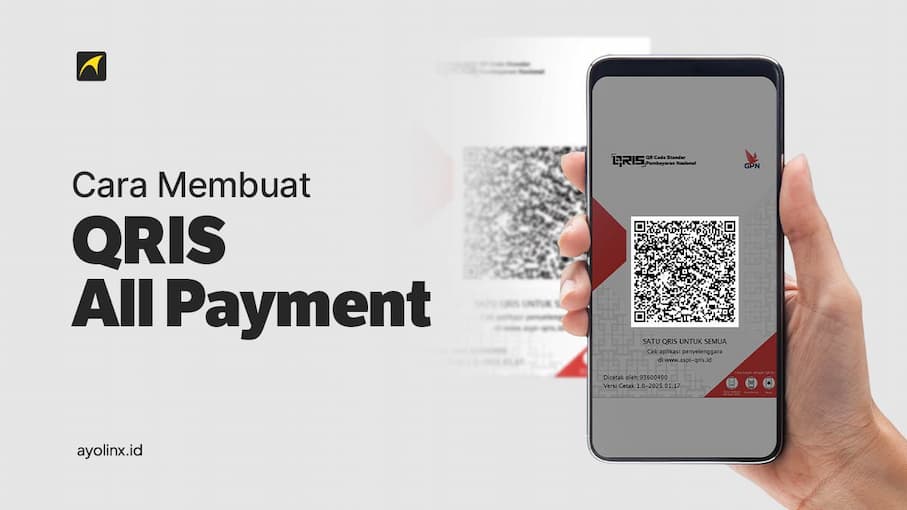
QRIS, the Quick Response Code Indonesian Standard, is Indonesia's national QR payment standard, developed by Bank Indonesia to unify the country's fragmented QR payment landscape. The system has achieved remarkable merchant adoption, with over 30 million merchants accepting QRIS payments as of 2025.
Indonesia's QRIS has become a model for cross-border QR payment interoperability, with connections to Thailand, Malaysia, Singapore, and other ASEAN countries. The IMF highlights QRIS as a key example of central banks developing QR payment standards to ensure interoperability across borders.
For small merchants in Indonesia, one of Southeast Asia's largest economies, QRIS has been instrumental in enabling digital payment acceptance. Before QRIS, merchants faced a bewildering array of incompatible QR codes from competing payment providers. The unified standard eliminated that confusion and brought millions of small businesses into the digital payment ecosystem.
Asia's digital payment market shows no signs of slowing. The region's central banks continue to invest in public payment infrastructure, while private platforms expand their financial services offerings. Cross-border interoperability is emerging as the next frontier, with QRIS's ASEAN connections and Alipay's global reach pointing the way.
Related Posts



0 Comments
Join the discussion and share your thoughts
No Comments Yet
Be the first to share your thoughts on this article!