Top 10 Best Cloud Deployment Platforms In The World 2026


Table of Contents
The global cloud computing market has entered a new phase of maturity. As of early 2026, businesses are no longer simply deciding whether to move to the cloud. They are deciding which cloud deployment platform best fits their specific workload, compliance needs, and budget constraints. The era of the single-vendor cloud is giving way to a multi-cloud reality where organizations distribute applications across specialized providers.
Our analysis draws on the latest quarterly earnings reports, market share data from industry analysts, and hands-on evaluations of platform capabilities. We have ranked these platforms based on a combination of revenue scale, service breadth, developer experience, pricing transparency, and suitability for different deployment scenarios. Here are the top 10 best cloud deployment platforms in the world for 2026.
How We Ranked These
To build this list, we weighed several factors. Revenue and market share data from Q4 2025 and Q1 2026 earnings reports formed the baseline for scale. We then evaluated each platform on service portfolio breadth, pricing predictability, hybrid and multi-cloud support, AI and machine learning capabilities, and developer experience. User sentiment from forums and review sites was considered alongside analyst reports from Gartner and other research firms. We also prioritized platforms that offer distinct value propositions rather than simply competing on the same metrics.
These Are The Top 10 Best Cloud Deployment Platforms In 2026:
1. Amazon Web Services (AWS)
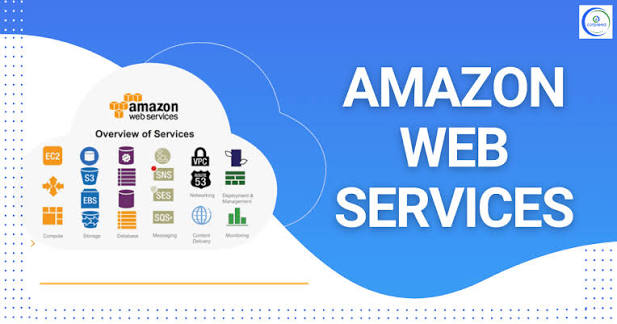
AWS reported $35.6 billion in quarterly cloud revenue for Q4 2025, maintaining its commanding 31-33 percent share of the global market. The platform now offers more than 200 services spanning compute, storage, artificial intelligence, machine learning, and serverless computing. For large enterprises that need extensive, battle-tested infrastructure with global reach, AWS remains the default choice.
Three developments define AWS in 2026. First, the expansion of Local Zones brings low-latency compute closer to end users in more metropolitan areas, addressing a long-standing complaint about centralization. Second, the latest Graviton processors deliver improved price-performance for compute-intensive workloads, giving AWS a strong value argument for cost-conscious teams. Third, Amazon Bedrock has matured into a curated model garden that lets enterprises access multiple foundation models through a single API, reducing the friction of generative AI adoption.
The trade-offs are well known. AWS's complexity can overwhelm smaller teams. Its pricing structure, with hundreds of service-specific charges and tiered support plans, requires dedicated financial management. For organizations with the head count to manage it, however, AWS provides the most comprehensive infrastructure available.
2. Microsoft Azure

Azure holds an estimated $28-30 billion in quarterly cloud revenue and roughly 24-26 percent of the global market. Its primary advantage is seamless integration with the Microsoft ecosystem. Organizations already running Microsoft 365, Office, Copilot, Power Platform, or Fabric find Azure to be the natural extension of their existing infrastructure.
Azure Arc has become a cornerstone of the platform's hybrid-cloud strategy, allowing organizations to manage resources across on-premises, multi-cloud, and edge environments from a single control plane. The Azure OpenAI Service continues to draw enterprises that want to deploy generative AI models with enterprise-grade security and compliance. Azure's compliance coverage supports global regulations including GDPR, HIPAA, FedRAMP, and SOC 2, making it the preferred platform for healthcare, government, and financial services organizations that require bespoke industry applications.
Azure's pay-as-you-go model and rapid deployment capabilities reduce time-to-market for regulated industries. The main drawback is that Azure's pricing can become opaque for organizations that do not already have Microsoft licensing expertise in house.
3. Google Cloud Platform (GCP)
GCP reported $17.7 billion in quarterly cloud revenue for Q4 2025, holding 13 percent of the global market across 42 regions and 127 availability zones. Gartner's 2024 Critical Capabilities report ranked GCP highest in AI and ML capabilities, and the platform continues to lead in data analytics and open-source support.
Google Kubernetes Engine remains the industry standard for container orchestration, offering features that other providers are still catching up to. GCP's pricing is generally less fragmented than AWS or Azure, with committed-use discounts reaching up to 57 percent for predictable workloads. Services like Cloud Run for serverless containers and BigQuery for serverless data warehousing appeal to teams that want to minimize operational overhead.
GCP's focus on open cloud and multi-cloud support makes it attractive for AI-forward organizations and data-driven enterprises. The platform's weakness remains its smaller market share, which means fewer third-party integrations and a smaller talent pool compared to AWS and Azure.
4. Oracle Cloud Infrastructure (OCI)
OCI generated $8.9 billion in quarterly cloud revenue as of Q1 2026, with strong growth driven by AI database capabilities. Oracle differentiates itself through high-performance computing with innovative networking and storage offerings, plus the Oracle Autonomous Database for self-managing, self-securing data operations.
In 2026, Oracle has strengthened its AI database capabilities for agentic AI workloads, allowing organizations to run AI inference directly on data without moving it to separate compute environments. The platform offers a strong hybrid-cloud story with multi-cloud connectivity, letting customers run Oracle workloads on AWS, Azure, or Google Cloud while maintaining OCI as the primary management plane.
OCI is particularly compelling for enterprises running Oracle workloads and those requiring security-focused, regulated-industry solutions. Pricing is predictable via monthly flex options, a welcome contrast to the consumption-based models of the hyperscalers.
5. Alibaba Cloud (Aliyun)
Alibaba Cloud holds 4 percent of the global market with 88 availability zones across 29 regions. It is the dominant cloud provider in China and the broader Asia-Pacific region, making it essential for any organization targeting those markets.
The platform offers competitive pricing, including up to 55 percent price cuts on more than 100 core products announced in 2024. Its Elastic Compute Service and container services support high-scale workloads, and its global expansion continues to challenge Western providers in Southeast Asia, the Middle East, and Africa. Alibaba Cloud's AI capabilities are extensive, with services for natural language processing, computer vision, and machine learning integrated into the platform.
For Asia-focused businesses and organizations requiring affordable, scalable solutions with strong AI integration, Alibaba Cloud is the logical choice. The primary concern for Western enterprises remains data sovereignty and compliance with local regulations in China.
6. IBM Cloud
IBM Cloud earns an overall rating of 4.4 out of 5 across user review platforms, with scores of 4.5 for pricing, integrations, and feature set. The platform excels in hybrid-cloud and regulated-industry capabilities, leveraging Red Hat OpenShift to provide a consistent application platform across IBM Cloud, customer datacenters, and other providers.
The watsonx AI platform is increasingly embedded across services, giving enterprises tools to build, tune, and govern AI models with a strong focus on explainability and control. This matters for financial services, healthcare, and public sector environments where regulatory requirements demand transparency in AI decision-making.
IBM Cloud is best for enterprises with clear modernization needs that require robust security and compliance. Its smaller service catalog compared to the hyperscalers means it is not a general-purpose replacement for AWS or Azure, but for specific regulated workloads, it is often the best fit.
7. DigitalOcean
DigitalOcean serves more than 600,000 developers and startups globally, earning an overall rating of 3 out of 5 on review platforms. The platform is the developer-favorite for simplicity, transparent pricing, and an easy-to-use interface that avoids the complexity of hyperscalers.
Its App Platform offers one-click deployment from GitHub, managed databases covering PostgreSQL, MySQL, and Redis, and predictable pay-as-you-go pricing ideal for smaller projects. Notable companies including Shopify, GitHub, and Airbnb use DigitalOcean, demonstrating that the platform can scale beyond hobby projects.
DigitalOcean is the top choice for startups, SMBs, and developers who prioritize efficiency and straightforward cloud management. The trade-off is a significantly smaller service catalog and no advanced AI or ML services, but for teams that just need reliable compute and databases, it delivers without the overhead.
8. Railway
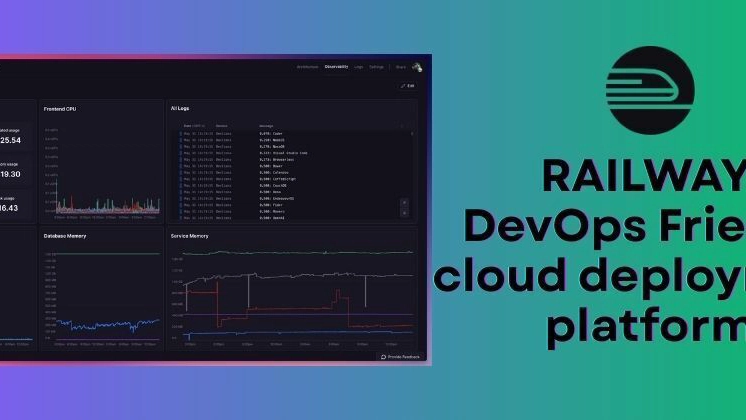
Railway has emerged as the leading modern deployment platform for full-stack teams in 2026. It offers a free trial with $5 credit, a Hobby plan at $5 per month, and a Pro plan at $20 per month per seat. The platform provides one-click database deployment for PostgreSQL, MySQL, MongoDB, and Redis, Git-based automatic builds, and transparent usage-based billing without complex credit management.
Private networking between services and environment variable management simplifies backend and database hosting significantly compared to traditional cloud providers. Railway is best for development teams building products that need a real backend and a real database without the operational overhead of Kubernetes.
The platform's growth reflects a broader shift toward developer experience as a primary purchasing criterion. Teams can go from code to deployment in minutes rather than days.
9. Vercel
Vercel is the premier platform for frontend applications, optimized specifically for Next.js, React, Vue, and other modern frameworks. The Pro plan at $20 per month includes 100GB bandwidth and a global CDN with edge functions that provide sub-50ms latency worldwide.
Automatic Git-integrated deployments mean every pull request generates a preview deployment, enabling seamless collaboration between developers and stakeholders. Vercel's built-in analytics and performance monitoring give teams visibility into real user metrics without additional tooling.
For teams shipping primarily frontend applications and static sites, Vercel is the go-to choice. It does not attempt to compete with full-cloud providers for backend workloads, but within its niche, it is the market leader.
10. Northflank
Northflank has become the leading Kubernetes-native deployment platform for teams wanting container orchestration without operating a control plane. Its Sandbox tier is free with a credit card, and the BYOC (Bring Your Own Cloud) model charges no markup on underlying cloud costs.
The platform supports AWS, GCP, Azure, Oracle, CoreWeave, bare metal, and on-premises infrastructure, offering preview environments, native managed databases, GPU support, and microVM isolation. Northflank is best for teams that have decided Kubernetes is non-negotiable but want to avoid the operational complexity of managing Kubernetes clusters directly.
This approach fills a gap in the market. Many organizations want Kubernetes for its portability and ecosystem but lack the specialized staff to run it. Northflank abstracts the control plane while giving teams full access to the underlying infrastructure.
Related Posts



0 Comments
Join the discussion and share your thoughts
No Comments Yet
Be the first to share your thoughts on this article!