Top 10 Best Budgeting Apps In 2026

Table of Contents
The best budgeting apps in 2026 look nothing like the spreadsheet templates of a decade ago. After Mint shut down in 2024, the market split into two camps: premium apps built for people who want a full financial operating system, and free tools that handle the basics without a subscription. We tested and compared the leading options across pricing, bank syncing, user ratings, and real-world usability to build this ranking of the 10 best budgeting apps available right now.
Our picks draw on expert roundups from CNBC Select, Forbes Advisor, and NerdWallet, plus App Store ratings and pricing data current as of 2026. Prices change, so verify current rates on each provider's site before you commit.
How We Ranked These
We weighed four factors: sustained expert ratings across major review outlets, App Store user scores, price relative to features, and how well each app handles its stated purpose. A free tier with strong bank syncing can outrank a paid app that does less. We also factored in platform availability, since an iOS-only app serves a smaller audience. No weighted scoring tables here, just judgment calls explained in plain terms.
These Are The List Of The Top 10 Best Budgeting Apps In 2026:
1. YNAB (You Need a Budget)
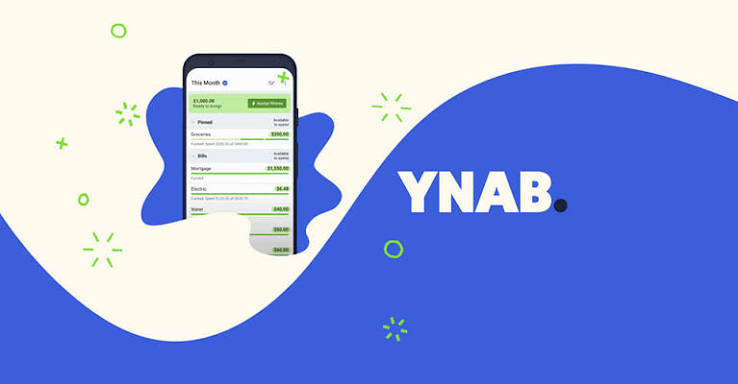
YNAB sits at the top because no other app has shaped how people think about budgeting quite like it. The company pioneered zero-based budgeting, where every dollar gets a job before you spend it, and its "four rules" framework is now taught in personal finance circles as an industry standard.
At $109 per year or $14.99 monthly, it's not cheap. But the 4.8/5 App Store rating across roughly 30,000 reviews suggests users feel they get their money's worth. The app includes real-time bank syncing, loan tracking, and a metric called "Age of Money" that gamifies how long your cash survives between paychecks. Free educational workshops and a 34-day trial lower the entry barrier.
CNBC Select, Forbes, and NerdWallet all rank YNAB first in their 2026 roundups. The catch is time: this is a hands-on system that rewards discipline and punishes users who want autopilot. If you'll commit to the method, nothing else comes close.
2. Monarch Money
Built by former Mint leaders, Monarch Money fills the hole Mint left behind. The $99 annual subscription (after a 7-day trial) buys an all-in-one dashboard covering budgeting, net worth, investments, and shared accounts for couples and families.
Its 4.7/5 App Store rating reflects what users consistently praise: polish. Unlimited custom categories, multi-account aggregation across banks, brokerages, and loans, plus goal tracking and detailed transaction rules make it the most complete Mint replacement on the market. Collaboration features are a genuine differentiator, since most budgeting apps still assume a single user.
The lack of a free tier is the main knock. You pay for the polish, and for households splitting finances, that trade-off usually makes sense.
3. PocketGuard
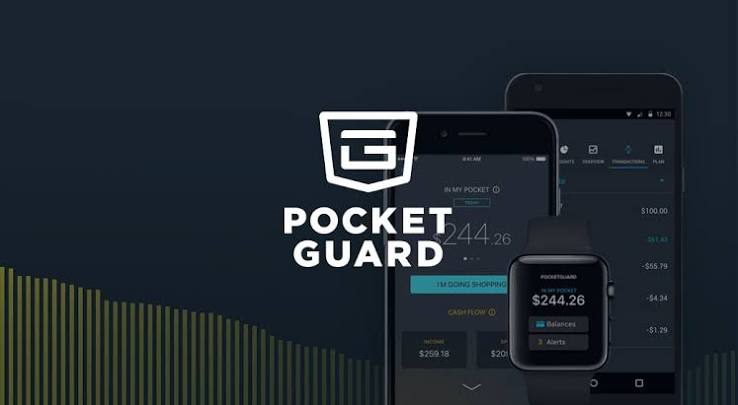
PocketGuard answers one question better than anyone: how much can I safely spend right now? Its "In My Pocket" feature subtracts bills, savings goals, and spending from your income to produce a single discretionary number. For people who freeze at the sight of a full budget spreadsheet, that simplicity is the whole point.
The free tier covers core tracking, while PocketGuard Plus at $7.99 monthly or $34.99 annually unlocks custom categories and bill cancellation. Automatic categorization, subscription tracking, and bill negotiation round out the package. A 4.6/5 rating puts it near the top of the free-to-cheap segment.
4. EveryDollar
Dave Ramsey's company built EveryDollar around zero-based budgeting, and the app mirrors the "Baby Steps" philosophy taught through Ramsey Solutions. Manual budgeting takes about 10 minutes a month, which is among the fastest in the category.
The free version requires you to enter transactions by hand. Plenty of users prefer that friction because it forces awareness. EveryDollar Premium runs $17.99 monthly or $129.99 annually and adds bank syncing, paycheck planning, and custom reports. Integration with Financial Peace University and Ramsey's coaching ecosystem gives followers a natural home.
That premium price is steep for what you get compared with rivals. The 4.5/5 rating holds up, but this app makes the most sense if you're already inside the Ramsey universe.
5. Goodbudget
Goodbudget digitizes the envelope system: you fill virtual envelopes with cash for each spending category, and when an envelope empties, you stop. Households can split expenses and sync budgets across devices, a feature that remains rare in this category.
The free tier is unusually generous, supporting 10 regular envelopes plus 10 annual ones, unlimited accounts, and debt tracking. Premium at $10 monthly or $80 annually removes the envelope caps. Because it doesn't require linking bank accounts, privacy-conscious users get full functionality without handing over credentials. A 4.6/5 rating backs it up.
6. Quicken Simplifi
Simplifi takes the opposite approach to YNAB and EveryDollar. Instead of rigid categories, it uses flexible "spending plans" that adapt to fluctuating income, which suits freelancers and anyone whose paycheck varies month to month.
At $3.99 monthly billed annually (about $47.88 per year), it's the value pick among paid apps. Accurate bank syncing, a clean dashboard, savings goals, investment tracking, and a watchlist for bills and subscriptions cover the essentials, and a 30-day money-back guarantee limits the risk. The 4.5/5 rating is solid rather than spectacular.
Users migrating from Mint tend to land here first. The interface feels familiar without feeling dated.
7. Copilot Money
Copilot is the best-looking budgeting app available, full stop. An Apple Design Award finalist with roughly a 4.8/5 App Store rating, it pairs machine-learning categorization with visualizations that make spending analytics genuinely pleasant to review.
Budgets, subscriptions, investments, and net worth all live in one place, and the categorization engine improves the longer you use it. Pricing is $13 monthly or $95 annually after a one-month trial.
The limitation is platform. Copilot was built for iOS and Mac, and its expansion to web and Android is still in progress. That keeps it at #7 despite elite design and ratings. Apple-ecosystem users who value automation over manual control will find it hard to beat.
8. Empower

Empower, formerly Personal Capital, isn't really a budgeting app. It's a wealth-tracking dashboard with budgeting features attached, and that's exactly why it earns a spot. The free tier aggregates 401(k)s, brokerages, and bank accounts, then layers on retirement planning and fee-analysis tools that dedicated budgeting apps don't attempt.
For anyone whose real question is "am I on track for retirement?" rather than "did I overspend on groceries?" this is the most powerful free tool available. The 4.6/5 rating reflects that strength. Budgeting mechanics are light, and the paid advisory tier charges a 0.89% fee on managed accounts up to $1 million, aimed at higher-net-worth users. Treat the free dashboard as the product and the advisory as optional.
9. NerdWallet (App)
NerdWallet's app functions as a financial companion rather than a strict budget tracker. Free credit-score monitoring, spending insights, bill tracking, and personalized recommendations sit alongside cash-back offers and product comparisons drawn from NerdWallet's editorial research.
A 4.7/5 App Store rating and a platform trusted by more than 20 million monthly users give it real credibility. What it lacks is depth: category-level budgeting and envelope mechanics aren't here. As a starting point for beginners who want education and transparency before committing to a system, though, it's the strongest free entry point on this list.
10. Spendee
Spendee targets a niche the US-centric apps ignore: travelers and international households. Multi-currency support, shared wallets for couples and groups, and even cash and bitcoin wallet tracking set it apart, and 5 million-plus downloads with a 4.5/5 rating show the formula works.
The free tier covers basic tracking with limited wallets. Premium starts around $2.99 monthly and unlocks unlimited budgets, bank sync, and receipt scanning. Spendee is particularly popular in Europe, where its currency flexibility matters more than deep US bank integrations, which remain its weak spot. For frequent travelers juggling spending across countries, few apps handle the math as smoothly.
The right budgeting app depends on how much effort you'll actually put in. Hands-on budgeters who want a proven system should start with YNAB's 34-day trial. Mint refugees and couples sharing finances will find Monarch Money the closest match to what they lost. Anyone who wants a free, privacy-friendly envelope system can't do better than Goodbudget, while travelers should look at Spendee before anything else.
One practical note: bank-syncing apps occasionally break connections, so check recent reviews for your specific bank before subscribing. Pricing and ratings in this guide reflect data available as of 2026 and may change. For related reading, our breakdowns of zero-based budgeting methods and Mint alternatives dig deeper into the systems behind these apps.
Related Posts


0 Comments
Join the discussion and share your thoughts
No Comments Yet
Be the first to share your thoughts on this article!