Top 10 Best Automotive Manufacturers In Germany 2026

Table of Contents
Germany remains the undisputed powerhouse of European automotive manufacturing, and the first half of 2026 has delivered a fascinating snapshot of an industry in flux. The Top 10 Best Automotive Manufacturers In Germany 2026 ranking reflects a market that is simultaneously defending its combustion-engine heritage while pivoting aggressively toward electrification. To build this list, we weighed domestic market share data from the KBA (German Federal Motor Transport Authority), global revenue figures, market capitalization as of February 2026, brand prestige, manufacturing significance, and each company's stated technology roadmap.
The headline numbers tell a story of concentration at the top. Volkswagen Group alone commands 18.4% of the domestic market, selling 273,747 vehicles in H1 2026. That is more than the combined sales of BMW and Mercedes-Benz, the two luxury giants that sit in second and third place. Yet market share is only one lens. When we factor in profitability per vehicle, innovation output, and brand desirability, the picture becomes more complex. Porsche, for instance, sells a fraction of the volume of its parent company Volkswagen, yet commands a market valuation that reflects its outsized margins.
This ranking also acknowledges the shifting boundaries of what constitutes a German manufacturer. Opel operates under the Dutch-registered Stellantis umbrella, Alpina is now fully owned by BMW, and e.GO Mobile represents a new wave of startups emerging from university ecosystems. The German automotive identity, it seems, is becoming more about engineering DNA than corporate nationality. What follows is our assessment of the ten manufacturers defining German mobility in 2026.
The Top 10 Best Automotive Manufacturers In Germany 2026:
1. Volkswagen Group
Volkswagen Group enters 2026 as the dominant force in its home market, holding nearly one-fifth of all domestic sales. The company sold 273,747 vehicles in Germany during the first half of 2026, translating to an 18.4% market share. Globally, the group delivered 9.24 million vehicles in 2024, generating $348.6 billion in revenue. These figures place Volkswagen firmly ahead of every other European manufacturer by a considerable margin.
The group's production network is staggering in scale. Volkswagen operates 120 production plants across 19 countries, with the Wolfsburg facility standing as the world's largest single car factory. Under CEO Oliver Blume, who also leads Porsche, the company is executing a dual strategy: defending its combustion-engine volume base while investing heavily in EV infrastructure. The Salzgitter gigafactory represents a multi-billion-euro bet on in-house battery production, and the partnership with Rivian, announced to develop next-generation EV software architecture, signals that Volkswagen recognizes software as the new battleground for automotive competitiveness.
Domestic dominance is the clearest reason for the top ranking. No other manufacturer comes close to Volkswagen's German market penetration, and the group's ability to spread development costs across brands like Audi, Porsche, SEAT, and Skoda provides an economies-of-scale advantage that smaller rivals cannot replicate. Trade tensions with China and the United States remain a headwind, but the group's geographic diversification offers resilience that pure-play luxury brands lack.
2. BMW Group
BMW Group claims the second spot on the strength of its market capitalization, which stood at $64.81 billion as of February 2026, making it the most valuable German automotive company by that measure. The group sold 126,766 vehicles in Germany in H1 2026 (8.5% market share) and delivered 2.45 million units globally in 2024, generating $168.3 billion in revenue.
What separates BMW from its Munich rival Mercedes-Benz is reputation for reliability. Consumer Reports has ranked BMW as the benchmark luxury brand, noting that their reliability easily outshines all of their European rivals. That assessment carries weight in a segment where ownership costs and dependability increasingly influence purchase decisions. The company's recent celebration of its 7 millionth vehicle produced at the Shenyang plant in China underscores the scale of its global operations; that facility is now BMW's largest production hub worldwide.
BMW's electrification strategy has been pragmatic rather than dogmatic. Rather than committing to a single platform for all EVs, the group has developed flexible architectures that accommodate combustion, hybrid, and fully electric powertrains. Models like the i7 and iX have established BMW as a credible player in the premium EV segment, while the continued success of the 3 Series and X3 in their combustion forms ensures the brand maintains its traditional customer base. The market value gap between BMW and Mercedes-Benz, roughly $2.8 billion in BMW's favor, reflects investor confidence in this balanced approach.
3. Mercedes-Benz Group
Mercedes-Benz Group sits in third place with 125,960 vehicles sold in Germany during H1 2026, a figure nearly identical to BMW's 126,766. The group's global deliveries reached 2.0 million units in 2024, generating $164.3 billion in revenue. Its market capitalization of $62.02 billion places it just behind BMW among German automakers.
The company is in the middle of its most significant product offensive in decades. The 'Next Level Performance' plan, running through 2027, represents the brand's biggest technology campaign, and the all-electric CLA on the new MMA platform is its first major output. Mercedes has also committed to its Ambition 2039 strategy, which targets a carbon-neutral new vehicle fleet within the next 13 years. That timeline is aggressive by industry standards, and the brand's integration of Microsoft Teams and AI Copilot into its vehicles suggests Mercedes is treating the cabin experience as a competitive battleground.
Mercedes-Benz holds a unique distinction in automotive history: founded in 1926, it is the oldest automotive brand in the world. That heritage carries weight in the luxury segment, where provenance and tradition influence buyer perception. The brand's pursuit of axial-flux motors for high-performance EVs indicates that Mercedes intends to compete at the top of the performance hierarchy, not just in the volume luxury segment. The near-parity with BMW in domestic sales makes the rivalry between the two Stuttgart and Munich giants one of the most closely watched competitions in global manufacturing.
4. Audi AG
Audi secures fourth place with 106,422 vehicles sold in Germany in H1 2026, representing 7.2% of the domestic market. As a subsidiary of Volkswagen Group, Audi's financial results are consolidated within the parent company's $348.6 billion revenue figure, but the brand's strategic importance to the group extends far beyond its balance sheet contribution.
Audi's reputation rests on design consistency and interior quality. The Virtual Cockpit system remains one of the sharpest digital display setups available in any production vehicle, setting the standard for driver-focused interface design. The brand's Quattro all-wheel drive continues to define the driving experience across the range, providing confidence in poor weather conditions and at high speeds. Audi Sport builds on this foundation with RS and S models, from the RS 3 Sportback to the RS e-tron GT, delivering some of the most complete performance cars in their respective segments.
The 2026 YouGov Automotive Rankings Germany highlighted Audi as a leading manufacturer in its home market, reflecting strong brand perception among German consumers. Audi's challenge in the coming years will be differentiating itself from both its parent company's volume brands and its luxury rivals. The group's investment in Audi production, announced under CEO Oliver Blume, signals that Volkswagen sees Audi as central to its premium ambitions. The upcoming Q6 e-tron and continued development of the PPE (Premium Platform Electric) architecture will be critical tests of whether Audi can translate its design and engineering reputation into EV leadership.
5. Porsche AG
Porsche's fifth-place ranking belies its outsized influence on the German automotive industry. The company sold just 15,601 vehicles in Germany during H1 2026, a 1.1% market share, yet its market capitalization of $44.35 billion reflects profitability that volume manufacturers can only envy. Porsche is the most profitable automaker in the world on a per-vehicle basis, a position built on decades of motorsport success and disciplined brand management.
The company's 'Strategy 2035', unveiled at its 4th Annual General Meeting on June 23, 2026, confirms that the 911 will remain a combustion-hybrid model and will not transition to a fully electric powertrain. That decision runs counter to industry trends, but it reflects Porsche's understanding of its core customer base: the 911's buyers value the analog driving experience and the character of a flat-six engine. The strategy focuses on enhancing profitability through brand desirability and reduced model complexity, a recognition that Porsche's exclusivity is part of its appeal.
Porsche's electric transition is nonetheless well underway. The Taycan and Macan Electric have become firm favorites among families and business users, demonstrating that the brand can succeed in the EV segment without diluting its performance credentials. The Panamera Turbo E-Hybrid, starting at $210,150 with a Plug-In Hybrid 4.0L V8 Turbo engine, represents the upper echelon of the brand's hybrid offerings. With 19 overall Le Mans victories, more than any other manufacturer, Porsche's racing heritage continues to inform its road car development. The company confirmed its financial forecast for 2026, signaling confidence in its ability to navigate the transition ahead.
6. Opel
Opel's sixth-place ranking reflects a remarkable turnaround story. The brand sold 70,403 vehicles in Germany in H1 2026, capturing 4.7% of the domestic market, with growth of 14.5% year-over-year. That trajectory makes Opel the fastest-growing major manufacturer in the German market, a notable achievement for a brand that was struggling with profitability and identity just a few years ago.
Now operating under the Stellantis umbrella, Opel has repositioned itself with a "German engineering" message that resonates with domestic buyers. The brand benefits from Stellantis's global platform sharing and electrification strategy, gaining access to technology and scale that would have been unattainable as an independent manufacturer. The Corsa and Astra, Opel's core models, have been modernized with both electric and hybrid powertrain options, ensuring the brand remains competitive in the segments that matter most to European buyers.
Opel's production facilities in Rüsselsheim and Eisenach remain important employment centers in the German automotive industry, and the brand's commitment to domestic manufacturing has been a factor in its recovery. The Rüsselsheim plant, in particular, has been modernized to produce electric vehicles, positioning Opel as a significant player in Germany's EV transition. The 14.5% growth rate suggests that consumers are responding to the brand's renewed focus on value and practicality, attributes that have historically defined Opel's appeal in its home market.
7. MAN Truck & Bus SE
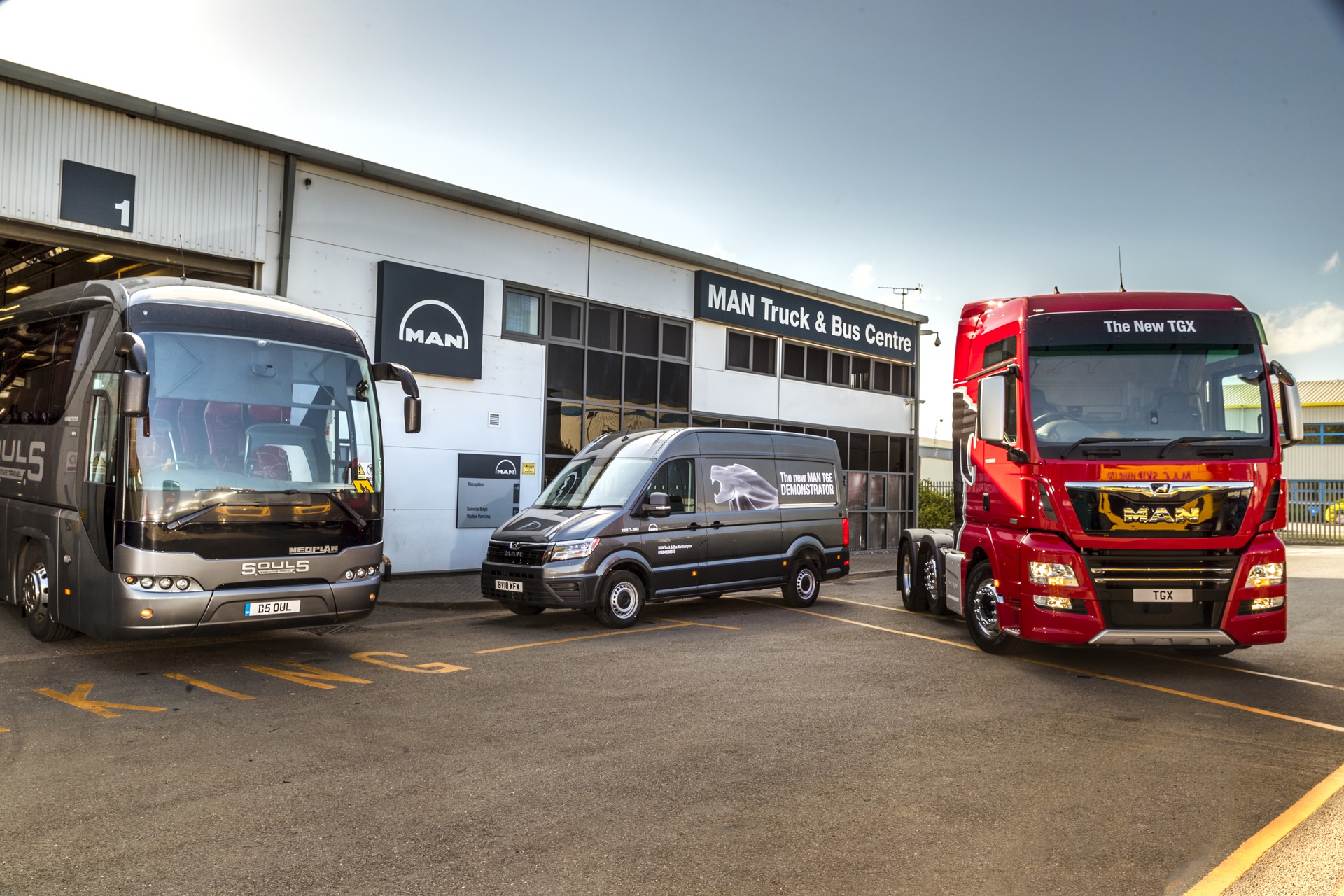
MAN Truck & Bus represents Germany's commercial vehicle sector in this ranking, securing seventh place as the country's leading manufacturer of heavy trucks and buses. As part of Volkswagen Group's Traton SE commercial vehicle division, MAN produces approximately 100,000 commercial vehicles annually across its global operations, with headquarters in Munich and major production facilities in Germany, Poland, Austria, and Turkey.
The company has positioned itself at the forefront of electric truck development in Europe. Models like the eTGM and eTGE are leading the transition to zero-emission commercial transport, a segment that presents unique challenges compared to passenger vehicles. The weight of batteries, the need for rapid charging infrastructure, and the operational demands of freight logistics all require specialized engineering solutions. MAN's approach has been methodical, focusing on applications where electric trucks make economic sense today while developing the technology for broader adoption.
MAN's bus division is equally significant. The Lion's Coach and Lion's City buses rank among the most popular coach and transit buses in Europe, serving operators across the continent. The transition to electric buses is proceeding faster than in the truck segment, driven by urban air quality regulations and the predictable routes of city transit systems. MAN's position within the Traton group provides access to shared technology and purchasing power, while its German engineering heritage remains a selling point in export markets.
8. Volkswagen Commercial Vehicles
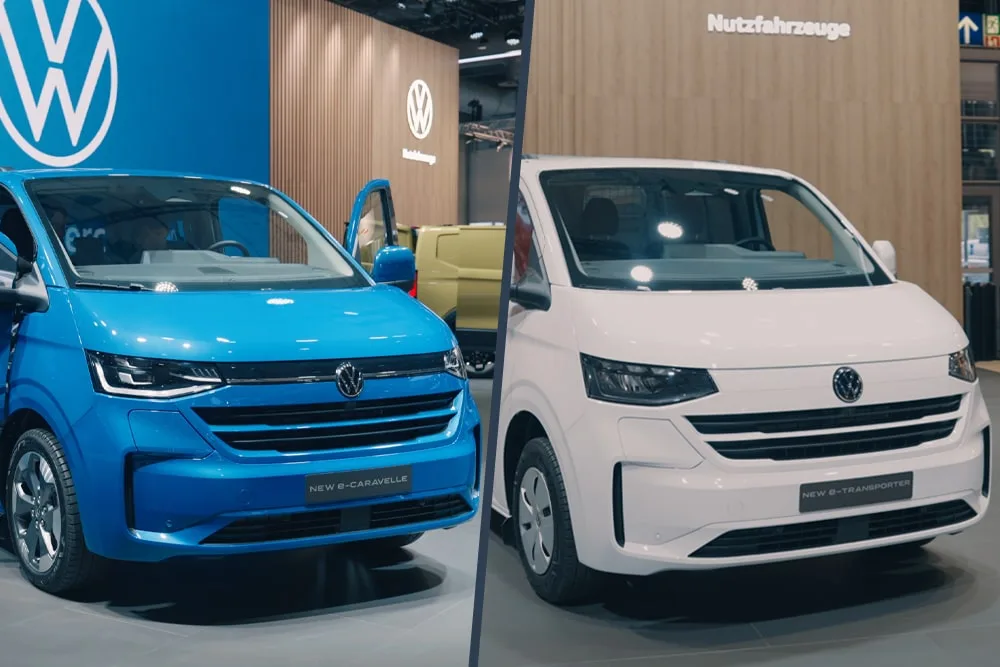
Volkswagen Commercial Vehicles (VWN) secures eighth place as the group's dedicated light commercial vehicle division. The company produces approximately 400,000 vehicles annually across its global plants, with headquarters and main production facility in Hanover, one of Europe's largest commercial vehicle plants.
The division's model lineup includes the iconic Transporter, Caddy, and Crafter, names that have defined the European light commercial vehicle segment for decades. The Transporter, in particular, has achieved cultural status beyond its commercial function, serving as the basis for camper conversions, delivery vans, and even the classic Volkswagen Microbus heritage that continues to influence the brand's image.
VWN's electrification strategy centers on the ID. Buzz, the electric reincarnation of the classic Microbus. The model has generated significant attention since its launch, combining retro styling with modern EV technology. The ID. Buzz represents VWN's ambition to lead the European light commercial vehicle market, leveraging Volkswagen Group's MEB platform to offer an electric van that appeals to both commercial operators and lifestyle buyers. The division plays a crucial role in Volkswagen's broader strategy to dominate the European commercial vehicle market, complementing MAN's heavy truck operations with light commercial offerings.
9. Alpina Burkard Bovensiepen GmbH & Co. KG
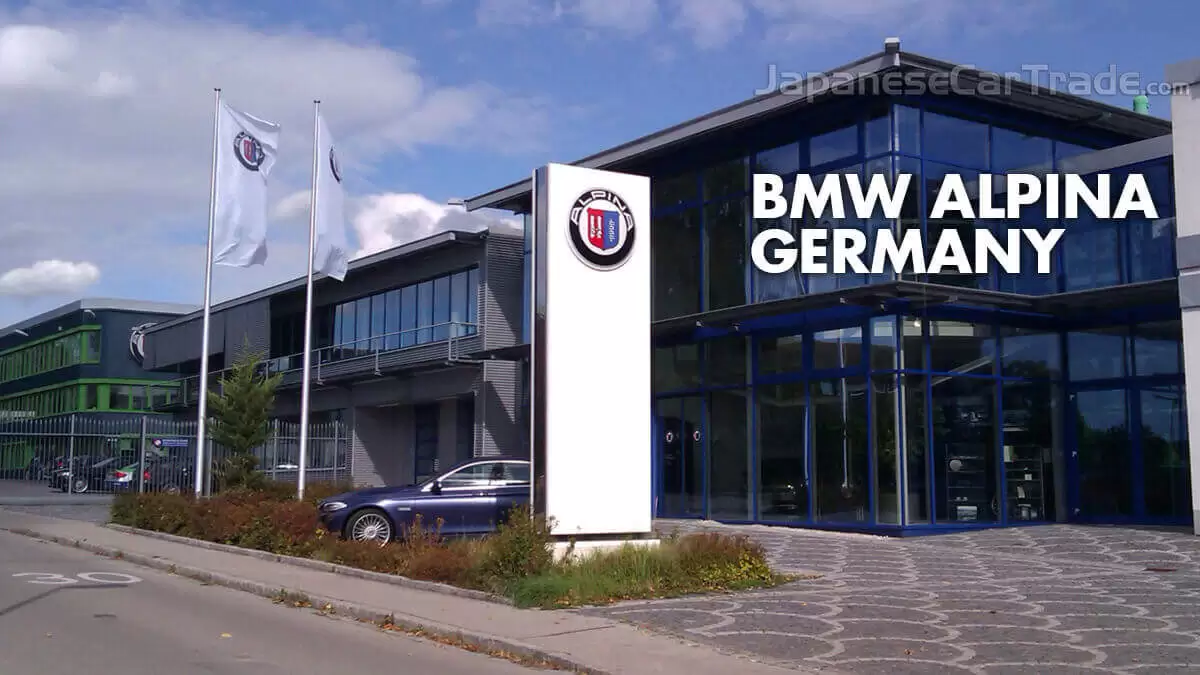
Alpina occupies a unique position in the German automotive landscape as the country's most prestigious independent manufacturer. Founded in 1965, the company produces approximately 2,000 vehicles per year, intentionally limiting volumes to maintain exclusivity. Since being fully acquired by BMW Group in 2022, Alpina has been integrated into BMW's operations while retaining its distinct identity.
Alpina's approach differs fundamentally from BMW's M division. While M models prioritize track-focused performance, Alpina vehicles are tuned for comfort-oriented performance, combining extreme capability with daily usability. Models like the B3, B4, and XB7 offer refined tuning that prioritizes ride quality and long-distance comfort while still delivering impressive performance figures. This positioning has earned Alpina a devoted following among buyers who want BMW performance without the harshness often associated with dedicated sports models.
The acquisition by BMW in 2022 raised questions about Alpina's future independence, but the brand has continued to operate with considerable autonomy. The integration provides Alpina with access to BMW's latest platforms and technology, while BMW gains a premium sub-brand that can serve customers seeking something beyond the standard M offerings. Alpina's production volumes remain deliberately limited, ensuring that each vehicle retains its exclusivity. For enthusiasts, Alpina represents the pinnacle of German automotive craftsmanship, a manufacturer that combines engineering excellence with an attention to detail that mass production cannot replicate.
10. e.GO Mobile SE
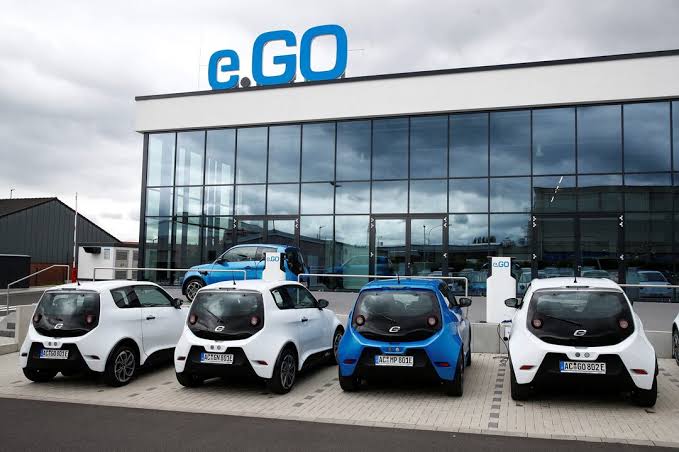
e.GO Mobile rounds out our ranking as Germany's most innovative electric vehicle startup. Based in Aachen, the company emerged from RWTH Aachen University, one of Germany's leading technical universities, and represents a new wave of EV-focused manufacturers challenging traditional automotive structures.
The company's production concept is its most distinctive feature. e.GO developed a micro-factory approach using innovative assembly techniques that significantly reduce manufacturing costs compared to traditional automotive plants. This model allows for smaller production runs and greater flexibility in responding to market demand, a fundamental departure from the economies-of-scale logic that has governed automotive manufacturing for a century. The company's Rüsselsheim plant has a production capacity of 20,000 vehicles annually, a fraction of what major manufacturers produce, but sufficient for its targeted market segment.
e.GO's vehicles, including the e.GO Life and e.GO Life Cross, are designed specifically for urban mobility. Compact dimensions and efficient electric powertrains make them well-suited for city driving, where range limitations are less of a concern and the benefits of zero-emission operation are most apparent. The company's focus on accessible pricing positions it in a segment that established manufacturers have largely ignored, offering an entry point into electric mobility for buyers who cannot afford premium EVs.
The challenges facing e.GO are considerable. The startup operates in a market dominated by manufacturers with vastly greater resources, and its production volumes remain small by industry standards. However, its innovative manufacturing approach and clear focus on urban mobility provide a differentiated value proposition. As Germany's EV market continues to develop, e.GO represents the entrepreneurial energy that will be essential to the country's automotive future.
The Best Automotive Manufacturers In Germany 2026 reveals an industry at a crossroads. The traditional hierarchy remains intact at the top, with Volkswagen, BMW, and Mercedes-Benz continuing to dominate. Yet the composition of this list, from Opel's resurgence under Stellantis to e.GO's university-rooted startup model, demonstrates that the German automotive identity is expanding beyond its historical boundaries.
Related Posts




0 Comments
Join the discussion and share your thoughts
No Comments Yet
Be the first to share your thoughts on this article!