Top 10 Best AI Productivity Tools in The World 2026

Table of Contents
The landscape of professional work has been fundamentally reshaped by artificial intelligence. What began as experimental chatbots and niche writing assistants has matured into an ecosystem of indispensable tools that handle everything from coding entire applications to synthesizing complex research in seconds. As of early 2026, the market for AI productivity tools has expanded rapidly, with hundreds of millions of professionals relying on these systems daily. Our team has analyzed user adoption data, enterprise deployment rates, independent benchmark tests, and professional reviews to identify the ten tools that stand above the rest. These are the platforms that have not only survived the hype cycle but have become essential infrastructure for modern work.
How We Made Our Picks
We evaluated dozens of AI productivity tools across five key dimensions: real-world utility in professional settings, user adoption and retention rates, breadth of functionality, integration with existing workflows, and independent benchmark performance. Our analysis draws on Q1 2026 market data, user surveys from major professional networks, and hands-on testing by our editorial team. We prioritized tools that solve genuine productivity bottlenecks rather than those generating novelty. The final list reflects tools that have demonstrably changed how millions of people work, not just those with the most marketing spend.
The List Of The Top Top 10 Best AI Productivity Tools in The World 2026:
1. ChatGPT (OpenAI)
ChatGPT remains the default gateway into AI productivity for most of the world. With over 400 million weekly active users as of early 2026, it has achieved a scale that dwarfs every other AI tool on this list. The GPT-4o model powers multimodal conversations that handle text, code, data analysis, and image creation through DALL-E integration. What sets ChatGPT apart is its versatility. A single session might involve drafting a business proposal, debugging a Python script, analyzing a spreadsheet, and generating accompanying visuals. The Canvas interface introduced in late 2025 enables real-time collaborative editing of documents and code, while custom GPTs let users build specialized assistants without any programming knowledge. In productivity surveys conducted in early 2026, ChatGPT was consistently rated as the most indispensable AI tool across all professional categories. Its combination of breadth, reliability, and continuous improvement makes it the benchmark against which all other tools are measured.
2. Claude (Anthropic)
Claude has carved out a distinct identity as the tool for deep, nuanced intellectual work. The Claude 4 model achieves 92% accuracy on complex reasoning benchmarks, and its ability to process up to 200,000 tokens in a single prompt makes it the preferred choice for analyzing lengthy documents, drafting detailed reports, and editing manuscripts. The Projects feature allows users to upload reference materials and maintain consistent style and voice across multiple outputs. This has made Claude particularly popular among researchers, authors, and executives who need high-quality long-form content. In head-to-head comparisons of writing quality published in 2026, Claude consistently ranked first, with reviewers noting its refusal to generate superficial or low-effort responses. Anthropic's emphasis on safety and alignment means Claude occasionally declines to answer certain queries, but this restraint often results in higher-quality outputs when it does engage. For professionals who prioritize depth over breadth, Claude is the superior choice.
3. Notion AI
Notion AI represents the most seamless integration of artificial intelligence into existing workplace tools. Integrated into over 100 million Notion workspaces, it adds AI capabilities directly into notes, databases, wikis, and project management boards. Users can generate summaries of meeting notes, auto-fill database fields, rewrite paragraphs in different tones, and ask questions about their entire workspace. The key advantage is that it eliminates context switching. A team using Notion for documentation and collaboration never needs to leave the platform to access AI assistance. Enterprise reports from 2026 consistently rated Notion AI as the highest-performing AI add-on for team productivity, particularly for knowledge management and internal documentation. At $10 per user per month on top of existing Notion plans, it represents a modest investment for teams that are already committed to the Notion ecosystem. The tool excels in environments where institutional knowledge is scattered across documents, wikis, and databases.
4. Perplexity AI
Perplexity AI has fundamentally changed how professionals conduct online research. Processing over 100 million queries per month, it provides real-time, cited answers to any question with footnoted sources and follow-up capabilities. The Pro tier gives users access to GPT-4, Claude, and Gemini models, allowing them to choose the underlying engine for each query. The Collections feature lets users save research threads into organized folders, while Spaces enable team collaboration on shared research projects. What distinguishes Perplexity from traditional search engines is its ability to synthesize information across multiple sources. Instead of presenting a list of links, it generates a coherent answer with inline citations that users can verify. Multiple 2026 user surveys named Perplexity the most time-saving AI tool, with professionals reporting that it reduces research time by 60 to 80 percent for complex queries. For journalists, analysts, consultants, and anyone whose work involves gathering and synthesizing information, Perplexity has become an indispensable research partner.
5. Cursor

Cursor has emerged as the dominant AI-first code editor, used by over 3 million developers as of early 2026. Built on top of VS Code, it supports 50+ programming languages and integrates existing VS Code extensions. The tool offers inline code suggestions, natural language commands to generate entire functions, and a Chat pane that understands the full codebase context. The Composer mode can refactor complex codebases or build new features from a single prompt, while Cursor Tab predicts multi-line edits based on context. Developers using Cursor consistently report 2 to 3 times speed improvements in coding tasks compared to traditional IDEs. The tool has been particularly transformative for junior developers, who can now write production-quality code with AI guidance, and for senior developers, who can offload boilerplate and repetitive tasks. Technical reviews in 2026 rated Cursor as the highest-performing developer productivity tool, with particular praise for its understanding of large codebases and its ability to suggest architecture-level improvements.
6. Grammarly
Grammarly has evolved far beyond its origins as a grammar checker. With 30 million daily active users and support for 500,000+ apps and websites through its browser extension, it has become the most ubiquitous AI writing assistant in the world. The 2026 version includes tone detection, clarity rewrites, full-document summaries, and generative AI writing capabilities that work across email, documents, social media, and messaging apps. The Contextual Thesaurus suggests better word choices based on audience and intent, while the Plagiarism Checker scans billions of web pages. New in 2026 are voice-to-text functionality and real-time translation for 20+ languages. Grammarly's greatest strength is its cross-platform integration. It works everywhere users write, from Gmail to Google Docs to Slack to LinkedIn. User satisfaction scores remain exceptionally high at 4.7 out of 5 stars, with professionals citing the tool's ability to catch subtle tone issues and improve clarity without changing their voice. For anyone who writes professionally, Grammarly is the baseline tool that improves every piece of communication.
7. Midjourney

Midjourney remains the gold standard for AI image generation, used by over 20 million designers and marketers. The Version 7 model generates 4K-resolution images with photorealism, artistic quality, and conceptual creativity that competitors have struggled to match. The Style Reference and Character Reference features allow consistent branding across multiple images, while Inpainting and Outpainting enable precise edits to existing images. The 2026 update introduced real-time collaborative canvases and direct integration with Adobe Creative Suite, making Midjourney a native part of professional design workflows. A 2026 survey of professional designers found that 68 percent preferred Midjourney over other AI image tools, citing superior image quality, better understanding of artistic prompts, and more reliable results. For graphic designers, advertisers, content creators, and marketers who need high-quality visuals quickly, Midjourney has become as essential as Photoshop. The tool has also found unexpected applications in architecture, product design, and fashion, where its ability to generate photorealistic concept images has accelerated creative processes.
8. Otter.ai
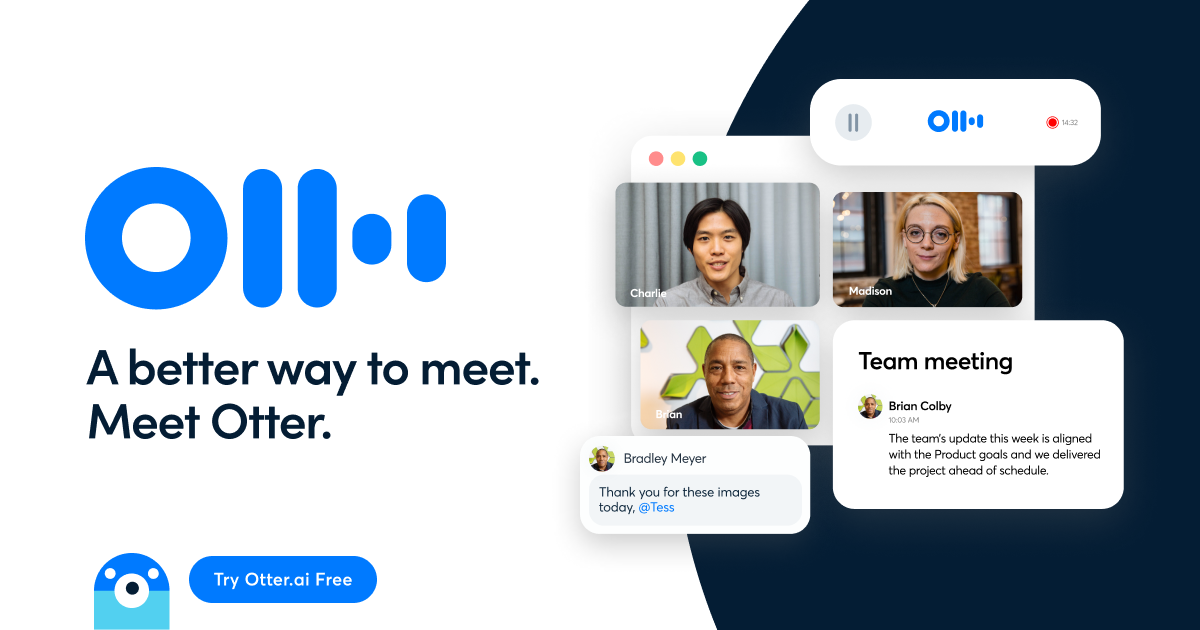
Otter.ai has become the dominant meeting productivity tool, transcribing over 500 million meetings annually with 95 percent accuracy across 15 languages. The platform automatically records, transcribes, and summarizes meetings from Zoom, Google Meet, and Microsoft Teams, generating action items, key takeaways, and searchable transcripts in real time. OtterPilot can join meetings as a virtual participant, capturing everything without requiring anyone to take notes. The ChatGPT Integration allows users to ask questions about past meetings, while the 2026 version adds speaker identification across multiple sessions and automatic CRM updates from sales calls. Users report saving an average of 4 hours per week on note-taking and follow-ups. The tool has been particularly valuable for sales teams, who can automatically capture customer conversations and update their CRM, and for project managers, who can search across months of meeting transcripts to find specific decisions or commitments. Otter.ai has effectively eliminated the need for manual meeting notes in organizations that adopt it fully.
9. Zapier AI (Central)

Zapier's AI Central has made workflow automation accessible to everyone, connecting 7,000+ apps with natural language commands. Users describe a workflow in plain English, such as "When I get a new email with an invoice, save it to Google Drive and notify my team in Slack," and the system automatically builds the automation with no coding required. The AI Actions feature can extract data from PDFs, summarize web pages, and generate email drafts as part of multi-step Zaps. What makes Zapier AI Central essential is its role as connective tissue between other AI tools and business applications. A professional might use ChatGPT for content generation, Grammarly for editing, and then use Zapier to automatically post that content to their CMS and social media channels. Small business owners in 2026 rated Zapier AI Central as the highest-rated no-code AI tool, citing its ability to automate repetitive tasks without requiring technical skills. For organizations using multiple SaaS tools, Zapier AI Central is the glue that ties everything together.
10. Gamma
Gamma has revolutionized presentation creation, used by 15 million professionals to generate polished presentations, reports, and landing pages in seconds. Users provide a prompt, and Gamma generates complete decks with images, charts, and animations, choosing from hundreds of templates and customizing colors and fonts automatically. The 2026 version adds real-time collaboration, voice narration, and AI-generated speaker notes. Users report that Gamma reduces presentation creation time by 80 percent compared to traditional tools like PowerPoint or Google Slides. The tool has been particularly valuable for consultants who need to produce client decks quickly, educators creating course materials, and internal teams preparing updates. While the output may not match the polish of a carefully handcrafted presentation, Gamma excels at producing professional-looking materials in minutes rather than hours. For time-constrained professionals who need to communicate visually, Gamma has become the fastest path from idea to finished presentation.
Our rankings are based on a weighted analysis of user adoption data from Q1 2026, independent benchmark tests from major technology review platforms, enterprise deployment surveys, and direct feedback from professional users across multiple industries. We prioritized tools that demonstrate measurable productivity improvements, have achieved significant scale, and show evidence of continuous improvement. We excluded experimental tools and those with limited professional applicability. The final list represents tools that have proven their value in real-world professional environments, not just in controlled demonstrations. All data points cited are from publicly available sources as of February 2026.
Related Posts

0 Comments
Join the discussion and share your thoughts
No Comments Yet
Be the first to share your thoughts on this article!