Top 10 Best AI Hardware Manufacturers In USA 2026

Table of Contents
The race to build the physical layer of artificial intelligence has become the most consequential contest in American manufacturing, and our ranking of the top 10 best AI hardware manufacturers in USA 2026 reflects how quickly the balance of power has shifted. NVIDIA alone crossed a $1 trillion market valuation in early 2023, and the Blackwell generation that followed now runs 2.5 times faster and 25 times more energy-efficient than its predecessors. Those numbers explain why capital keeps pouring into American fabs, rack-scale systems, and custom silicon programs.
To build this list, we weighed several factors rather than relying on revenue alone. We looked at production status, since a shipping product carries more weight than a roadmap slide. We examined disclosed customer orders, benchmark results from independent testing, and the depth of each company's software stack. Market share in AI accelerator compute mattered, but so did architectural differentiation and whether a manufacturer sells hardware on the open market or consumes it internally. Companies that design chips for their own data centers rank lower than merchant vendors with the same technical capability, because their hardware never reaches third-party buyers. We also factored in 2026 shipping timelines, executive leadership changes, and the volume of verifiable deployments announced through the year. The result is a ranking that rewards companies turning silicon into shipped product, not just press releases.
The Top 10 Best AI Hardware Manufacturers In USA 2026:
1. NVIDIA
Founded in 1993 and headquartered in Santa Clara, California, NVIDIA remains the default hardware supplier for nearly every large language model training run and inference workload in the industry. The company's Hopper architecture, led by the H100, and its Blackwell line, including the B200 and GB200, form the standard compute layer across research labs, cloud providers, and enterprise deployments.
The software moat is what separates NVIDIA from every challenger on this list. CUDA, the company's parallel computing platform, underpins almost all AI development, and it's reinforced by CUDA-X libraries, NIM microservices, and the NGC catalog of pre-trained models and containers. Competitors can match transistor counts. Replicating more than a decade of developer tooling is a different problem entirely.
The roadmap has not slowed. The B300, also called Blackwell Ultra, shipped in the second half of 2025, and the Vera Rubin NVL72 superchip entered early customer access in September 2026. Vera Rubin pairs a custom Vera CPU with the Rubin GPU and targets a late 2026 release window. NVIDIA holds the dominant share of AI accelerator compute, and no other company on this list comes close to its combination of hardware performance and software lock-in.
2. AMD
AMD's Instinct MI400 Series arrived at Advancing AI 2026, held July 22-23, and the specifications are aggressive. The MI455X, built on CDNA 5, carries 320 billion transistors, 432 GB of HBM4 memory, 23.3 TB/s of peak memory bandwidth, and 40.3 PFLOPS of OCP MXFP4 compute. The chip is manufactured on TSMC 2nm/3nm FinFET process technology, and the MI355X on CDNA 4 is already shipping to customers.
The commercial traction is what elevates AMD above every other NVIDIA challenger. In September 2026, Hewlett Packard Enterprise announced a $1.2 billion order from Vultr for Helios racks, each carrying 72 MI455X GPUs, destined for US data centers. That ranks among the largest disclosed deployments of AMD AI accelerators to date. AMD's Helios rack-scale system entered full production in July 2026, with initial shipments targeted for the end of Q3 2026.
AMD is the only merchant vendor with a shipping, production-scale GPU line that tracks NVIDIA's data-center roadmap generation for generation. The company still trails in software maturity, but a billion-dollar customer order answers the question of whether hyperscalers will buy.
3. Intel
Intel's position rests on the largest legacy x86 data-center footprint in the world and an AI accelerator roadmap that is still catching up. The company discontinued its Nervana neural network processors and pivoted to Habana Labs, acquired for $2 billion, to anchor its AI strategy. That decision reset Intel's timeline and left it playing catch-up in training silicon.
The Crescent Island data center GPU, announced in October 2025 and built on the Xe3P architecture, is positioned as an inference-focused accelerator. Customer sampling is targeted for the second half of 2026, and Intel has not disclosed training capabilities for the part. The company also points to a symbiotic relationship between quantum computing advances and classical processing innovations, though that work sits further from revenue.
What keeps Intel at number three is distribution. No other company on this list can place AI-adjacent silicon into as many existing enterprise server racks. If Crescent Island performs in inference workloads, Intel has a channel ready to absorb it. The hardware just needs to arrive.
4. Google

Google's Tensor Processing Units represent the most mature hyperscaler-designed AI silicon in production. The Ironwood generation, also designated TPU7x, reached general availability in March 2026. These custom ASICs support both training and inference across the full AI lifecycle, including the multi-step reasoning workloads that agentic AI systems demand.
Founded in 1998 and headquartered in California under CEO Sundar Pichai, Google co-designs its TPUs with open software frameworks, giving the company full control over its technological stack from chip layout to deployed model. That vertical integration produces efficiency gains that merchant silicon vendors struggle to match, because Google tunes hardware and software together against its own workloads.
The limitation is distribution. TPUs are consumed primarily through Google Cloud rather than sold as standalone hardware, which caps the company's rank relative to merchant vendors. For customers already inside Google Cloud, though, Ironwood offers a credible alternative to NVIDIA dependency.
5. Amazon (AWS)
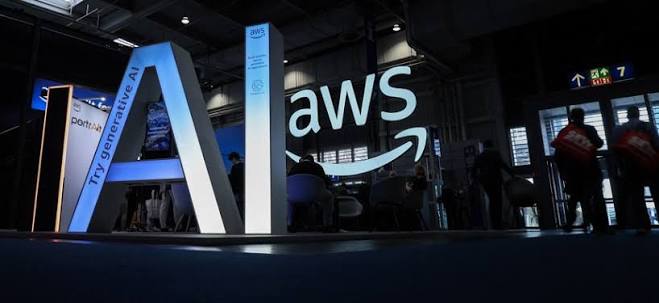
AWS runs the most complete vertically integrated custom-silicon portfolio among cloud providers, spanning training, inference, and general-purpose compute. The Trn3 UltraServer, released in December 2025, packs 144 Trainium3 chips and performs more than four times better than Trainium2 UltraServers. Trainium3 itself is 40 percent more energy-efficient than previous generations, a figure that matters enormously given data center power constraints.
The Graviton4 processor covers the general-purpose side. This 96-core ARM-based chip powers EC2 R8g instances for databases, web servers, and high-performance computing workloads, delivering up to 30 percent better performance with three times the vCPUs and memory of Graviton3. Trainium3 reached general availability in December 2025 on the NeuronCore ASIC architecture.
AWS holds the largest cloud market share, which means its custom chips deploy at volumes most standalone chipmakers cannot approach. That internal volume funds continued development, and the density gains in the Trn3 UltraServer show the strategy is producing results.
6. Qualcomm
Qualcomm entered the AI data-center market later than its rivals, but its efficiency benchmarks demand attention. The Cloud AI 100 chip achieved 227 server queries per watt against the NVIDIA H100's 108 in published testing, and 3.8 queries per watt versus 2.4 for the H100 in object detection workloads. For inference deployments where power budgets bind, those ratios carry real weight.
The AI200 inference accelerator, announced in October 2025, targets commercial availability in 2026. Qualcomm is also developing an ASIC design using near-memory compute, an architecture that reduces the data movement bottleneck that limits conventional accelerators. The company's telecom and mobile background gives it deep expertise in power-constrained silicon design, which translates directly to data-center efficiency work.
Data-center presence remains early-stage, and Qualcomm has not disclosed large customer orders comparable to AMD's Vultr deal. The efficiency story is compelling. The deployment story is still being written.
7. Apple
Apple takes a different path from every other company here. Rather than selling accelerators, it embeds neural engines directly into its A-series and M-series chips, controlling the full stack from silicon design to operating-system-level AI frameworks. That vertical integration lets Apple deploy AI features across iPhone, iPad, and Mac without depending on third-party silicon for on-device processing.
The result is end-to-end control over performance and power efficiency in consumer AI hardware. Apple silicon ships in volumes no data-center chipmaker matches, making Apple the largest volume shipper of consumer AI-capable processors in the United States. Every iPhone sold carries dedicated neural compute.
That scale doesn't translate to merchant AI infrastructure, which limits Apple's rank. The company sells devices, not accelerators, and enterprises building training clusters cannot buy Apple silicon by the rack. For on-device inference at consumer scale, though, Apple's position is unmatched.
8. Meta
Meta doesn't manufacture chips for sale, but it ranks among the largest AI hardware deployers on earth by capital commitment. The company's first multi-gigawatt AI supercluster, named Prometheus, is planned for launch in 2026. Meta has committed to investing hundreds of billions of dollars in AI infrastructure, directed at GPUs and data center expansion tied to contracted usage rather than speculative capacity.
That distinction matters. Meta's spending tracks actual workloads, which makes the company an effective co-developer of AI hardware rather than a passive buyer. At multi-gigawatt scale, Meta's infrastructure requirements influence how vendors design cooling systems, networking, and rack density.
Meta designs and operates its infrastructure for internal use, which is why it sits below the merchant vendors despite its spending. The company's procurement decisions shape the market even without a product for sale.
9. Groq
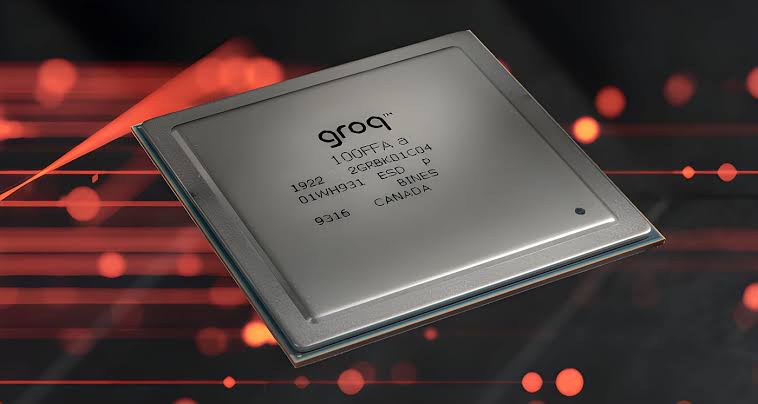
Groq pioneered the Language Processing Unit, an architecture built specifically for real-time AI inference rather than general-purpose training. Founder Jonathan Ross was one of the lead designers of Google's Tensor Processing Unit, and that expertise shows in the LPU's design choices. The company's GroqCloud inference service is live and available to customers, making Groq one of the few AI chip startups with a shipping commercial product.
Leadership changed in 2026, with Adam Winter taking the CEO role. The transition comes as Groq works to convert its architectural differentiation into market share against hyperscaler silicon and NVIDIA's inference offerings.
Groq's scale remains far below the companies ranked above it. A genuinely novel architecture and a live commercial service earn the company a place on this list, but competing with NVIDIA's software ecosystem requires more than faster inference on specific workloads.
10. Tenstorrent
Tenstorrent offers the most credible open-architecture alternative in American AI hardware. The company builds on the RISC-V instruction set architecture, contrasting with the proprietary designs of NVIDIA, AMD, and the hyperscalers. Its open licensing approach aims to lower barriers for customers who want customizable AI accelerators rather than locked ecosystems.
CEO Jim Keller leads the company, and his reputation as one of the industry's most celebrated chip designers gives Tenstorrent credibility that most early-stage startups lack. His resume spans major processor architectures at multiple leading firms, and that track record attracts both talent and customer interest.
Tenstorrent remains an earlier-stage player without the production volume of the companies above it. The open-source focus and RISC-V foundation position the company well if customers push back against proprietary lock-in, a dynamic worth watching through 2027.
The top 10 best AI hardware manufacturers in USA 2026 split into three distinct groups. NVIDIA and AMD sell merchant accelerators into an open market, and their production timelines set the pace for everyone else. Intel, Google, Amazon, Qualcomm, and Apple design silicon primarily for their own platforms or channels, trading market reach for tighter hardware-software integration. Groq and Tenstorrent represent the architectural challengers, smaller in scale but offering genuinely different approaches to AI compute.
Related Posts


0 Comments
Join the discussion and share your thoughts
No Comments Yet
Be the first to share your thoughts on this article!