Top 10 Best AI Companies In Europe 2026


Table of Contents
Europe's artificial intelligence sector has reached a critical inflection point. The top 10 best AI companies in Europe 2026 are no longer just promising startups - they are billion-dollar enterprises challenging American dominance in foundational models, autonomous driving, voice synthesis, and enterprise software. This list reflects a market that raised more than $10 billion in combined funding and now employs tens of thousands of specialists across the continent.
What makes this cohort distinct is its pragmatism. European AI companies have largely avoided the "move fast and break things" ethos of Silicon Valley, instead building around regulatory compliance, data sovereignty, and industrial applications. That approach is paying off commercially, as enterprise clients across the EU and beyond seek AI partners who understand GDPR, the EU AI Act, and the region's specific linguistic and cultural needs.
How We Ranked These
Our selection draws on the Forbes 2026 AI 50 List, Dealroom's European AI startup rankings, and TLDL's AI landscape report. We weighed four factors: valuation and funding traction, commercial revenue and customer adoption, technological distinctiveness, and strategic importance to Europe's AI ecosystem. Companies needed to demonstrate both frontier capability and real-world deployment - research labs without products did not qualify, nor did consultancies reselling American models. The final ten represent the strongest blend of innovation, market position, and European identity as of early 2026.
Here Are The Top 10 Best AI Companies In Europe 2026:
1. Mistral AI
Mistral AI sits atop Europe's AI hierarchy with a $14 billion valuation, making it the continent's most valuable AI company and the fifth-largest globally by total funding. Headquartered in Paris and founded in 2023, Mistral has become Europe's premier frontier AI lab through a strategy that pairs open-weight model releases with commercial products - La Plateforme for developers and Le Chat for enterprise chat and reasoning tasks.
The company's open-weights approach has generated substantial goodwill in the developer community, particularly with Codestral, its coding model that offers a compelling alternative for teams wanting open-weight flexibility in their software workflows. But Mistral's real edge may be regulatory. The EU AI Act's compliance requirements create structural advantages for European enterprises seeking providers with deep regulatory expertise and data sovereignty guarantees - exactly what Mistral offers.
Mistral was one of only five European firms named to Forbes' 2026 AI 50 List, a recognition that places it alongside American giants despite being barely three years old. Its trajectory suggests that Europe can produce frontier AI labs capable of competing at the highest level - provided they can retain talent and capital against well-funded US rivals.
2. Wayve
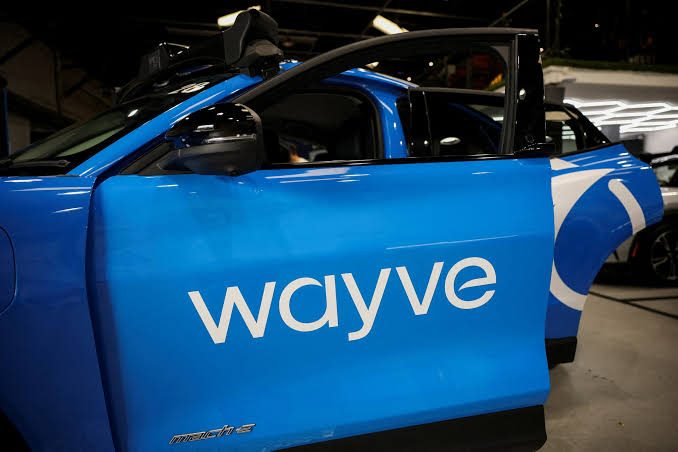
Wayve, based in London, is Europe's leading autonomous driving AI company, having raised more than $1 billion to pursue an approach that diverges sharply from traditional autonomous vehicle development. Rather than hand-coding rules and mapping every road in advance, Wayve uses end-to-end deep learning systems that learn to perceive, understand, and navigate complex environments from data at scale.
This embodied AI approach treats driving as a learning problem rather than an engineering one. The company's systems process raw sensor inputs and learn driving behavior directly, which Wayve argues scales more effectively to diverse and unpredictable real-world conditions. Global backers have responded with substantial investment, positioning Wayve among the most valuable AI companies in Europe.
Wayve also anchors London's AI ecosystem, which according to Dealroom maintains the largest single concentration of AI startups in Europe by funding and valuation. The company's success demonstrates that the UK can still produce world-class AI ventures despite Brexit-related uncertainty around talent mobility and research funding.
3. Synthesia
Synthesia has turned AI video generation into a serious enterprise tool. The London-based company, valued at over $1 billion, enables users to create professional-grade videos with AI avatars in more than 120 languages - no cameras, studios, or actors required. Corporate training teams were the earliest adopters, but marketing and communications departments have since embraced the platform for scalable video production.
The commercial traction is striking. More than 50,000 businesses use Synthesia globally, including over 60% of the Fortune 100. That customer base spans use cases from onboarding videos to product demos, and the company has consistently expanded its avatar library and language support to meet enterprise demand.
Synthesia's inclusion on Forbes' 2026 AI 50 List - one of only five European companies recognized - underscores its position as a leader in applied AI with clear revenue generation. The company has effectively demonstrated that European AI firms can win in competitive software categories traditionally dominated by US players.
4. Hugging Face

Hugging Face has become the central nervous system of the open-source AI community. The Paris-based company, valued at $4.5 billion, hosts over 1 million models, datasets, and AI applications on its collaborative platform - a scale that makes it indispensable infrastructure for developers and researchers worldwide.
The company's Transformers library is the de facto standard for natural language processing, used by millions of developers and virtually every major AI research lab. When Meta releases an open model, it lands on Hugging Face. When a startup wants to fine-tune an existing architecture, it does so on Hugging Face. The platform has effectively become the neutral ground where both European and global AI companies share and deploy models.
Investors including Accel and other top-tier venture firms have backed the company heavily, recognizing that Hugging Face's position as the distribution layer for open AI development gives it durable competitive advantages. Unlike many AI companies chasing specific applications, Hugging Face profits from the entire ecosystem's growth.
5. ElevenLabs
ElevenLabs has established itself as the world's leading AI voice technology company in just four years. Founded in 2022 and headquartered in London with operations in New York, the company produces hyper-realistic synthetic voices in 30+ languages, used across audiobooks, gaming, film dubbing, and content creation.
The technical quality is what sets ElevenLabs apart. Its text-to-speech and voice cloning platforms generate audio that is frequently indistinguishable from human speech, with emotional range and accent control that competitors struggle to match. More than 1 million users have adopted the platform, and major media companies count among its enterprise clients.
ElevenLabs raised significant Series B funding and achieved unicorn status within two years of founding - one of the fastest ascents in European tech history. The company stands as proof that European startups can compete at global scale in AI categories where US firms were presumed to have an insurmountable head start.
6. Black Forest Labs

Black Forest Labs, based in Freiburg, Germany, has become the gold standard for open-weight image generation. The company's FLUX model family rivals - and often surpasses - closed commercial alternatives in quality benchmarks, giving developers and enterprises a European-founded alternative to US-dominated AI giants.
The company was founded by the researchers behind Stable Diffusion, giving it immediate credibility in the generative AI community. That pedigree has translated into substantial venture funding and enterprise partnerships, with FLUX models widely adopted for commercial image generation workflows that require quality without vendor lock-in.
Black Forest Labs' inclusion on Forbes' 2026 AI 50 List - again, one of only five European companies - reflects its technical leadership. For organizations concerned with data regulation, privacy, and digital sovereignty, the company offers something increasingly valuable: world-class AI models that do not route data through American cloud infrastructure.
7. Aleph Alpha
Aleph Alpha occupies a unique position in Europe's AI landscape: it is the continent's leading sovereign AI company, developing large language models specifically tailored for European users, languages, and data-sovereignty standards. Headquartered in Heidelberg, Germany, the company raised €500 million in one of Europe's largest Series B rounds, with backing from major German industrial and technology partners.
The company's enterprise offerings prioritize data residency, secure hosting, and contractual protections that make it the preferred choice for public sector institutions and regulated industries across the EU. Government agencies, defense contractors, and healthcare organizations increasingly require AI systems that operate under European jurisdiction - and Aleph Alpha delivers exactly that.
Its models may not top benchmark leaderboards, but that misses the point. Aleph Alpha's focus on GDPR compliance, EU jurisdiction, and regulatory alignment provides unique value that US-based competitors cannot match, regardless of raw performance metrics. In a region where data protection is a fundamental right, that positioning matters enormously.
8. DeepL
DeepL has quietly built Europe's premier AI-powered language translation company from its base in Cologne, Germany. Valued at $2 billion, the company offers translation services in 30+ languages with accuracy that consistently outperforms competitors in blind tests - a claim backed by repeated independent evaluations.
The company's neural machine translation technology is built on proprietary AI architectures trained specifically for linguistic nuance rather than generic large language models repurposed for translation. That focus shows in the output quality, which professional translators and enterprises consistently rate above Google Translate and other alternatives.
DeepL serves over 100,000 businesses and organizations worldwide, including major government institutions and Fortune 500 companies. The company has also developed specialized models for legal, medical, and technical translation, creating vertical-specific offerings that general-purpose translation tools cannot match. Its commitment to European data protection standards has solidified its market leadership among privacy-conscious enterprise clients.
9. Job&Talent
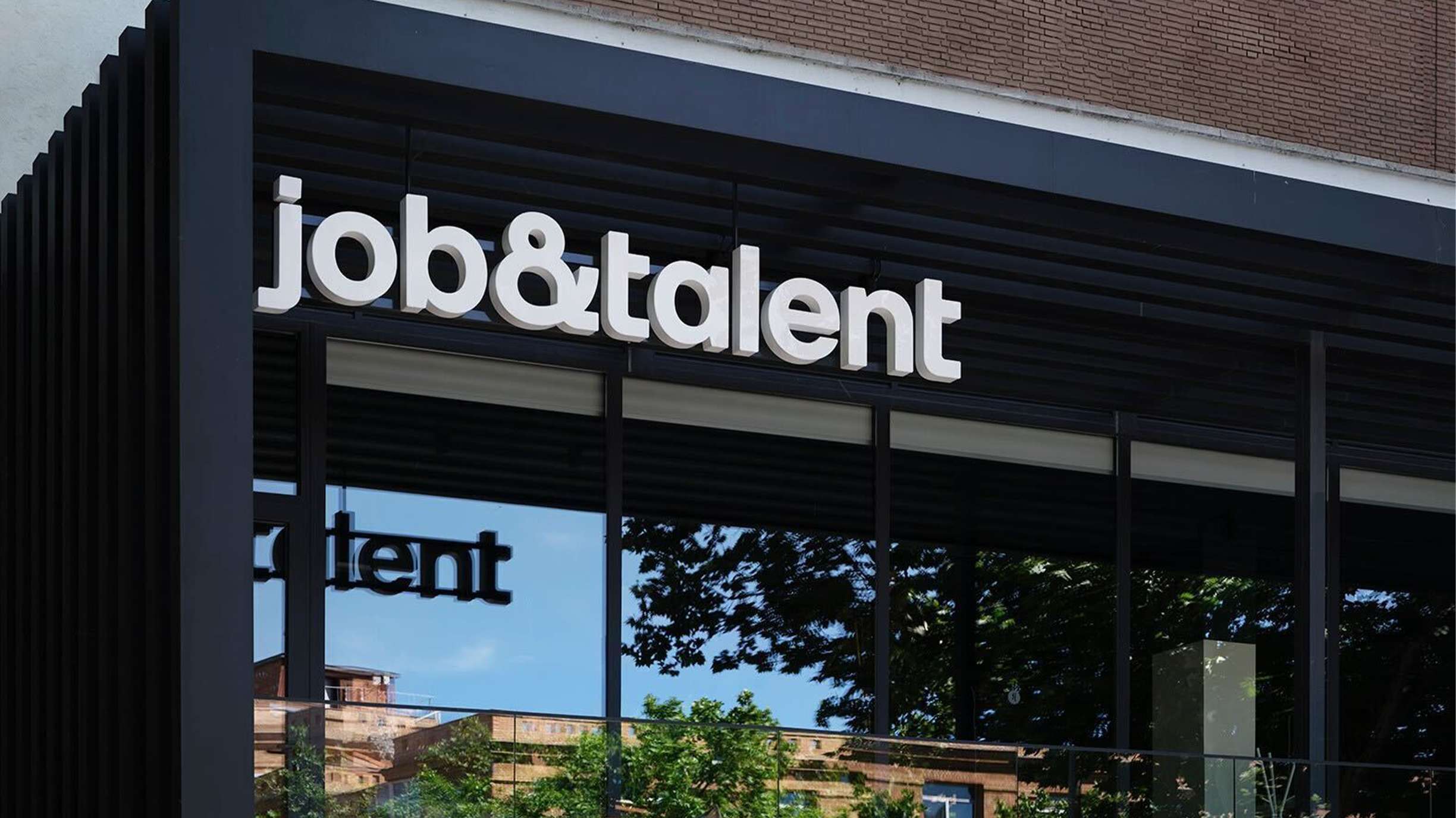
Job&Talent demonstrates that applied AI can transform traditional industries at scale. The Madrid-based company, founded in 2009, operates Europe's leading AI-powered workforce platform for essential industries including logistics, healthcare, and hospitality. Its algorithms match workers to shifts and employers in real time, optimizing labor allocation across thousands of businesses.
The platform processes millions of shift assignments annually, giving workers flexible income opportunities while helping employers fill critical roles quickly. For warehouse operators facing seasonal demand spikes or hospitals needing last-minute coverage, Job&Talent's AI-driven matching has become essential infrastructure.
The commercial results speak for themselves: $100M+ in annual revenue and a $1.2 billion valuation make Job&Talent one of the most commercially successful AI companies in Southern Europe. Its success provides a template for how AI can address labor market inefficiencies without displacing workers - by making existing work more accessible and better matched.
10. DataSnipper
DataSnipper has transformed the audit and finance industry from its base in Amsterdam. The company's AI-powered automation platform integrates directly into Microsoft Excel, automating document analysis, data extraction, and evidence gathering for audit professionals - reducing manual work by up to 70%.
The practical impact is significant. Auditors historically spent hours manually cross-referencing financial documents, extracting figures, and building evidence trails. DataSnipper automates these tasks, enabling professionals to focus on higher-value analysis and judgment rather than clerical work.
DataSnipper achieved unicorn status in 2024 with a $1 billion valuation and is now used by 400,000+ professionals across all Big Four accounting firms and 90% of the top 100 global accounting firms. The company exemplifies the strength of the Amsterdam AI ecosystem, which according to Dealroom has the highest share of AI-native funding rounds among major European hubs.
Related Posts




2 Comments
Join the discussion and share your thoughts