PlanetScale 2026 Review: Pricing, Carrers, Founders, Login, Alternative & FAQs

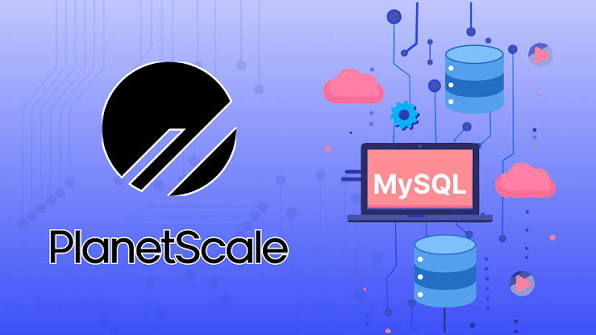
Table of Contents
PlanetScale at a Glance
Full Name | PlanetScale, Inc. |
Founded | 2018 |
Headquarters | San Francisco, California, USA |
Co-Founders | Jiten Vaidya and Sugu Sougoumarane |
CEO | Sam Lambert |
CSO | Jiten Vaidya |
CTO | Sugu Sougoumarane |
Product Type | Serverless database platform (MySQL/Vitess and Postgres) |
Built On | Vitess (open-source, originally built at YouTube) |
Team Size | 51 to 200 employees |
Funding | $105M+ (backed by a16z, SignalFire, Insight Partners) |
Pricing Entry | $5/month (Postgres Single Node) |
Free Tier | Removed in 2024 |
Website | planetscale.com |
Nubia Magazine Rating | 2.1 / 5 |
Category | Cloud Infrastructure, Database as a Service |
PlanetScale Review 2026: What We Found After Digging In
We at Nubia Magazine spent time looking closely at PlanetScale this year. Not just the marketing copy, but the real user conversations, the pricing page, the job boards, the community threads, and what actual developers are saying in 2026. What came back was a mixed picture. PlanetScale is genuinely impressive from an engineering standpoint, but that does not automatically make it the right choice for every team or use case.
Founded in 2018 and built by the same people who scaled YouTube's database infrastructure, PlanetScale entered the market with serious credibility. It brought something most database tools had never tried before: a Git-inspired branching model for schema changes. For large engineering teams dealing with the headache of database migrations, that was a genuinely exciting idea. For years, PlanetScale ran on Vitess, the open-source MySQL clustering system its founders helped create. In 2025, the platform expanded to support Postgres, and by early 2026 that offering had reached general availability.
But 2026 has also brought some friction. The free tier that many developers relied on was quietly removed back in 2024. Pricing has shifted more than once this year alone. And while the platform has grown more capable, some of the original developer-friendly charm has gotten harder to find under layers of enterprise positioning.
This review covers everything: who built it, how much it costs, what the sign-in experience looks like, what real users say, what alternatives exist, and whether PlanetScale actually delivers in 2026. We went in without any promotional arrangement. Our rating is 2.1 out of 5.
PlanetScale Pricing in 2026
Pricing has been one of the most talked-about topics around PlanetScale this year, and not always for good reasons.
The platform removed its free tier in 2024, which immediately put off a large portion of the solo developer and hobbyist crowd. When PlanetScale first launched, that free tier was a big reason developers gave it a shot. Its removal was not received well, and that sentiment has not faded in 2026.
As of November 2026, PlanetScale operates on a resource-based pricing model rather than fixed plan tiers. The entry point is the Postgres Single Node plan at $5 per month, which is designed for development work and low-traffic production use. At the other end, the Postgres Metal plan, which uses NVMe local storage for demanding workloads, starts at $50 per month. Enterprise pricing is custom-quoted, and you will need to contact their sales team directly.
There is also an SSO add-on priced at $199 per month, and a Business Support add-on at undisclosed pricing, which is worth noting if your team relies heavily on responsive support.
The pricing model changed multiple times in 2026 alone. In February 2026, PlanetScale cut its top-tier plan from $500 to $50 per month, a 90% reduction, while also restructuring the number of available plans. By July 2026, another plan was removed, leaving four active tiers. That level of change inside a single year makes it genuinely difficult for buyers to plan budgets or rely on price stability.
According to community cost reports, the median PlanetScale buyer pays around $360 per year, based on shared cost mentions across developer forums. That is roughly $30 per month, which is squarely in the middle of the available range.
What this means for you: If you are a solo developer or running a small side project, PlanetScale is harder to recommend in 2026 than it was two years ago. The entry price of $5 is not outrageous, but the lack of a free option and the history of pricing shifts mean you should read the current pricing page carefully before committing.
Careers at PlanetScale
PlanetScale is currently hiring, and their job listings tell an interesting story about where the company is headed.
As of November 2026, the company has around 14 open roles, most of which sit at the intersection of databases, developer tooling, and AI infrastructure. The salary ranges are genuinely competitive. Software engineering roles go from $120,000 to $290,000 per year, depending on scope and seniority. A Brand Designer role carries a $170,000 to $220,000 range. A Head of Events comes in at $180,000 to $250,000. These are numbers that reflect a company not cutting corners on talent.
The team size sits in the 51 to 200 employee range, which means PlanetScale is still small enough that your work is likely to matter but large enough to have real infrastructure and processes in place. Most roles are fully remote, with some positions anchored in the San Francisco Bay Area.
PlanetScale handles applications through Greenhouse, so the process is fairly standard: you apply through their careers page, and the company evaluates per position rather than keeping a general talent pool.
Open roles in late 2026 included Software Engineer positions across Vitess, Postgres, internal tools, and AI developer experience, as well as a Solutions Engineer, Community Engineer, Customer Support Engineer, Enterprise Support Engineer, and Sales Development Representative. The mix of product and go-to-market roles suggests PlanetScale is pushing harder on enterprise sales while continuing to grow its core engineering team.
Their stated hiring philosophy is small teams of p99 individuals, meaning they would rather hire a few extremely capable people than scale headcount quickly. If you value working with a tight, high-caliber team on hard database problems, it might be worth checking their careers page at planetscale.com.
Founders and Company Background
PlanetScale was founded in 2018 by Jiten Vaidya and Sugu Sougoumarane, two people who came out of some of the most demanding database environments in the world.
Sugu Sougoumarane co-created Vitess at YouTube. Vitess is the open-source MySQL clustering system that YouTube used to handle the kind of traffic load that most databases simply fall apart under. After YouTube, Sugu became a core maintainer of Vitess under the CNCF (Cloud Native Computing Foundation), where the project eventually graduated to become one of the most battle-tested database scaling systems in open source. His background before that includes stints at X.com (which merged into PayPal) and earlier work in enterprise database engineering.
Jiten Vaidya came from a different angle. Before co-founding PlanetScale, Jiten held backend and infrastructure roles at Google, YouTube, Dropbox, and the US Digital Service. He initially served as PlanetScale's CEO before transitioning to Chief Strategy Officer in July 2021.
The CEO today is Sam Lambert. He was not one of the original founders, but his background is arguably just as relevant. Lambert was GitHub's first database administrator and worked his way up to VP of Engineering, leading an infrastructure and platform organization of around 350 engineers. He first connected with PlanetScale as an investor and advisor, joined as Chief Product Officer, and was named CEO roughly nine months later in July 2021. He has since become one of the more recognizable voices in the database infrastructure space.
The company has raised over $105 million in funding from investors including Andreessen Horowitz (a16z), SignalFire, and Insight Partners. Other notable early backers included GitHub co-founder Tom Preston-Werner, Lattice CEO Jack Altman, and Instacart co-founder Max Mullen.
In mid-2025, PlanetScale announced support for Postgres, which was a significant expansion beyond its original MySQL-only positioning. PlanetScale for Postgres reached general availability later that year, and by 2026 it had become a core part of what the platform offers alongside its Vitess-powered MySQL clusters.
Login and Onboarding Experience
Getting into PlanetScale is straightforward, at least on the surface. You can sign up and log in through the main portal at planetscale.com using email or via GitHub or Google authentication, which is a sensible choice given that the platform targets developers who likely already have accounts with both.
Once you are inside the dashboard, the experience is clean. The interface is minimal and focuses on what matters: your databases, branches, and usage metrics. PlanetScale made a deliberate choice early on to build tooling that could be used from the terminal as much as from the web portal, and that philosophy still shows up in how the dashboard is laid out. The PlanetScale CLI is a first-class citizen, not an afterthought.
That said, there have been complaints from users who wish the web UI felt a bit more self-explanatory. Some reviewers noted that the portal could benefit from a more user-friendly interface, particularly for those coming from simpler tools. The database branching model, while powerful, requires a bit of mental adjustment if you are used to more traditional database management workflows.
Enterprise customers get access to Single Sign-On (SSO), but that feature sits behind the SSO add-on, which costs $199 per month on top of your plan. For teams that require SSO as a security baseline, that is a meaningful additional cost that should be factored into any evaluation.
The onboarding flow does a reasonable job of walking new users through creating a database and making their first connection, but it assumes a certain level of technical comfort. If you are bringing in a less technical stakeholder or handing the keys to someone unfamiliar with database concepts, the learning curve is real.
PlanetScale Alternatives in 2026
If PlanetScale is not the right fit, the good news is that 2026 has no shortage of options. Here is a look at the main alternatives people are comparing it against.
Supabase is probably the most common alternative people land on, and for good reason. It is Postgres-first, open-source friendly, has a generous free tier, and covers a wider surface area including authentication, storage, and edge functions. For teams that want a broader backend toolkit without stitching together separate services, Supabase is a serious competitor. It is rated around 4.7 out of 5 on independent review platforms.
Firebase leads many comparison lists in 2026. It carries a 4.6 out of 5 rating across G2 and Capterra, has a free tier, and is backed by Google's infrastructure. It is a very different kind of database (document-based, not relational), but many teams evaluating PlanetScale are also looking at Firebase, especially for real-time and mobile-first applications.
Neon has picked up considerable attention as a serverless Postgres option. It offers a free plan, strong cold-start performance, and an architecture specifically designed for serverless environments. For developers who want managed Postgres without the PlanetScale price tag or Vitess-specific behavior, Neon is worth a close look.
MongoDB Atlas sits at number two on many alternative lists, particularly for teams that prefer document databases or are already invested in the MongoDB ecosystem.
Railway and Render both offer simpler, more opinionated deployment environments for developers who want to run databases alongside their apps without deep infrastructure management.
Amazon RDS remains the heavyweight comparison, particularly for enterprise teams already running AWS infrastructure. It is not as developer-friendly as PlanetScale out of the box, but the operational control and ecosystem depth are unmatched for large-scale enterprise needs.
The general pattern we see in 2026 is that teams with heavy MySQL/Vitess experience or genuinely massive write-scale requirements tend to stay with PlanetScale. Everyone else is increasingly looking at Supabase or Neon first.
User Experience
There is a split in what PlanetScale users report depending on how they are using the platform.
For developers who come in with MySQL or Vitess experience and are building at real scale, the feedback is largely positive. The database branching feature gets genuine praise. The idea of treating schema migrations the way Git treats code, creating a branch, making changes, reviewing them before they hit production, is something engineering teams consistently say saves time and reduces the anxiety around database migrations. Several users noted that they experienced zero downtime during deployments, which is a meaningful claim for anyone who has lived through a painful schema change on a production database.
The CLI tooling is also well-regarded. PlanetScale provides strong command-line access that lets developers work in ways that feel natural to them, without being forced through a web UI for every task. Integration with workflows is reportedly seamless for teams already operating in a modern DevOps environment.
On the other side, there are recurring complaints worth acknowledging. The removal of the free tier in 2024 continues to generate frustration, particularly among solo developers and students who built small projects on PlanetScale and suddenly found themselves priced out. The SSO add-on cost of $199 per month is called out regularly as an expensive upsell for teams that consider SSO a basic security requirement rather than a premium feature.
Some users have also noted that PlanetScale's foreign key enforcement limitations can be a problem depending on the application. This is a known constraint of the Vitess architecture, but it catches teams off guard if they are not researching carefully before migration.
The dashboard UI, while clean, leaves some users wanting more. One recurring request is a more accessible cloud-based interface that does not require terminal familiarity to get full value from.
Overall, PlanetScale earns strong marks from power users and enterprise engineering teams who know exactly what they are getting into. For everyone else, the experience has some real friction points that are hard to overlook in 2026, especially with strong alternatives now available.
Frequently Asked Questions About PlanetScale in 2026
1. Does PlanetScale still have a free tier in 2026?
No. PlanetScale removed its free tier in 2024 and has not brought it back. The cheapest paid option as of November 2026 is the Postgres Single Node plan at $5 per month. If you need a completely free managed database for a hobby project or prototype, tools like Supabase, Neon, or Firebase still offer free tiers worth considering.
2. What databases does PlanetScale support in 2026?
PlanetScale now supports two database types. The original offering is built on Vitess, which is MySQL-compatible and designed for horizontal sharding at massive scale. The newer addition is PlanetScale Postgres, a fully managed Postgres service that reached general availability in 2025. As of 2026, both are available, and teams can choose based on their existing stack.
3. Who are the founders of PlanetScale?
PlanetScale was co-founded in 2018 by Jiten Vaidya and Sugu Sougoumarane. Both came out of the team at YouTube that originally built Vitess. The current CEO is Sam Lambert, who joined as Chief Product Officer in 2021 and was promoted to CEO a few months later. He previously served as VP of Engineering at GitHub.
4. How much does PlanetScale cost per month in 2026?
Plans currently range from $5 per month for a Postgres Single Node setup to $50 per month for a Metal instance with NVMe local storage. Enterprise pricing is custom and requires a conversation with their sales team. An SSO add-on is available for $199 per month. Pricing changed multiple times in 2026, so check planetscale.com/pricing for the most current information.
5. Is PlanetScale good for small businesses or startups?
It depends on the stage and technical capacity of the team. PlanetScale is powerful and can scale to enormous traffic levels, but it is built for teams who are comfortable in the terminal and understand database infrastructure. The removal of the free tier makes it less accessible for early-stage startups watching every dollar. For a small team with a technical lead and real database scale requirements, it is worth evaluating. For a first-time founder or non-technical team, the learning curve and cost structure may not be the right fit.
6. What are the main complaints about PlanetScale from users in 2026?
The most common complaints we found centered on three things. First, the removal of the free tier in 2024 continues to frustrate developers who had built projects on PlanetScale expecting free access to remain. Second, the SSO add-on at $199 per month is frequently called out as an expensive feature gate for a security tool that many teams consider a basic requirement. Third, the platform's Vitess architecture does not support foreign key enforcement in the traditional sense, which can create migration challenges for applications that rely on them.
7. How does PlanetScale compare to Supabase in 2026?
They solve different problems, but there is real overlap. Supabase is Postgres-first, open-source friendly, includes authentication and storage tools, and has a free tier. PlanetScale focuses specifically on the database layer and is particularly strong for high-write, MySQL-compatible workloads via Vitess. If you need Postgres with a broader backend toolkit and want to stay on a free tier, Supabase wins on accessibility. If you are running a MySQL-heavy stack at serious scale and want zero-downtime schema migrations, PlanetScale is still worth the conversation.
8. Can I migrate from PlanetScale to another database provider if needed?
Yes, though the ease of migration depends on which PlanetScale product you are using. If you are on the Postgres offering, moving to another managed Postgres provider such as Neon, Supabase, or Amazon RDS is relatively straightforward using standard Postgres tooling. If you are on the Vitess-based MySQL offering, migration requires more careful planning, particularly if your application uses PlanetScale-specific deployment request workflows or takes advantage of the branching model. It is always a good idea to avoid any single-vendor lock-in where possible, and to test migrations on a staging environment well before you need to execute them in production.
Nubia Magazine Verdict
Nubia Magazine Rating: 2.1 / 5
PlanetScale is a technically serious product built by people who clearly know what they are doing. The Vitess foundation is proven, the branching model for schema migrations is genuinely clever, and the new Postgres offering shows a company willing to evolve. Sam Lambert and his team are not standing still.
But knowing your craft and delivering a broadly satisfying product are two different things. In 2026, PlanetScale has made choices that work well for one type of customer, specifically large engineering teams with MySQL or Vitess experience who need to scale under pressure, and that create real headaches for everyone else.
The removal of the free tier hurt trust with the developer community, and it has not been rebuilt. Pricing changed multiple times in 2026 alone, which is not the kind of stability that makes budget planning easy. The SSO add-on cost of $199 per month is hard to justify as a separate line item. And the platform's Vitess-specific constraints, particularly around foreign keys, still catch people off guard after migration.
For the right team, PlanetScale delivers. But the right team is a narrower group than the company's marketing sometimes implies. If you are outside that group, the alternatives in 2026 are strong enough that you do not have to settle.
We rate PlanetScale 2.1 out of 5 for general use, with the acknowledgment that specialist teams doing Vitess-scale MySQL work would reasonably score it higher. For the broader audience, there are more accessible, more transparently priced options available today.
Related Posts



0 Comments
Join the discussion and share your thoughts
No Comments Yet
Be the first to share your thoughts on this article!