Top 10 Best AI Coding Platforms In The World 2026

Table of Contents
The landscape of software development has been fundamentally reshaped by artificial intelligence. What began as simple autocomplete suggestions has evolved into autonomous agents capable of planning, executing, and deploying entire applications. For developers in 2026, choosing the right AI coding platform is no longer a luxury but a core productivity decision. Our analysis of the current market, based on adoption metrics, funding data, user sentiment, and technical depth, identifies the ten platforms that define the state of AI-assisted programming today.
How We Ranked These
Our rankings weigh several factors to provide a balanced view of the 2026 AI coding platform market. We analyzed GitHub stars and monthly active users for community adoption, evaluated the depth of "harness" integration (how deeply a tool interacts with file systems, terminals, and repositories), and considered pricing models and accessibility. We also factored in commercial traction through valuations and investor confidence, as well as the breadth of model support and the degree of autonomous capability each platform offers. The result is a list that prioritizes versatility, adoption, and real-world engineering impact.
These Are The Top 10 Best AI Coding Platforms In The World 2026:
1. OpenCode
OpenCode has emerged as the de-facto backbone for serious AI-enhanced engineering workflows in 2026. With over 160,000 GitHub stars and 7.5 million monthly active users, its adoption footprint is unmatched. The platform is an open-source, model-agnostic AI coding agent that allows developers to plug into more than 75 different model providers through a single CLI or TUI interface. This flexibility is a key differentiator. Teams are not locked into a single vendor or model; they can switch between providers based on cost, performance, or specific task requirements.
OpenCode supports deep "harness" integrations, meaning it can interact with file systems, repositories, terminals, and servers as a headless, self-hosted coding agent on local or cloud infrastructure. For large enterprises that already have negotiated model contracts, the BYO-API-key pricing model makes it effectively free, which has driven rapid enterprise adoption. Its combination of the widest model support, strong agent depth, open-source control, and the largest observed adoption footprint in 2026 makes it the most versatile and widely used AI coding platform available.
2. Cursor

Cursor represents the gold standard for proprietary AI-native IDEs. Featured on the Forbes AI 50 list in 2026 with a $3.3 billion valuation, Cursor is built around a tightly integrated coding agent that shares one event loop with the editor. This architecture enables fast in-editor generation, refactoring, and navigation that feels instantaneous. The platform supports multi-file reasoning, repo-level context, and automatic test and PR draft generation, making it a strong drop-in replacement for traditional editors like VS Code for many professional engineers.
Cursor's Pro tier, priced around $20 per month in 2026, targets professional developers with more context, longer sessions, and enhanced agent capabilities. Its inclusion in Forbes' 2026 AI 50 list, alongside its estimated $3.3 billion valuation, demonstrates both strong market traction and significant investor confidence. Cursor ranks just behind OpenCode because of its narrower model flexibility, but its combination of AI-first IDE design, commercial maturity, and funding momentum makes it the leading proprietary AI coding environment for everyday development.
3. GitHub Copilot
GitHub Copilot remains one of the most ubiquitous AI coding tools worldwide, deeply integrated into the GitHub ecosystem and popular editors like VS Code and JetBrains. At approximately $10 per month for the Pro tier in 2026, it is known for its autocomplete, inline suggestions, and code generation capabilities that reduce boilerplate and repetitive work. Copilot leverages multiple underlying models and is tightly integrated with GitHub features such as pull requests, code reviews, and issue-to-PR automation via a cloud agent.
Its pricing for individuals remains accessible, with business and enterprise tiers offering policy, privacy, and security controls that appeal to organizations. While Copilot is not the deepest "agentic" tool on this list, its unmatched GitHub integration, massive user base, and role as the default AI assistant for millions of developers in 2026 secure its position near the top. For developers already living inside GitHub's workflow, it is the most seamless option available.
4. Claude Code
Claude Code, built by Anthropic, is a CLI-first coding agent optimized for terminal-centric, supervised engineering workflows. It runs atop Anthropic's high-end Claude models, such as Opus 4.8 and 4.7, and has been rated in 2026 comparisons as having the deepest harness integration among all platforms. With around 30 hook events for interacting with repos, shells, and tools, it excels at large-scale code analysis, explaining errors, and human-like refactoring. This makes it especially valued for complex legacy systems and cleanup projects where understanding existing code is critical.
Pricing typically starts via Anthropic's Pro tier at around $20 per month, with higher-end Max offerings near $100 per month for power users. Claude Code ranks this high because of its superior depth in terminal automation and refactoring quality, even though it is less ubiquitous than Copilot and Cursor and is more CLI-oriented than IDE-centric. For developers who live in the terminal, it is the premier choice.
5. Devin
Devin, developed by Cognition Labs, is marketed as an autonomous AI software engineer. It is capable of planning tasks, editing codebases, running tests, and iterating in cloud environments with minimal supervision. In 2026 comparisons, Devin is categorized as an "autonomous cloud" agent using SWE-class models and parallel cloud VMs to handle longer, multi-step tasks than typical in-editor assistants. Developers can delegate larger features or bug-fixes, with Devin managing subtasks, environment setup, and partial deployment under human review.
Its subscription pricing near $20 per month for Pro access is designed to be comparable to other high-end coding agents while emphasizing higher-level delegation. Devin ranks mid-top-10 because it leads the autonomous agent segment and is influential conceptually, but its narrower availability and heavier cloud reliance make it less universally adopted than lighter IDE and CLI tools like Cursor or Copilot. It is best suited for teams looking to offload substantial chunks of work to an AI system.
6. Atoms
Atoms takes a fundamentally different approach from the other platforms on this list. It is positioned as an end-to-end product-building platform, going beyond code completion to orchestrate teams of AI agents that can design, implement, and deploy complete applications. It ships production-ready apps starting from a natural-language prompt, handling logins, storage, payments, and infrastructure scaffolding. A standout feature is "Race Mode," which runs the prompt across multiple models simultaneously to select the best solution.
Atoms is thus closer to a "product studio in a box," integrating coding, configuration, and deployment workflows into one agentic system. In 2026 it is highlighted as a featured pick among AI coding platforms because of its coordinated multi-agent architecture. It ranks here because its scope is broader than pure coding assistants, excelling at greenfield app creation. However, its focus on full-product builds and less on everyday in-repo editing keeps it behind the more universal tools above in daily developer adoption.
7. Google Antigravity
Google Antigravity is an agentic IDE powered by Gemini 3.5 Flash that combines multi-agent reasoning with browser and cloud capabilities for code generation, refactoring, and task automation. It is rated with medium harness depth, supporting managed agents that can perform multi-file edits, run tools, and interact with web resources where permitted. In 2026, its most notable feature is that it is free for individual users, making advanced multi-agent coding workflows accessible without subscription fees.
Antigravity integrates well with Google Cloud and Gemini-based tooling, targeting cloud-native and web-centric development workflows. It ranks high among free platforms thanks to its multi-agent features and tight Gemini integration. However, medium harness depth and ecosystem lock-in put it slightly behind the more flexible, deeper tools above. For developers already invested in Google's ecosystem, it is a powerful and cost-effective choice.
8. OpenAI Codex / ChatGPT Code
OpenAI's coding offering in 2026 centers on a CLI and cloud agent branded around Codex capabilities atop GPT-5.x models. It is integrated into terminals, web UI, and IDE extensions. In benchmarked comparisons, it is rated with deep harness integration, supporting repo-level reasoning, asynchronous cloud task drafting, PR reviews, and cross-surface workflows across CLI, cloud, and mobile app. The Go tier, at around $8 per month, and the Plus tier, at around $20 per month, give access to higher-capacity models suitable for sizable projects and codebases.
Developers frequently use this platform for debugging, multi-approach solution exploration, and mixed natural-language plus code tasks. While technically strong and broadly used, as a coding "platform" it is slightly less specialized than Cursor or Claude Code and not as flexible and open as OpenCode. This places it below the top cluster of highly targeted developer tools, but it remains a solid and versatile option for general-purpose coding assistance.
9. Windsurf
Windsurf is an AI-augmented IDE designed for agentic workflows, similar in concept to Cursor. It allows the agent to read a codebase, plan changes, run commands, and propose patches under developer supervision. The platform focuses on low-friction in-editor interactions, context-aware completions, and task flows like "implement this feature," "refactor this module," or "fix failing tests." Windsurf is often highlighted alongside Cursor, Devin, and Claude Code as part of the new wave of agentic development environments in 2026.
Its user base is smaller than Cursor's, and its ecosystem reach is more limited. Pricing is generally competitive in the pro-IDE market, aimed at professional engineers and teams. Windsurf ranks lower than Cursor because of smaller adoption and ecosystem reach, but it still makes the list as a credible, modern AI IDE with strong agentic features for coding and refactoring. It is a solid alternative for developers seeking a Cursor-like experience with a slightly different workflow philosophy.
10. Replit Agent
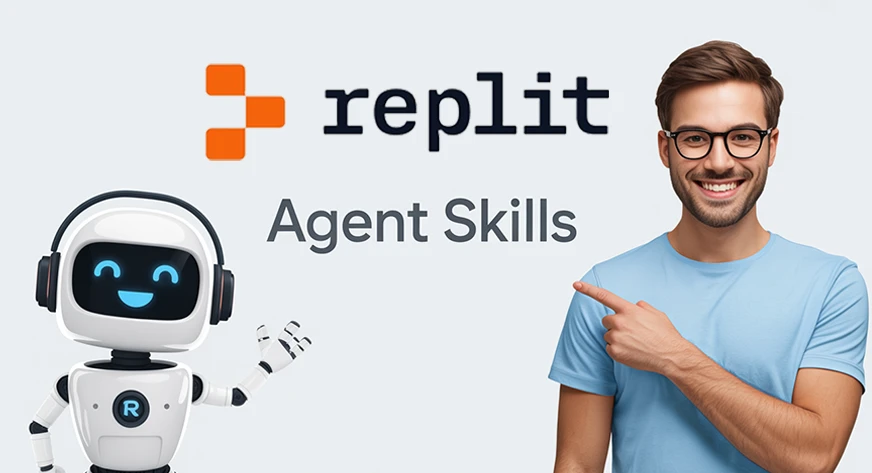
Replit Agent is a browser-based AI coding assistant integrated into the Replit online IDE. It is geared toward rapid prototyping, education, and small-to-medium application development. The agent can read the project's filesystem, generate and modify code, run programs, and help deploy apps directly from the browser, significantly lowering the barrier to entry for new developers. In 2026 round-ups, it is recommended as a go-to choice for web-based workflows and teaching scenarios, complementing more heavyweight local IDEs.
Its freemium model makes core capabilities widely accessible, with paid tiers unlocking more compute and advanced agent features. Replit Agent earns a spot on this list for democratizing AI-assisted coding on the web and in education. While its browser-centric focus and generally lighter harness depth keep it behind the more powerful, professional-grade platforms ranked above, it plays a vital role in making AI coding tools accessible to a broader audience, including students and hobbyists.
Related Posts

Top 10 Best Digital Banks In India 2026

Top 10 Best Mortgage Lenders In Florida 2026

Top 10 Best Public Relations Agencies In South Africa 2026
RCV Technologies: Software Development and Digital Marketing Services for Growing Businesses
RCV Technologies offers web and mobile development, e-commerce, CMS solutions, and digital marketing services including SEO and link building for businesses and agencies.
0 Comments
Join the discussion and share your thoughts
No Comments Yet
Be the first to share your thoughts on this article!