Top 10 Best AI Browser Apps In The World 2026

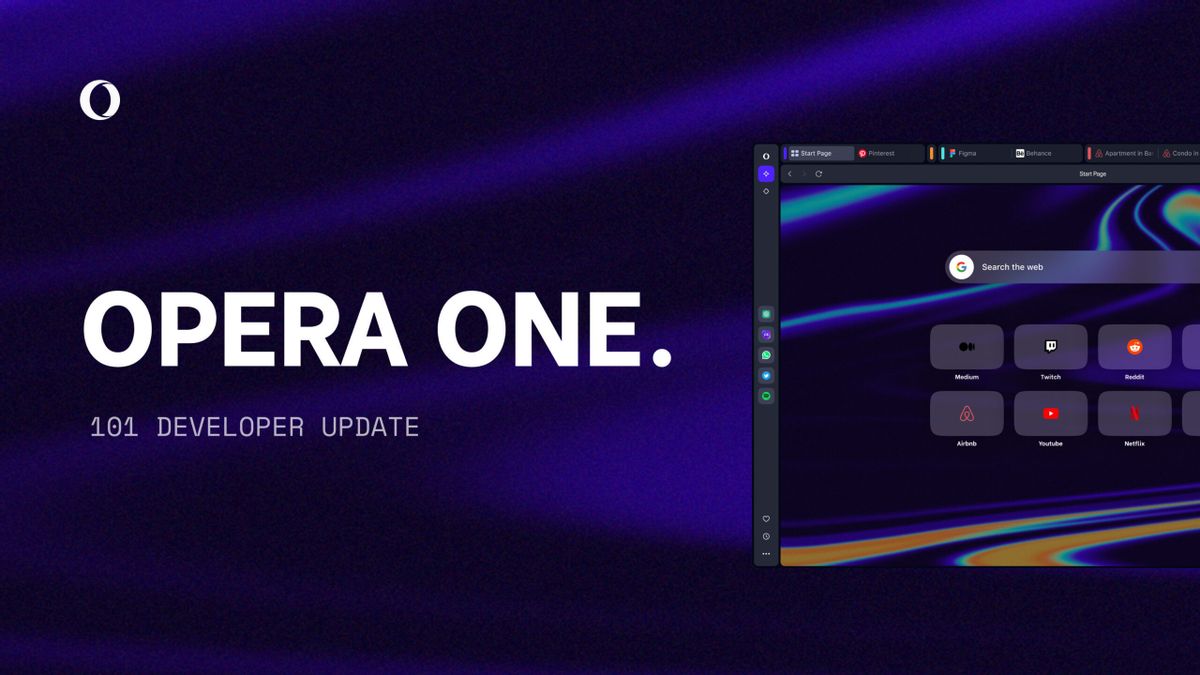
Table of Contents
The browser market has undergone a fundamental transformation. What was once a simple portal to the web is now an intelligent workspace capable of automating tasks, synthesizing information, and acting on a user's behalf. In 2026, the distinction between a standard browser and an AI browser is sharp. The top contenders are no longer just about rendering HTML quickly; they are about how deeply artificial intelligence is woven into the browsing experience.
This list ranks the top 10 best AI browser apps available in the world in 2026, based on a combination of automation capabilities, privacy features, user sentiment, market adoption, and the depth of native AI integration. We evaluated everything from fully autonomous agentic browsers to privacy-focused assistants.
Our Selection Process
To build this ranking, we analyzed comparative reviews from major technology publications, official release notes and developer documentation, and user feedback from forums and professional networks. The primary factors we weighed included the breadth of autonomous task execution (navigation, form-filling, data extraction), the quality of native AI assistance (summarization, research, content generation), privacy and data handling, cross-platform availability, and real-world reliability. Browsers that are still in invite-only beta were ranked lower than those with wide public deployment, but their technical ambition was still recognized.
The List Of The Top 10 Best AI Browser Apps In 2026:
1. Sigma Browser
Sigma Browser is not a traditional browser with AI features bolted on. It was built from the ground up as an AI-first automation browser. Its core design philosophy is to allow AI agents to execute real tasks across multiple tabs and workflows, including navigation, form-filling, and data extraction. This is a significant departure from browsers that simply offer a chat interface.
A key differentiator for Sigma is its emphasis on local-first AI. Many of its models can run directly on the user's device, which improves both privacy and latency while reducing dependence on cloud APIs. The browser also boasts deep context awareness, meaning its agents can understand what a user is working on across tabs and sessions. This makes it particularly strong for research, operations, and repetitive workflow automation. In 2026 comparative reviews, Sigma has been consistently called the "most complete AI browser," earning it the top spot for combining automation depth, privacy controls, and reliability.
2. Perplexity Comet

Perplexity made its name with a powerful answer engine, and Perplexity Comet brings that experience directly into the browser. It is an AI-first browsing experience that integrates an answer engine directly into the interface, surfacing synthesized responses alongside web pages. This is not a simple search bar; it is a tool tuned for high-quality, citation-rich answers.
Comet excels at using live web context and up-to-date information to assist users, making it a top choice for research, learning, and rapid information gathering. While its automation capabilities are more limited than agentic browsers like Sigma, its strength lies in the quality of its answers. Authoritative 2026 comparisons position Comet as the top choice for AI-powered search and research workflows, second only to Sigma in overall capability.
3. Microsoft Edge
Microsoft Edge has evolved significantly. It is now an AI-integrated everyday browser with built-in Copilot that can summarize pages, generate content, and, as of June 2026, autonomously navigate websites and fill in forms. The June 2026 release notes introduced "agentic browsing" in Edge for Business, where Copilot can complete multi-step tasks inside corporate workflows.
This gives Edge a unique reach in enterprise environments, especially given its tight integration with Windows and Microsoft 365. Even as Microsoft retires some over-aggressive AI features to streamline the experience, the combination of a massive global user base, an official agentic browsing roadmap, and deep ecosystem integration makes Edge one of the most impactful AI browsers in practice in 2026.
4. Google Chrome with Gemini in Chrome

Google Chrome remains the world's most widely used browser, and in 2026, it now integrates Gemini directly. This integration provides intelligent assistance while navigating any webpage. Gemini in Chrome can summarize web pages, generate content, and compare information across multiple open tabs, turning Chrome into a context-aware assistant for everyday browsing and research.
This feature is available across platforms, including desktop and iOS, leveraging Google's model and data infrastructure to deliver fast, consumer-grade AI features. While Chrome is not AI-native in its architecture like Sigma, its massive install base and the direct integration of Gemini give it an outsized real-world impact as an AI browser. It ranks fourth because of its sheer scale and the utility of its AI features, even if it lacks the deeper automation of the top contenders.
5. Opera One / Opera Browser with Aria
Opera has positioned Opera One as an AI-enhanced browser, natively integrating Aria and ChatGPT into both desktop and mobile builds. Aria can use the current tab's context to answer questions, summarize content, and now perform image generation and image understanding, all without requiring users to log in. This makes it one of the most frictionless AI experiences available.
The beta builds marketed as "Opera browser beta with AI" describe Aria as a groundbreaking AI-powered browser that adapts to user habits and preferences. It offers one of the most mature, consumer-friendly native AI integrations across both mobile and desktop, though with less automation depth than the top agentic browsers. For users who want a polished, out-of-the-box AI experience without a subscription, Opera One is a strong choice.
6. Brave Browser with Leo

Brave Browser integrates Leo, an AI assistant that can summarize pages, provide explanations, and interact conversationally within the privacy-focused Brave environment. Brave's core differentiation remains strong privacy: tracker blocking, ad blocking, and crypto-friendly options, all combined with AI features that aim not to compromise user data.
Leo is positioned as a simple, assistant-style tool rather than a full agentic system. This aligns with Brave's focus on safe, controlled AI features. Reviews highlight it as the top option for users who prioritize privacy but still want modern AI assistance, even though its task automation is more limited than leading agentic browsers. For the privacy-conscious user, it is the best balance of utility and security.
7. Dia Browser
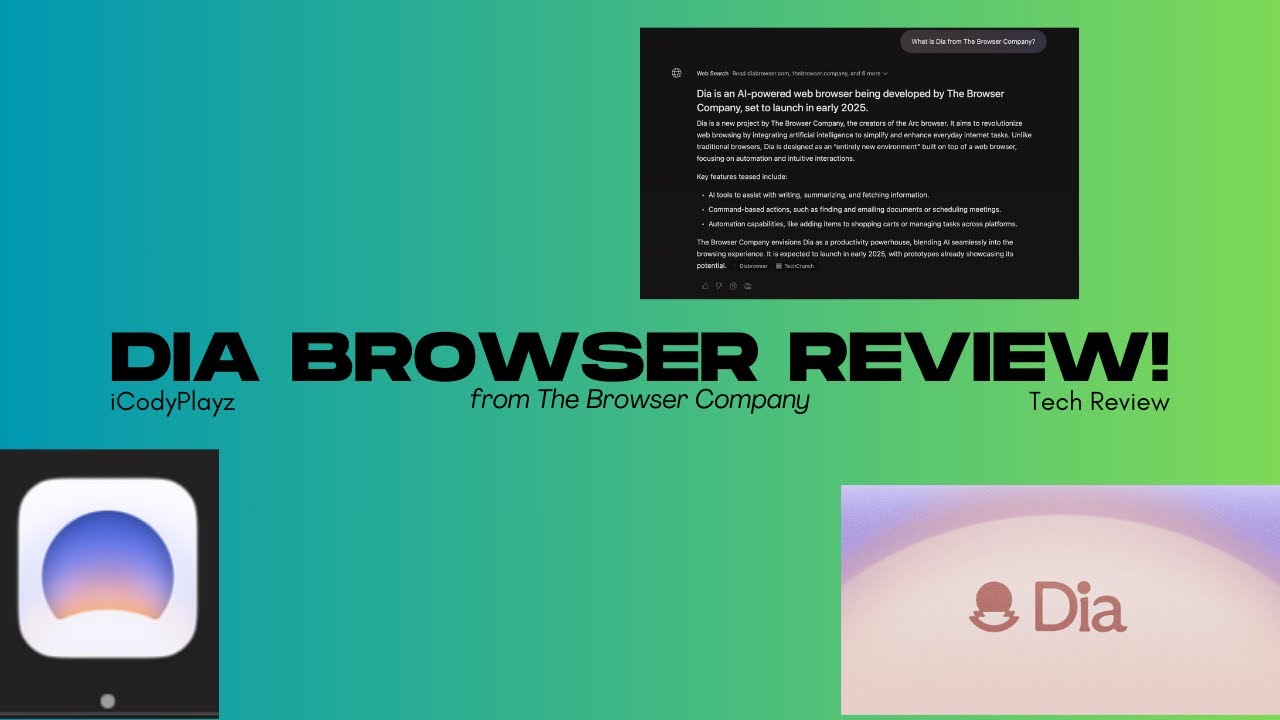
Dia is an AI-first browser from The Browser Company, the makers of Arc. It is designed to deeply understand a user's browsing history and current context to assist with navigation and tasks. Dia uses an integrated AI chat tool that can look across sites and accounts to help users find information, answer product questions, and summarize both web pages and uploaded documents.
As of mid-2026, Dia remains invite-only for Arc members or those on the waitlist, indicating an early but ambitious stage. It is one of the most advanced experimental AI browsers with strong context-awareness, but its limited availability and maturity compared to higher-ranked options place it at number seven. The ambition is clear, but the execution is not yet broadly available.
8. ChatGPT Atlas

OpenAI's ChatGPT Atlas brings ChatGPT into every tab. It features an Agent Mode that can autonomously navigate the web, click through pages, and complete structured tasks like form filling and data gathering. Atlas is cloud-based, leveraging OpenAI's models for deep conversational reasoning and complex instruction following.
It is highlighted as the "Best for conversational workflows" in 2026 AI browser rankings, emphasizing its strength in dialogue-driven browsing and task execution. While it offers powerful agentic capabilities and reasoning, it is still evolving and is more conversation-centric than some of the more workflow-integrated browsers above. For users who want to talk through a complex research task and have the browser execute it, Atlas is the best option.
9. Aside
Aside is an upcoming AI-first automation browser. It is designed not just for assistance but for fully autonomous task completion inside the browser. TechCrunch's 2026 coverage describes Aside as a platform that can fill out forms, manage data flows, and complete tasks with minimal human supervision, highlighting its agentic approach.
Being backed by Y Combinator lends it startup ecosystem credibility, but it remains in a relatively early stage compared to more widely deployed browsers. Its strong technical ambition and focus on autonomous task execution are notable, but limited public deployment and maturity put it below more established AI browsers. It is one to watch for the future.
10. Firefox
Firefox has integrated AI-assisted features such as page summarization, explanations, and proofreading via a sidebar chat that can connect to third-party chatbots like Claude and Copilot. However, security research in 2026 has discussed vulnerabilities in these AI integrations, leading Mozilla to implement mitigations.
With Project Nova, Mozilla has introduced a single settings control that lets users block all current and future generative AI features in Firefox 148. This approach highlights Firefox's cautious, user-controlled philosophy toward AI, balancing functionality with privacy and safety. Its AI tools are useful but limited and mostly third-party, with the browser emphasizing opt-out and control rather than being truly AI-native. This places it behind more aggressive AI browser innovations, but it remains a solid choice for users who want control over their AI experience.
The browser is no longer a passive window. In 2026, the best AI browsers are active participants in the user's workflow, capable of researching, summarizing, and even completing tasks autonomously. The market is splitting between agentic automation platforms and privacy-focused assistants, with major players like Google and Microsoft integrating AI at scale. As these technologies mature, the line between the browser and the operating system will continue to blur, making the choice of a browser one of the most important technology decisions a user can make.
Related Posts



0 Comments
Join the discussion and share your thoughts
No Comments Yet
Be the first to share your thoughts on this article!