Top 10 Best AI Audio Apps in The World 2026

Table of Contents
Audio is no longer just about sound quality. It is about workflow, intelligence, and automation. In 2026, the best AI audio apps do not simply record or play back sound. They transcribe, summarize, enhance, clone voices, and integrate into production pipelines that once required entire teams. To build this ranking, we looked at a combination of factors: production-grade features for creators, voice realism and multilingual support, transcription accuracy, platform integration, user adoption metrics, and recognition in 2025 and 2026 industry benchmarks and comparison tables. We weighed criteria like audio enhancement capability, real-time processing, mobile accessibility, and the depth of editing tools. The result is a list that spans from professional studio replacements to mobile voiceover generators. Here are the ten best AI audio apps in the world for 2026.
These Are The Top 10 Best AI Audio Apps In 2026:
1. Descript
Descript remains the most comprehensive AI audio and video editor on the market in 2026. Its core innovation is simple but powerful: you edit audio by editing the transcript. Delete a word from the text, and the corresponding audio vanishes. This approach transforms post-production from a technical chore into a writing task. Descript includes features like Overdub, which allows AI voice cloning from your own recordings, automatic removal of filler words such as "um" and "uh," and full multitrack editing.
The platform combines transcription, podcast production, screen recording, and publishing into a single desktop application. Its AI handles speaker detection, sound cleanup, and auto-captioning, drastically cutting the time needed for edits. Multiple 2026 tool roundups and podcast AI guides identify Descript as the most production-grade AI audio app for creators and teams. It is the benchmark against which other audio editing tools are measured.
2. ElevenLabs
ElevenLabs is the leading platform for AI voice generation and voice cloning. It converts text to highly natural, expressive speech with granular controls over emotion, pacing, and accent. The ecosystem now supports over 550 AI voices across 75 languages, making it the most multilingual voice engine available. Creators use ElevenLabs to build brand voices, recreate their own voice for scalable content output, or generate voiceovers without hiring talent.
Authoritative podcast and generative AI tool lists consistently highlight ElevenLabs as the top choice for realistic speech. A free tier offering about ten minutes of generation per month in 2026 allows new users to test the quality before committing. ElevenLabs ranks second because its voice quality and breadth of languages are unmatched, though it focuses on voice generation rather than full audio editing workflows.
3. Adobe Podcast (Adobe Enhance / Adobe Audio Tools)
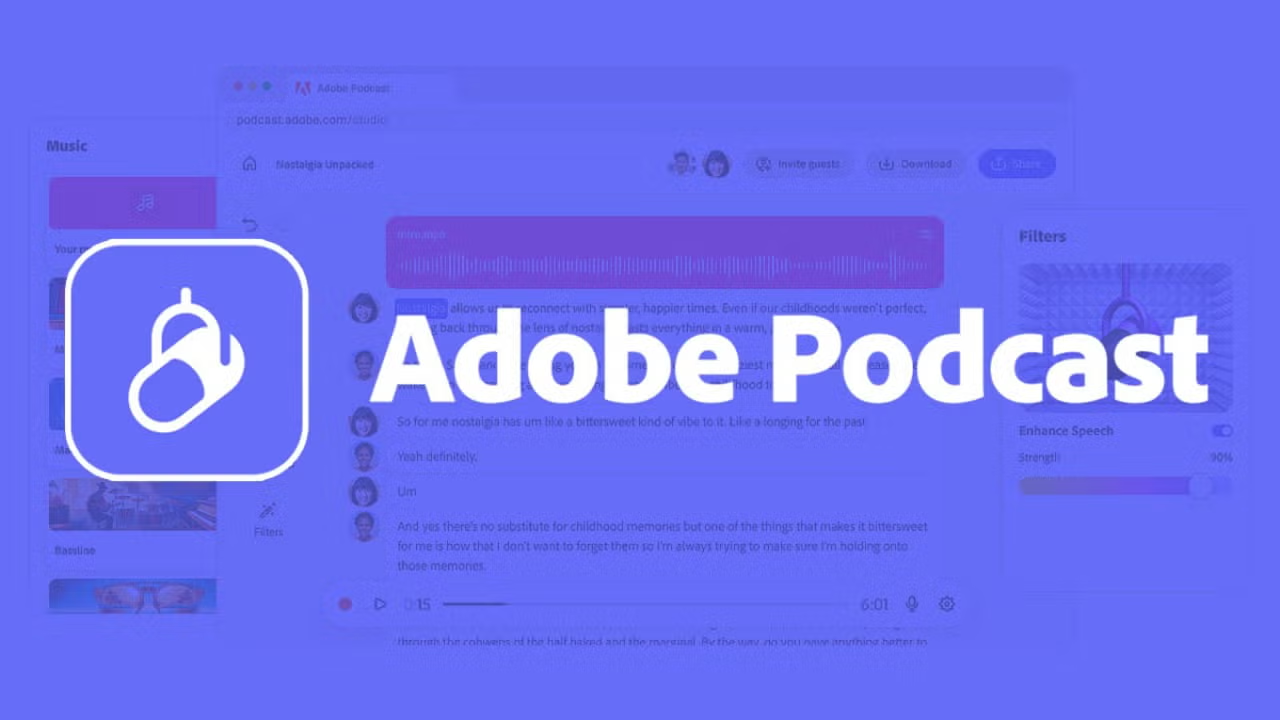
Adobe Podcast, formerly known as Project Shasta, provides a suite of AI-powered tools that automatically clean up spoken audio. The Enhance Speech feature removes background noise, fixes inconsistent levels, and makes recordings sound as though they were captured in a treated studio. The platform also includes auto-leveling and source separation, allowing users to isolate individual speakers from mixed recordings.
Adobe Podcast integrates tightly with the broader Adobe creative ecosystem, including Premiere Pro and Audition. It offers both browser-based and app-based workflows, making it accessible to creators who do not own the full Creative Cloud suite. Hundreds of thousands of creators use these tools, and 2026 reviews and YouTube comparisons of audio enhancers repeatedly list Adobe's AI tools among the top options. It ranks third because of its strong integration into professional production pipelines and its reputation as the go-to enhancer for podcast and video audio.
4. Otter.ai
Otter.ai is among the most widely used AI transcription apps, particularly in business and education. It automatically records, transcribes, and summarizes conversations from platforms like Zoom, Google Meet, and Microsoft Teams. The app identifies speakers, converts speech to searchable text, and generates summaries of key decisions and action items. This transforms meetings into structured, reusable knowledge rather than lost conversations.
Industry coverage indicates that Otter has powered over 40 million recorded sessions. The app is praised for its accuracy and productivity features in 2025 and 2026 lists of top AI apps. Otter ranks fourth because it is the category leader in real-time, meeting-focused AI audio processing, balancing robust features with accessibility for individual users and teams.
5. Sonix
Sonix is an AI transcription platform designed for fast, accurate conversion of audio and video into text. It supports dozens of languages and offers auto-translation, captioning, and content search. A 2026 comparison of eleven transcription competitors scored Sonix on accuracy, usability, support, and feature set, giving it top marks with an overall rating between 4.7 and 4.9 out of 5. That review named Sonix the best transcription app among the field.
The platform offers browser-based editing, collaboration tools, and integrations with media workflows. It is popular among podcasters, researchers, and media companies who need reliable, high-volume transcription. Sonix ranks fifth because of its quantitative top rating in a dedicated 2026 speech-to-text benchmark, placing it among the best specialized AI audio apps for transcription-heavy use cases.
6. Trint
Trint is an AI-powered transcription and content workflow platform used heavily by newsrooms, enterprises, and creators. It transcribes audio and video in more than 40 languages and can translate completed transcriptions into more than 70 languages. This multilingual capability makes it a strong choice for global teams working with large audio archives.
Trint adds AI-assisted features like real-time captioning, automated summarization, and identification of key moments to streamline editing and storytelling workflows. 2026 AI app roundups position Trint as a top-tier professional tool, though it is more niche than Otter and Sonix. It focuses on editorial and broadcast use cases rather than general consumer meetings. Trint ranks sixth for its specialized strength in professional transcription and translation.
7. Google Recorder (Pixel)
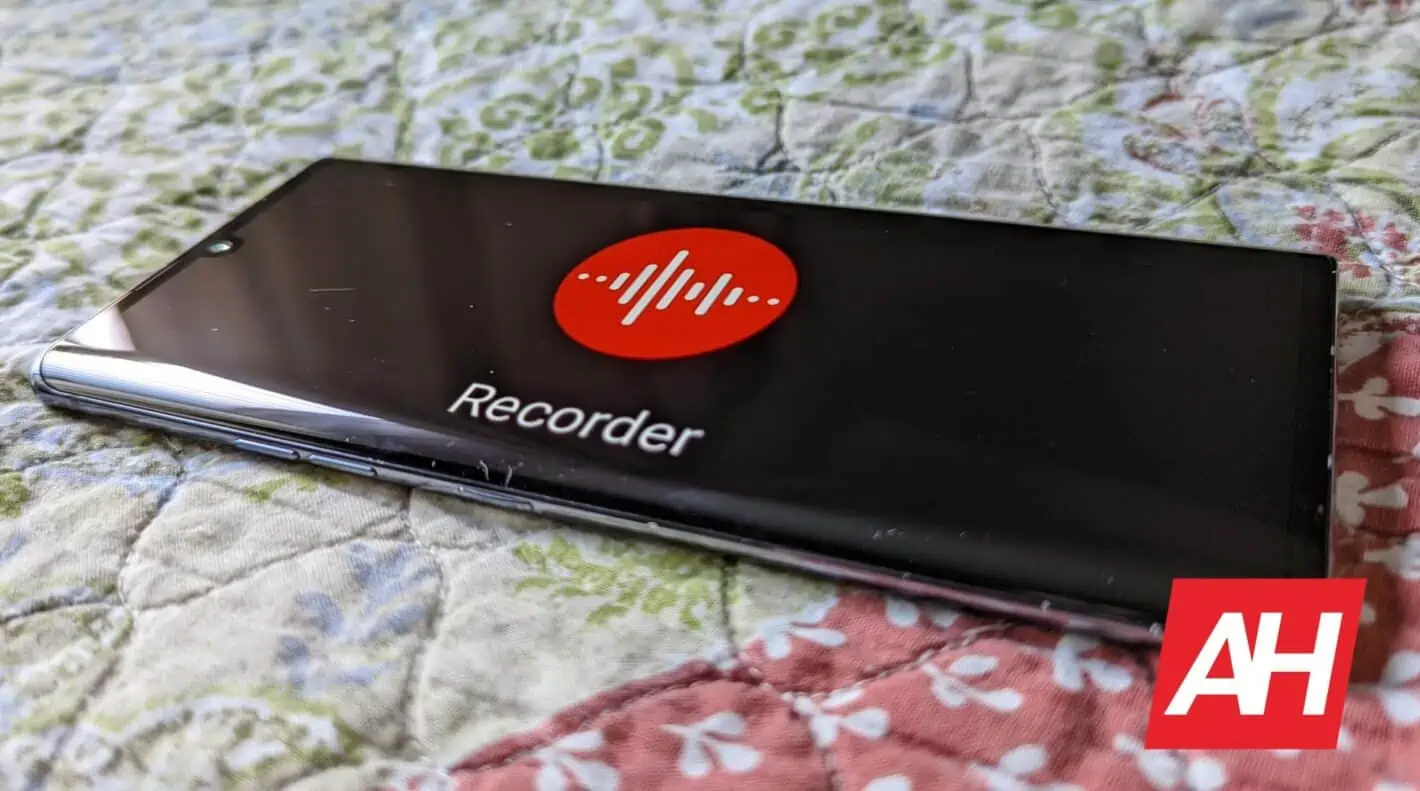
Google Recorder is an AI-powered audio recording app exclusive to Pixel smartphones. It automatically transcribes spoken content in real time and labels speakers. The app uses on-device models, specifically Gemini Nano, to generate summaries and maintain privacy by processing audio locally rather than in the cloud. This local processing is a significant advantage for users concerned about data security.
The app is particularly valued for lectures, interviews, and meetings. Users can search recordings by keywords and navigate via time-stamped transcript segments. Google Recorder ranks seventh because, while highly capable and widely deployed through Pixel devices, it is platform-limited to Android Pixel phones and more focused on personal recording and note-taking than full production or cross-platform workflows.
8. PlayAI
PlayAI is an AI voiceover platform designed to generate natural-sounding speech from text for videos, presentations, and marketing content. It supports multiple languages and voice styles, enabling creators to produce narration without hiring voice talent. In a 2026 test of 18 leading AI platforms, PlayAI was specifically highlighted as the best option for lifelike AI voiceovers, reflecting strong quality and usability.
PlayAI ranks eighth because it is a top performer in AI voice generation according to platform comparisons. However, its ecosystem and feature set are narrower than those of ElevenLabs and Descript, making it slightly less central in broader audio production workflows. It is a focused tool for creators who need high-quality voiceovers quickly.
9. Voiser - AI Voice: Text to Speech TTS
Voiser's AI Voice: Text to Speech TTS app provides mobile users with a large catalog of synthetic voices for creating human-like voiceovers from text on Android devices. Developed by VOISER TEKNOLOJI LIMITED SIRKETI in Turkey, the app offers over 550 AI voices in more than 75 languages. It targets content creators, educators, and businesses who need fast multilingual narration.
Its broad language and voice coverage makes it suitable for global audiences and localized content. The app focuses on ease of use for non-technical users. Voiser ranks ninth because it is a feature-rich, highly multilingual TTS app in the mobile space, but it is less prominent in global professional audio-production rankings compared with ElevenLabs and PlayAI.
10. Podcastle
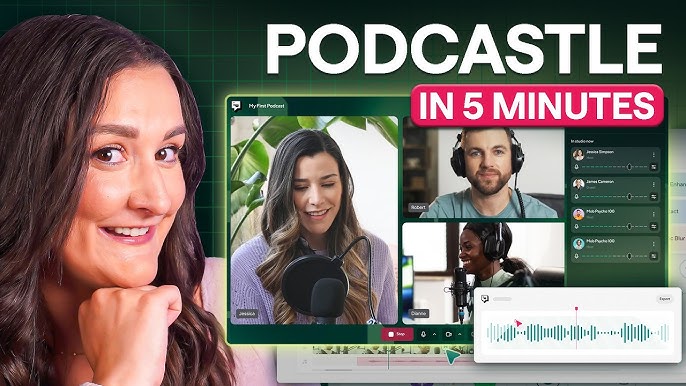
Podcastle is a browser-based AI podcast studio that offers recording, remote interviews, AI-powered audio enhancement, and basic editing in one platform. It is frequently recommended in podcast workflows as a convenient tool for beginners and small teams, combining capture, cleanup, and export without needing separate applications. The platform uses AI for noise reduction, leveling, and some automatic production tasks.
Podcastle includes a free tier aimed at new podcasters, lowering the barrier to entry for podcast creation. It ranks tenth because it is a strong, specialized app for podcast creation, but occupies a narrower niche and has a smaller ecosystem than higher-ranked tools like Descript and Adobe Podcast. Those tools are more widely adopted and feature-rich for broader audio work.
The AI audio landscape in 2026 is defined by tools that do not just record sound but understand it. From Descript's full-stack editing to Google Recorder's on-device privacy, each of these ten apps solves a specific problem with intelligence and efficiency. We expect continued convergence between voice generation, transcription, and editing, but for now, these are the best AI audio apps available.
Related Posts



0 Comments
Join the discussion and share your thoughts
No Comments Yet
Be the first to share your thoughts on this article!