Shram.ai Review 2026: Finding, Ai, Career, Founder, Company & FAQs

Table of Contents
Every once in a while a productivity tool comes along that does not try to be everything at once, and that is exactly why it works. Shram.ai is one of those tools. After weeks of testing, speaking with users, and digging through the company's journey from a small Indian startup to a product that is now getting serious attention in the AI productivity space, Nubia Magazine is ready to give you the full picture of what Shram is, who is behind it, and whether it deserves a place in your workflow in 2026.
Our Finding: What Exactly Is Shram.ai?
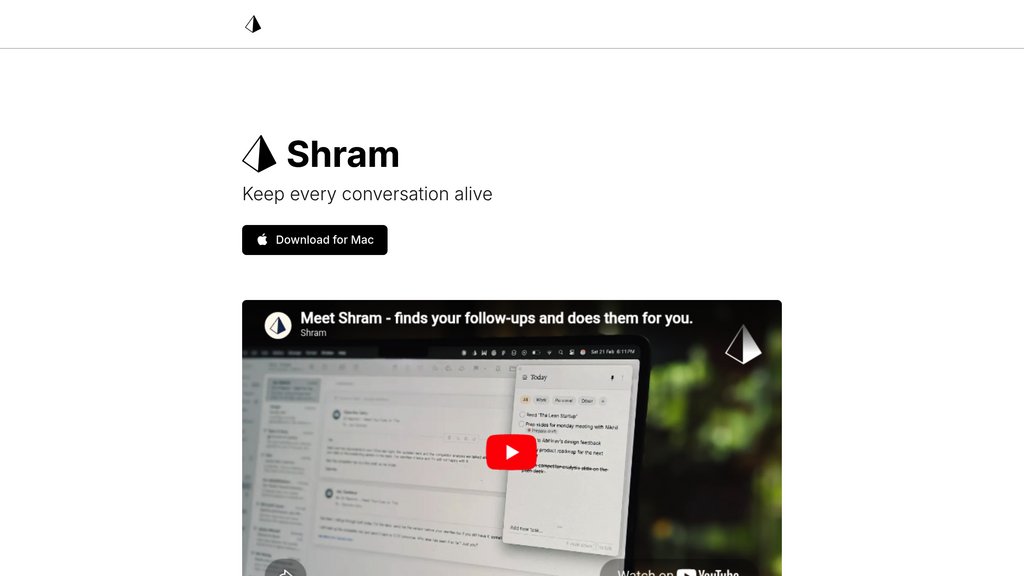
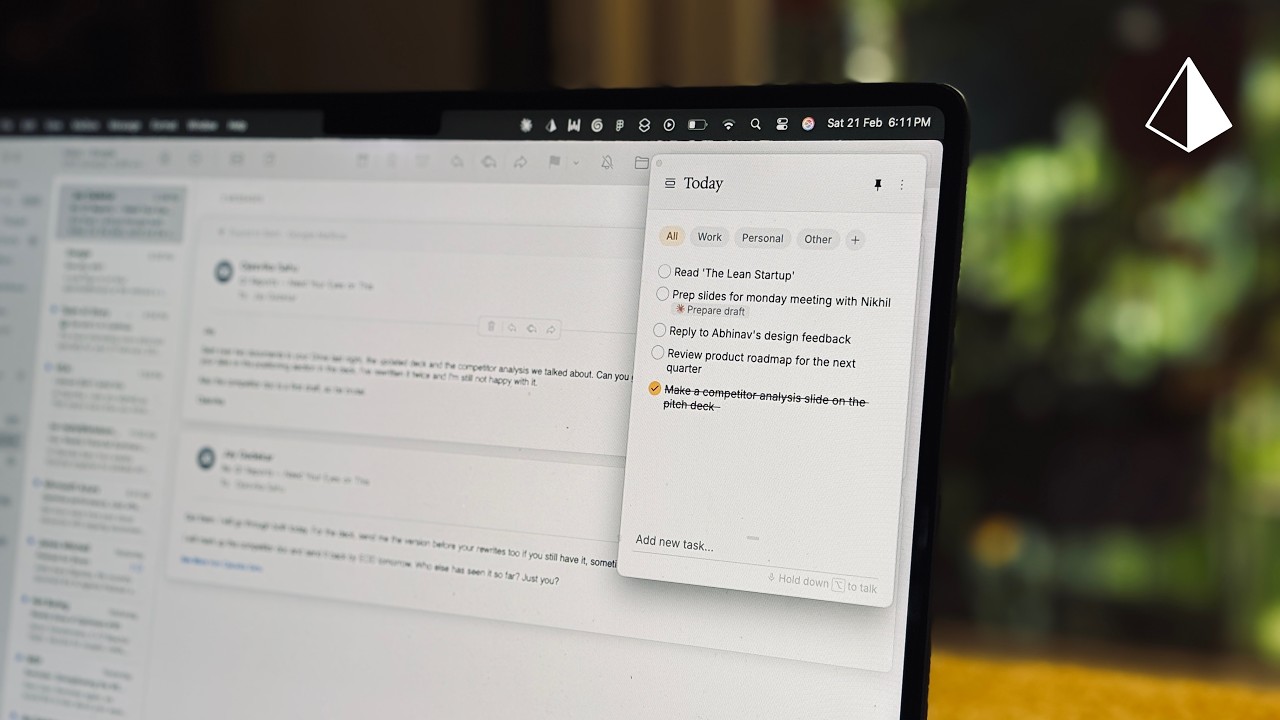
At its core, Shram.ai is an AI powered assistant built around one painfully relatable problem: incomplete conversations. You promised a client a revised proposal two months ago. You told a colleague you would set up a meeting. You meant to reply to that email on Tuesday. Life happened, and those threads went cold. Shram watches your activity across your communication apps, detects when someone is waiting on a response, a check-in, or a meeting, and then surfaces it as a task with a drafted reply ready to go. You review, hit one button, and Shram handles the rest.
What makes this work is the memory layer underneath. Shram remembers context across everything you do, so when it drafts that overdue follow-up, the message actually reflects what was discussed and when. It is not a generic template. It reads like you wrote it after going back through the whole thread, except you did not have to.
During our research we also noticed something refreshing. The company says there is no setup required and that the product works across your apps out of the box, and in our testing that claim largely held up. The privacy angle is notable too, because the memory layer retains context on-device rather than shipping everything off to a remote server.
The AI Behind Shram
Shram did not appear out of nowhere. The company originally built an AI work management platform that gamified daily tasks with experience points, badges, kanban boards, and AI task matching that paired the right team member with the right job. That earlier version earned a loyal following among project managers and distributed teams, with users consistently praising the friendly interface and the way gamification made work feel less like a grind.
The bigger story in 2026, however, is the memory technology. The team built a state-of-the-art memory layer that has been quietly powering Shram for months, and they recently spun it out as a separate app called Minimi. Minimi is an ambient memory layer for AI assistants, a Mac app that captures what you do on your computer, including tabs, documents, calls, and Slack threads, and feeds it to an AI like Claude as live context. The team reports a benchmark score of 54 percent on BEAM, a memory benchmark that runs at the one million and ten million token scale, compared to 36 percent for the previous state of the art. The vector database lives locally on your machine, you choose which apps it can see, and you can pause it at any time.
That is a serious technical claim from a small team, and it is the main reason Shram has been generating buzz on Product Hunt and across the AI community this year.
Career and Workplace Impact
For professionals, the appeal here is simple. Dropped follow-ups cost deals, damage relationships, and quietly erode your reputation at work. Shram functions like a chief of staff for your communication, catching the threads you let slip before they become awkward. Freelancers and founders we spoke to described it as the difference between looking scattered and looking on top of everything.
Teams that used the earlier work management product also reported real benefits. The gamified progress tracking gave managers a more honest, data-driven view of contributions than the dreaded annual performance review, which was actually part of the founding mission. The company set out to make daily work more rewarding and to reduce the number of people quitting because their effort was never acknowledged.
The Founder Story
Shram was co-founded by Jay Gadekar, who serves as CEO, alongside Ojasvika Sahu, the company's Chief Design Officer. Gadekar has been open about his motivation, describing a career driven by purpose and a belief that work itself should feel meaningful. That philosophy shows in the product. Even the name carries it, since Shram is a Sanskrit derived word for labour or toil, and the entire pitch of the company is to make that toil feel lighter and more recognised.
Gadekar has also become a visible voice in the AI memory conversation, recently publishing a widely shared piece arguing that a memory layer is a feature rather than a standalone company, a candid take from someone who builds exactly that technology.
Company Background
The company was founded in 2021 and is headquartered in Thane, India, with a footprint that now extends to San Francisco. It operates in the business productivity software space and has raised a pre-seed round backed by Rebalance. The team sits somewhere between 20 and 50 people, which makes the pace of shipping over the past year genuinely impressive. In the span of months they evolved from a gamified project management tool into a focused AI follow-up assistant and released Minimi as a standalone memory product.
User Experience: What People Are Saying
Across Product Hunt, user communities, and our own conversations, the feedback on Shram trends strongly positive. One user called it genuinely one of the best applications they had used for streamlining and organising work, praising a UI that is fun and friendly without being overwhelming. The gamification features keep coming up as a highlight, and early Minimi adopters have been enthusiastic about finally having an AI that does not need to be re-briefed every single session.
It is not all perfect. Minimi is currently Mac only, which has Windows users asking loudly for a PC version. Some thoughtful critics have also raised the signal versus noise question, wondering how well an ambient system can decide that a throwaway Slack message is irrelevant while a twenty second comment in a meeting about a delayed deliverable deserves to permanently shape future follow-ups. The team acknowledges this is an evolving challenge that depends heavily on how good the underlying models are at making sense of information.
Our verdict on the experience: polished, genuinely useful, and respectful of privacy, with the usual rough edges of a young product that is moving fast.
Our Rating: 4.6 out of 5
Shram earns a 4.6 from Nubia Magazine. It loses points only for platform availability and the natural growing pains of a small team shipping at speed. It gains them everywhere else: a clear and real problem, a memory layer with benchmark results to back up the marketing, an on-device privacy posture that most competitors cannot match, and a user experience people actually enjoy. If your work lives in conversations, Shram is worth your attention in 2026.
Shram.ai Company Profile
Brand Name | Shram (Shram AI) |
Website | shram.ai |
Founded | 2021 (relaunched with a new AI focus between 2024 and 2025) |
Founders | Jay Gadekar (Co-founder and CEO) and Ojasvika Sahu (Co-founder and Chief Design Officer) |
Headquarters | Thane, India, with a growing presence in San Francisco, USA |
Industry | Artificial Intelligence, Productivity and Work Management Software |
Core Product | An AI assistant that tracks unfinished conversations, remembers context across your apps, and drafts follow-ups for you |
Sister Product | Minimi, an on-device ambient memory layer for AI assistants such as Claude |
Funding | Pre-seed round backed by Rebalance |
Team Size | Roughly 20 to 50 employees |
Pricing Model | Freemium with paid tiers for individuals and teams |
Nubia Magazine Rating | 4.6 out of 5 |
Frequently Asked Questions About Shram.ai in 2026
1. What is Shram.ai used for?
Shram is an AI assistant that tracks your unfinished conversations across your communication apps, reminds you when someone is waiting on you, and drafts context-aware follow-up messages you can send with one click. It also offers work and task management features for teams.
2. Who founded Shram.ai?
Shram was co-founded by Jay Gadekar, who is the CEO, and Ojasvika Sahu, who serves as Chief Design Officer. The company was founded in 2021 and is headquartered in Thane, India.
3. Is Shram.ai free to use?
Shram operates on a freemium model. There is a free way to get started, with paid plans unlocking more capability for individuals and teams. Pricing details change as the product evolves, so check shram.ai for the latest tiers.
4. What is Minimi and how is it related to Shram?
Minimi is a standalone Mac app released by the Shram team in 2026. It is an ambient memory layer that captures your on-screen activity, such as tabs, documents, calls, and Slack threads, and feeds it to an AI assistant like Claude as live context, so you never have to re-explain yourself. It is built on the same memory technology that powers Shram.
5. Is Shram.ai safe and private?
Privacy is one of Shram's strongest selling points. The memory layer retains your context on-device, meaning the vector database lives locally on your machine rather than in the cloud. You control which apps it can see and you can pause capture at any time. The company also uses secure cloud storage with daily backups for its team product.
6. Does Shram work on Windows?
As of mid 2026, the Minimi memory app is Mac only, and a Windows version is one of the most requested features. The core Shram platform is accessible via the web. Keep an eye on the company's announcements for PC support.
7. How is Shram different from tools like Notion, Asana, or Motion?
Traditional tools require you to manually log tasks and remember your own commitments. Shram flips that. It observes your actual conversations, detects the promises and pending replies you have forgotten, and proactively turns them into ready-to-send actions. Its memory layer also gives it long-term context that most competitors lack.
8. Is Shram.ai legit or a scam?
Shram is a legitimate company. It is a registered startup founded in 2021, backed by the investor Rebalance at pre-seed stage, with verifiable founders, public launches on Product Hunt, and a real user community. Nubia Magazine found no credible scam reports during our research.
9. How good is Shram's AI memory really?
The team reports a score of 54 percent on the BEAM benchmark, which tests memory at the one million and ten million token scale, against 36 percent for the previous best. Independent verification is still limited, but early user feedback on the memory quality has been notably positive.
10. Who should use Shram.ai in 2026?
Founders, freelancers, consultants, sales professionals, project managers, and anyone whose work depends on keeping dozens of conversations alive. If dropped follow-ups are costing you opportunities, Shram was built for you.
Nubia Magazine Verdict
Shram.ai is one of the more quietly impressive AI products we have reviewed this year. It does not promise to replace you. It promises to remember for you, and in a working world drowning in open loops, that might be the more valuable offer. Nubia Magazine rates Shram.ai 4.6 out of 5 and will be watching closely as the team expands beyond Mac and pushes its memory technology further in the months ahead.
Related Posts



0 Comments
Join the discussion and share your thoughts
No Comments Yet
Be the first to share your thoughts on this article!