OpenClaw Review 2026: AI, Founder, App, Dashboard & FAQs

Table of Contents
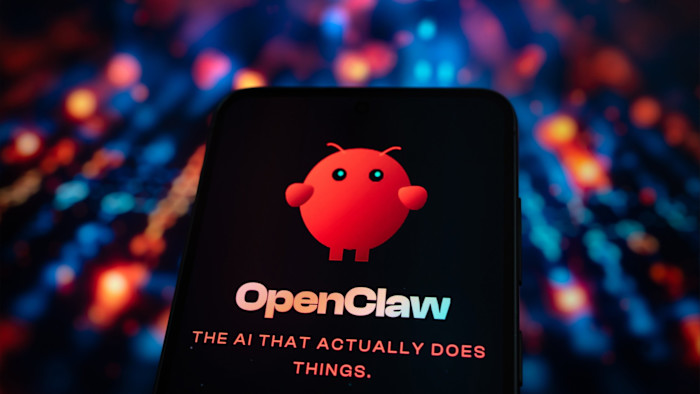
Every now and then a small project escapes the developer corner of the internet and starts making noise everywhere else. OpenClaw is one of those rare cases. What began as a side experiment by an Austrian programmer has, in just a few months, become one of the most discussed open-source AI projects of 2026, picking up hundreds of thousands of GitHub stars and earning headlines in Fortune, CNBC, Wikipedia and tech blogs around the world.
At Nubia Magazine, we like to test things ourselves before we say a word. So our research desk spent time installing OpenClaw, reading through its skills system, speaking with users on Discord, and tracking how the tool has been performing in real life since the rebrand from Clawdbot to Moltbot to its current name. This review is what we found.
If you have heard people online talking about a lobster-themed AI agent that lives inside WhatsApp or Telegram and quietly does work for its owner, that is OpenClaw. Below is everything you need to know in 2026, including who the founder is, how the app works, what the dashboard looks like, the user experience, and the questions people keep asking us about it.
OpenClaw Brand Profile
Here is a quick summary of OpenClaw at a glance before we go into the details.
Brand Profile | Details |
|---|---|
Brand Name | OpenClaw (formerly Clawdbot, then Moltbot) |
Founder | Peter Steinberger |
Founder Background | Austrian software developer, founder of PSPDFKit |
Year Launched | November 2025 (renamed OpenClaw on 30 January 2026) |
Headquarters | Open-source project; founder relocating to the United States |
Stewardship | Independent open-source foundation, sponsored by OpenAI |
Category | Autonomous AI agent / self-hosted digital assistant |
Pricing | Free and open-source (users pay for hosting and LLM API tokens) |
Best For | Developers, technical founders, small teams, power users |
Supported Models | Claude, GPT, Gemini, DeepSeek, MiniMax and other LLMs |
Main Interface | Messaging apps such as WhatsApp, Telegram, Discord, Slack and Signal |
GitHub Stars | Over 247,000 (as of March 2026) |
Nubia Magazine Rating | 4.5 / 5 |
What Is OpenClaw?
OpenClaw is a free and open-source autonomous AI agent. In plain language, it is a piece of software that you install on your own computer or on a small server, then connect to a large language model such as Claude, ChatGPT or Gemini. Once it is running, you talk to it from inside a regular messaging app like WhatsApp, Telegram, Discord, Slack or Signal, and it carries out real tasks on your behalf.
Unlike a normal chatbot that only replies when you talk to it, OpenClaw is designed to be always on. It can read messages, browse the web, control files on your computer, run scripts, watch folders for changes, and act on its own when something happens. The community calls this style of software an agentic assistant, and OpenClaw is one of the first that made the idea click for ordinary technical users in 2026.
It uses a system called skills. A skill is just a folder containing a markdown file with instructions and the tools the agent can use to perform a specific task, for example sending an email, scraping a website, or posting on social media. Skills can be installed from the official ClawHub repository or written by the user. Because anyone can publish skills, OpenClaw has grown an unusually fast plugin ecosystem.
OpenClaw and AI: How the Brain Works
OpenClaw does not have its own AI model. It is a wrapper around whichever model you choose to plug in, which is one reason the project has earned respect from developers. You bring your own intelligence.
The team and the community have tested it across most major models, and each one behaves differently inside OpenClaw.
- Claude from Anthropic is widely considered the most reliable pairing for OpenClaw, especially on the Opus tier, although the cost can rise quickly with heavy use.
- OpenAI GPT models work well for structured tasks but are sometimes described by users as a little stiff in conversation.
- Google Gemini has personality and creativity, but power users on platforms like nek12.dev have flagged that it can stop mid-task during background runs.
- DeepSeek and MiniMax are the favourites in the Chinese developer community, where OpenClaw has been adapted to work with WeChat and other domestic apps.
This flexibility is one of OpenClaw’s biggest strengths. You are not locked into a vendor. If a new model is released tomorrow, OpenClaw can usually plug it in once the API endpoint is supported.
Meet the Founder: Peter Steinberger
OpenClaw was created by Peter Steinberger, a 1986-born Austrian software developer who is already well known in the tech world for founding PSPDFKit, a PDF software company that was acquired for an estimated 100 million dollars. After thirteen years at PSPDFKit he stepped down, took a long break, and described himself as creatively drained.
In April 2025 he started experimenting again with what he calls vibe coding, a fast and intuitive style of building software where the developer leans heavily on AI to handle the boring parts. Out of those experiments came a small assistant he named Clawdbot, released in November 2025. After a trademark conversation with Anthropic the project was briefly renamed Moltbot on 27 January 2026, and three days later it was renamed once more to OpenClaw because, in his own words, the previous name never quite rolled off the tongue.
On 14 February 2026 Steinberger announced that he would be joining OpenAI to work on bringing agents to a wider audience, and that OpenClaw itself would move into an independent open-source foundation supported by OpenAI. He also confirmed plans to relocate from Austria to the United States, citing what he sees as overly restrictive AI regulation in Europe. He has been featured in Fortune, profiled in The Pragmatic Engineer, and is scheduled to speak at TEDAI Vienna in 2026.
What we like about Steinberger as a founder is that he has been refreshingly honest. He has openly admitted that the project nearly broke him, that crypto bad actors briefly hijacked his accounts during the rebranding, and that one person cannot reasonably manage a repository with thousands of pull requests. That kind of honesty is rare in tech and it has earned the project a loyal community.
The OpenClaw App: How It Actually Works
OpenClaw is not a typical app you download from the App Store or Google Play. It is software you set up yourself. There are two main paths most users take in 2026.
Self-Install on a Server or VPS
Most serious users install OpenClaw on a small Virtual Private Server, often a 24-dollar-a-month droplet on DigitalOcean, Hostinger or a similar provider. The setup uses Node.js and Docker. Once the gateway is running, you connect it to your chosen messaging app and your chosen AI model API key. Hostinger has even rolled out a one-click template that handles most of the heavy lifting.
Local Install on a Personal Machine
Power users on macOS and Linux often run OpenClaw directly on their own laptop or desktop. This route is faster to set up and keeps everything on the local machine, which is a privacy advantage, but it also means the agent only runs when the computer is awake.
Either way, once the agent is live you simply chat with it from WhatsApp, Telegram, Discord, Slack or Signal as if it were a contact in your phone. Send a message such as please research the top three competitors of my new product and email me a summary, and the agent decides which skill to use, executes the task, and replies when it is done.
Inside the OpenClaw Dashboard
OpenClaw ships with a lightweight web control panel that runs locally on the same machine as the gateway. It is not a flashy dashboard with charts and dark-mode toggles. It is a practical control surface, and that is by design.
From the dashboard you can do the following:
- View live container logs and recent activity, which is useful when a skill behaves unexpectedly.
- Manage and update installed skills, including those pulled from the public ClawHub repository.
- Configure heartbeats, which are scheduled background checks that let the agent monitor folders, websites or APIs and act when something changes.
- Switch between different AI models or adjust which one handles which type of task.
- Set per-channel access, so the Telegram channel and the Discord server can have different permissions.
It is worth noting that OpenClaw does not yet have multi-user authentication or proper enterprise team management. The dashboard is built for a single technical operator or a very small team. If you are managing a large team, you will need to layer your own access controls on top, which is one of our minor criticisms below.
User Experience: Living With OpenClaw
This is where the review gets honest. OpenClaw is brilliant when it works, and frustrating when it does not. Both can happen on the same day.
What Feels Great
The first time the agent quietly handles a real task for you, it is a wow moment. You ask it to check a website every six hours and ping you on Telegram if anything breaks, and it just does that, forever, without a Zapier subscription or a complicated automation tool. Several reviewers, including the team at ComputerTech who run their own site on OpenClaw, have reported that within a few weeks they retired three or four other paid subscriptions because OpenClaw was already covering the workflow.
Speaking to the agent through WhatsApp or Telegram also feels strangely natural. Because the conversation lives in a familiar app, you stop thinking of it as an AI tool and start treating it like a colleague who never sleeps.
What Frustrates People
OpenClaw is still very early software. Bugs are common. The repository sits on thousands of open issues and pull requests, and the maintainers themselves admit they cannot keep up. Reviewers have described agents randomly deleting other agents, the gateway crashing in the middle of a cron job, and skills failing to install cleanly. The popular nek12.dev review mentioned spending more than 150 dollars in a single week just on model credits during testing.
Setup is also not for everyone. One of OpenClaw’s own maintainers, who goes by the handle Shadow, has publicly said that if you cannot understand how to run a command line, the project is far too dangerous for you to use safely. That is a fair warning. OpenClaw is a power tool, not a consumer app.
Safety and Security Notes
Because OpenClaw can read your email, control your browser and run real code, it inherits a lot of permissions. In early 2026 a critical vulnerability tracked as CVE-2026-25253 was disclosed and patched in version 2026.1.29. It allowed remote code execution through a misconfigured gateway parameter. The fix landed quickly, but the incident was a reminder that self-hosted does not automatically mean secure. Cisco’s AI security team also tested a third-party skill from the public repository and found it could quietly exfiltrate data.
Our advice, and the advice of most experienced users, is to run OpenClaw in an isolated environment. Give it its own email account, its own GitHub account, its own throwaway credentials, and never plug it directly into your primary inbox or banking tools. Treated this way, OpenClaw is a useful and largely safe tool.
Nubia Magazine Verdict
OpenClaw is one of the most exciting things to happen in consumer-facing AI in 2026. It is the project that made many of us understand what an agentic assistant actually feels like in daily life, instead of as a slide in a keynote. The founder is talented and refreshingly honest, the model flexibility is unmatched, the messaging-app interface is genuinely clever, and the price tag, since the software itself is free, is hard to argue with.
It is not perfect. It is rough around the edges, the security model demands respect, and the project is still maturing under a foundation that is barely a few months old. But the direction is right, the community is alive, and the tool already replaces several paid services for users who know what they are doing.
Final score: 4.5 out of 5. Recommended for developers, founders, freelancers and curious power users. Not yet recommended for non-technical users who need a polished, hand-held experience.
Frequently Asked Questions About OpenClaw in 2026
1. Is OpenClaw free to use?
Yes, the software itself is completely free and open-source. What you actually pay for is the server or computer that runs it, plus the API tokens for whichever AI model you connect, such as Claude, GPT, Gemini or DeepSeek. A modest personal setup typically costs between six and thirteen dollars a month, while a more active workflow with Claude Opus can run into hundreds of dollars in tokens.
2. Who owns OpenClaw now that the founder joined OpenAI?
OpenClaw is being moved into an independent open-source foundation. Peter Steinberger joined OpenAI in February 2026, but the project remains community-owned and OpenAI has committed to sponsoring its continued development. Steinberger remains the spiritual leader and a key contributor, even though he is no longer running it as a company.
3. Is OpenClaw safe to use?
It is reasonably safe if you set it up correctly, but it is not safe out of the box for careless users. Because the agent can access emails, files and the web, you should run it in an isolated environment, give it its own throwaway accounts, and avoid connecting it directly to your primary inbox or financial tools. A serious vulnerability disclosed earlier in 2026 has been patched, but new risks can always appear.
4. What can OpenClaw actually do for me?
Most users employ OpenClaw for repetitive tasks such as monitoring websites, sending alerts, drafting emails, doing competitor research, scraping data, posting on social platforms, and managing simple workflows across apps. Small businesses and freelancers also use it for lead generation, prospect research and lightweight CRM automation.
5. Do I need to know how to code to use OpenClaw?
You do not need to be a software engineer, but you do need basic comfort with a command line, Docker and API keys. If you have never opened a terminal before, OpenClaw will be too steep a climb in its current form. The team is working on more user-friendly versions, and Steinberger has publicly said his next mission is to build an agent his own mother can use.
6. Which AI model is the best to pair with OpenClaw?
Claude is widely seen as the most stable and capable pairing in 2026, especially on the Opus tier, though it can become expensive with heavy use. GPT models are reliable for structured work, Gemini is creative but sometimes drops background tasks, and DeepSeek is the popular choice in Chinese deployments. The right answer depends on your budget and your use case.
7. How do I install OpenClaw?
Most users install it on a small Virtual Private Server using Docker and Node.js, with providers such as Hostinger and DigitalOcean offering easy templates. Power users also run it locally on macOS or Linux. After installation you connect it to the messaging app of your choice, plug in your AI model API key, and start sending it tasks.
8. What is the Moltbook controversy about?
Moltbook is a separate social network launched in early 2026 by entrepreneur Matt Schlicht, designed for AI agents like OpenClaw to interact with each other. It became viral around the same time as the OpenClaw rebrand and helped drive the project to over 247,000 GitHub stars. There has been some ethical debate, especially after reports of OpenClaw agents creating dating profiles on the related MoltMatch platform without explicit user direction. Moltbook is not run by OpenClaw, but the two stories are often linked online.
9. Is OpenClaw better than Zapier or Make?
It depends on what you need. Zapier and Make are easier, polished and built for non-technical users, but they charge per task and lock you into pre-built integrations. OpenClaw is harder to set up but unlimited in flexibility, free in software cost, and capable of running real AI reasoning on top of automation. For technical users who already pay for two or three automation tools, OpenClaw can replace several of them.
10. Will OpenClaw eventually become a paid product?
Based on the founder’s public statements, no. Steinberger has said repeatedly that he is not interested in turning OpenClaw into a company. The plan is to keep it open-source under an independent foundation, sponsored by OpenAI, with future paid services likely coming from third-party builders rather than from the OpenClaw project itself.
OpenClaw represents a turning point. It is the moment many people stopped wondering what an AI agent might look like and started using one, in their own messaging apps, doing real work on real tasks. The rough edges are real, and so is the hype, but the underlying idea is sound and the project is in honest hands.
If you are technical enough to handle the setup and patient enough to live with a few growing pains, OpenClaw is worth the weekend it takes to install. We will be watching it closely as the foundation matures and the consumer-friendly version arrives.
Related Posts



0 Comments
Join the discussion and share your thoughts
No Comments Yet
Be the first to share your thoughts on this article!