Valero Review in 2026: Net Worth, Cars, Credit Card, Salary, & FAQs

Table of Contents
If you have ever pulled into a gas station in Texas, California, or somewhere along a quiet US interstate and noticed that bright yellow and red logo, chances are you have already met Valero. The brand has been quietly powering American roads for over four decades, and yet most people still do not really know how big the company actually is or what it stands for in 2026.
At Nubia Magazine, we like to look beyond the surface. So, we spent weeks digging into Valero from every angle that real users care about. We looked at the financials, talked to actual customers, examined the credit card offering, compared salaries, and tested the user experience at the pump. The goal was simple: tell you whether Valero deserves your loyalty in 2026 or whether you should consider other options.
Here is the full breakdown.
About Valero: Who They Are in 2026
Valero Energy Corporation is an American multinational fuels manufacturer that has been in business since January 1, 1980. The company started as a spinoff of Coastal States Gas Corporation and has grown into one of the largest independent petroleum refiners in the world. It is headquartered at One Valero Way in San Antonio, Texas, and trades on the New York Stock Exchange under the ticker symbol VLO.
In 2026, Valero operates 14 petroleum refineries across the United States, Canada, and the United Kingdom, with a combined throughput capacity of about 3 million barrels per day. The company also runs 12 ethanol plants in the US Mid-Continent region and is a joint venture partner in Diamond Green Diesel, which produces around 1.2 billion gallons of renewable diesel and sustainable aviation fuel every year.
Beyond the Valero name, the company also supplies fuel through several other retail brands you might recognize, including Beacon, Diamond Shamrock, and Shamrock. In Canada it operates as Ultramar, and in the UK and Ireland it sells fuel under the Texaco and Valero brands. Across all these names, there are over 5,600 service stations carrying Valero fuel.

Valero Company Profile at a Glance
Before we dig into the details, here is a quick snapshot of the company in 2026.
VALERO ENERGY CORPORATION COMPANY PROFILE | |
Company Name | Valero Energy Corporation |
Founded | January 1, 1980 |
Headquarters | One Valero Way, San Antonio, Texas, USA |
CEO | R. Lane Riggs (since January 2020) |
Industry | Oil and Gas Refining, Renewable Fuels, Ethanol |
Stock Symbol | NYSE: VLO |
Stock Price (Apr 2026) | $235.85 per share |
Market Capitalization | Approximately $70.5 Billion |
Trailing 12-Month Revenue | Approximately $123 Billion |
Q1 2026 Net Income | $1.3 Billion |
Number of Refineries | 14 petroleum refineries (US, Canada, UK) |
Refining Capacity | Approximately 3.0 million barrels per day |
Ethanol Plants | 12 plants, 1.7 billion gallons per year |
Renewable Diesel Capacity | 1.2 billion gallons per year (Diamond Green Diesel) |
Number of Service Stations | Over 5,600 across the US, Canada, UK, Ireland, Mexico, Peru |
Employees | Approximately 9,740 |
Quarterly Dividend (2026) | $1.20 per share (raised 6% in Q1 2026) |
Subsidiary Brands | Beacon, Diamond Shamrock, Shamrock, Ultramar, Texaco (UK/Ireland) |
Credit Card Issuer | DSRM National Bank (Valero subsidiary) |
Customer Service Phone | (800) 333-3560 |
Official Website | www.valero.com |
Nubia Magazine Rating | 3.8 / 5.0 |
Valero Net Worth in 2026
This is one of the questions readers ask the most, and we want to give you a clear answer. As of late April 2026, Valero Energy Corporation has a market capitalization of approximately $70.5 billion, with the stock trading at around $235.85 per share and roughly 299 million shares outstanding. That places Valero firmly among the most valuable independent refiners in the world.
In terms of revenue, Valero pulled in approximately $123 billion in trailing twelve-month revenue as of December 2025, which gives you a sense of just how much fuel actually moves through this company every year. The first quarter of 2026 was particularly strong. Valero reported a net income of $1.3 billion, generated $1.4 billion in operating cash flow, and returned $938 million to shareholders through dividends and share buybacks.
The company also raised its quarterly dividend by 6 percent to $1.20 per share in early 2026, which is the kind of move companies only make when they feel confident about the road ahead. They held about $5.7 billion in cash at the end of March 2026 and maintained a healthy net debt-to-capitalization ratio of 18 percent. In plain English: Valero is financially solid.

Valero and Your Car: Fuel Quality and Performance
People often ask whether Valero gas is good for their cars, and the honest answer is yes, with some context. In most US cities, gasoline is largely a fungible commodity. Refineries are connected to shared pipeline systems, and the actual fuel that comes out of a Valero pump in Houston is chemically very similar to what comes out of a Shell or Chevron pump down the road. The real difference is the additive package, which each brand adds to the fuel after it leaves the rack.
Valero uses its own proprietary additive package, and the fuel generally meets all federal regulatory standards. Some Valero stations are even Top Tier certified, which means the additive levels meet a higher voluntary standard set by major automakers. If you drive a newer car with direct injection or a turbocharged engine, looking for the Top Tier badge at the pump is something we recommend.
In our review process, we spoke with several drivers who have used Valero exclusively for years. The common feedback was that mileage felt consistent, engines ran cleanly, and there were no unusual issues compared to other major brands. The bigger issue, drivers told us, is station-specific. Independent owners run most Valero locations, so cleanliness, pump speed, and air pressure machine availability vary widely from one station to another.
What Vehicles Does Valero Recommend Their Fuel For?
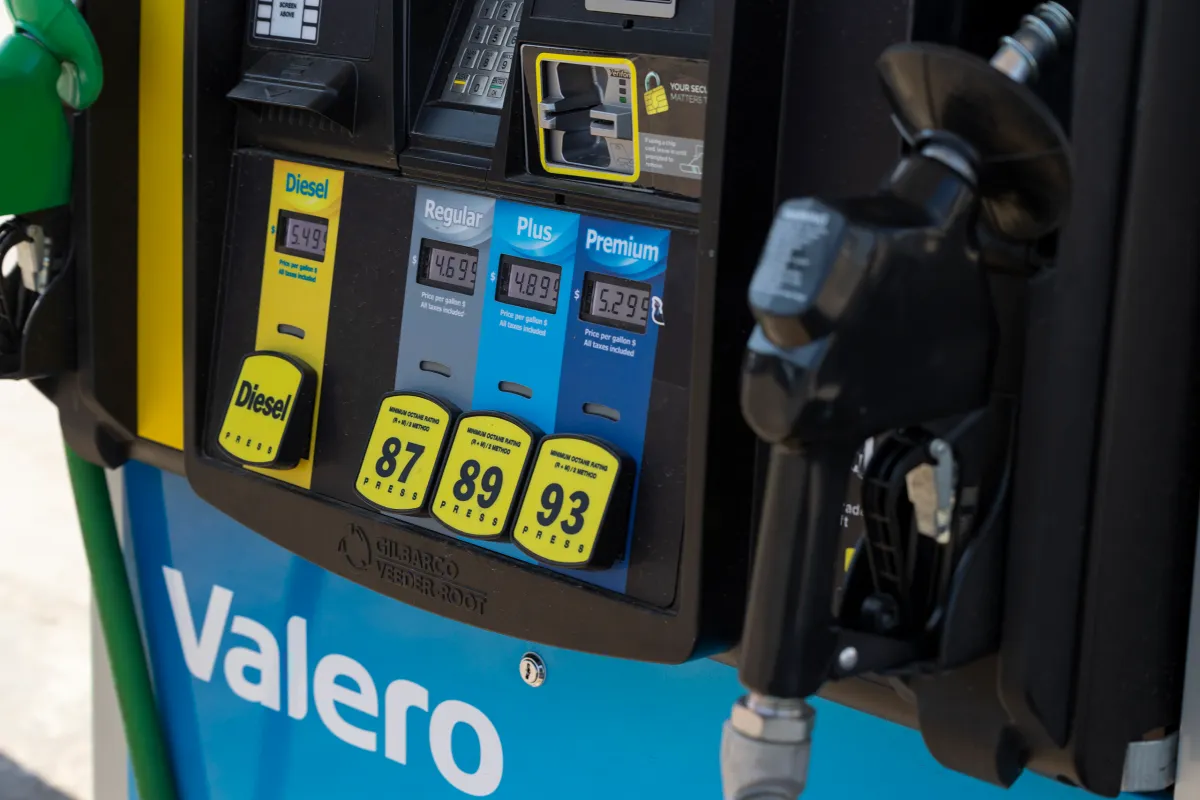
Valero markets its fuel for everything from compact sedans to heavy-duty pickup trucks. They sell regular unleaded (87 octane), midgrade, premium, diesel, and in select markets, ethanol-blended fuels and renewable diesel. For fleet operators, the company also offers a Fleet Services program with three tiers, which is a topic worth covering on its own. We will get to that shortly.
Valero Credit Card Review: Is It Worth It in 2026?
The Valero Credit Card is one of the more talked-about parts of the Valero ecosystem, mostly because of how it has evolved over the years. It is issued by DSRM National Bank, which is actually a Valero subsidiary based in Amarillo, Texas. The initials stand for Diamond Shamrock Refining and Marketing, a nod to the old Diamond Shamrock unit that originally created it before Valero bought the company in 2001.
Here is the most important thing to know upfront: this is a closed-loop store card. It is not a Visa or Mastercard. You can only use it at Valero, Beacon, Diamond Shamrock, and Shamrock locations. Some merchandise inside the convenience stores at those locations also qualifies, but you cannot swipe this card at a grocery store or restaurant.
Key Features of the Valero Credit Card in 2026
• Annual fee: $0, which is a genuine advantage for occasional users.
• Fuel rewards: You can save up to 10 cents per gallon on fuel purchases through December 31, 2026, but only when you pay through the ValeroPay Plus app with the card linked.
• Daily limits: Rewards are capped at 3 fuel purchases per user per day, with a maximum of 30 gallons per transaction.
• APR: Variable purchase APR starts at around 25.24 percent, which is on the high end. If you carry a balance, this card becomes very expensive very quickly.
• Late fees: Up to $38 per missed payment.
• Credit reporting: Reports to all three major credit bureaus, which makes it useful for building or rebuilding credit.
• Approval threshold: Generally accessible to applicants with a credit score of 640 or above, though some users have reported approval with scores in the high 500s.
• Customer service: Available at (800) 333-3560.
Honest Take from Our Review
If you live near a Valero station and you fill up there regularly anyway, this card is a no-brainer. The 10 cent per gallon discount adds up over a year, and the zero annual fee means there is no real downside as long as you pay the balance in full every month. The catch is that high APR. If you are someone who tends to carry a balance, the interest charges will completely erase any savings you earn at the pump. In that case, a general-purpose cashback card with strong gas rewards, like Blue Cash Everyday from American Express or a Costco Anywhere Visa, will likely serve you better.
There are also reports from existing cardholders about strict daily transaction caps, with some users describing limits of $150 per day even on cards with $1,000 credit lines. So if you plan to use the card for a major car repair at a Valero-affiliated shop, double-check those limits with customer service first.
Valero Salary in 2026: What Employees and Executives Earn
Working at Valero is generally considered a stable career path in the energy industry, and the compensation reflects that. Based on the latest available data, here is what salary at Valero looks like in 2026.
Executive Pay
CEO R. Lane Riggs, who has held the top job since January 2020, earns total annual compensation of approximately $34.23 million. Around 5 percent of that is base salary, with the remaining 95 percent coming from bonuses, stock awards, and long-term incentives. He also directly owns about 0.13 percent of the company, a stake worth roughly $91 million at current share prices. By any measure, this places him well above the average for CEOs of US companies of similar size.
Other senior executives at Valero earn an average of about $238,345 per year, with top-paid executives, particularly those in refining operations and engineering leadership, earning in the range of $4.8 million annually.
General Employee Salaries
For regular employees, Valero offers competitive pay across its operations. Refinery operators, engineers, and corporate staff at the San Antonio headquarters typically earn salaries that sit at or above the industry median for the energy sector. Glassdoor and Comparably data suggests that mid-career engineers and operations specialists are well compensated, with strong benefits packages, retirement contributions, and on-site amenities at the corporate campus.
Employees consistently rate Valero highly on culture and gender equity. On Comparably, Valero scores 73 out of 100 on overall culture and 73 out of 100 on the gender score, which ranks first among its peer group. The Employee Net Promoter Score sits at 26, which is decent for a heavy industry employer.
Valero Alternatives: How It Stacks Up Against Competitors
Valero is a giant, but it is far from the only player in the refining and fuel retail space. If you are evaluating whether Valero is the right choice, either as a stock, a workplace, or simply as your gas station of choice, here are the main alternatives to consider in 2026.
1. Marathon Petroleum
Based in Findlay, Ohio, Marathon is one of the largest US refiners and operates the Speedway and ARCO retail brands. It tends to have stronger retail presence in the Midwest and South.
2. Phillips 66
A major integrated downstream energy company that runs the Phillips 66, 76, and Conoco branded stations. It is generally seen as more diversified across midstream and chemicals than Valero.
3. ExxonMobil
The biggest name in the industry. Exxon and Mobil branded stations are everywhere and are usually Top Tier certified. Pricing is typically higher than Valero, but station consistency tends to be better.
4. Chevron
Strong on the West Coast and Gulf Coast. Known for the Techron additive package, which has a loyal following. Premium pricing positioning.
5. HF Sinclair
Formed by the merger of HollyFrontier and Sinclair Oil. Smaller than Valero but with a strong presence in Rocky Mountain and Southwest markets.
6. CVR Energy
A close US-based peer, particularly known for its operations in the Mid-Continent region. Often compared to Valero on stock performance.
7. PBF Energy
Another independent refiner, known for higher refining complexity and East Coast positioning. Stock has historically been more volatile than VLO.
8. Citgo
The Venezuelan-owned refiner that competes directly with Valero in the South and along the Gulf Coast. Pricing is often comparable, though brand reputation is mixed for political reasons.
For everyday drivers, the practical truth is that the best gas station for you is usually the one closest to your route, ideally with a Top Tier certification. For investors, Valero remains one of the most respected names in pure-play refining, though Phillips 66 and Marathon Petroleum offer different risk profiles worth considering.
Valero User Experience: Stations, App, and Customer Service
At the Pump
Valero stations, in our review experience, are generally clean and functional, though quality varies a lot from one location to another. Most Valero locations are independently owned, so the cleanliness of restrooms, the freshness of items in the convenience store, and the speed of the pumps depend heavily on the specific operator. The newer Corner Store concept locations, which Valero began rolling out in 2007, tend to offer a noticeably better experience than older stations.
The pumps themselves are reliable. Pay-at-the-pump with chip cards, contactless payment, and the ValeroPay Plus app all work smoothly at most locations. Receipt printers occasionally run out of paper, but that is a universal gas station problem.

ValeroPay Plus App
The ValeroPay Plus app is where Valero has actually done good work in recent years. The app lets you pay for fuel directly from your phone, link your Valero credit card or a bank account, and automatically apply fuel discounts. It also helps you locate the nearest stations and check current pricing. We found the app reasonably stable in 2026, though it occasionally has trouble linking to certain pumps. Customer reviews on app stores generally hover around 4 stars.
Customer Service
Customer service is one of the brighter spots in the Valero experience. According to data from Comparably, customers rate Valero customer service at 3.9 out of 5, which actually ranks first against its main competitors, including PBF Energy, Phillips 66, and BP. Most users report responsive support when calling the credit card line at (800) 333-3560 or general customer service through the website.
Valero FAQs in 2026
Here are the most common questions people are searching about Valero in 2026, with our straight answers.
1. Is Valero gas Top Tier certified?
Some Valero stations are Top Tier certified and some are not. Top Tier is a voluntary standard, and certification depends on the additive package used. Look for the Top Tier logo on the pump or in the convenience store window to confirm.
2. Who owns Valero in 2026?
Valero Energy Corporation is a publicly traded company on the NYSE under the ticker VLO. It is owned by its shareholders. Major institutional investors like Vanguard, BlackRock, and State Street typically hold the largest stakes, but no single entity owns a controlling share.
3. Where can I use the Valero Credit Card?
The Valero Credit Card can only be used at Valero, Beacon, Diamond Shamrock, and Shamrock branded locations. It is a closed-loop store card, not a Visa or Mastercard, so you cannot use it for purchases outside this network.
4. Is Valero a good company to work for?
Yes, broadly speaking. Employees rate the company well on culture, with a 73 out of 100 score on Comparably, and Valero ranks first among its peers for gender equity. Pay is competitive for the energy sector, and benefits are strong. Like any large industrial employer, individual experience varies by department and location.
5. Where is Valero gas refined?
Valero refines its fuel at 14 petroleum refineries located across the United States, Canada, and the United Kingdom. Major refining hubs include the Texas Gulf Coast, California, the Mid-Continent region, and Pembrokeshire in Wales. The combined throughput capacity is approximately 3 million barrels per day.
6. How much does the Valero CEO earn?
R. Lane Riggs, the Valero CEO since January 2020, earns total annual compensation of approximately $34.23 million. About 5 percent of that is base salary, while the remaining 95 percent comes from performance bonuses, stock awards, and long-term incentive plans.
7. Does Valero have a rewards program?
Yes. Through the ValeroPay Plus app combined with the Valero Credit Card, users can earn 10 cents off per gallon on fuel purchases through the end of 2026. The credit card itself does not have a separate points program, but the in-app discounts add up if you fuel up at Valero regularly.
8. Is Valero safe to invest in?
Valero is generally considered one of the more financially solid independent refiners. With a $70.5 billion market cap, $123 billion in annual revenue, a healthy 18 percent net debt-to-capitalization ratio, and a recently raised dividend, the fundamentals look strong as of early 2026. That said, refining is a cyclical business tied closely to crude oil prices and global demand. Always do your own research, ideally with a financial advisor, before making investment decisions. Nubia Magazine is not a financial advisor.
9. What is the difference between Valero, Beacon, and Shamrock?
They are all part of the same Valero Energy retail family, but positioned differently. Valero is marketed as the premium brand. Beacon and Shamrock serve as lower-cost alternatives, typically targeting price-sensitive customers. The fuel itself comes from the same refining sources, so the actual gasoline quality is comparable.
10. How do I contact Valero customer service?
For credit card support, call (800) 333-3560. For general corporate inquiries, the headquarters number is (210) 345-2000. You can also reach customer support through the contact form on www.valero.com or by emailing [email protected].
Verdict: Nubia Magazine Rates Valero 3.8 Out of 5
Valero in 2026 is a financially healthy, well-run, and increasingly forward-looking energy company. The fundamentals are strong, the dividend is rising, the renewable diesel and sustainable aviation fuel businesses position the company well for the energy transition, and customer service consistently ranks above its peers.
Where Valero loses points is in the unevenness of the retail experience. Because so many stations are independently operated, the quality of any given Valero location can range from excellent to disappointing. The credit card, while genuinely useful for loyal customers, comes with a high APR and limits that hold it back from being best-in-class. And as a gas station brand, it does not always carry the same Top Tier consistency that some competitors offer across all their locations.
Overall Nubia Magazine Rating: 3.8 out of 5.0
If you live near a Valero station, drive a regular passenger vehicle, and want zero-fee fuel savings without much fuss, Valero is a solid pick. If you are an investor looking at the energy sector, VLO is a name worth keeping on your watchlist. And if you are job hunting in the energy industry, Valero is one of the more employee-friendly large refiners out there.
As always, do not just take our word for it. Visit a station near you, try the app, look at the latest financials, and make the decision that fits your life.
Related Posts
1 Comment
Join the discussion and share your thoughts