Top 10 Best WorkFlow Orchestration Tools In The World 2026

Table of Contents
This ranking evaluates workflow orchestration tools based on six weighted criteria: community adoption and ecosystem size, enterprise readiness and security features, pricing accessibility and total cost of ownership, specific use-case fit for batch and real-time processing, developer experience, and the ability to handle modern AI and machine learning pipeline demands. We analyzed publicly available documentation, community engagement metrics, funding data, and user sentiment across forums and professional networks. The result reflects the tools that matter most in 2026, not simply the most popular ones.
1. Apache Airflow
Apache Airflow remains the undisputed standard for data orchestration in 2026. Originally developed at Airbnb in 2014 and now stewarded by the Apache Software Foundation, Airflow uses Python-based Directed Acyclic Graphs (DAGs) to schedule, monitor, and manage complex batch pipelines. Its operator library exceeds 1,000 built-in integrations, covering every major cloud platform, database, messaging system, and analytics tool. No other orchestration tool matches this breadth of native connectivity.
The trade-off is operational complexity. Running Airflow in production requires managing a scheduler, worker pool, metadata database, and web server. Organizations without dedicated platform engineering teams often struggle with infrastructure overhead. Managed versions such as Amazon MWAA and Google Cloud Composer reduce this burden but introduce significant cost. For teams that can handle the operational demands, Airflow offers the largest community, the most extensive documentation, and the deepest pool of available talent. It remains the default choice for enterprises that prioritize ecosystem size over developer experience.
2. Orchestra
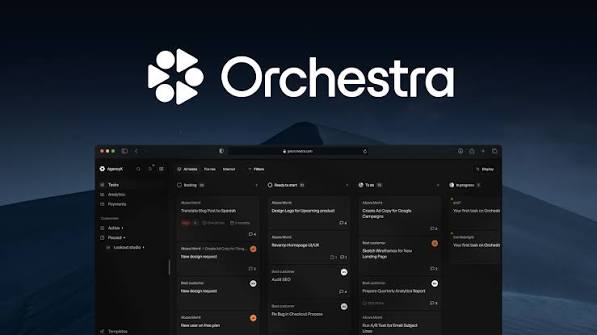
Orchestra has carved a distinct niche as a "data person first" platform that sits between fully configured Airflow and accessible low-code tools like n8n. Its cloud SaaS model delivers time-to-live measured in days rather than months, a compelling metric for teams that cannot afford lengthy implementation cycles. The platform offers first-class dbt orchestration, Python APIs with declarative configuration, and a GUI-driven interface with a low barrier to entry.
Investors have taken notice. Moonfire Ventures, Sequoia Scout, and angel investors from dbt, Snowflake, and Snowplow have backed Orchestra with roughly 1 million pounds in seed funding. Pricing starts with a free tier, then moves to 600 dollars per month, with enterprise plans beginning at 20,000 dollars per year. Enterprises choose Orchestra specifically because they can reduce time spent managing and debugging pipelines while enabling better self-serve patterns across the data function. For dbt-first teams that want speed without sacrificing control, Orchestra is the strongest emerging contender.
3. Prefect
Prefect introduced a hybrid execution model that separates the control plane (Prefect Cloud) from the data plane (customer infrastructure). This architecture addresses a critical security concern for organizations that cannot send data externally. Founded in 2018 as a modern alternative to Airflow, Prefect offers a cleaner developer experience, event-driven automations, and official dbt integrations.
The platform has raised approximately 43.6 million dollars in total funding from Bessemer Venture Partners and Positive Sum. Prefect Cloud pricing starts at 100 to 400 dollars per month, while the open-source version remains free. Prefect Automations provide governance-adjacent capabilities such as automated alerting and credential rotation workflows. The tool is best suited for Python-first teams that need hybrid execution capabilities and want a significantly cleaner developer experience than Airflow provides. Its event-driven architecture makes it particularly attractive for teams moving toward real-time data processing.
4. Dagster
Dagster approaches orchestration with a philosophical difference: it treats pipelines as versioned assets rather than simple tasks. This asset-centric model improves testing, validation, and long-term maintainability, making it especially valuable for AI teams where data quality directly impacts model outcomes. Founded in 2019, Dagster provides built-in observability and lineage capabilities directly in its UI, along with deep dbt asset support and a Python-first architecture.
The platform has raised roughly 47 million dollars from Georgian, Sequoia, Index, 8VC, and Slow. Dagster Plus cloud pricing ranges from 10 to 1,200 dollars per month, with a free open-source version available. The learning curve is steep due to the asset-driven approach, and pricing complexity has been noted as a drawback by some users. For organizations that prioritize data reliability and software engineering best practices over ease of initial setup, Dagster offers the most rigorous framework available.
5. AWS Step Functions
AWS Step Functions is a serverless function orchestrator that sequences AWS Lambda functions and multiple AWS services into business-critical applications. It is purpose-built for event-driven architectures and teams already invested in the AWS ecosystem. The service provides a visual workflow designer, execution logs linked to each workflow run with step outputs for traceable reporting, and supports both standard and express workflows.
Pricing is based on state transitions, with standard workflows costing 0.025 dollars per 1,000 state transitions as of 2024. Step Functions integrates with more than 200 AWS services and offers deep integration with Bedrock AgentCore for AI agent orchestration. The tool is best suited for organizations with deep AWS investments that need structured workflows in a developer-centric environment. Its serverless nature eliminates infrastructure management entirely, though it creates significant lock-in to the AWS platform.
6. Astronomer (Astro)
Astronomer provides a managed Airflow platform that reduces the operational burden of running Airflow in production while maintaining full compatibility with the open-source ecosystem. The company has raised approximately 376 million dollars in total funding, including a Series D of roughly 93 million dollars in 2025 from Bain Capital Ventures, Salesforce Ventures, Insight, Meritech, and Venrock.
Astro offers time-to-live measured in weeks compared to months for self-managed Airflow. This makes it attractive for Airflow shops that want managed infrastructure without vendor lock-in. Pricing is usage-based and enterprise-focused. For organizations that have standardized on Airflow but lack the operational capacity to run it effectively, Astronomer provides the most seamless path to production reliability.
7. Temporal
Temporal focuses on microservice orchestration with an emphasis on workflow reliability and fault tolerance. Originally developed at Uber and released as open source, Temporal provides durable workflow execution with automatic recovery, support for multiple programming languages, and built-in versioning and migration capabilities. Its exactly-once semantics and strong consistency guarantees make it the preferred choice for mission-critical systems in financial services, logistics, and platform-level automation.
The open-source version is free, while Temporal Cloud pricing ranges from hundreds to thousands of dollars per month depending on usage. Temporal can support millions of concurrent workflows and high-throughput systems with its scalable architecture. For organizations building resilient, long-running business processes where failure recovery cannot be compromised, Temporal offers capabilities that batch-oriented tools like Airflow cannot match.
8. n8n
n8n is a fair-code workflow automation tool that enables technical users to build complex integrations through a node-based visual interface. It supports JavaScript and Python code nodes directly inside workflows, along with sub-workflows, error handling paths, and parallel execution. The platform supports more than 400 integrations, making it one of the most capable options at any price point for teams with engineering resources.
The free community edition can be self-hosted. Paid plans start at 20 dollars per month for Starter, 50 dollars per month for Pro, and 800 dollars per month for Business. n8n is not designed for non-technical users and requires dedicated engineering maintenance for most organizations. Its flexibility and self-hosting capabilities have driven adoption among both large enterprises and startups that need a highly customizable automation layer without per-workflow licensing costs.
9. Azure Data Factory (ADF)
Azure Data Factory is a cloud-based ETL and data integration service from Microsoft Azure that allows users to create, schedule, and orchestrate data workflows through both visual and code-based interfaces. ADF is a key component for building data lakehouse architectures on Azure, offering roughly 90 connectors for building data pipelines. While this is a substantial number, it is notably fewer than some competitors offer.
Pricing is based on data movement and pipeline activity. ADF is best suited for organizations already invested in the Microsoft and Azure ecosystem, providing native integration with services like Blob Storage, SQL Database, and Synapse Analytics. The tool works only in the cloud, which may be a limitation for hybrid or on-premises scenarios. For Microsoft-centric enterprises, ADF provides the most natural integration path, though its connector library lags behind Airflow and n8n.
10. Flyte
Flyte is a Kubernetes-native workflow orchestration platform designed specifically for machine learning pipelines. Originally developed at Lyft and released as open source, Flyte offers strong typing, reproducibility, and dynamic resource allocation. It supports distributed model training and data processing with built-in failure recovery that avoids rerunning successful tasks, a critical feature for expensive ML workloads.
The open-source version is free. The commercial version starts at 2,500 dollars per month. Flyte provides customizable workflows, out-of-the-box integrations for ML training and monitoring, and isolated environments for team collaboration. For organizations running ML pipelines on Kubernetes that need strong typing guarantees and reproducibility, Flyte offers capabilities that general-purpose orchestration tools cannot match. Its Kubernetes-native architecture makes it the strongest choice for AI-first teams operating at scale.
The orchestration tool landscape in 2026 offers more specialization than ever before. Apache Airflow remains the safest choice for broad compatibility, while tools like Dagster and Flyte serve specific high-value niches. Orchestra and Prefect represent the modern wave of developer-experience-first platforms. Temporal handles mission-critical microservice workflows that batch tools cannot address. The best choice depends on your team's technical depth, existing infrastructure investments, and the specific demands of your workflows. For most organizations, the answer is no longer a single tool but a thoughtful combination of platforms that match different workload types.
Related Posts

1 Comment
Join the discussion and share your thoughts