Top 10 Best Full-Stack AI Apps In The World 2026

Table of Contents
The term "full-stack AI app" has evolved rapidly. No longer does it describe a traditional software stack with a machine learning model tacked on. In 2026, the best full-stack AI apps are platforms that take a natural-language prompt and output a complete, deployable application - frontend, backend, database, and logic - all within a single environment. These tools are reshaping how software is built, turning product ideas into working code in hours rather than weeks.
We evaluated dozens of platforms against several criteria: the breadth of the full-stack pipeline they cover, the maturity of their AI agent capabilities, the quality of their deployment infrastructure, and real-world user adoption. The list below represents the ten platforms that, in our analysis, define the state of the art for full-stack AI application development in 2026.
Our ranking weighs five factors equally. First, the platform must handle all layers of a full-stack app: UI, backend logic, data storage, and deployment. Second, we measured the intelligence and reliability of the AI agent in translating natural language into functional code. Third, we considered the scale of the user base and ecosystem, as larger communities mean better support and more pre-built integrations. Fourth, we assessed production readiness - can the output be shipped to real users without major rework. Fifth, we looked at 2025-2026 industry coverage from technical publications, developer forums, and low-code/no-code roundups to verify each platform's standing.
The List Of The Top 10 Best Full-Stack AI Apps In The World 2026:
1. Replit Agent
Replit Agent sits at the top of this list for a simple reason: it is the most complete full-stack AI development environment available in 2026. With over 25 million registered users as of 2025, Replit has built a massive installed base that trusts its cloud IDE. The Agent extends that trust by turning natural-language specifications into working applications that wire together frontend, backend, and deployment without leaving the browser.
What sets Replit Agent apart is its iterative capability. A developer can describe an app, watch the agent scaffold the entire codebase, then refine features through conversation. The platform handles package management, includes Replit DB and hosted Postgres for data storage, and offers one-click deployment. In 2026 app-builder rankings, it is repeatedly cited as the best full-stack AI app builder for developers who want prompt-to-production capabilities in a single product. Its combination of a mature infrastructure, a massive developer community, and an AI agent that can refactor and ship full-stack apps with minimal manual setup makes it the clear number one.
2. Lovable
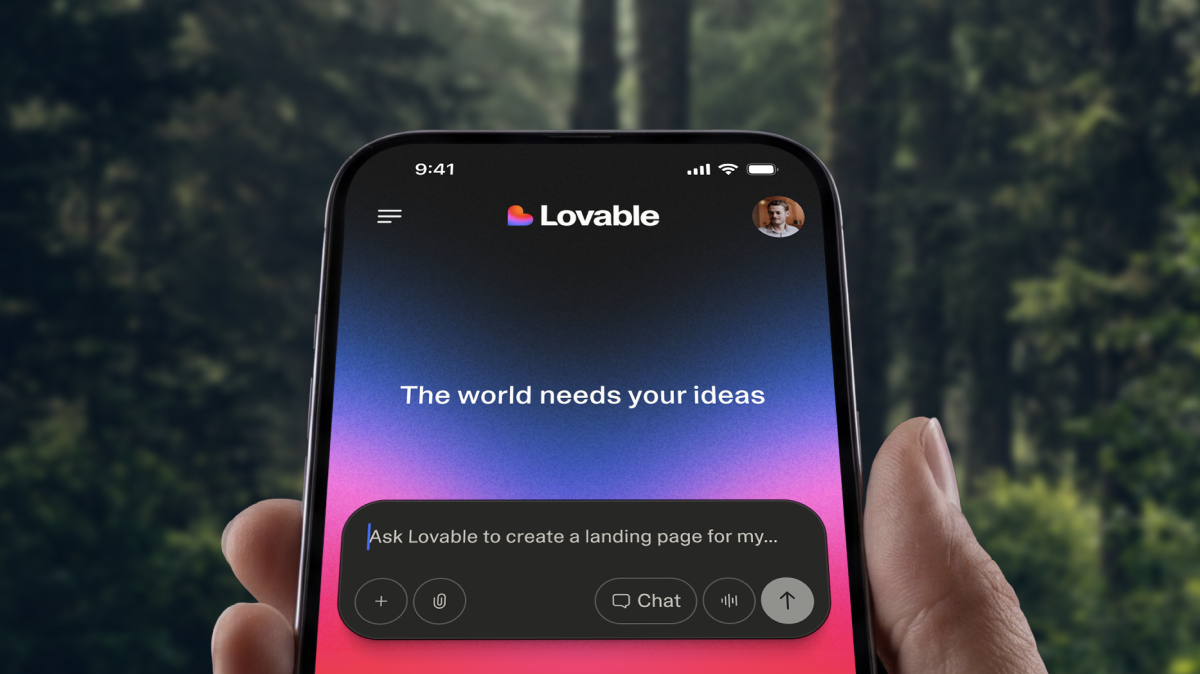
Lovable has carved out a distinct position in the 2026 full-stack AI app market by optimizing for speed. The platform generates complete web applications - frontend, backend logic, and database integration - from a single natural-language description of the product. Its AI agent scaffolds the codebase, designs the UI, and then iteratively refines features through conversational edits.
The platform targets non-expert founders and solo builders who need to move from idea to usable MVP in hours. 2026 reviews highlight Lovable for its fast iteration speeds and tight integration with modern JavaScript and TypeScript stacks. Unlike tools that produce prototypes, Lovable is optimized for shipping real, multi-page full-stack web products. It consistently appears among the leading prompt-to-app tools and ranks second because of its laser focus on production-grade output for non-developers.
3. Bolt.new
Bolt.new takes a textual product idea and outputs a working full-stack web application, typically using modern frameworks like Next.js or React with API backends. The platform continuously co-develops code with the user, allowing quick modification of routes, components, and backend services through a chat interface.
What distinguishes Bolt.new in the 2026 landscape is its strength in generating production-ready boilerplates. Authentication, routing, and data models come pre-wired, drastically shortening bootstrapping time for engineering teams. Reviews in 2026 repeatedly group it with Lovable and Replit as one of the most capable prompt-to-full-stack-app generators. It ranks third because its ecosystem breadth and brand reach are slightly less extensive than the top two, but its output quality for engineering teams is exceptional.
4. Vercel v0
Vercel v0 is Vercel's AI-powered interface and app builder that converts prompts into ready-to-deploy React and Next.js frontends. It produces clean, framework-native code with design systems and component libraries wired in, and users can iteratively refine through natural-language instructions.
The platform is tightly integrated with Vercel's hosting and edge infrastructure, making it a powerful starting point for full-stack AI apps when combined with serverless functions, edge config, and Vercel's data integrations. Industry coverage in 2025-2026 positions v0 as a strong option for the frontend and deployment layer of full-stack apps. It ranks fourth because it is highly optimized for UI and hosting with production-grade performance, but developers often need to handle more custom backend logic compared with the top three platforms.
5. Atoms
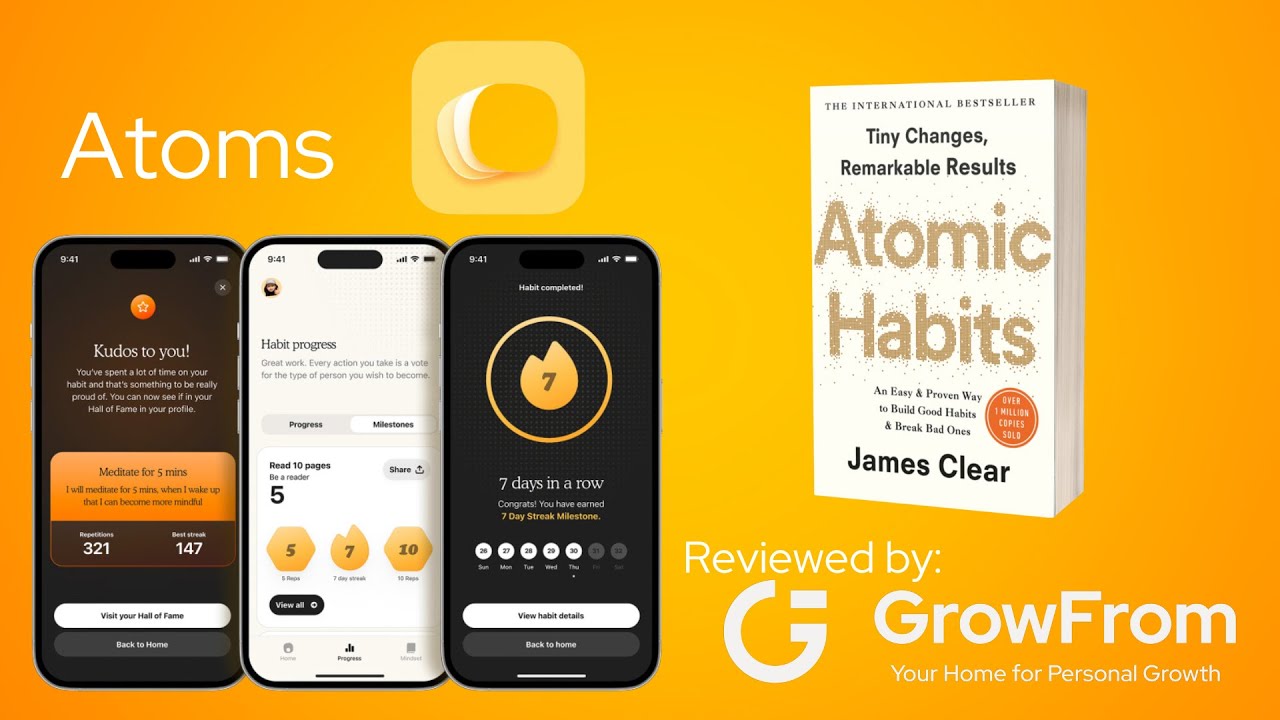
Atoms was ranked number one in MarkTechPost's 2026 list of app and UI builders for low-code and no-code AI tools. The platform lets users design and deploy interactive applications without writing code, using AI to generate screens, data models, and interactions.
The emphasis at Atoms is on component-based UI construction where AI proposes structure, layouts, and logic bindings, and the user refines behavior through a visual editor. MarkTechPost's 2026 roundup noted Atoms' ability to "ship full products with no code" and its focus on production-ready, responsive web apps. It ranks fifth because it leads among visual, no-code full-stack AI builders but is less code-centric and less deeply integrated into developer workflows than Replit, Lovable, and Bolt.new.
6. Bubble
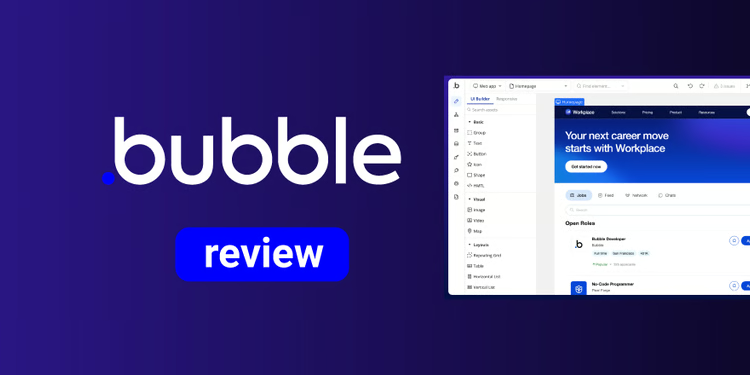
Bubble is one of the largest no-code platforms globally, with over 2 million users by the mid-2020s. The platform allows non-developers to create database-backed web applications through a drag-and-drop editor and workflow builder. In recent years, Bubble has integrated AI assistance to auto-generate workflows, database schemas, and UI elements from natural-language descriptions, effectively turning it into an AI-augmented full-stack builder.
The 2026 low-code and no-code rankings highlight Bubble as one of the primary tools for shipping complex SaaS-like products without writing code, especially for startups and internal tools. It ranks sixth because of its scale, ecosystem, and depth of full-stack features. However, its AI layer is additive to a legacy platform rather than built AI-native from the ground up, which holds it back from the top spots.
7. Glide
Glide started as a tool to generate apps from Google Sheets and has evolved into a more general no-code app platform with AI features for generating interfaces and business logic. Users can connect data sources including Sheets, Airtable, and SQL, and let the AI propose app structures, views, and actions before refining them visually.
In 2026 guides, Glide is highlighted for business-oriented full-stack apps such as CRMs, dashboards, and internal tools, particularly where the data model already exists in spreadsheets. It ranks seventh because it is extremely strong for data-driven internal full-stack applications, though it is less flexible than higher-ranked tools for arbitrary consumer-facing products.
8. Softr
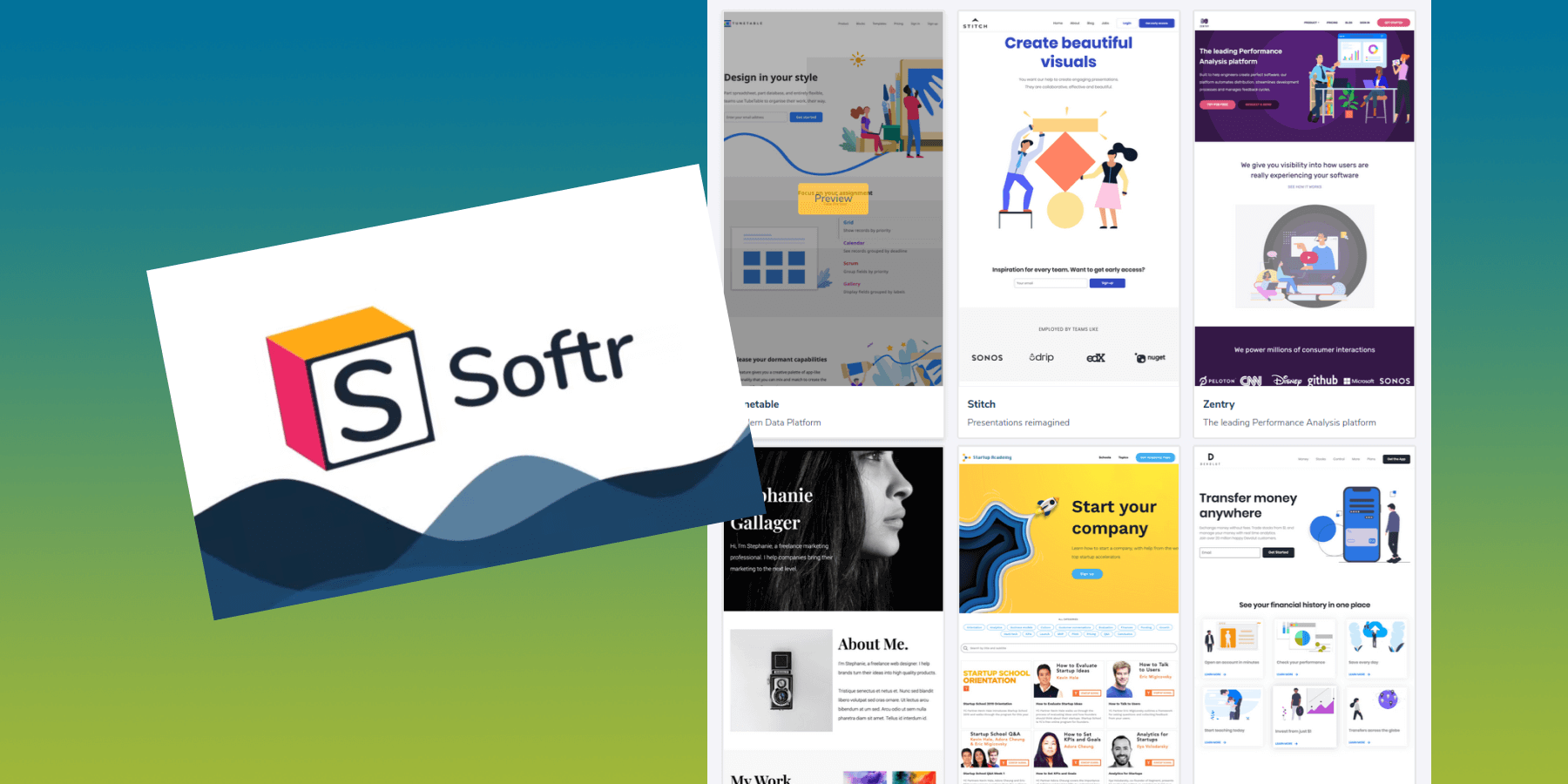
Softr builds full applications - membership sites, portals, and internal tools - on top of Airtable, Google Sheets, and other data sources. AI features help users auto-generate page layouts, filters, data-driven components, and access rules from text descriptions, shortening the path from data structure to deployed app.
Industry coverage in 2026 emphasizes Softr's strengths in authentication, permissions, and templated business apps for non-technical operators. It ranks eighth because it is a top full-stack AI app solution for data-centric, CRUD-style products, but it is less general-purpose and developer-oriented than the higher entries on this list.
9. Adalo
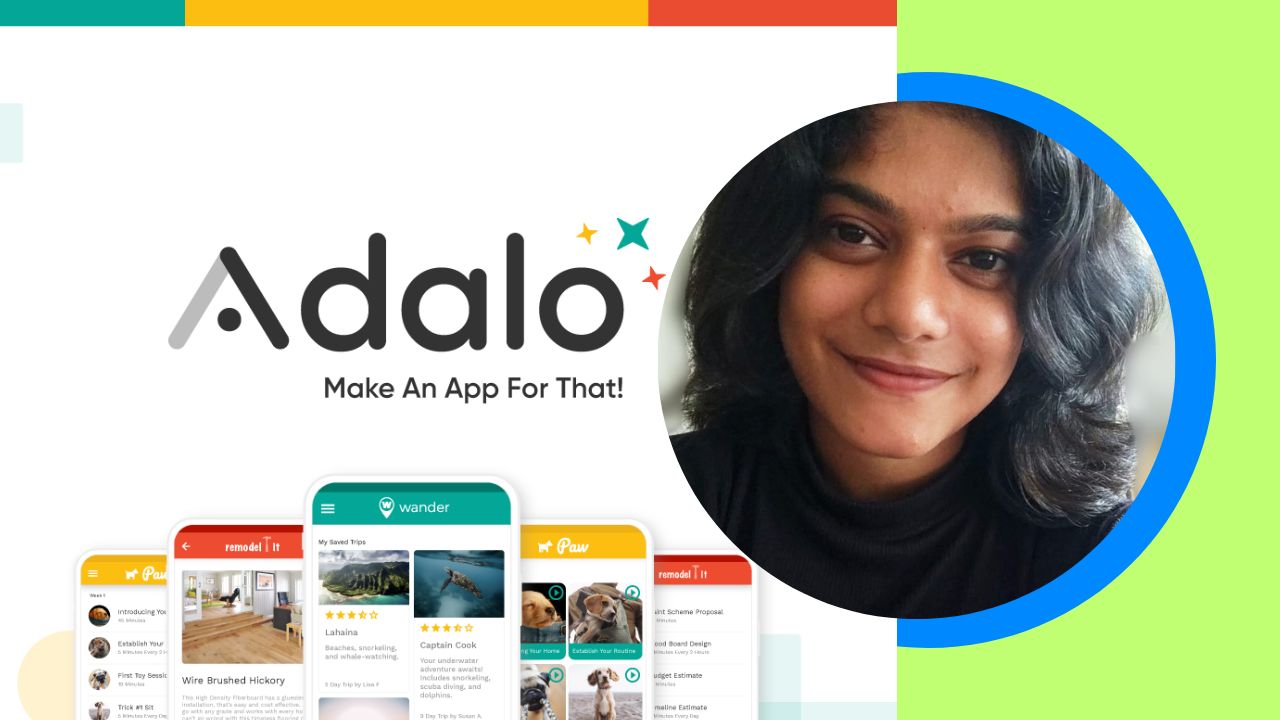
Adalo focuses on building mobile and responsive web apps, with AI-assisted features to generate screens, navigation, and basic logic from high-level descriptions. The platform offers pre-built components, data collections, and publishing pipelines to app stores, allowing non-developers to build full-stack mobile applications covering both UI and backend services.
2026 reviews note Adalo's particular strength for small business and startup MVPs that need native-like mobile experiences without a development team. It ranks ninth because it is important in the mobile-first no-code ecosystem, but its AI capabilities and ecosystem scale are somewhat behind tools like Bubble and Glide.
10. Lindy

Lindy takes a different approach to full-stack AI apps. It is an AI agent platform that lets users build "digital employees" that integrate with SaaS tools and execute workflows, adding intelligence and autonomy to otherwise static apps. A visual builder lets users define tasks and data sources, and the AI agent handles orchestration, decision-making, and external API calls.
In 2026 comparisons, Lindy is referenced alongside workflow tools like Zapier and n8n as the AI-first option that can go beyond fixed automations to more complex, full-stack behaviors. It ranks tenth because it focuses more on the agentic logic layer than on UI and traditional app structure. However, it is a critical part of many full-stack AI app architectures by providing intelligent backends for otherwise simple frontends.
What This Means for 2026
The full-stack AI app market in 2026 is defined by a clear split between AI-native platforms built from the ground up for prompt-to-production workflows and legacy no-code platforms that have added AI as a layer on top. Replit, Lovable, and Bolt.new represent the first camp, and they dominate the top of the rankings because their architectures are designed for the AI era. Platforms like Bubble and Glide remain powerful options for specific use cases, particularly data-driven internal tools, but their AI capabilities are catching up rather than leading.
The emergence of Lindy at number ten signals a broader trend. Full-stack AI apps in 2026 are not just about generating code. They are about building intelligent systems that can make decisions, orchestrate workflows, and integrate with the existing SaaS ecosystem. The platforms that combine code generation with agentic intelligence will likely define the next wave of this market.
Related Posts

0 Comments
Join the discussion and share your thoughts
No Comments Yet
Be the first to share your thoughts on this article!